


More news on this day
Passengers travelling through Manchester Airport are facing widespread disruption today after a power outage in the early hours led to dozens of flight cancellations and significant delays across multiple terminals.
Get the latest news straight to your inbox!
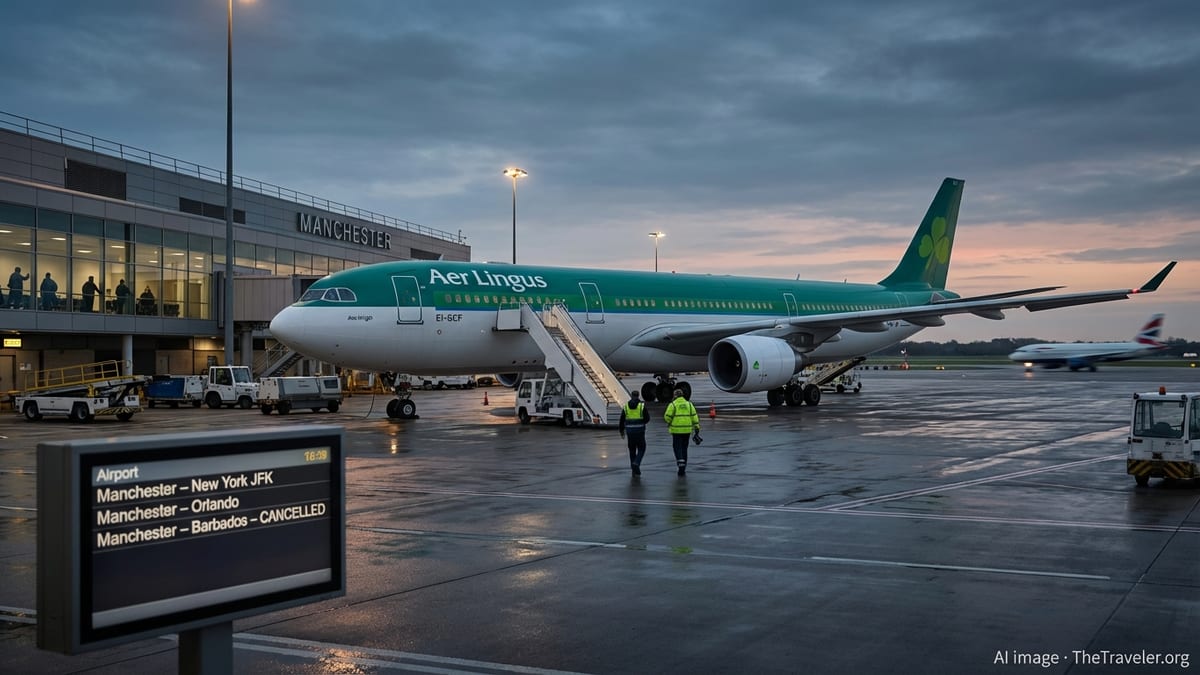
Early-morning power cut triggers cascading delays
Reports indicate that a local power cut in the vicinity of Manchester Airport in the small hours of the morning forced key systems offline, disrupting check-in, baggage handling and aircraft turnaround operations. Initial accounts suggest the interruption began before dawn, affecting services as the first wave of departures was preparing to leave.
Publicly available information shows that the outage resulted in immediate cancellations for a number of early flights, while others were held on the ground as staff attempted to work around reduced systems capacity. With aircraft and crew out of position, delays rapidly built up across the schedule, affecting both short-haul and longer European services.
By mid-morning, live departure boards were showing a mix of cancellations, rolling delays and gate changes, with some departures pushed back by several hours. Aviation data services tracking operations at Manchester also indicated a sharp spike in late-running flights compared with an average day at the airport.
Although power was gradually restored, the complexity of restarting airport and airline operations meant that disruption continued to ripple through the day, with knock-on effects expected into the evening peak.
Terminals and airlines hit as schedules unravel
The disruption has affected all three terminals to varying degrees, with particularly heavy impacts reported in areas handling high-frequency short-haul carriers. According to published coverage, a number of services from major low-cost and full-service airlines were either cancelled outright or subject to extended delays as ground operations were reset.
Departures to key European hubs and holiday destinations were among those worst affected, as aircraft due to operate later rotations were left out of sequence. This has had a compounding effect on the network, with some inbound flights diverting or arriving significantly behind schedule, further constraining available aircraft and crew.
Data from flight-tracking platforms shows that morning cancellations have translated into reduced frequencies on several routes, limiting rebooking options for disrupted passengers. In some cases, travellers have been offered alternative departures from other UK airports where spare capacity exists, although this can involve lengthy overland connections.
Arrivals into Manchester have also experienced delays as air traffic flow is adjusted to match the airport’s reduced handling capacity. Some passengers landing in the late morning and early afternoon have reported extended waits for baggage while systems are brought fully back online.
Queues, confusion and advice for affected passengers
Images and accounts shared on social media describe long queues forming at check-in, security and customer service desks as passengers seek information and alternative travel plans. With flight information screens updating frequently and some gates changing at short notice, airport staff have been directing travellers through crowded concourses as operations evolve.
Consumer travel guidance suggests that passengers due to fly today should check the status of their flight directly with their airline before setting off for the airport, as schedules remain subject to late changes. Where flights have been cancelled, airlines are generally offering rebooking on the next available service or refunds, in line with their conditions of carriage.
Travel rights organisations note that under UK261 regulations, travellers on cancelled or heavily delayed flights may be entitled to care, assistance and, in some circumstances, financial compensation, depending on the cause of the disruption and the length of the delay. Passengers are being encouraged to keep receipts for any reasonable additional expenses such as meals and refreshments while they wait.
Those already at the airport are being advised, in publicly available guidance, to stay close to departure boards and official announcements, as gate allocations and timings can move quickly while the schedule is rebalanced.
Knock-on effects expected into the evening
Even as core power and IT systems are brought back to normal operation, the highly interconnected nature of airline scheduling means that disruption at Manchester is likely to continue throughout the day. Aircraft and crews that began the morning out of position can take several rotations to return to planned patterns, particularly on multi-leg routes.
Industry analysis of previous major outages at European airports indicates that once a certain proportion of the morning schedule is cancelled or significantly delayed, recovery can take many hours, even if the original technical problem is resolved relatively quickly. Airlines may adopt approaches such as consolidating lightly booked services or prioritising routes with the greatest concentration of connecting passengers in order to stabilise operations.
Travel commentators are warning that some passengers may see their return flights affected even if they are not travelling today, as aircraft that should have been positioned for future departures are used to clear the current backlog. Travellers due to fly tomorrow are therefore being urged to monitor their booking information closely for any schedule adjustments.
Preparing for travel through Manchester in coming days
With residual disruption likely to linger beyond today, regular travellers through Manchester Airport are being advised to allow extra time for their journeys over the next 24 to 48 hours. While security and check-in operations are expected to normalise, lingering schedule changes can still create pockets of congestion at certain times of day.
Passenger advocacy groups suggest downloading airline apps and enabling notifications to receive real-time updates on gate changes, delays or aircraft substitutions. Keeping boarding passes, booking references and identification easily accessible can help speed progress through checkpoints during busy periods.
For those with flexible plans, publicly available travel advice recommends considering off-peak departure times or, where practical, alternative airports in the region until the full scale of the knock-on disruption becomes clear. However, for many travellers, Manchester remains the most convenient gateway, and patience may be required while airlines and airport teams work to restore normal operations.
As airlines continue to adjust their schedules and reposition aircraft, the situation at Manchester Airport is expected to evolve through the day. Passengers are urged to rely on official airline and airport channels for the latest information on their specific flights.