


More news on this day
A newly released preliminary report from federal investigators is providing the first detailed look at the Norfolk Southern freight train derailment in Morgan County, Tennessee, an incident that spilled ethanol, sparked a fire and prompted short-term evacuations and river-use advisories in a remote Appalachian valley popular with outdoor visitors.
Get the latest news straight to your inbox!
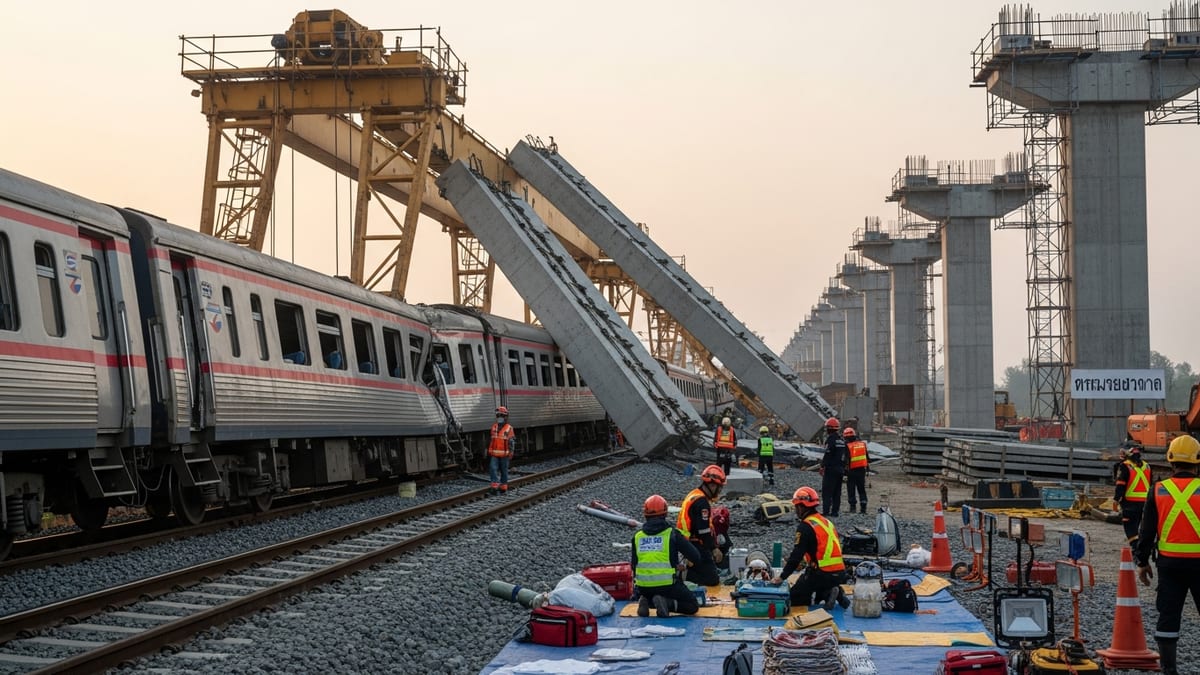
Early findings from the federal investigation
According to publicly available information from the National Transportation Safety Board, the derailment occurred on June 11, 2026, near Wartburg in Morgan County, along a section of track used by Norfolk Southern on the Cincinnati, New Orleans and Texas Pacific Railway line. The southbound mixed freight train, designated 197T610, was reported to be traveling at about 32 miles per hour on a main track where the maximum authorized speed was 40 miles per hour.
The train consisted of two locomotives and more than 120 railcars, including 23 tank cars loaded with hazardous materials. Preliminary details indicate that 29 cars derailed near the head of the train, among them 19 tank cars carrying hazardous cargo. Several of those cars were reported to be transporting ethanol classified as a flammable liquid, which contributed to a post-derailment fire visible from nearby roadways and rural communities.
Initial federal summaries emphasize that the findings are subject to change as the investigation continues. Early work by investigators is focused on collecting data from onboard recorders, examining track conditions at the derailment site and reviewing train inspection and maintenance records. A full determination of probable cause is expected to take many months.
Environmental response along the Obed Wild and Scenic River
The derailment drew particular attention because it occurred near the Obed Wild and Scenic River, a protected corridor managed as a national park unit and known for whitewater paddling, rock climbing and backcountry camping. Local coverage shortly after the crash noted concerns that spilled ethanol or firefighting runoff could reach Rock Creek and the Obed River system downstream.
Publicly available statements from the National Park Service and regional media reports indicated that visitors were urged to stay out of the water in areas around the Rock Creek Campground and the Nemo day use area in the days following the derailment. The request was described as a precaution while teams assessed whether contaminants had entered the river or tributary streams that are heavily used by paddlers and anglers.
Several days after the incident, additional reporting from Knoxville based outlets described ongoing sampling of surface water and air quality near the crash site. These updates indicated that testing had not identified unsafe levels of contaminants in treated drinking water or ambient air, but advisories for direct river contact remained in place for a time while monitoring continued. Travelers planning paddling or camping trips in the Obed corridor have been encouraged by local land managers to check the latest advisories before entering the water.
Local impact in a remote Appalachian county
The derailment site sits in a sparsely populated area of Morgan County, a region of forested ridges, narrow valleys and small communities that depend heavily on a mix of outdoor tourism, public sector employment and extractive industries. Reports from Tennessee media outlets described how the rural location complicated the emergency response, with narrow roads and limited access points affecting the movement of firefighting equipment and hazardous materials teams.
Local officials reported temporary evacuations for residents closest to the crash, along with road closures that affected travel between communities such as Wartburg, Lancing and nearby unincorporated areas. Travelers passing through the county encountered detours and occasional delays as responders staged along key highway corridors to manage traffic and protect access for emergency vehicles.
Coverage in regional news sources has also drawn attention to the role of freight rail in the county, where trains move through rugged terrain not far from popular trailheads, campgrounds and river put ins. The derailment has renewed questions in the area about how hazardous materials are routed through recreation oriented landscapes and what contingency plans exist for incidents that occur far from major urban centers.
What the preliminary report means for rail safety
While the newly published document is described as preliminary and does not assign a definitive cause, it offers context that will feed into a broader national conversation about rail safety and hazardous materials transport. The Morgan County derailment is one of several recent incidents involving Norfolk Southern in which trains carrying flammable liquids or other hazardous cargo have left the tracks, drawing close scrutiny from regulators and safety advocates.
Federal investigators use preliminary reports to document factual information gathered in the early stages of an inquiry, including train speed, composition, track characteristics and weather conditions. In the Morgan County case, publicly available technical details highlight that the track segment was equipped with a positive train control system and that the train was operating below the posted speed limit at the time of the derailment. Those factors are likely to direct attention toward other potential issues such as track condition, equipment performance or train handling.
National rail safety organizations and labor groups monitoring the Morgan County case have noted that the incident adds to a pattern of derailments involving long, heavy freight trains moving through rural areas. Discussion in industry publications and union communications has focused on questions of train length, inspection practices, staffing levels and the resilience of rural emergency response systems when hazardous materials incidents occur.
Implications for travelers and outdoor visitors
For travelers, the derailment underscores how transportation and industrial activity intersect with outdoor recreation in regions like the Cumberland Plateau. The Obed Wild and Scenic River draws paddlers, climbers and hikers from across the Southeast, many of whom pass directly under or alongside active freight rail lines as they access trailheads, campgrounds and river put ins. In the days after the derailment, visiting the area required flexibility as certain river segments were temporarily discouraged for contact recreation and some roadways experienced increased response related activity.
Regional tourism agencies and local businesses have continued to promote Morgan County and the broader plateau as a destination for summer and autumn trips, while acknowledging that some visitors may have questions about long term environmental effects. Publicly available monitoring results to date have not indicated persistent contamination of drinking water or ambient air, and land managers have emphasized that advisories are adjusted as new data become available.
Travel planning guidance emerging from local coverage suggests that visitors considering trips to the Obed corridor and nearby state natural areas should verify current conditions for river use, road closures and campground access before arrival. The Morgan County derailment serves as a reminder that in remote, recreation heavy regions, rail safety and hazardous materials oversight are not only transportation issues but also important factors in maintaining visitor confidence and protecting the natural landscapes that attract travelers in the first place.