


Landing at Venice Marco Polo Airport can feel different from almost any other arrival in Europe. Instead of heading straight for a metro or highway, many travelers step from a modern terminal onto a pier and glide into the lagoon by boat. This guide walks you through every stage after landing at Venice Marco Polo (VCE), from passport control and baggage claim to ATMs, SIM cards, water transport, buses, taxis, and onward connections into the city and beyond.
Get the latest updates straight to your inbox!
First Steps After Landing: Disembarkation and Passport Control
Venice Marco Polo is a single-terminal airport, so whether you arrive on a legacy carrier from North America or a European low-cost airline, you will funnel into the same arrivals level. After disembarking, follow the yellow "Arrivals" and "Baggage claim" signs. Walking distances are moderate compared with major hubs; even from a remote stand, most passengers reach passport control in around 5 to 10 minutes at a normal walking pace.
If you are arriving from another Schengen Area country, you will usually bypass passport control and head directly toward baggage claim. Arrivals from outside the Schengen Zone, such as the United States, United Kingdom or Canada, pass through border control. Lines fluctuate based on time of day and how many flights land together. Early morning and late afternoon banks of intercontinental arrivals can create queues of 20 to 40 minutes, while late evening arrivals often clear in under 15 minutes.
Have your passport ready and keep your accommodation details handy in case an officer asks where you are staying. Automated e-gates are occasionally available for certain EU and biometric passport holders, but staffing patterns shift, so be prepared to go through a staffed booth. Families with children and travelers needing assistance are usually directed to dedicated lanes; look for the clearly marked signs and staff at the lane entrances.
Once your passport is stamped, you descend to the arrivals level on the ground floor. If you are traveling with only hand luggage, you can proceed directly to customs and the arrivals hall. Otherwise, follow the overhead signs to the baggage claim area, which is located adjacent to customs.
Baggage Claim, Customs and Arrivals Hall Layout
The baggage claim hall at Venice Marco Polo is compact and straightforward, with a limited number of carousels grouped together. Overhead screens list flight numbers and carousel assignments. Bags for European services often appear within 15 to 25 minutes, while long-haul flights sometimes take a little longer, especially at peak times when handlers are juggling multiple wide-body arrivals.
If your luggage does not appear, the lost baggage counters for major airlines and ground handlers are located along the perimeter of the hall. Keep your luggage tag receipt from check-in; staff will ask for it when you submit a claim. They will typically arrange delivery to your hotel or apartment in Venice or Mestre once your bags are located, though delivery times can vary depending on how easily couriers can reach your address inside the historic center.
Customs in Italy typically operates on a green and red channel system. If you have nothing to declare beyond personal items and goods within duty-free allowances, you walk through the green "Nothing to declare" corridor directly into the public arrivals area. Travelers carrying high-value goods or amounts of cash above EU declaration thresholds should use the red channel. Random checks do occur, but for most leisure travelers carrying typical luggage, the process is simply a matter of walking through.
As you pass into the public arrivals hall on the ground floor, you will emerge into a bright, modern space lined with information points, car rental desks and service counters. Large overhead signs clearly differentiate exits for land-side transport, such as buses and taxis, from the route toward the moving walkway and piers used by water buses and water taxis.
Money, Connectivity and Essential Arrivals Services
Before you leave the terminal, this is the best moment to handle cash, mobile data and basic errands. You will find several bank ATMs from major Italian and international banks in or near the arrivals hall. Using a bank-branded ATM is generally preferable to currency exchange kiosks, which often apply higher fees and less favorable rates. Withdraw only what you expect to need for at least the first day; Venice is card-friendly, but small guesthouses and neighborhood cafes may still prefer cash.
For mobile connectivity, international visitors increasingly rely on eSIMs purchased before travel, which provide immediate coverage on arrival using Italian networks such as TIM, Vodafone and Wind Tre. If your phone does not support eSIM, look for mobile service counters or multi-brand electronics shops in the terminal where you can buy a physical SIM card, usually requiring a passport for registration. Prices and offerings change regularly, but you can typically expect tourist SIM packages to include a generous data allowance valid for the duration of a short trip.
Free airport Wi-Fi is available in the terminal, useful for confirming hotel directions, ride options or water bus schedules. Look for the airport network name on signs near seating areas. Once online, many travelers use apps like Google Maps or the official local transport apps to check the next bus departure from the airport or vaporetto connections from Piazzale Roma or the islands.
The arrivals area also includes a tourist information point and, in peak seasons, kiosks that sell transport passes valid on Venice’s public transport, including buses and vaporetti. Buying a combined ticket here can be convenient if you already know that you will use buses and water buses extensively over 24, 48 or 72 hours, particularly if your accommodation is far from the main hubs of Piazzale Roma or Rialto.
Understanding Water Transport: Signs, Piers and Options
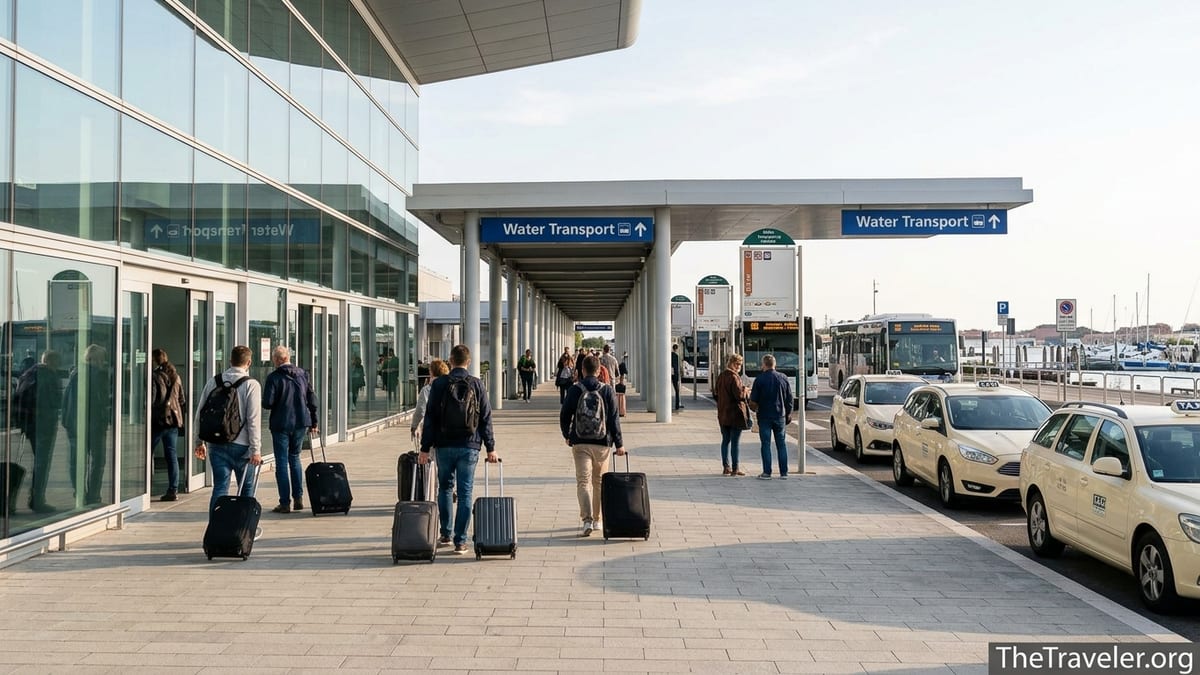
One of the defining features of Venice Marco Polo Airport is direct access to water transport. From the arrivals hall, follow the prominent blue "Water Transport" signs. These guide you along a covered walkway of several hundred meters to the airport’s dock area on the lagoon. Moving walkways help with the distance, but if you are traveling with heavy or multiple suitcases, allow 8 to 10 minutes of walking time.
At the dock, you will find separate areas for Alilaguna water buses and for private water taxis. Alilaguna is a dedicated airport boat service that runs fixed routes between the airport and key stops in Venice, such as Murano, the Lido, Fondamente Nove, Rialto, San Marco and the Santa Lucia railway station, depending on the line. The Blue Line commonly connects the airport to stops like Murano, San Marco and the train station, while other seasonal lines may serve different combinations of piers. Boats are slower than buses but offer a distinctly Venetian arrival, gliding past island shorelines and church domes.
Alilaguna tickets can typically be purchased from ticket offices or ticket machines near the dock, with staff on hand during core operating hours. You may also be able to buy tickets online in advance and scan a QR code, though it is wise to confirm current procedures before travel. Prices vary by line and any included luggage, but single fares are usually noticeably higher than land buses and lower than private water taxis. For a couple or solo traveler with one suitcase each staying near San Marco or Rialto, this is often the best balance of cost and convenience.
Private water taxis offer the most direct and atmospheric way to reach hotels that have their own canal entrances or nearby jetties. Boats are typically sleek wooden or fiberglass craft that carry a small group, often up to 8 or more passengers depending on the operator and luggage. You can book ahead through your hotel or approach the taxi desk at the dock. Prices are significantly higher than other options and are generally charged per boat, not per person. For example, a family of four arriving late at night might find that the convenience of a prebooked water taxi directly to a San Marco hotel door is worth the premium compared with managing children and suitcases on buses and vaporetti.
Buses, Taxi Ranks and Land Transport Connections
If you prefer to keep your arrival simple and cost-effective, land transport from Marco Polo Airport is efficient and well signposted. From the arrivals hall, follow the green or white signs pointing to "Bus" and "Taxi." Sliding doors lead out to a forecourt where buses use clearly marked bays and the taxi rank sits opposite the terminal.
Several bus companies run frequent services between the airport and Venice. Public ACTV buses connect the airport with Piazzale Roma, the road terminus at the edge of the historic center. Dedicated ATVO express buses also run between Marco Polo and both Piazzale Roma and Mestre railway station. Buses usually depart from a second lane just outside the arrivals hall, with dedicated ATVO and ACTV stops. Typical daytime journey times to Piazzale Roma are around 20 to 25 minutes, depending on traffic.
Buying your ticket before boarding is important. ATVO tickets are often available from branded counters or machines in the arrivals area and at their bus stops, while ACTV tickets may be sold at transport counters, machines, or via integrated city passes. As of mid-2026, travelers frequently report one-way bus fares to Venice in the approximate range of 10 euros, but prices can change, so always check the current rate on arrival. From Piazzale Roma, you transfer to a public vaporetto or walk if your accommodation is nearby.
The taxi rank is located directly opposite the arrivals exit. Licensed land taxis run on meters and can take you either into Mestre on the mainland or to Piazzale Roma at the entrance to Venice proper, where roads end and canals begin. A taxi to Piazzale Roma usually takes a similar 15 to 25 minutes, depending on congestion, and costs significantly more than the bus but offers door-to-door comfort for those staying in Mestre or with heavy luggage needing to get to the edge of the historic center quickly.
Onward Travel: Trains, Mainland Stays and Late-night Arrivals
Your onward journey will depend largely on where you are staying. Visitors whose hotels are in Venice’s historic center usually treat Piazzale Roma or the Santa Lucia railway station as their main gateway. From these hubs, vaporetto lines fan out along the Grand Canal and around the perimeter of the islands. For example, a traveler staying near the Rialto Bridge might take a Line 1 vaporetto from Piazzale Roma or Ferrovia, while guests at a Lido hotel might transfer to a lagoon-facing line from the same points.
Travelers continuing by train to other Italian cities such as Florence, Rome or Milan often head to Venezia Mestre station on the mainland or Venezia Santa Lucia on the island. The ATVO express bus offers direct routes to Venezia Mestre, while buses to Piazzale Roma place you within a short walk or quick vaporetto hop of Santa Lucia. Fast trains depart frequently from both stations, so you can often plan a comfortable layover of a few hours between flight arrival and train departure.
Many budget-conscious visitors choose to stay in Mestre, where hotel prices are typically lower and larger modern properties line the streets around the station and tram lines. From the airport, taking an ATVO or ACTV bus to Mestre rather than into the historic center can save time if your accommodation is near the bus or train station. Once settled in Mestre, you can use regular trains, trams or buses to reach Venice for sightseeing during the day.
For late-night arrivals, options narrow slightly but you are not stranded. Buses on some routes run until near or shortly after midnight, and private water taxis operate around the clock if prebooked or arranged at the dock. Many travelers with flights landing close to midnight choose a private water taxi, particularly if they are staying deep in the historic center and want to avoid dragging bags over bridges after public services have thinned out. Others opt for a hotel in or near Mestre for the first night, then transfer into Venice the following morning when full daytime services resume.
Practical Tips for a Smooth Arrival
A little planning before arrival goes a long way at Venice Marco Polo. If you already know where you are staying, check which arrival point is most convenient: some hotels near San Marco or Rialto are easiest to reach by Alilaguna, while accommodations close to Piazzale Roma or the train station often favor bus plus short walk or vaporetto. Having this decided in advance helps you choose the right signs to follow the moment you leave customs.
Pack with Venice’s unique infrastructure in mind. Even if you transfer by water taxi, there is a good chance you will cross at least one bridge or walk along narrow streets with uneven paving. Wheeled suitcases that can handle cobblestones and one smaller, easy-to-lift bag are usually more practical than multiple oversized cases. Consider keeping valuables and a change of clothes in your cabin baggage in case your checked luggage is delayed and must be delivered later.
When handling money and tickets at the airport, stay aware of your surroundings without becoming anxious. Terminal lighting is bright and the atmosphere is generally relaxed, but the usual advice applies: keep wallets, passports and phones secure, especially in busy areas around ATMs, ticket machines and bus boarding. Buying tickets only from official counters, machines or clearly identified staff helps avoid confusion.
Finally, give yourself some buffer time. While the airport itself is efficient, Venice’s charm lies partly in its slower pace and maze-like layout. Allow extra time for your first crossings of bridges, locating your hotel entrance on a narrow alley, or waiting at a vaporetto stop. Treat the transfer from the airport not just as logistics, but as the start of your Venetian experience, whether you are watching the lagoon glow at sunset from a boat or glimpsing the city’s skyline from a bus window as you approach Piazzale Roma.
FAQ
Q1. How long does it usually take to get from landing at Venice Marco Polo to central Venice?
For most travelers, allow around 60 to 90 minutes from touchdown to reaching central Venice. This includes deplaning, passport control, baggage claim, walking to your chosen transport and the journey itself by bus, water bus or water taxi.
Q2. What is the cheapest way to get from Marco Polo Airport to Venice?
The cheapest commonly used option is usually a land bus such as an ACTV or ATVO service to Piazzale Roma, then a public vaporetto or short walk to your accommodation. Fares are often around the cost of a standard city bus ticket plus any vaporetto ticket.
Q3. Is taking the Alilaguna water bus from the airport worth it?
Alilaguna is slower and more expensive than buses but offers a direct and scenic arrival by water to stops like San Marco, Rialto, Murano and the Lido. It is particularly convenient if your hotel is near one of its piers and you have manageable luggage.
Q4. Do I need to book a private water taxi in advance?
Advance booking is strongly recommended if you arrive very late, with a large group or want a guaranteed direct drop-off at a specific hotel dock. At other times, you can often arrange a taxi on the spot at the airport dock, though waiting times and prices may vary.
Q5. Where can I buy tickets for buses and water transport at the airport?
Tickets are typically sold at dedicated transport counters and machines in the arrivals hall and at bus stops or the airport dock. Look for branded ATVO and ACTV machines for buses and Alilaguna ticket offices or machines near the water transport area.
Q6. Are there ATMs and currency exchange services in the arrivals area?
Yes, you will find several bank ATMs in or near the arrivals hall. Currency exchange booths may also be present, but withdrawing cash from a bank ATM is often more cost-effective than using exchange counters with higher fees.
Q7. Can I buy a local SIM card or use an eSIM on arrival?
Many travelers now use eSIMs purchased before their trip to connect immediately on Italian networks. If you need a physical SIM, look for mobile service points or electronics shops in the terminal that sell prepaid tourist packages, and bring your passport for registration.
Q8. What should I do if my flight arrives around midnight?
Late-night arrivals still have options, but they are fewer than during the day. Some bus services run close to midnight, and private water taxis usually operate 24 hours, though at a premium. Many travelers book a water taxi or a hotel in Mestre for the first night and transfer into Venice the next morning.
Q9. Is it easy to travel from Marco Polo Airport to other Italian cities?
Yes. Buses connect the airport to Venezia Mestre and Venezia Santa Lucia stations, from which frequent trains run to cities like Florence, Rome, Milan and Bologna. Plan a comfortable connection window, especially if you need to clear passport control and collect luggage first.
Q10. How accessible is Venice Marco Polo Airport for travelers with reduced mobility?
The terminal is modern, with elevators, ramps and designated assistance points marked throughout, including near car parks and the dock area. If you need wheelchair assistance or extra support, arrange this through your airline before travel so staff are ready when you land.