


More news on this day
Public safety agencies across North America are partnering with rail companies and emergency planners to stage full-scale train derailment exercises that simulate hazardous spills, complex rescues and coordinated evacuations in real time.
Get the latest news straight to your inbox!
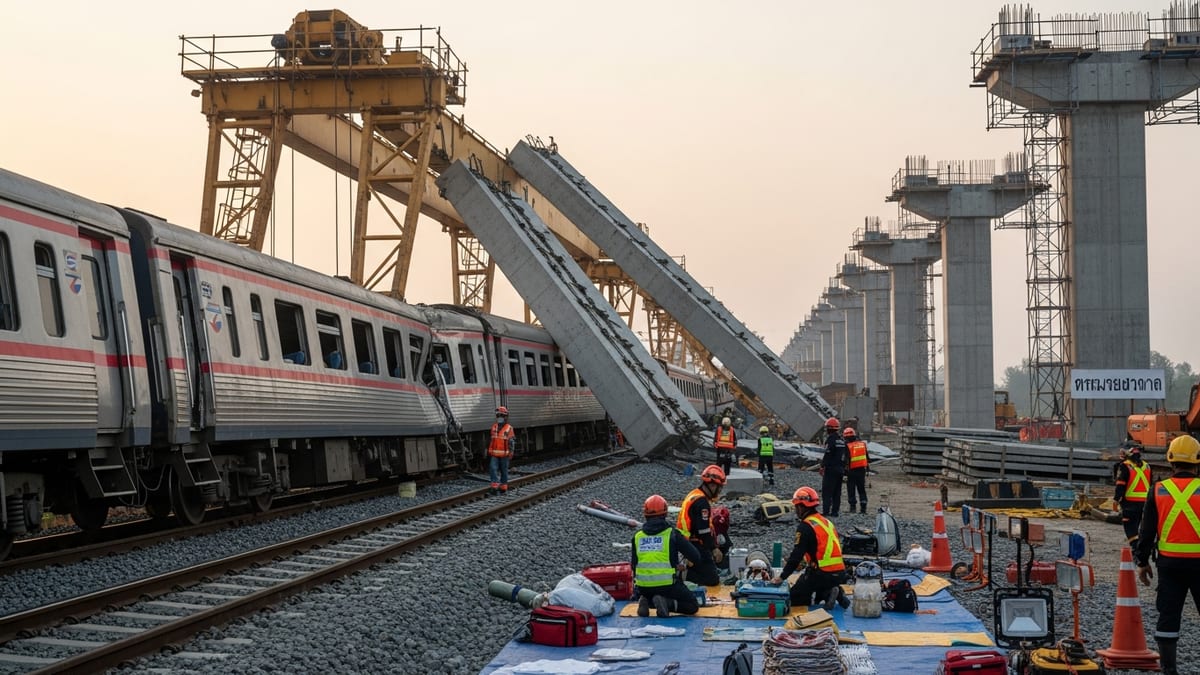
Regional Partnerships Put Rail Emergencies to the Test
Recent planning documents and public reports describe a growing number of multiagency drills built around realistic train derailment scenarios. Emergency management offices, fire services, law enforcement, public health departments and volunteer groups are joining rail operators to rehearse how they would respond if a freight train carrying hazardous materials left the tracks in or near a community.
In several U.S. counties, meeting minutes from homeland security advisory committees describe plans for full-scale derailment exercises that bring together local responders, regional task forces and railroad hazardous materials teams. These drills are designed to move beyond classroom instruction and tabletop discussions, placing participants in a simulated emergency environment with live radio traffic, staged casualties and timed objectives.
Publicly available summaries from emergency management agencies indicate that work on these exercises often stretches over many months. Planners identify potential locations along active rail corridors, develop a derailment storyline and coordinate participation from multiple jurisdictions so that the drill reflects the geographic reach of a real incident.
Across the border in Canada, published program materials from national safety initiatives describe similar efforts to stage immersive derailment scenarios involving flammable liquids and other high-risk cargoes. These cross-agency collaborations focus on testing not only technical tactics but also how well information flows between site commanders, rail representatives and government partners.
From Tabletop Scenarios to Full-Scale Field Operations
Most large derailment exercises are preceded by smaller planning and discussion sessions that allow agencies to map out roles and identify gaps. Public documentation from previous projects outlines a progression from tabletop exercises, where participants talk through decisions around a conference table, to full-scale field operations that unfold over several hours on the ground.
In this progression, the tabletop phase is often used to clarify evacuation triggers, sheltering options, hazardous materials zones and communication responsibilities. Planners record problem areas that emerge during discussion and then design the field exercise to stress those same points under more realistic conditions.
The full-scale phase typically involves staged wreckage, mock hazardous material releases and volunteer actors or mannequins representing injured residents and rail workers. Responders must establish command posts, secure perimeters, conduct rescues, manage decontamination lines and coordinate medical transport while evaluators track performance against pre-set objectives.
Reports from past exercises indicate that this step-by-step approach helps agencies refine emergency operations plans and ensures that lessons learned at the table are validated in the field. The process also allows organizers to adjust scenarios in response to new rail traffic patterns, recent derailment incidents and evolving hazardous materials regulations.
Focus on Hazardous Materials and Community Protection
Train derailment drills increasingly concentrate on hazardous materials, reflecting concern about the movement of flammable liquids, industrial chemicals and other dangerous goods by rail. Public briefings and emergency management reports describe scenarios built around high-hazard trains passing through small communities, industrial areas and transportation hubs.
In these simulations, response teams practice identifying railcar contents using placards and shipping papers, establishing isolation zones and determining when to recommend shelter-in-place versus evacuation. Public health units and environmental specialists are often incorporated into the exercise to assess potential air and water impacts, advise on protective actions and plan for long-term monitoring.
Some exercise materials highlight the importance of integrating rail company hazardous materials specialists into on-scene operations. These personnel bring detailed knowledge of tank car design, product behavior and containment strategies, which can influence firefighting tactics and spill control measures during a derailment involving chemical releases or fuel fires.
The drills also test how quickly and accurately information about the incident reaches the public. Scenario injects may include simulated social media posts, news inquiries and calls from concerned residents, pushing public information officers to coordinate messaging while technical teams focus on containment and rescue.
Lessons Learned and Improvements for Future Incidents
After each full-scale derailment exercise, organizers typically compile after-action reports that summarize strengths, weaknesses and recommended improvements. Publicly accessible summaries from past events point to recurring themes such as the need for clearer radio protocols, updated contact lists for partner agencies and more robust mutual aid agreements for specialized equipment.
Exercises frequently reveal challenges around interoperable communications when multiple jurisdictions respond with different radio systems and channel plans. Evaluators often recommend additional cross-training and technical upgrades so that fire, law enforcement, emergency medical services and rail representatives can share information without delay during an actual derailment.
Another common lesson involves resource tracking and logistics. Full-scale drills expose how quickly supplies such as absorbent materials, foam concentrates, air monitoring equipment and personal protective gear can be consumed. In response, emergency managers refine inventory lists, pre-stage caches and review agreements with neighboring regions and private vendors.
Public reports also note that these exercises support long-term planning by informing updates to hazard mitigation plans and emergency operations plans. Findings from derailment scenarios are often incorporated into grant requests for training, equipment and infrastructure improvements aimed at reducing risk along busy rail corridors.
Strengthening Community Confidence Along Rail Corridors
Residents in rail-adjacent communities frequently express concern about the possibility of a serious train derailment, particularly when hazardous materials are transported through dense neighborhoods or environmentally sensitive areas. Public-facing summaries of recent exercises indicate that planners increasingly view these drills as an opportunity to build community confidence in local emergency capabilities.
Some jurisdictions incorporate public observers, local officials and volunteer organizations into parts of the exercise to demonstrate how command structures function, how evacuation routes would be managed and how sheltering facilities would operate under stress. Even when the public does not attend directly, exercise results are often shared in community meetings or annual emergency management reports.
For participating agencies, the drills serve as a chance to test not only technical skills but also working relationships. Police, fire, emergency medical services, public health, transportation departments and rail operators must coordinate closely when time is critical and information is incomplete. Practicing these dynamics in a controlled environment is viewed as central to improving performance when real emergencies occur.
As rail networks continue to carry heavy freight volumes, the trend toward full-scale, multiagency derailment exercises suggests that public safety organizations are seeking more realistic ways to prepare for low-frequency but high-impact events. The combination of hands-on field operations, cross-sector collaboration and systematic follow-up is shaping how communities along the tracks plan for, and practice, rail incident response.