


More news on this day
A Qantas flight from Canberra to Perth made an unscheduled landing in Adelaide after passengers and crew reported a strong, unexplained smell in the cabin, prompting medical checks and raising fresh questions about recent operational challenges for Australia’s largest airline.
Get the latest news straight to your inbox!
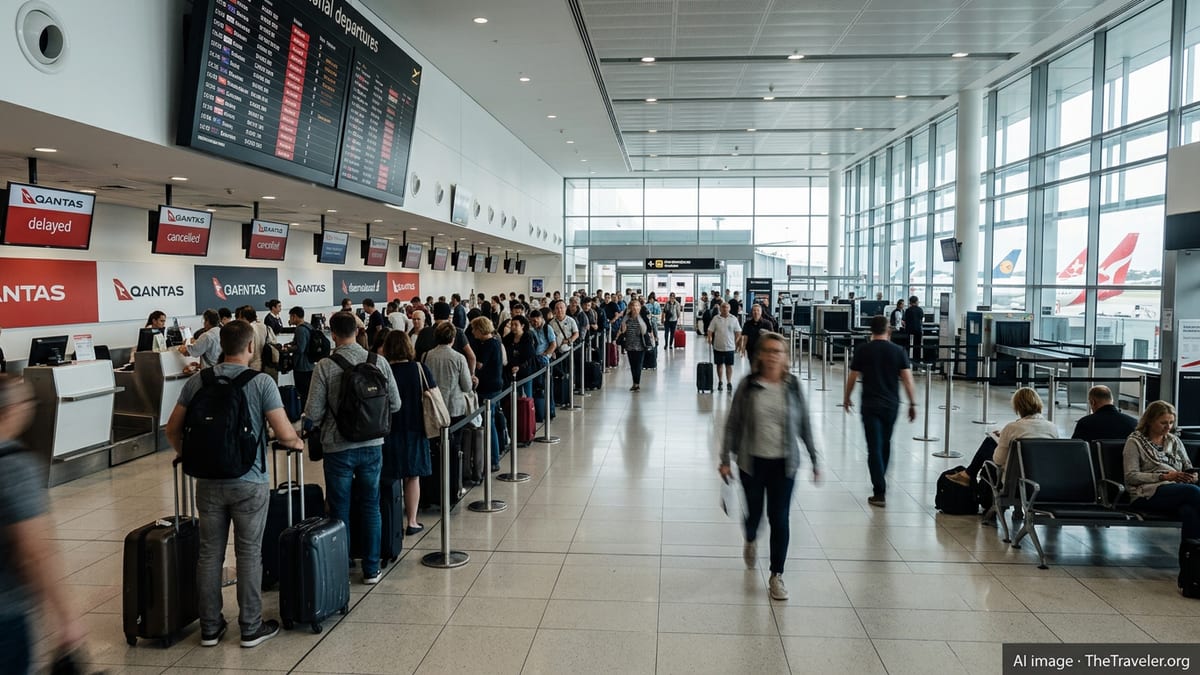
Unexpected Diversion En Route to Western Australia
The domestic service, operating between Canberra and Perth, was diverted on Tuesday to Adelaide, where emergency services were placed on standby as a precaution. Published coverage indicates that the aircraft landed safely and taxied to a remote stand, where paramedics met the flight to assess passengers and crew.
Reports indicate that the decision to divert followed multiple accounts of a noticeable smell in the cabin partway through the journey. While the exact nature and source of the odour have not yet been confirmed, the smell was described in local media as strong enough to prompt concern among both travellers and flight attendants.
Publicly available flight-tracking data shows that the aircraft altered course toward Adelaide after crossing into South Australian airspace, rather than continuing west to Perth. The diversion lengthened journey times and disrupted connections for those on board, but there were no immediate indications of serious injuries.
According to media summaries of the incident, passengers remained on the ground in Adelaide while engineers and ground crews examined the aircraft. Some travellers were later re-accommodated on onward services to Perth, while others faced overnight delays as the airline reviewed the aircraft’s condition.
Medical Response and Passenger Precautions
Local news reports describe a visible emergency presence at Adelaide Airport as the aircraft arrived, with paramedics positioned near the tarmac ahead of landing. This response is consistent with standard industry practice when there are reports of potential fumes, smoke, or unusual odours on board an aircraft.
Accounts from the scene suggest that a number of passengers were evaluated for minor symptoms such as nausea, headache or throat irritation. There were no widespread reports of serious illness, and publicly available information did not indicate any hospitalisations directly linked to the incident at the time of publication.
In similar events worldwide, airlines typically request medical support out of an abundance of caution rather than in response to confirmed toxic exposure. Aviation safety literature notes that unusual cabin smells can sometimes be associated with issues in air-conditioning or bleed-air systems, galley equipment, or cleaning chemicals, though investigators usually require more time and engineering analysis before identifying a cause.
Reports from Adelaide indicate that the aircraft remained grounded while checks took place, aligning with standard protocols that keep a jet out of service until basic safety inspections are complete. Passengers were offered rebooking options, with some choosing to continue to Perth later the same day and others waiting for alternative arrangements.
Ongoing Checks as Cause of Smell Remains Under Review
As of Wednesday, publicly available information suggests that the specific source of the smell had not yet been formally detailed. Airline engineers are expected to review technical logs, inspect air systems and cabins, and examine any recent maintenance work that could be relevant to the incident.
Investigations into cabin odours can range from straightforward to complex. In some cases, the cause may be traced to spilled cleaning products, overheated galley components or minor oil residue in air ducts. In other instances, the assessment can involve detailed examination of engines, filters and sensors, sometimes requiring parts replacement and test flights before the aircraft returns to normal service.
Reports on comparable events in Australia highlight that many diversions prompted by odours or smoke do not ultimately reveal serious mechanical faults. Even so, industry analysts note that carriers have strong incentives to err on the side of caution, given the sensitivity around cabin air quality and passenger health concerns.
Any formal findings related to this Canberra to Perth service are expected to be reflected in subsequent maintenance or regulatory records. Travel industry observers are watching for updates that could clarify whether the smell was linked to a transient cabin issue or a deeper technical concern.
Incident Comes Amid Broader Operational Pressures on Qantas
The diversion adds to a period of heightened scrutiny for Qantas, as the airline navigates schedule changes, fuel cost pressures and evolving route networks across Australia. Recent business coverage has pointed to thousands of domestic flight adjustments, including reductions on certain regional routes and frequency changes on others.
Travel industry reporting indicates that steep increases in jet fuel refining margins have pushed Qantas and other carriers to reassess capacity. Some routes in South Australia and other states are being trimmed or suspended, while aircraft and crews are increasingly redeployed to higher-demand services and long-haul operations.
At the same time, Australian travellers have faced a series of notable disruptions, from weather-related cancellations to diversions linked to technical concerns. Aviation analysts caution against drawing direct conclusions from a single odour-related diversion, but acknowledge that each high-profile incident contributes to public perceptions of reliability and safety.
Consumer advocates have also emphasised the importance of clear communication when diversions occur. Passengers on the Canberra–Perth service experienced extended travel times and uncertain onward connections, reinforcing the need for timely updates, transparent rebooking options and support at intermediate airports such as Adelaide.
What Travellers Should Know About Diversions for Cabin Smells
Aviation safety specialists consistently describe diversions for unexplained smells as a precautionary, safety-first measure. Even when no serious fault is ultimately found, crews are trained to treat any unusual odour as a potential risk until it can be ruled out through inspection and testing.
For travellers, this means that an unscheduled stop, medical presence on arrival or extended ground delay may be inconvenient but often indicates that onboard procedures are being followed conservatively. In many cases worldwide, diversions for odours end with engineers clearing the aircraft after checks, or with the airline substituting a different aircraft while the original undergoes further maintenance.
Trip planners flying across Australia’s long domestic sectors, such as the Canberra–Perth route, may wish to build in additional connection time when linking to international flights or remote regional services. Travel advisers often recommend monitoring airline apps and airport information displays closely, particularly when news of disruptions or technical checks emerges on the day of travel.
As this latest Qantas diversion is reviewed, the incident serves as a reminder that Australia’s domestic network, while generally reliable, is subject to operational and technical uncertainties that can rapidly alter even routine journeys across the continent.