


More news on this day
Perth is accelerating its rise as a global aviation hub as Qantas and other major carriers expand long-haul services while Perth Airport appoints DXC Technology to knit together more than 70 systems in a multi‑billion dollar terminal overhaul designed to create a unified “One Airport” experience.
Get the latest news straight to your inbox!
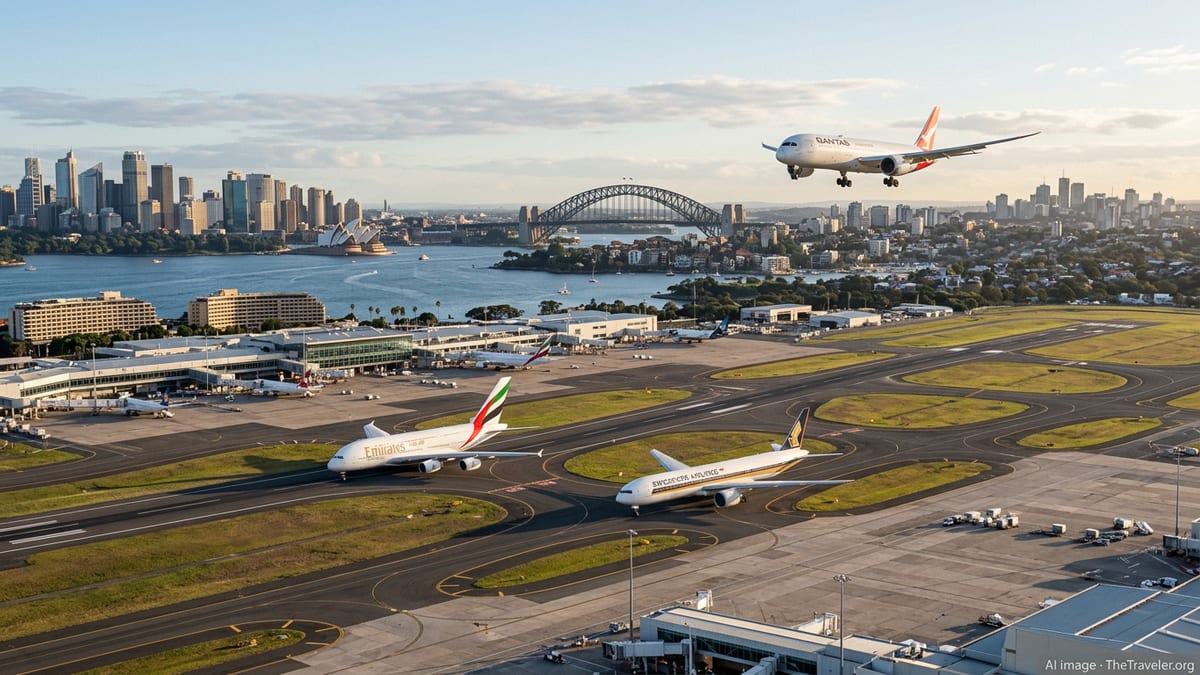
DXC Named Master Integrator for Perth’s ‘One Airport’ Overhaul
Perth Airport has selected DXC Technology as master systems integrator for its next-generation terminal development, a flagship stage in a multi‑billion dollar investment program aimed at consolidating operations into a single integrated precinct. Publicly available information on the agreement indicates DXC will be responsible for designing, integrating, testing and commissioning more than 70 information technology and operational systems across the new terminal environment.
The scope extends from passenger processing, baggage tracking and security screening integration to building management, digital signage, wayfinding, public Wi‑Fi and airport operations control. The objective is to ensure disparate systems function as a single platform so the future terminal can support higher passenger throughput, tighter airline schedules and more complex international connections.
DXC’s airport solutions portfolio highlights the use of cloud services, artificial intelligence and enhanced cybersecurity across airside and terminal infrastructure. At Perth, these capabilities are expected to underpin a more resilient operation, with integrated data flows helping the airport and its airline partners anticipate bottlenecks and recover more quickly from disruptions.
The “One Airport” program dovetails with Perth Airport’s broader plan to consolidate domestic and international operations around new common-use facilities. Consolidation is intended to cut transfer times, simplify wayfinding for connecting passengers and create additional capacity for widebody aircraft serving long‑haul markets.
Qantas Deepens Perth Hub With Europe, Africa and Trans-Tasman Growth
Qantas is building Perth into a central pillar of its international network, adding new long‑haul destinations and ramping up capacity on existing routes. According to recent schedule updates and investor material, the flag carrier has increased services between Perth and Europe, including popular nonstops to London, Rome and Paris, while also using Perth as a through point on some Sydney–Europe services routed via Western Australia.
New nonstop flights from Perth to Johannesburg and Auckland, progressively introduced from late 2025, have added tens of thousands of seats per year and extended Perth’s reach across three continents. Reports indicate the Perth–Johannesburg and Perth–Auckland routes form part of a broader strategy to channel European, African and New Zealand traffic through Western Australia, supporting tourism inflows and trade links.
Qantas has also flagged the use of incoming Airbus A321XLR aircraft to bolster transcontinental services and short and medium‑haul international flying from Perth, including potential new links into key South and Southeast Asian markets. Fleet changes are intended to give the airline more flexibility to match capacity to demand while maintaining business‑focused products on longer domestic and regional routes served from the city.
Regional and domestic additions, such as links between Perth and key intra‑Australian leisure and business destinations, are being framed as complementary to the hub’s long‑haul role. For Western Australia, this combination of intercontinental and regional growth is positioning Perth as both gateway and connector for travellers within the state and across the country.
Emirates, Singapore Airlines and Virgin Reinforce Global Links
Alongside Qantas, other major carriers are sharpening their focus on Perth as long‑haul travel demand rebounds. Emirates has deployed its refurbished four‑class Airbus A380 on the Dubai–Perth route, introducing Premium Economy to the Western Australian market for the first time. Aviation industry coverage notes that the upgraded aircraft began operating regular services to Perth in late 2025, aligning with a period of record international passenger traffic at the airport.
Singapore Airlines continues to operate multiple daily services linking Perth with its Changi hub, providing onward connectivity to Europe, Asia and North America. Its long‑standing presence in the market is regarded by analysts as a critical pillar of Perth’s global reach, particularly for travellers preferring a Southeast Asian transit point.
Virgin Australia, for its part, has been reinforcing Perth’s role within its domestic and short‑haul international strategy while partnering with global carriers to extend reach. Public filings and alliance updates show the airline’s cooperation with Qatar Airways enables passengers to book itineraries from Perth to Doha and beyond to Europe on a single ticket, adding another one‑stop option for West Australian travellers heading to long‑haul destinations.
Collectively, services from Emirates, Singapore Airlines, Virgin Australia and other foreign carriers such as Qatar Airways, Cathay Pacific and Malaysia Airlines have driven an increasingly dense web of international routes. Route data compiled by industry trackers shows more than two dozen airlines now operating from Perth to around 70 destinations worldwide, reinforcing the city’s status as a diversified hub rather than a single‑carrier stronghold.
Integrated Technology Aimed at Smoother Journeys and Higher Throughput
The appointment of DXC as master systems integrator sits at the heart of plans to translate increased airline capacity into a consistently better passenger experience. Airport technology specialists point out that modern hub terminals depend on the seamless interaction of dozens of systems, ranging from airline departure control and biometric boarding to baggage reconciliation, airside operations and retail analytics.
Under the Perth program, DXC is expected to coordinate multiple vendors and platforms so that core functions such as check‑in, security, immigration and boarding can share real‑time data. This integration is designed to support innovations such as automated baggage tracking notifications, predictive queue management and dynamic wayfinding that adjusts to congestion or gate changes.
Enhanced building management systems are also being positioned as a contributor to passenger comfort and operational resilience. Smart controls for lighting, air conditioning and energy use can help manage peak‑time loads while supporting the airport’s environmental objectives, which are being scrutinised closely as traffic grows.
For airlines like Qantas, Emirates, Singapore Airlines and Virgin Australia, a more integrated airport environment promises faster aircraft turnarounds and improved on‑time performance. For travellers, the benefits are expected to show up in shorter connection times, more reliable baggage handling and a clearer, more intuitive journey through the terminal.
Western Australia Eyes Economic and Tourism Dividend
Government and industry commentary surrounding the “One Airport” initiative consistently ties the project to Western Australia’s long‑term economic ambitions. Perth Airport’s master planning documents highlight more than 5 billion Australian dollars in planned infrastructure investment, with the new integrated terminal seen as critical to supporting the state’s resource sector, international education, tourism and air cargo flows.
Additional nonstop routes to Europe, Africa, Asia and New Zealand are expected to bring higher-yield visitors, particularly from key tourism markets such as the United Kingdom, continental Europe and South Africa. Direct access is often cited by tourism bodies as a decisive factor in destination choice for both leisure and business events, and Perth’s growing route map is beginning to rival those of larger east coast gateways in certain long‑haul segments.
Trade and investment links are also set to deepen as connectivity improves. Nonstop and one‑stop services linking Perth with major financial centres in Europe, the Middle East and Asia reduce travel times for corporate travellers and create more options for time‑sensitive cargo, including high‑value mining, technology and agricultural exports.
As DXC moves ahead with systems design and integration, and as Qantas, Emirates, Singapore Airlines and Virgin Australia continue to adjust schedules and gauge demand, Perth’s evolution into a fully fledged, tech‑enabled global hub will remain a closely watched test case for how mid‑sized cities can leverage aviation, digital infrastructure and coordinated investment to punch above their weight in global connectivity.