


More news on this day
Doha’s Family Hope Center has secured dual international credentials in autism and Down syndrome support, marking a significant step in Qatar’s wider push to position itself as a leading destination for inclusive, family-focused travel.
Get the latest news straight to your inbox!
New Dual Designations Put Doha Center on the Global Map
Family Hope Center for People with Disabilities in Doha has been recognized as a Certified Autism Center and a Down Syndrome Center of Excellence, according to a June 9 announcement from the International Board of Credentialing and Continuing Education Standards. The designations highlight the center’s specialized training programs, individualized support plans and evidence-based therapies for children and young people with developmental differences.
The autism designation indicates that a substantial proportion of the center’s staff have undergone structured training in autism-specific communication, behavior support and sensory needs. The Down Syndrome Center of Excellence label reflects additional professional development and tailored supports focused on cognitive, speech and motor development as well as family education.
Publicly available information on the center shows that Family Hope offers multidisciplinary services including speech and language therapy, occupational therapy, applied behavior analysis, psychology and special education. The facility is described as wheelchair accessible, with individualized education plans and a mix of English, Arabic and French language provision, positioning it as a resource for both local and expatriate families.
While the designations primarily target residents, industry observers note that such certifications can influence perceptions among international families planning holidays or relocations, particularly those who weigh access to specialist services when choosing where to spend extended breaks.
Qatar Tourism Links Accessibility to Visitor Strategy
The Family Hope Center milestone comes as Qatar Tourism intensifies its focus on inclusive and sustainable travel. A memorandum of understanding signed in May 2026 between Qatar Tourism and Qatar Foundation for Social Work set out a framework for integrating more segments of society into the tourism economy and improving the visitor experience for people on the autism spectrum.
The agreement includes an “Autism-Friendly Spaces” initiative, beginning with a pilot in a local hotel. According to published coverage, the program is designed to adapt lighting, sound environments, staff training and wayfinding so that autistic guests and their families encounter fewer sensory barriers during stays in Doha. The partnership is also expected to roll out awareness campaigns and sector-wide training modules.
Qatar’s latest tourism achievements report outlines a strategy that places accessibility alongside major events and cultural attractions as a pillar of future growth. The approach reflects a shift from viewing disability inclusion solely as a social policy issue toward framing it as an economic and destination competitiveness factor.
Analysts note that visible, independently validated credentials such as those earned by Family Hope Center complement these national efforts by signaling that community services are keeping pace with visitor-facing initiatives in hotels, attractions and transport.
Building an Autism-Friendly Ecosystem in Doha
The Family Hope Center announcement sits within a broader ecosystem of autism-focused programs emerging across Qatar. Qatar Foundation’s Autism Strategy 2025–2035, detailed in public reports, sets targets for early diagnosis, inclusive education and community support, while Sidra Medicine has introduced an Autism-Friendly Hospital Initiative to reduce stress for children during medical visits.
Specialist schools and centers, including Renad Academy, Shafallah Center and other non-profit organizations, have for several years been expanding tailored education and therapy options. Many mark World Autism Awareness Day and World Down Syndrome Day with campaigns and community events that promote visibility and acceptance.
Digital tools are also part of the landscape. The Accessible Qatar application, backed by a local energy-sector initiative, provides ratings and information on the physical accessibility of public and tourist venues, from parks to cultural sites. This enables families, including international visitors, to plan outings with a clearer understanding of ramps, elevators and other basic features.
Experts in disability inclusion note that bringing clinical, educational and tourism-focused projects into alignment can be critical. With the new dual designation, Family Hope Center adds a clinically robust anchor point to a network that already includes accessible sports programs, museum adaptations and hospital pathways tailored for neurodivergent people.
Inclusive Family Travel Emerges as a Regional Differentiator
Across the Gulf, tourism promotion is increasingly competitive, with destinations investing heavily in resorts, shopping districts and cultural programming. In this context, Qatar’s emphasis on inclusive family travel has the potential to become a differentiator, especially for visitors who have previously struggled to find destinations that accommodate complex support needs.
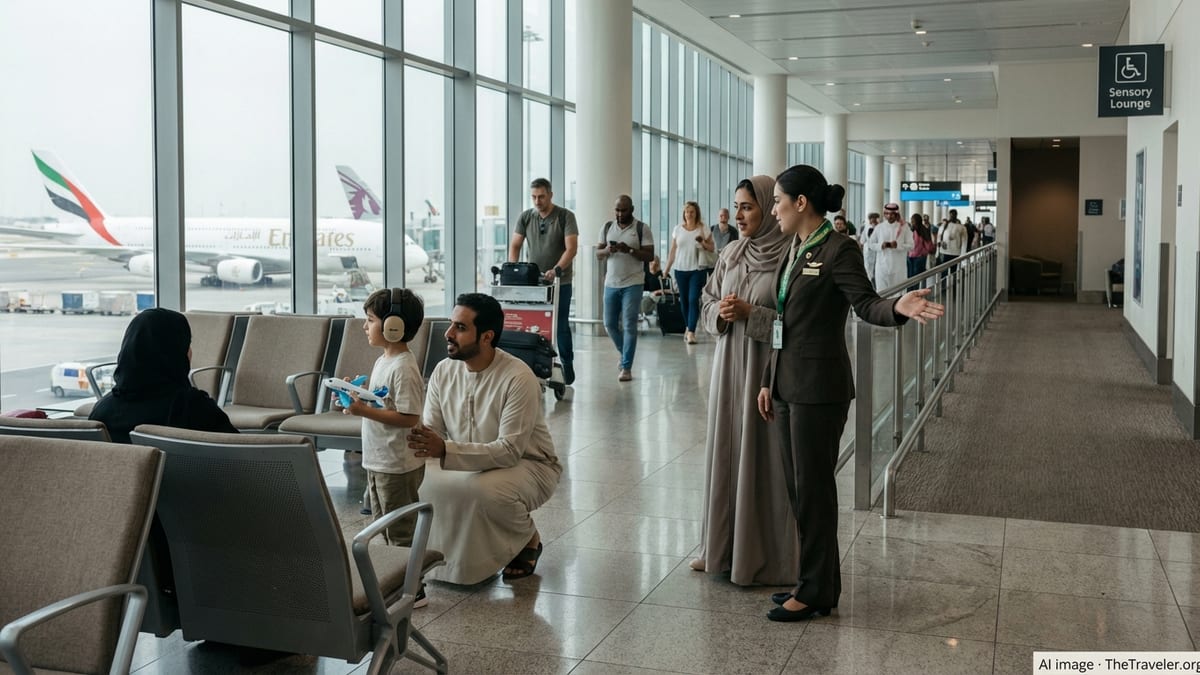
Reports on regional trends indicate that families of autistic children or those with intellectual disabilities often face barriers ranging from airport processes and unfamiliar public transport to crowded attractions without quiet areas. Programs such as autism-friendly hotel pilots and structured staff training may make it easier for these travelers to consider stopovers or longer stays in Doha.
Qatar Museums’ alignment with global responsible and accessible tourism standards, combined with efforts by local entities to adjust exhibitions and programming, also contributes to this positioning. New leisure and cultural sites in Doha often incorporate accessibility features at the design stage, influenced by research on universal design and sensory-friendly environments.
While the market segment remains relatively niche in absolute numbers, industry commentators point out that word-of-mouth within disability communities can be decisive. Destinations perceived as understanding neurodiversity and offering trustworthy services are more likely to attract repeat visitors and extended family groups.
Next Steps for Families Considering Doha
The latest developments suggest that families planning travel to Qatar will see a growing range of options that take disability into account, from airport assistance and accessible transport to specialized therapies available during longer stays. Family Hope Center’s new credentials provide an additional reassurance point for those who want to know that internationally benchmarked support exists within the city.
Travel planners advise that, as with any destination, families should check current information on accessibility features at individual hotels, attractions and medical providers before booking. Many services in Doha encourage advance contact so that staff can prepare accommodations such as reduced waiting times, quieter check-in processes or adjusted activity schedules.
Observers also highlight the role of large-scale events and festivals in testing and showcasing inclusive tourism practices. Recent cultural fairs and book events have partnered with accessibility organizations to introduce assistive technologies, quiet zones and adapted programming, practices that can later be replicated in mainstream tourism offerings.
For Qatar, the convergence of specialized designations at centers like Family Hope, long-term national autism planning and a tourism sector that is beginning to prioritize inclusion signals a new phase. Inclusive family tourism is moving from pilot projects and awareness campaigns toward a more structured, credentialed framework that could reshape how Doha is perceived by travelers with disability-related needs.