


Most first‑time visitors to Nice agonize over Old Town or the Port, hilltop views or hidden beaches, and in the process they often glide right past Carré d’Or, assuming it is only for shoppers and hotel loyalists. That is a mistake. Skipping Carré d’Or can mean missing the city’s most stylish, quietly glamorous district, where Belle Époque facades frame café terraces, luxury boutiques line pedestrian lanes, and the Promenade des Anglais is only a few steps away. For travelers who care as much about atmosphere as about sightseeing, Carré d’Or is one of Nice’s essential experiences.
Get the latest updates straight to your inbox!
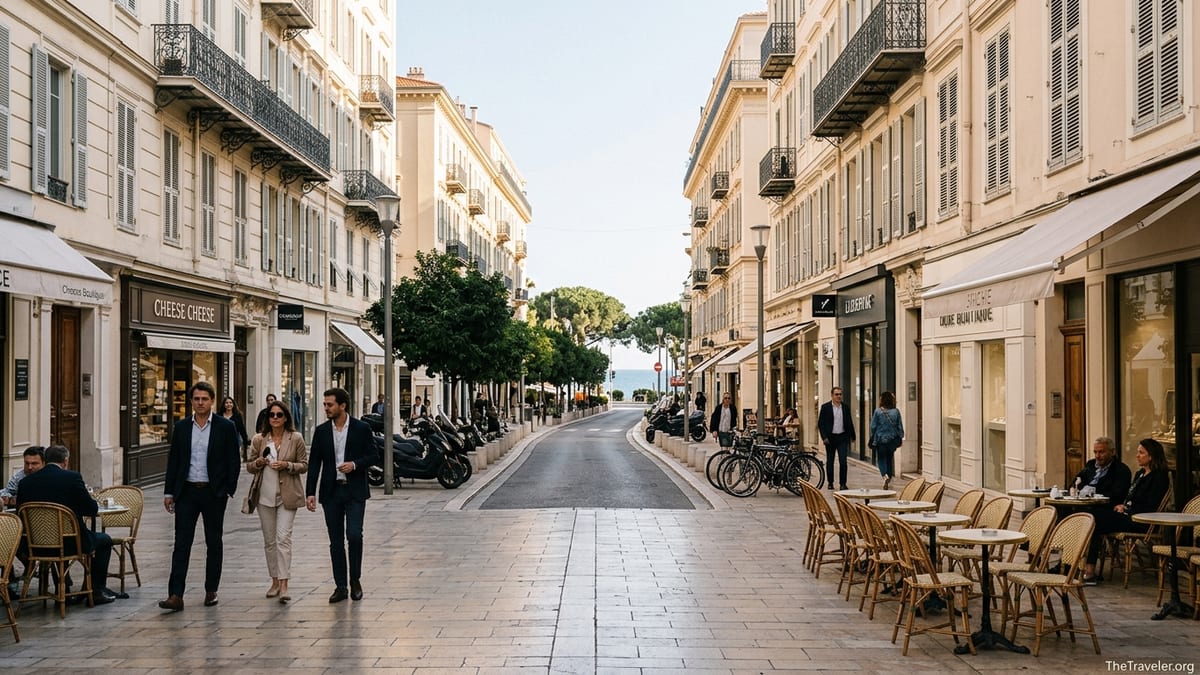
Understanding Nice’s Carré d’Or: The Golden Square of Style
In Nice, the Carré d’Or is not a single sight but a compact grid of streets that concentrate the city’s polished, urban charm. Locals and real estate agents describe it as the chic heart of town, wedged between the Promenade des Anglais and boulevard Victor Hugo, and bordered by avenues like Jean Médecin and the Musicians quarter. Within this relatively small area, you move from busy tram lines to hushed, tree‑lined boulevards and on to sea views in a matter of minutes. That mix of residential calm and big‑city energy is what defines the neighborhood.
Walk along boulevard Victor Hugo and you see why the area is so coveted: grand apartment buildings with wrought‑iron balconies, carved stone details and high ceilings, a legacy of Nice’s Belle Époque building boom. Closer to the sea, streets such as rue de France and nearby lanes are more overtly commercial, full of terraces, ice‑cream counters and stylish crowds moving between the beach and the shops. Unlike the medieval tangle of Old Nice, Carré d’Or feels open and airy, with broad pavements and plenty of light, especially in late afternoon when the façades take on a warm, honeyed glow.
Because the district is both central and self‑contained, it functions as an easy base for visitors. From a hotel or apartment near rue de la Liberté or rue du Congrès, you can stroll to Place Masséna in a few minutes, reach the tram for the airport or the main station without changing lines, and still step away from the busiest squares when you want a quieter evening. For many regular visitors, that combination of elegance, walkability and practical convenience makes Carré d’Or their default choice in Nice.
Shopping in Carré d’Or: From Luxury Houses to Independent Gems
Carré d’Or is where Nice concentrates much of its upmarket shopping. The local tourism office highlights the neighborhood’s role in luxury retail, noting that its streets hold some of the city center’s most refined boutiques and jewelers. You will find familiar international names along avenues leading down to the Promenade des Anglais and near the flagship department store by Place Masséna, where window displays change with Paris‑level ambition. Prices in these boutiques can be comparable to Paris or Milan, so treat them as a chance to browse Riviera fashion rather than a bargain hunt.
The district is not only about global brands. Independent shops are part of the pleasure of wandering here. A jewelry shop like Anagram Bijoux, which has been operating in the neighborhood for years, mixes French designers with more accessible pieces, so you can pick up a delicate necklace for roughly the price of a mid‑range dinner for two. On nearby streets, you will see small concept stores selling linen resort wear, straw beach bags and espadrilles that look at home on the Promenade. Many of these boutiques keep generous opening hours in high season, often until early evening, which makes Carré d’Or ideal for a post‑beach stroll.
Food‑focused travelers can turn shopping into a gastronomic tour. An artisanal cheese shop like Fromagerie du Carré d’Or on rue de France stocks regional cheeses from the Alps and Provence alongside aged Comté and other French classics, and staff are typically happy to assemble a tasting selection for around the cost of a modest lunch. Pick up a baguette and some fruit from nearby stores and you have an impromptu picnic for the pebbled beach. This everyday luxury, more than the high‑end flagships, is what often makes visitors fall for the neighborhood.
Café Culture, Dining and Nightlife: Elegant but Unpretentious
If Old Nice has the boisterous bar scene, Carré d’Or offers a more polished version of Riviera sociability. Pavement cafés cluster along the pedestrian zone near Place Masséna and down rue de France, with wicker chairs turned toward the flow of passers‑by. Prices are higher than in back‑street neighborhoods, but not dramatically so: a morning espresso might cost a little more than in a residential suburb, and an afternoon glass of local rosé on a sunny terrace is still a relatively gentle indulgence compared with many other European resort cities.
The dining scene reflects the area’s mixed audience of well‑heeled locals, hotel guests and visitors from across the Côte d’Azur. Within a 10‑minute walk you can move from classic Niçoise bistros serving socca, stuffed vegetables and pan bagnat, to brasseries that stay open late, to contemporary Mediterranean restaurants that lean into seafood and seasonal produce. Travelers on forums often mention stumbling upon neighborly restaurants in side streets just off the main drag, where lunch menus are priced competitively for the area, especially at midday during the week.
At night, Carré d’Or is lively without feeling rowdy. Many visitors choose it precisely because it is calmer than Old Nice after midnight, yet within easy walking distance of more intense nightlife if they want it. Wine bars and hotel lounges along the Promenade serve cocktails in smart but relaxed surroundings, sometimes with live music in high season. The area is popular with couples in their late twenties and thirties who want to be out late but still sleep with their windows open without constant street noise.
Architecture, Seafront Glamour and Everyday Strolls
Architecturally, Carré d’Or is one of the best places in Nice to appreciate the city beyond its famous seafront postcards. Boulevard Victor Hugo and surrounding streets are lined with Belle Époque and early 20th‑century buildings that give the neighborhood its refined character. Many residential blocks feature carved stone balconies, elaborate cornices and entrance halls with marble floors and vintage lift cages. Real‑estate agencies market apartments here as some of the city’s most desirable, underlining how strongly the built environment shapes the district’s identity.
A short walk south brings you to the Promenade des Anglais, where Carré d’Or touches Nice’s most iconic landscape: the curve of the Baie des Anges, beach clubs with striped parasols, cyclists and joggers sliding past palms. Several of the city’s grand hotels sit either within or just at the edge of the district, creating a backdrop of domes and colonnades. Even if you are not staying in one of these properties, the hotel bars and terraces are often open to non‑guests, letting you enjoy the atmosphere with a single drink or afternoon tea instead of a multi‑night bill.
One of the underrated pleasures of staying near Carré d’Or is simply walking. In the morning, streets around Jardin Alsace‑Lorraine feel almost village‑like, with parents on school runs and residents queuing at bakeries. By late afternoon, people head toward the sea, and the light over the water reflects off windows and pale façades, making even a quick supermarket run feel cinematic. On market days, you can easily combine an amble through Carré d’Or with a foray into the Cours Saleya flower and produce market in Old Nice, then retreat to the quieter, wider streets of your own neighborhood.
Staying in Carré d’Or: Hotels, Apartments and Who It Suits
Accommodation in Carré d’Or skews higher‑end than in some other parts of Nice, but it is not exclusively luxury. You will find grand seafront properties with room rates to match their views, alongside mid‑range hotels on streets like rue Massenet, rue du Congrès or avenue de Suède, plus a growing stock of serviced apartments tucked into residential buildings. During busy periods such as Carnival in February or high summer, travelers report that mid‑range hotels in this area often fill quickly, while apartments near Jardin Alsace‑Lorraine appeal to visitors seeking a slightly quieter base still within the district’s orbit.
The neighborhood suits different traveler profiles for different reasons. Couples and solo visitors often appreciate being able to walk to both the beach and the historic center, without committing to the late‑night energy of Old Nice. Families like the relatively flat, stroller‑friendly streets, easy access to playgrounds and public gardens, and the fact that essential services like supermarkets, pharmacies and bakeries are scattered throughout the area rather than concentrated in one tourist strip. Longer‑term visitors and students sometimes prefer slightly more residential districts for price reasons, but many still single out Carré d’Or for its beautiful buildings and safe, central feel when budget allows.
Price levels vary with season and how close you are to the sea. A simple room in a well‑reviewed three‑star hotel a few blocks back from the Promenade may cost markedly less than a sea‑view room in a historic palace hotel, even though both are technically in or on the edge of Carré d’Or. Apartments with balconies overlooking boulevard Victor Hugo or quiet cross streets command a premium, largely because they combine urban elegance with a short walk to the sand. Booking early and being flexible about exact streets can make the area more accessible than many first imagine.
Location, Transport and Practical Advantages
Beyond aesthetics, Carré d’Or works exceptionally well on a practical level, which is one reason locals speak of it as a strategic address. The neighborhood is close to key tram lines linking Nice Côte d’Azur Airport with the city center and the main train station, so you can often get from arrivals to your accommodation in around half an hour without changing lines. For travelers planning day trips to Cannes, Antibes, Monaco or the hill villages, being able to reach Nice‑Ville station on foot or via a short tram ride is a real advantage.
Everyday errands are straightforward in Carré d’Or. Small supermarkets, bakeries, pharmacies and banks are dotted throughout the quarter, and you rarely need to walk more than a few minutes for basics. This matters if you are staying in an apartment and preparing some meals at home, or if you are traveling with children and need snacks and supplies without a long detour. Because the area has a strong residential component, many services keep year‑round hours rather than closing outside the main tourist season.
Safety is another element visitors frequently mention when comparing Carré d’Or with other districts. While no city neighborhood is entirely without risk, this part of Nice is generally perceived as secure and well lit, with a steady flow of people in the streets well into the evening. For solo travelers or those returning from late dinners, that can make a tangible difference to how relaxed a trip feels. Combined with the area’s central position between the sea, Old Town and the modern shopping spine of avenue Jean Médecin, it adds up to a district that is as functional as it is fashionable.
The Takeaway
Nice offers many faces: the pastel maze of the Old Town, the working quays and trendy restaurants of the Port, the market bustle of Libération, the hilltop calm of Cimiez. It is tempting, especially on a short visit, to focus on the most photogenic postcards and ignore what looks at first like a polished, commercial core. Yet Carré d’Or is precisely where the city’s contemporary, lived‑in elegance comes into focus. Its mix of Belle Époque architecture, refined shopping, outdoor café life and close relationship with the sea gives it a personality that complements rather than duplicates the rest of Nice.
Skipping Carré d’Or means missing one of the Riviera’s most atmospheric strolls, several of its easiest and most pleasant bases for exploring, and an everyday version of luxury that is more about light on stone façades and a good coffee on a sunny terrace than about exclusive price tags. Whether you choose to stay there or simply devote an afternoon to wandering its streets, building Carré d’Or into your Nice itinerary is less a splurge than a way to understand how this Mediterranean city sees itself at its most stylish.
FAQ
Q1. Where exactly is Carré d’Or in Nice? Carré d’Or is the central upscale district between the Promenade des Anglais and boulevard Victor Hugo, bounded by avenues like Jean Médecin and the Musicians quarter.
Q2. Is Carré d’Or a good area to stay for first‑time visitors? Yes. It is central, walkable, close to the beach and Old Town, well connected by tram and generally quieter at night than the historic center.
Q3. Is Carré d’Or only for luxury travelers? No. While there are luxury hotels and boutiques, the area also has mid‑range hotels, apartments, casual cafés and everyday shops that suit a range of budgets.
Q4. How far is Carré d’Or from the beach? From most streets in Carré d’Or it is roughly a 5 to 10 minute walk to the pebbled beaches and promenade, depending on how close you are to the seafront.
Q5. What kind of shopping can I expect in Carré d’Or? You will find a mix of international fashion brands, local designer boutiques, jewelers, department‑store shopping and specialty food shops such as cheese and wine stores.
Q6. Is Carré d’Or safe at night? Carré d’Or is widely regarded as one of Nice’s safer central districts, with well‑lit streets, residential buildings and a steady flow of people into the evening.
Q7. How do I get to Carré d’Or from Nice Airport? You can take the tram from the airport toward the city center and get off near stops serving avenue Jean Médecin or the Promenade, then walk a few minutes into the neighborhood.
Q8. Does Carré d’Or have nightlife? Yes, but it is more about wine bars, hotel lounges and lively cafés than late‑night clubs, making it appealing for travelers seeking a stylish yet relaxed evening scene.
Q9. Is Carré d’Or suitable for families with children? It can work very well for families, thanks to flat streets for strollers, nearby parks and playgrounds, easy access to the beach and plenty of everyday services.
Q10. How many days should I spend exploring Carré d’Or? You can get a feel for the neighborhood in half a day, but staying there for two or three nights lets you experience its café culture, seafront walks and central convenience fully.