


More news on this day
Severe disruption on routes out of London Waterloo has left thousands of commuters scrambling for alternative transport, with many turning to taxis after South Western Railway authorised long-distance cab journeys and pledged to reimburse fares for those unable to travel by train.
Get the latest news straight to your inbox!
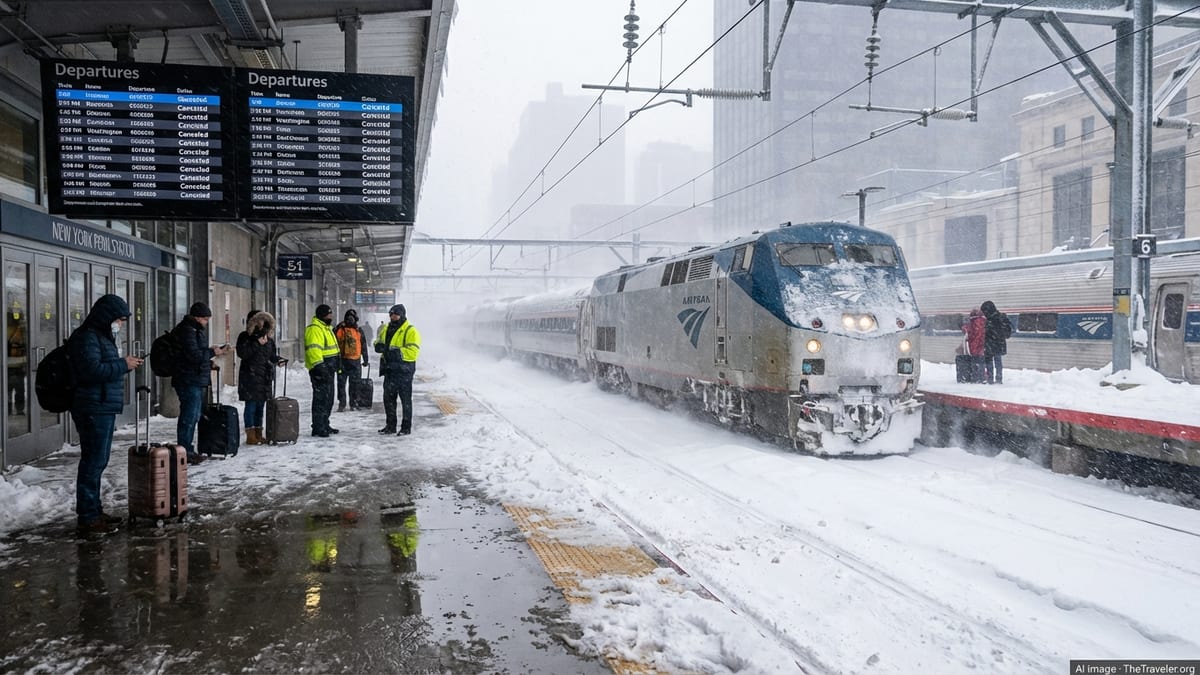
Police incident triggers major disruption from London Waterloo
Publicly available information shows that the disruption began during the evening peak on Thursday 22 October 2026, when a police incident between Woking and Brookwood in Surrey brought all lines to a halt on one of the busiest stretches of the South Western Railway network serving London Waterloo. Services towards key commuter destinations including Woking, Guildford, Basingstoke and Salisbury were suspended for several hours while the line remained closed.
National Rail’s live disruption pages recorded severe delays and cancellations across the South Western network, with departures from Waterloo heavily curtailed and some services terminating short of their planned destinations. The knock-on impact extended into the late evening, leaving many passengers facing journeys that took several hours longer than scheduled or, in some cases, no remaining trains to complete their trips.
Reports from passengers and local media indicate that platforms and concourse areas at Waterloo became increasingly crowded as trains were shown as delayed, altered or cancelled. With the incident unfolding at the height of the rush hour, the scale of the disruption meant rail replacement buses were unable to meet demand, and alternative rail routes quickly became congested.
Although the incident near Woking was ultimately brought to a safe conclusion shortly before the early hours of Friday, the effects on timetables continued into the following day. Journey planners on National Rail and South Western Railway continued to flag potential delays and late notice cancellations, and ticket easements were introduced to allow affected passengers to travel on later services over the weekend.
Taxi offer extends up to 170 miles from the capital
In an unusual step that has attracted widespread attention, South Western Railway confirmed through customer information channels that passengers caught up in Thursday’s disruption were authorised to book their own taxis home and claim the cost back. According to published coverage, the operator stated that customers could arrange cabs between London Waterloo and a wide range of destinations on its network.
The list of eligible routes included Woking, Guildford, Alton, Basingstoke, Salisbury, Southampton Central, Bournemouth, Exeter St Davids and Weymouth, effectively covering much of the main line and several long-distance branches. For some travellers, the authorised journey length approached 170 miles, with routes such as London Waterloo to Exeter St Davids highlighted in media reports as examples of how far the taxi reimbursement scheme could stretch.
While train companies routinely arrange taxis for small numbers of passengers during incidents, reports indicate that the scale of South Western Railway’s offer was highly unusual on a busy commuter corridor into and out of London. The combination of a complete line closure, late evening timing and limited replacement capacity meant that thousands of people were potentially eligible to use a taxi as their only realistic means of getting home.
Travel commentators note that the costs associated with such a wide-ranging taxi authorisation are likely to be substantial, particularly on popular routes from Waterloo to major towns across Surrey, Hampshire and Dorset. However, the move also reflects the growing expectation that rail operators provide practical solutions where severe disruption leaves passengers stranded far from home late at night.
How stranded passengers can claim taxi costs and compensation
Guidance shared by South Western Railway and summarised in local coverage sets out the information passengers must provide to reclaim taxi fares incurred during the Waterloo disruption. Customers are advised to submit full contact details, the date and time of travel, the stations they were booked to travel between and a description of the events that prevented them from completing their journey by train.
Copies of both the original train ticket and the taxi receipt are required as part of the claim. The operator’s standard advice also points passengers towards online claim forms, which are used to process both refunds for unused tickets and additional compensation where journey times have been significantly extended. In this case, the taxi reimbursement is treated separately from the usual Delay Repay scheme, which normally compensates travellers based on the length of their delay rather than the cost of alternative transport.
National Rail’s disruption guidance confirms that, during major incidents, train operators may provide or authorise alternative transport where no reasonable rail or bus options remain. However, published information notes that passengers are generally expected to seek agreement before booking their own taxis, and reimbursement is not automatic unless an operator has explicitly allowed self-booked cabs, as South Western Railway did during the Waterloo incident.
Consumer advice sources recommend that travellers keep detailed records when disruption occurs, including screenshots of cancellations on departure boards, confirmation of any ticket easements and clear, itemised taxi receipts. Where a train company has publicised an offer to cover cab fares, these documents can help speed up claims and reduce the likelihood of disputes over eligibility.
London’s taxi network under pressure as demand spikes
The sudden shift from rail to road placed additional pressure on London’s taxi and private hire network, particularly around Waterloo station and key interchange hubs. Accounts shared via social media platforms described long queues at taxi ranks and difficulty securing app-based rides as demand surged following the line closure.
Transport for London’s most recent reports on taxi activity highlight the importance of major rail termini such as Waterloo, Victoria and Paddington as focal points for cab demand. When large numbers of passengers are forced to abandon train plans simultaneously, these locations can see rapid spikes in requests for black cabs and private hire vehicles, leading to longer waiting times and higher quoted prices for some journeys.
Although exact fare levels on the night of the disruption vary by route and provider, typical licensed taxi tariffs from central London to outer commuter towns can run into three figures, particularly for journeys extending well beyond the Greater London boundary. For groups of stranded commuters sharing vehicles, the per-person cost may be reduced, but the overall outlay still represents a significant unexpected expense for many households.
Observers note that the Waterloo incident illustrates how closely integrated London’s transport modes have become. When rail services fail, road networks, taxis and ride-hailing services must absorb the displaced demand, with knock-on effects on congestion and journey times for other road users across the city.
What the disruption means for rail reliability and passenger rights
The chaos at London Waterloo arrives against a wider backdrop of concern over rail reliability across Britain. Recent disruption reports from National Rail show repeated periods of severe delays on multiple intercity and commuter routes, often linked to a combination of infrastructure faults, extreme weather and incidents requiring emergency services involvement.
Industry research published in 2025 and 2026 points to persistent passenger frustration over last-minute cancellations and extended delays, even as wider reforms such as the creation of Great British Railways are discussed at national level. Survey data cited in those reports indicates that confidence in the network’s ability to handle disruption effectively remains fragile, particularly among regular commuters who depend on evening peak services to return home.
The Waterloo episode has therefore renewed attention on what travellers are entitled to when things go wrong. National conditions of travel state that where a service is cancelled, delayed or rescheduled, passengers may be able to claim a full or partial refund, travel on alternative services or, in some circumstances, use other operators without additional cost. In more severe cases, operators may arrange hotel accommodation or taxis if passengers are left without any viable route home late at night.
For now, the immediate focus for many affected by the Waterloo shutdown is on recovering out-of-pocket costs and rethinking how they plan future journeys. Travel advisers suggest that commuters regularly check live updates from National Rail and their train operator before setting out, build extra time into evening trips where possible and familiarise themselves with compensation rules, including when taxi expenses can be reclaimed. While such steps cannot prevent disruption, they can help travellers respond more quickly when rail chaos leaves them looking for a cab instead of a train.