


More news on this day
Severe disruption on routes out of London Waterloo on Thursday 22 October 2026 left thousands of evening peak rail passengers stranded, with many turning to taxis after services towards Surrey and the south coast were halted following a police incident near Woking.
Get the latest news straight to your inbox!
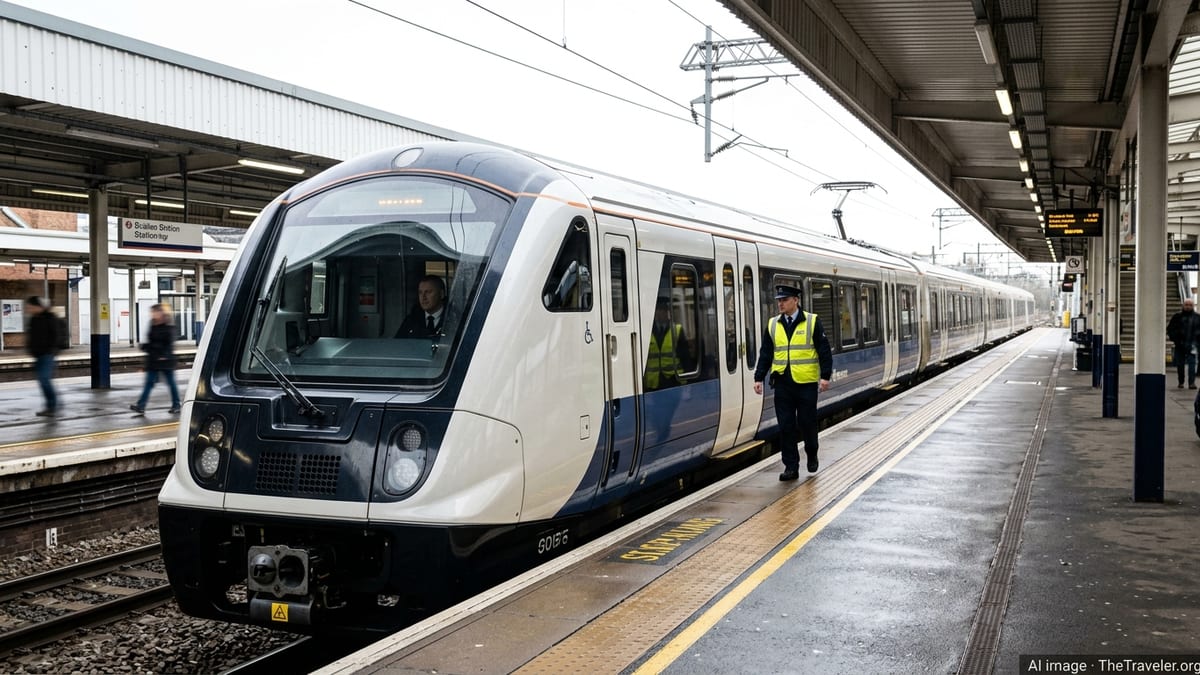
Rush-hour shutdown leaves Waterloo concourse gridlocked
According to published disruption summaries and operator journey updates, services on one of South Western Railway’s busiest stretches between Woking and Brookwood were brought to a standstill during the evening peak after a police incident on the line. The interruption hit trains serving large commuter towns including Guildford, Basingstoke and Woking, as well as long-distance services towards Salisbury, Exeter and Weymouth.
Coverage from London-focused news outlets indicates that departure boards at London Waterloo quickly filled with cancellations and severe delays, creating dense crowds across the concourse as passengers waited for updates or looked for alternative routes. Photos and eyewitness accounts shared publicly showed long queues at information points and ticket gates as disruption stretched on into the late evening.
National rail status pages later recorded that all lines eventually reopened in the early hours of Friday 23 October, after several hours of rolling disruption through the evening and into the night. By that point, however, many travellers with evening commitments or long onward journeys faced difficult choices about how to continue their trips home.
Publicly available material from passenger advocacy bodies notes that the South Western route from Waterloo is among the country’s most heavily used commuter corridors, meaning incidents during the evening peak can have an immediate and widespread impact on both regular commuters and longer-distance leisure travellers.
Taxi authorisation stretches as far as Exeter
As trains remained suspended or heavily delayed, South Western Railway published guidance stating that affected customers could book taxis to complete their journeys from London Waterloo and claim reimbursement. According to widely shared extracts of that messaging, passengers were told that alternative travel could be arranged to destinations including Woking, Guildford, Alton, Basingstoke, Salisbury, Southampton Central, Bournemouth, Exeter St Davids and Weymouth.
Coverage on consumer travel and general news sites highlighted that authorising taxi travel as far as Exeter meant some journeys of around 170 miles by road. Passengers posting on social media described being advised to retain receipts in order to claim costs back under the operator’s disruption and compensation policies, rather than being provided with taxis directly at the station.
In addition to taxi authorisation, reports indicate that replacement buses were arranged from key hubs on the affected route, including Woking, to help move passengers towards the south and west once limited services began running again. Even so, some travellers reported arriving home several hours later than scheduled after complex re-routings via other London termini and connecting services.
The scale of the taxi offer stood out among recent rail disruption events, where operators more commonly direct passengers to rail replacement buses or alternative train operators. Travel commentators suggested that the decision underlined the severity of the interruption on one of the capital’s core commuter arteries.
Rules on refunds, taxis and onward travel
Under National Rail Conditions of Travel, when disruption prevents passengers from completing a journey, train companies are expected to provide a reasonable alternative, which can include other train services, buses or taxis, or overnight accommodation. Guidance summarised on several consumer advice platforms notes that if the last feasible train is cancelled or if travellers are stranded away from home, operators may arrange and pay for taxis directly or reimburse pre-agreed costs.
According to published information from South Western Railway, passengers delayed by more than 15 minutes are entitled to Delay Repay compensation, with higher payments for delays over 30, 60 and 120 minutes. The taxi authorisation on the evening of 22 October was presented as an additional measure to ensure that customers could complete their trips, alongside the usual delay compensation rules.
In practice, publicly available case studies from passenger watchdogs and accessibility groups suggest that the process can vary significantly depending on staff availability and how busy a station is at the time of disruption. Travellers are often advised to seek written confirmation from station or train staff before booking their own taxis, or to obtain screenshots of disruption alerts that explicitly authorise alternative road transport.
The recent disruption around Waterloo also intersects with wider changes across Britain’s rail network, including new rules reported in national media that give passengers an automatic right to switch to other operators at no extra cost when trains are cancelled. Advocates argue that these measures, combined with clearer taxi and overnight accommodation policies, are intended to reduce the likelihood of passengers being left stranded late at night.
Knock-on pressures for London’s wider transport network
The sudden loss of evening peak services from Waterloo added pressure to other parts of London’s transport system. Transport updates show that passengers were advised to use London Underground and bus services where possible to reach alternative mainline stations such as Paddington, Victoria or Charing Cross, then attempt to pick up different routes out of the city.
However, network status pages from other operators around the same period reflected their own planned engineering works and weather-related disruption, limiting the options for seamless rerouting. Great Western Railway, for example, had schedule changes on services between London Paddington and Reading due to maintenance and recent storm impacts, while parts of the Tube network were affected by overnight engineering on key central corridors.
Observers noted that this kind of multi-layered disruption can have a compounding effect, with stranded passengers from one mainline station crowding onto already busy Underground services or taxi ranks. With central London hosting large numbers of visitors as well as commuters, extended evening disruption has the potential to affect late-night hospitality, events and airport connections in addition to regular journeys home.
According to transport policy reports, incidents of severe disruption also contribute to broader debates about resilience in the capital’s rail and road networks, particularly as extreme weather and infrastructure failures continue to affect services in and out of London termini.
What the chaos means for future rail travel
Recent assessments commissioned by the Office of Rail and Road and passenger watchdogs point to a continuing gap between passenger expectations and the reality of large-scale disruption, especially when it comes to information, crowd management and alternative transport such as taxis. Stranded travellers repeatedly highlight clear communication and proactive offers of help as the most important factors in how they rate their experience.
Specialist reports on stranded trains and major line closures show that where operators quickly arrange taxis or hotels for those who miss their last connection, overall satisfaction is significantly higher, even if journeys end up taking much longer than planned. Conversely, when passengers feel they must fight for basic assistance or pay for expensive taxis without clear reassurance on reimbursement, trust in the rail network erodes.
Analysts suggest that the Waterloo disruption will likely be examined alongside other recent high-profile incidents when regulators and industry bodies assess how operators handle stranded passengers. The unusually extensive offer of reimbursed taxis over long distances may be viewed as an example of good practice in ensuring travellers are not left without options, but also raises questions about consistency across different routes and companies.
For travellers planning journeys into and out of London over the coming months, consumer advisers recommend checking live updates from train operators on the day of travel, understanding Delay Repay entitlements and keeping records of any written permissions to use taxis or alternative transport when services are heavily disrupted.