


More news on this day
Evening rush hour on one of London’s busiest commuter corridors descended into chaos this week, as severe disruption on South Western Railway services from Waterloo left thousands of passengers stranded and prompted an unusual operator offer: book a taxi home and claim the fare back.
Get the latest news straight to your inbox!
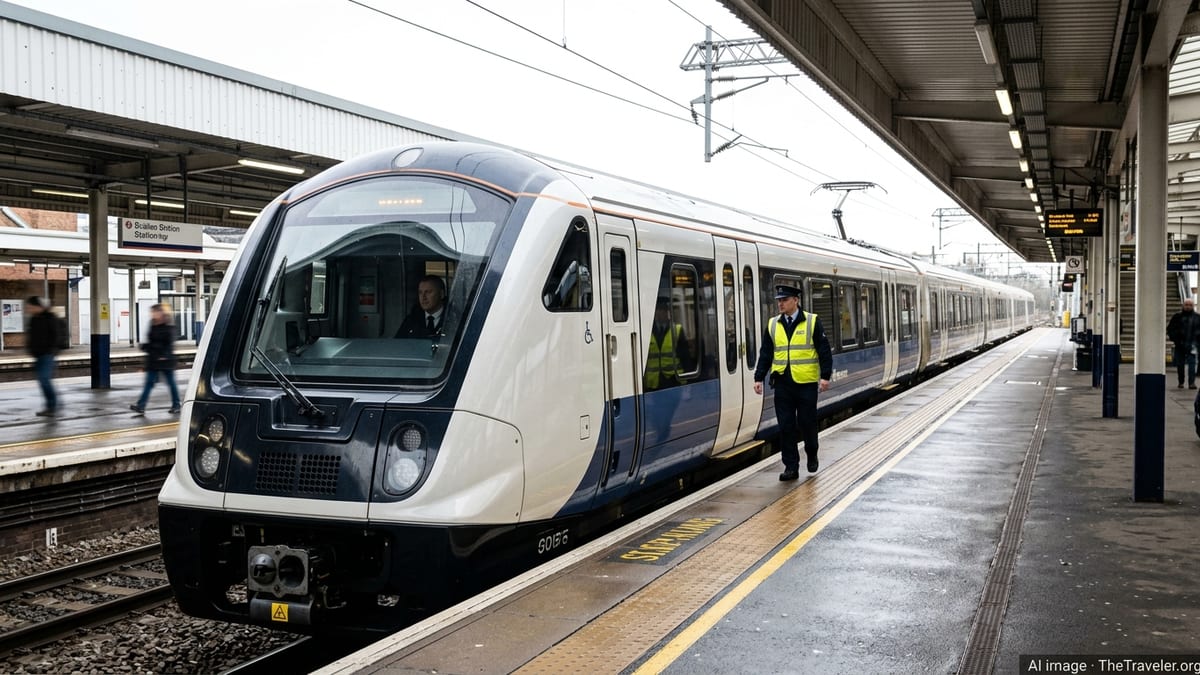
Police incident halts trains on key Surrey corridor
Publicly available information shows that the disruption began during the Thursday 22 October evening peak, when a police incident between Woking and Brookwood in Surrey brought all lines to a standstill on one of the main routes linking London Waterloo with the south and south west of England. Coverage in London-based outlets describes trains being held outside stations for extended periods while platforms at Waterloo and key interchange points rapidly filled with commuters trying to get home.
According to reports on the incident, services towards Woking, Guildford, Basingstoke, Salisbury, Southampton, Bournemouth and Exeter were either cancelled outright or subject to long delays as rail staff waited for the scene to be declared safe and for Network Rail to reopen the affected tracks. National disruption alerts indicated that knock-on delays would continue late into the evening, leaving many passengers facing the prospect of missing the last viable train home.
In parallel, the wider network was already under pressure from bad weather associated with Storm Austen, which had triggered disruption on Southern, Thameslink and Gatwick Express routes on the same day. Live service updates from multiple operators highlighted speed restrictions, short-notice cancellations and overcrowding across parts of the south east, reducing the scope for rerouting stranded South Western Railway passengers via alternative London termini.
The combination of a localised incident on a critical section of track and broader weather-related problems elsewhere left little spare capacity for replacement trains, setting the stage for an unusually sweeping recourse to taxis as an emergency measure.
South Western Railway authorises long-distance taxi bookings
In messages shared on social media and reported by UK news outlets, South Western Railway advised ticket holders that they were authorised to book taxis at their own expense for journeys between London Waterloo and a series of major destinations, to be reclaimed later through the operator’s customer relations channels. The list included Woking, Guildford, Alton, Basingstoke, Salisbury, Southampton Central, Bournemouth, Exeter St Davids and Weymouth, effectively covering much of the operator’s long-distance network.
Coverage indicates that passengers were told they could claim for journeys of up to around 170 miles, the approximate distance between London and Exeter, a scale that has drawn particular attention among regular rail users. While train operators do sometimes arrange taxis during disruption, inviting large numbers of commuters to secure their own long-distance cabs and seek reimbursement is regarded as highly unusual on such a heavily trafficked commuter route.
Reports indicate that those seeking to recover costs will need to provide copies of both their rail ticket and their taxi receipt when submitting claims. South Western Railway’s standard guidance normally channels passengers towards Delay Repay compensation for late-running services, but in this case the taxi reimbursement sits alongside that framework, creating an additional layer of claims for both travellers and the operator to manage in the weeks ahead.
Replacement buses were also arranged on parts of the route, with publicly available information showing services departing from Woking later in the evening. However, the volume of displaced passengers and the relatively limited capacity of road coaches meant that taxis were often the only practical way for some commuters to reach smaller towns and rural stations away from the mainline.
Commuters weigh up costs, rights and alternatives
The events have renewed focus on what rights rail passengers have when severe disruption strikes late in the day. Office of Rail and Road guidance explains that when a train is cancelled or significantly delayed, operators are expected to help travellers complete their journeys, including by rerouting them on other services or, in some circumstances, arranging alternative transport such as taxis or overnight accommodation. However, the extent of that support and how it is implemented can vary between operators and situations.
Recent Department for Transport research into rail delays and compensation highlights that many passengers remain unclear about what they can reasonably request during serious disruption, and a significant proportion never claim money back even when eligible. The South Western Railway taxi offer, widely reported and shared online, has therefore been seen by some commentators as a rare, highly visible example of an operator leaning into its obligations during an exceptional evening of disruption.
At the same time, the incident underscores the financial calculations individual commuters must make in real time. Booking a taxi from central London to destinations such as Basingstoke or Southampton can easily run to three-figure sums, particularly at peak evening times or in poor weather. While reports indicate that South Western Railway has committed to reimbursing reasonable costs for affected journeys, some passengers have expressed concern about the upfront expense and the time it may take to process claims.
Travel discussion forums also point to a growing tendency among regular rail users to maintain backup options where possible, whether that means alternative rail routes via different operators, strategic use of coach services or simply working from home when severe weather or major engineering work is forecast. For those whose commute depends on a single mainline, however, Thursday’s events offered a stark reminder of how vulnerable their journeys can be to isolated incidents.
Storm Austen amplifies pressure on the wider rail network
The timing of the South Western Railway disruption has drawn added scrutiny because it coincided with the impact of Storm Austen on the wider rail network. Service updates from operators including Southern, Thameslink and Gatwick Express indicated speed restrictions, reduced timetables and short-notice alterations across parts of the south east, as strong winds and heavy rain affected infrastructure and triggered precautionary measures.
National Rail advisory pages for the period around the storm highlighted yellow weather warnings and urged passengers to check live journey planners before travelling, warning that average journey times could be significantly longer than normal. In some cases, tickets were being accepted on alternative routes to give passengers more flexibility, but capacity constraints limited the ability to absorb large numbers of additional travellers when disruption occurred elsewhere.
For passengers at London Waterloo on Thursday evening, this translated into fewer obvious fallback options. Routes that might otherwise have provided relief, such as services via London Victoria or London Bridge, were themselves under strain from weather-related timetable changes. According to publicly available information from service monitoring sites, extended delays were being recorded across multiple operators at the height of the storm’s impact.
Transport analysts note that incidents like the one between Woking and Brookwood can therefore have disproportionate effects when they coincide with wider network stress. With railway operations in much of southern England now tightly interlinked through shared infrastructure and rolling stock diagrams, a localised stoppage can quickly cascade into missed connections and overcrowded stations dozens of miles away.
Calls grow for clearer communication and more resilient planning
While the offer of reimbursed taxis has been broadly welcomed by many of those caught up in the disruption, the episode has also prompted renewed debate about how rail operators communicate in fast-moving situations and how prepared they are for major evening-peak incidents. Some passengers posting on social media described confusion over whether they were authorised to book a cab, how far they were allowed to travel, and which email address or web form they should use to submit receipts.
Passenger advocacy groups have long argued for clearer, simpler messaging when serious disruption occurs, including prominent announcements about rights to rerouting, refunds and compensation. The South Western Railway incident is likely to feature in upcoming discussions about best practice, particularly given the scale of the taxi offer and the number of commuters affected on key Surrey and Hampshire routes.
At policy level, the disruption feeds into wider conversations about rail reliability and resilience around London. Government documents and parliamentary material over recent years have pointed to ongoing challenges with punctuality and infrastructure reliability on busy main lines, even as operators and Network Rail have introduced new timetables, rolling stock and signalling upgrades intended to improve performance.
For now, attention is focused on how swiftly South Western Railway can process the influx of taxi reimbursement claims and whether similar approaches will be adopted during future episodes of severe disruption. For many of the commuters who eventually reached home in the back of a cab, Thursday’s chaos will likely linger as a vivid example of both the fragility of their daily journeys and the value of knowing precisely what help they can expect when the trains stop running.