


More news on this day
Raleigh-Durham International Airport in North Carolina has reopened to arriving and departing flights after a collision between a corporate jet and a box truck on a taxiway prompted a brief shutdown on Wednesday, disrupting travel at one of the Southeast’s busiest growing hubs.
Get the latest news straight to your inbox!
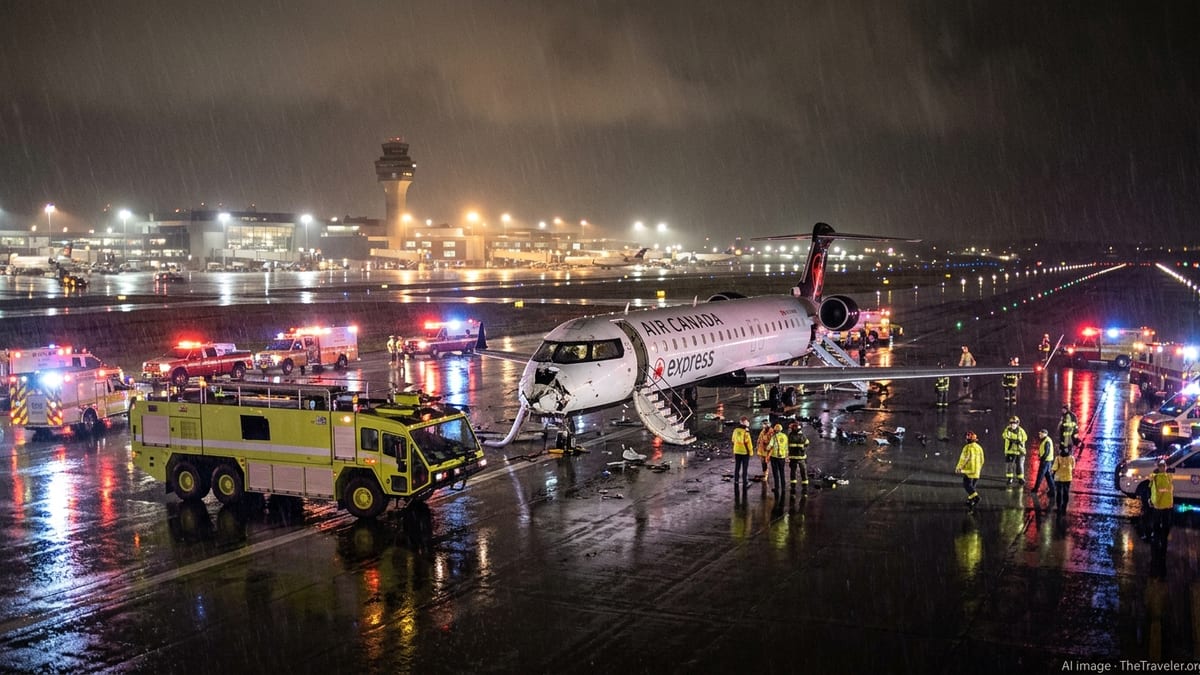
Brief shutdown follows taxiway collision
Publicly available information indicates that the incident occurred Wednesday afternoon on Taxiway C, away from the main passenger terminals but within the active airfield area. A general aviation jet with two people on board made contact with a box truck that was operating on the taxiway, damaging both vehicles and triggering an immediate suspension of movements across the field.
Coverage from regional outlets describes a rapid halt to takeoffs and landings as airport teams assessed the situation and ensured there was no fuel leak or fire risk. Several inbound flights were placed in holding patterns or diverted to nearby airports, while aircraft ready to depart were held at gates or on ramp areas until the all-clear was given.
Reports indicate that there were no injuries to the two occupants of the aircraft or the truck driver. The lack of serious damage to people or infrastructure allowed the airport to pivot quickly from emergency response to recovery, limiting the overall duration of the closure.
According to published coverage, the pause in operations lasted for a relatively short window, but its timing on a busy summer travel afternoon magnified the disruption for passengers and airlines already operating near capacity.
Operations resume as investigators review the crash
After emergency crews secured the scene and inspected the surrounding pavement and lighting, the airfield was cleared to reopen, and flight operations gradually resumed. Tracking data for Raleigh-Durham International shows a return to a normal pattern of departures and arrivals later in the day, indicating that runway capacity was fully restored.
Reports from local media note that both the corporate jet and the box truck sustained visible damage and were removed from the taxiway for further examination. The collision occurred in an area used to move aircraft between runways, terminals, and general aviation facilities, a critical piece of infrastructure that can create bottlenecks when obstructed.
While formal findings have not yet been released, publicly available information from aviation and transportation coverage indicates that the incident is under investigation to determine how the jet and ground vehicle came into conflict on a controlled taxiway. Such inquiries typically consider ground movement procedures, communication between pilots and ground controllers, and the routing of service vehicles around active aircraft movement areas.
Officials have not publicly detailed any anticipated changes to the airport’s operating procedures, but aviation analysts note that even non-injury events on the airfield often lead to reviews of signage, lighting, and vehicle access to reduce the risk of recurrence.
Passenger disruption and knock-on delays
The closure created immediate ripple effects for travelers who were in the middle of their journeys through Raleigh-Durham. Social media posts and regional news coverage described aircraft holding at outstations, diversions to airports such as Greensboro, and passengers kept onboard planes as crews waited for clearance to depart or return.
Once the airfield reopened, airlines faced the familiar challenge of compressing delayed departures and arrivals into the remaining operating window. Flight-tracking boards showed a mix of delays and schedule adjustments as carriers prioritized long-haul routes, tight connections, and aircraft that needed to reposition for later flights in the national network.
For some travelers, the disruption translated into missed connections and unexpected overnight stays, a common outcome when a sudden shutdown interrupts a hub’s tightly timed schedule. Reports from travel forums and local outlets indicate that many flights eventually departed with moderate delays, but some late-day services were canceled as airlines worked to reset operations.
Observers note that the event underscores how even a localized incident on a taxiway can quickly reverberate through a busy airport’s schedule. With traffic at Raleigh-Durham growing in recent years, the brief stoppage offered a test of how quickly the airfield and airlines could recover from an unexpected interruption.
Safety context at a fast-growing Southeast hub
Raleigh-Durham International has expanded rapidly as the Research Triangle region has attracted new residents and businesses. Public statistics show that the airport has set repeated passenger records in recent years, adding new domestic and international routes and increasing the density of peak-hour operations.
Aviation specialists point out that higher traffic levels place additional emphasis on ground safety, particularly in areas where aircraft, service vehicles, and construction equipment may intersect. While commercial aviation remains one of the safest modes of transport, industry reviews have highlighted close calls and ground incidents at busy airports across the United States, prompting renewed attention to runway and taxiway safety systems.
In that context, reports on the Raleigh-Durham collision note that the absence of injuries and the rapid restoration of service align with the industry’s layered approach to safety, which is designed to prevent a localized incident from escalating into a more serious event. Emergency response teams, air traffic control, and airline operations centers each play a role in containing the impact.
Published commentary from aviation observers suggests that the findings from the Raleigh-Durham investigation could contribute to a broader discussion about ground vehicle access, pilot situational awareness on complex taxiway layouts, and the use of technology to alert crews to potential conflicts.
What travelers can expect in the days ahead
With the airfield back in service, the immediate priority for airlines at Raleigh-Durham is to work through the backlog created by the interruption and return schedules to normal. Travelers with flights in the next day or two may still encounter scattered delays as aircraft and crews are repositioned following diversions and late arrivals on Wednesday.
Travel experts recommend that passengers monitor their flight status closely, arrive at the airport with extra time, and be prepared for potential gate or departure-time changes as operations stabilize. Many carriers allow same-day rebooking through their mobile apps or customer service channels when irregular operations persist.
For the broader travel industry, the Raleigh-Durham incident serves as another reminder of the importance of robust ground safety protocols at busy airports, particularly during peak travel seasons. While flying into and out of the Triangle region generally remains reliable, sudden events on the airfield can still reshape a day’s worth of travel plans in minutes.
As investigators continue their work, publicly available information suggests that Raleigh-Durham International is once again functioning at near-normal capacity, with airlines and airport personnel focused on restoring confidence and keeping the region’s critical air gateway running smoothly.