


More news on this day
Air travelers across North America are facing a turbulent start to the week as Ronald Reagan Washington National Airport grapples with more than 300 flight delays, compounding widespread operational strains affecting Delta Air Lines, Southwest Airlines, and regional carrier PSA Airlines.
Get the latest news straight to your inbox!
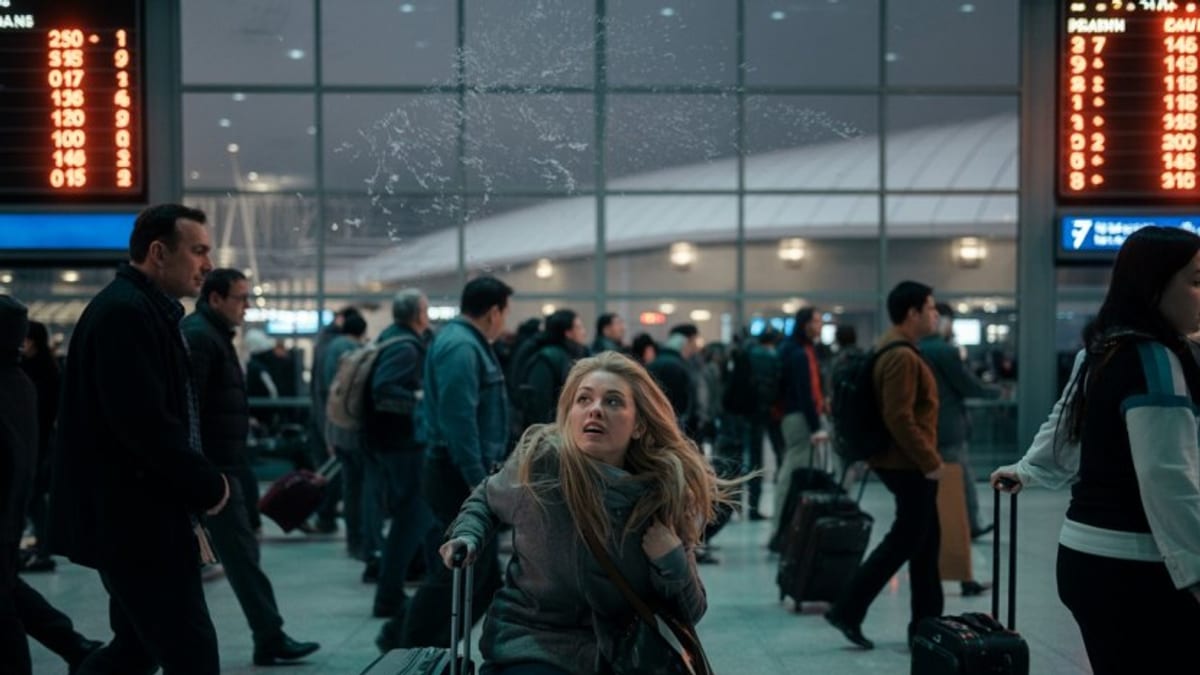
Reagan National Becomes a Flashpoint for Summer Disruptions
Reagan National, one of the busiest airports serving the U.S. capital region, has emerged as a focal point of summer travel stress, with tracking data indicating hundreds of delayed departures and arrivals clustered over a short window. The congestion is colliding with peak seasonal demand, leaving terminals crowded and departure boards dominated by orange and red delay alerts.
Publicly available aviation dashboards show a pattern of rolling delays affecting early morning and late afternoon banked departures, when traffic is heaviest and small disruptions can quickly cascade. Short-haul routes along the East Coast and to major hubs in the Midwest and South appear particularly vulnerable, with aircraft frequently departing outside their scheduled slots and arriving off-peak into already constrained airports.
The airport’s compact layout and strict slot controls, long recognized as operational challenges, are adding to the pressure. When flights miss their departure windows, subsequent rotations can be thrown off schedule for the rest of the day, magnifying the impact well beyond Washington and into secondary and regional markets that depend on Reagan National as a connecting gateway.
Travelers transiting through the capital report encountering long check-in queues, crowded gate areas, and frequent schedule changes posted within hours of departure. Many are being advised through airline apps and text alerts to arrive early, remain flexible with departure times, and be prepared for last-minute gate changes as carriers juggle tight aircraft and crew availability.
Delta, Southwest, and PSA Struggle to Stabilize Operations
The latest wave of delays at Reagan National is landing on networks that were already strained by a series of large-scale disruptions earlier in June. Independent analyses of U.S. flight performance highlight that Southwest and Delta have recently absorbed thousands of delayed flights across their systems, largely driven by internal operational pressures rather than a single weather or air-traffic control incident.
For Delta, which relies heavily on tightly timed hub-and-spoke connections through airports such as Atlanta and Minneapolis, modest schedule slippages at a slot-controlled airport like Reagan National can ripple quickly. Late-arriving aircraft reduce turn times, compress boarding windows, and increase the likelihood that flights depart behind schedule. As aircraft rotate onward to other cities, the knock-on effects can reach far beyond the East Coast corridor.
Southwest, which operates a high-frequency, point-to-point model, faces a different sort of vulnerability. The carrier’s dense scheduling and quick turns mean that even small operational delays can accumulate rapidly over the course of a day. Reports from other U.S. airports in recent days describe terminals where a majority of Southwest departures were posting delays of varying lengths, a pattern consistent with crews and aircraft being slightly out of position across the network.
PSA Airlines, which operates regional flights for a major U.S. carrier and links Reagan National to smaller communities, is also under strain. Industry commentary suggests that regional routes are often the first to face extended holds or cancellations when hub operations are disrupted and airspace programs are put in place. As a result, passengers on shorter regional legs may encounter some of the longest waits, even when longer-haul flights are prioritized to restore overall schedule integrity.
Weather, Airspace Constraints, and a Fragile System
The disruptions at Reagan National are unfolding within a broader context of a fragile U.S. aviation system coping with summer storms, crowded skies, and legacy scheduling decisions. Federal data published in recent air travel consumer reports underscore that delays are increasingly driven by a combination of carrier-related issues and capacity constraints rather than isolated, one-off events.
Frequent convective weather along the Eastern Seaboard, particularly during afternoon and evening hours, has forced traffic managers to implement ground delay programs and reroutes that slow overall throughput. Even when storms move quickly, the resulting backlog of arrivals and departures can take hours to clear, especially at airports such as Reagan National where runway capacity and permissible movements per hour are tightly controlled.
At the same time, high demand is testing airlines’ ability to recover after each disruption. When crews time out under duty regulations or aircraft end up at the wrong station at the wrong time, carriers must reshuffle resources across their networks. What begins as a local issue at one airport can quickly impact flights in distant markets, including transborder services to Canada and Mexico and longer domestic segments to the West Coast.
Operational experts note that this summer’s pattern of rolling, multi-day disruptions is exposing how little slack remains in airline schedules following years of cost-cutting and fleet optimization. With aircraft flying fuller and more frequently, any significant surge of delays at a hub like Reagan National has a higher probability of triggering a broader wave of missed connections, diversions, and cancellations across North America.
Passengers Face Long Lines, Confusion, and Limited Options
For travelers, the numbers translate into real-world frustration at check-in counters and boarding gates. As Reagan National works through more than 300 delayed flights, passengers are encountering rebookings that stretch into later days, overnight stays in the Washington region, and complex reroutes through alternative hubs when direct service is not available.
Consumer advocates point out that many passengers are still uncertain about what assistance they can expect from airlines when delays and cancellations are not tied to extreme weather. Federal transportation guidance and carrier customer service plans outline varying levels of support, but the practical experience at crowded airports often hinges on staffing at ticket counters and the capacity of call centers and digital channels to respond.
In the current disruption, travelers on Delta, Southwest, and PSA are being urged in public-facing advisories and third-party travel guidance to rely on mobile apps, online rebooking tools, and flight-tracking services for the latest status updates. These tools can sometimes offer same-day alternative routings through different hubs, even when airport staff are overwhelmed and hold times to reach agents are extended.
At the same time, the surge in demand for last-minute changes and standby seats limits flexibility, particularly for families and groups who need to travel together. With many flights departing near capacity at the height of summer, even a small fraction of cancellations and extensive delays at a major airport such as Reagan National can leave significant numbers of passengers stranded without easy alternatives.
Broader Questions for U.S. Aviation as Summer Peaks
The latest difficulties at Reagan National are feeding into a wider national debate over aviation resilience as the United States enters its busiest travel months. With federal data showing persistent punctuality challenges and industry analyses documenting repeated system-wide disruptions, policymakers and consumer groups are scrutinizing how airlines schedule and staff their operations under high load.
Analysts observing the current situation note that the convergence of slot-controlled airports, dense hub banks, regional feeder networks, and increasingly volatile weather is making it harder to keep complex schedules running smoothly. When operational slack is minimal, events such as the current surge of delays at Reagan National are less an aberration and more a stress test of how the system performs under predictable summer conditions.
While some carriers have responded by trimming marginal flights and adding buffer time into schedules, the latest data indicate that many networks remain heavily optimized for aircraft utilization and market coverage. As a result, a day of severe disruption at one key airport can still produce days of residual impacts, with aircraft and crews cycling through hubs and spokes that are already operating near capacity.
For now, travelers planning to pass through Reagan National and other busy U.S. airports are being encouraged by public-facing advisories and travel experts to monitor conditions closely, build additional time into itineraries, and consider earlier departures when possible. As summer advances, the experience of passengers navigating the current wave of delays is likely to shape expectations for how the U.S. aviation system should perform, and who bears responsibility, when the next round of travel chaos hits.