


More news on this day
Germany’s busiest airports are facing a fresh wave of disruption, with more than 1,320 flight delays and at least 70 cancellations across Frankfurt, Munich, and Berlin causing daylong chaos for passengers booked on Lufthansa, Ryanair, easyJet and other carriers.
Get the latest news straight to your inbox!
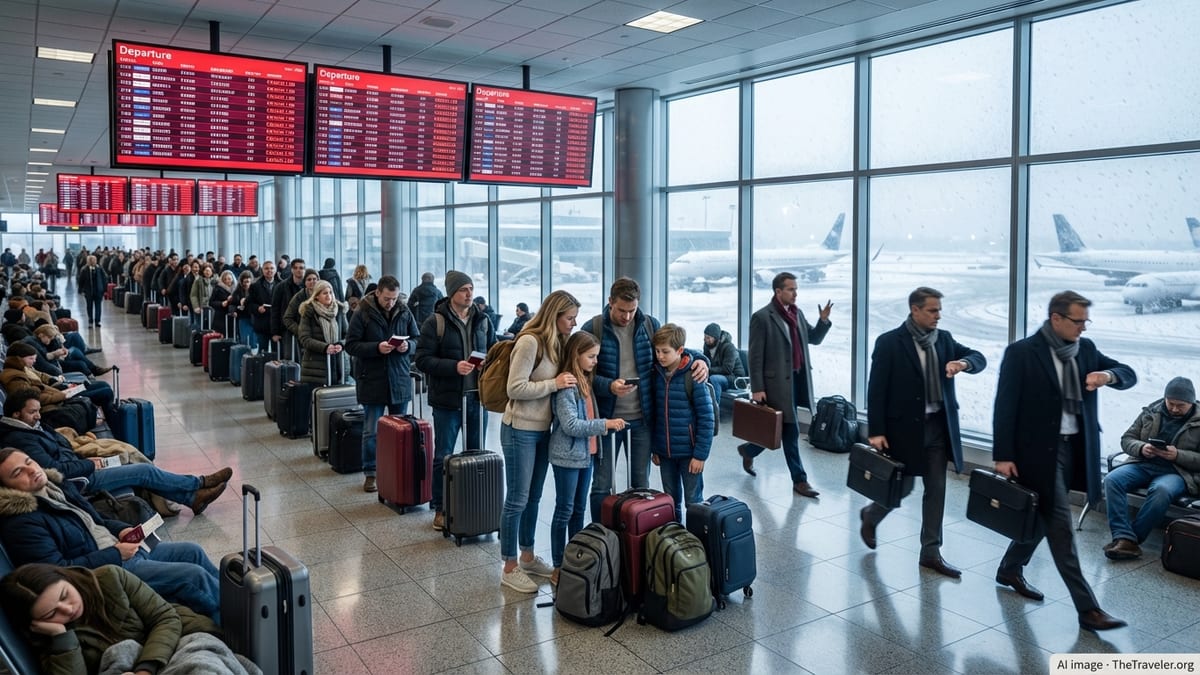
Delays and Cancellations Ripple Across Germany’s Main Hubs
Operational data and aviation tracking dashboards for late June 2026 indicate that Germany’s three main gateways, Frankfurt Airport, Munich Airport and Berlin Brandenburg Airport, have endured a sharp spike in disruption, with more than 1,320 delayed flights and around 70 cancellations recorded over a short window. These figures cover both arrivals and departures and capture a cross section of short haul European links and long haul services.
The disruption aligns with a broader pattern of instability in Germany’s aviation network this year. Recent tallies published by travel and passenger rights platforms for June show that at times more than a thousand flights in Germany have either been delayed or cancelled in a single day, with Lufthansa, its group partners and low cost competitors among the most affected. The latest wave continues that trend, concentrating problems once again at Frankfurt and Munich, while Berlin has also recorded mounting delays and selective cancellations.
While the absolute number of outright cancellations remains limited compared with the volume of delays, the irregular operations have translated into long queues at check in and transfer desks, missed connections and unplanned overnight stays for thousands of travelers. Social media posts and passenger accounts from the affected airports describe crowded terminals and extensive rebooking lines, particularly around peak morning and early evening banks of flights.
Frankfurt and Munich, which function as Lufthansa’s main hubs, have been the focal point, but disruption has not been confined to the flag carrier. Flight status feeds show knock on effects on services operated by Ryanair, easyJet and other European airlines that interline or compete on the same airport infrastructure, creating a web of secondary delays across intra European routes.
Lufthansa at the Center of a Strained Network
Lufthansa remains Germany’s largest airline by movements, and the concentration of its operation at Frankfurt and Munich means any irregularity quickly reverberates through its network. Publicly available flight status pages in recent weeks show multiple instances of Lufthansa services between Frankfurt, Munich and Berlin operating with delays ranging from 20 minutes to well over an hour, alongside scattered cancellations on domestic and European sectors.
The airline has already been operating under strain throughout 2026. A series of labor disputes and strike actions earlier in the year forced the cancellation of hundreds of flights at Frankfurt and Munich in March and April, while a special timetable and reduced frequencies have been introduced as part of a revised summer schedule. That reduced capacity is intended to stabilize operations, but it has also left the network with less slack to absorb fresh shocks such as adverse weather or air traffic control restrictions.
Industry analyses and German aviation monitoring studies highlight that Lufthansa has been trimming some feeder and point to point routes within Germany and consolidating others through its hubs. While this strategy can improve aircraft utilization and cost efficiency, it also increases dependence on smooth hub operations. When irregularities strike, missed onward connections through Frankfurt or Munich can quickly multiply the number of disrupted passengers, even if the recorded number of cancelled flights remains relatively modest.
Passenger rights organizations report steady demand for assistance and compensation checks related to Lufthansa flights from German airports this spring and early summer. They note that on several recent days, including periods of severe weather and staffing shortages, the combination of cancellations and long delays has triggered eligibility for payouts under European passenger protection rules for some travelers.
Ryanair and easyJet Face Knock On Disruption
Although Lufthansa and its group airlines dominate Frankfurt and Munich, low cost rivals Ryanair and easyJet are also key players in Germany’s short haul market and have been drawn into the latest disruption. Schedules show both carriers operating extensive networks from Berlin, with additional presence at secondary cities and, in Ryanair’s case, a rebuilt portfolio of German routes following earlier capacity reductions.
On heavily trafficked days in June, operational summaries from passenger advocacy platforms list Ryanair and easyJet among airlines experiencing substantial delay rates at German airports, even when outright cancellations for these carriers remain lower than for some full service rivals. In practice, tight turnaround times and high aircraft utilization mean that an initial delay on a single sector can cascade across an aircraft’s daily rotation, pushing later flights into late evening arrival windows.
Passengers on Ryanair and easyJet services into and out of Berlin report extended ground holds and late departures linked to congestion and weather at other German hubs, as well as slot restrictions rippling through the European air traffic control network. In several cases, travelers have described missed self connections onto separate tickets or limited rebooking options when final evening departures were delayed beyond viable transfer times.
Both airlines operate on a no frills model that typically relies on online support channels and self service tools during disruptions. While this helps keep operating costs low, it can leave travelers in crowded terminal halls competing for scarce hotel rooms and alternative flights when disruption stretches late into the night.
Weather, Staffing and Infrastructure Combine to Create a Perfect Storm
This latest episode of travel chaos is not attributed to a single, clearly identifiable cause. Instead, a combination of factors has converged at the start of the peak summer season. Recent days have seen periods of intense thunderstorms over parts of Germany, prompting temporary ground stops and air traffic flow restrictions at major hubs, which in turn have forced holding patterns, diversions and last minute schedule changes.
At the same time, the aviation sector continues to grapple with staffing constraints. Reports from earlier this year pointed to shortages among ground handling teams, security staff and some airline crews at German airports, stressing that recruitment since the pandemic has not fully kept pace with the strong recovery in passenger demand. When extreme weather or technical issues occur on top of already stretched duty rosters, delays lengthen quickly.
Infrastructure limitations at Frankfurt and Berlin also contribute to the system’s fragility. Frankfurt’s complex layout, reliance on bus transfers for some remote stands and tight slot environment can slow down turnarounds when conditions are not optimal. Berlin Brandenburg, still relatively new, has periodically struggled with congestion at security and border control during surges in traffic, feeding further hold ups for departing flights.
Aviation analysts note that German airports and airlines are simultaneously implementing network adjustments for the 2026 summer schedule, including route consolidations and frequency changes at Lufthansa, as well as incremental growth at carriers like Ryanair and easyJet. That realignment creates a transitional period in which contingency buffers are thin, making the system more vulnerable to disruption spikes of the kind now being observed.
What Travelers Can Expect in the Coming Days
With the European school holiday season ramping up, the latest chaos at Frankfurt, Munich and Berlin serves as an early warning for travelers planning to pass through Germany in the coming weeks. Historical patterns this year suggest that bouts of thunderstorms, industrial action risks and air traffic control constraints can reappear with little notice, triggering fresh clusters of delays and cancellations affecting Lufthansa, Ryanair, easyJet and other airlines.
Passenger rights bodies and consumer advocates are advising travelers to build additional buffer time into itineraries that involve connections at German hubs, particularly Frankfurt and Munich, and to avoid very tight self connections on separate tickets. They also recommend keeping digital and paper copies of boarding passes and receipts for meals and accommodation in case compensation or reimbursement claims become necessary.
Publicly available guidance on European passenger protection legislation indicates that travelers departing from or arriving in Germany with European carriers may, in some circumstances, be entitled to fixed sum compensation if flights are cancelled at short notice or arrive more than three hours late, provided the disruption is not primarily due to extraordinary factors such as severe weather or airspace closures. Even when compensation is not due, airlines are generally required to provide care such as refreshments and, where necessary, hotel stays during long waits.
For now, operational dashboards continue to show elevated disruption indicators at Germany’s three main airports, though the precise number of affected flights fluctuates by hour. As carriers and airports work through backlogs and adjust their schedules, travelers are likely to face a fluid situation, with punctual operations on some routes coexisting alongside severe delays and occasional cancellations on others.