


More news on this day
As WestJet faces periodic labour disputes involving mechanics, pilots and cabin crew, travellers are again confronting the risk that a strike or lockout could upend their flight plans with little warning.
Get the latest news straight to your inbox!
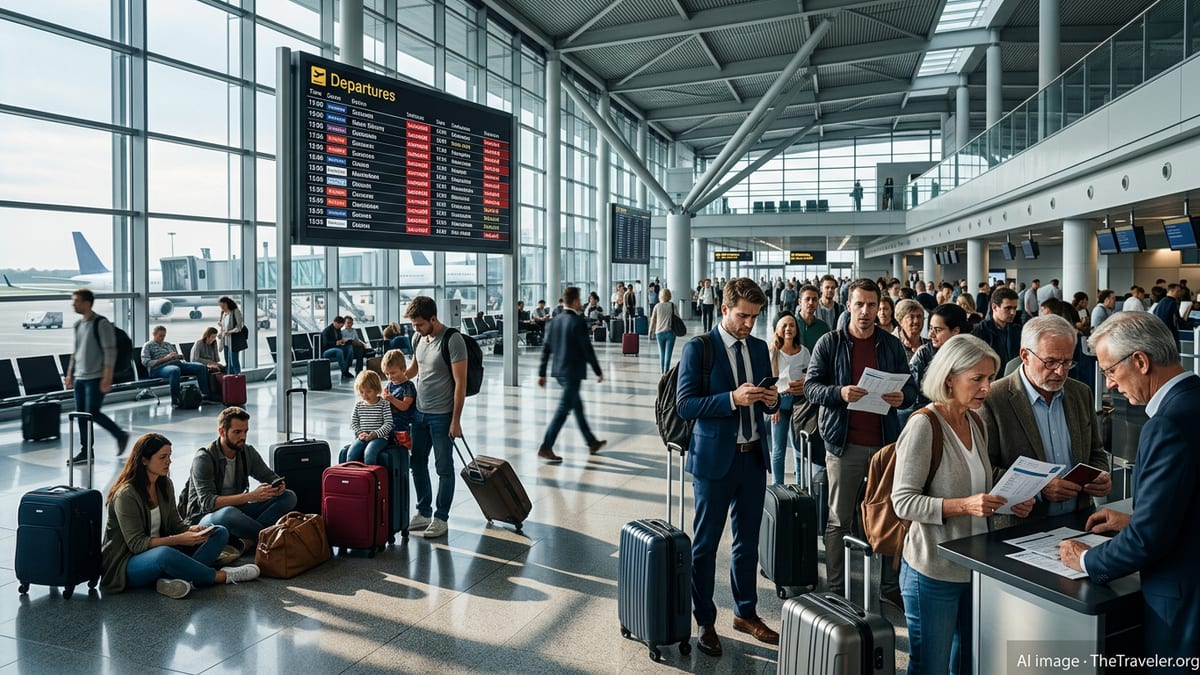
Understanding how strikes and lockouts affect WestJet flights
Labour disputes at WestJet have recently involved aircraft maintenance engineers, regional pilots and, most recently, cabin crew, leading to waves of cancellations and schedule changes around busy travel periods. Publicly available information from the airline and news outlets shows that even short work stoppages can trigger days of disruption across the network as aircraft and crews fall out of position.
In Canada, a legal strike or lockout typically follows a defined process, including notice periods and, in some cases, government-directed arbitration. During this window, airlines may begin cancelling or consolidating flights in anticipation of job action, even before a picket line appears. That means passengers can experience disruptions both from the labour disruption itself and from pre-emptive schedule changes.
WestJet’s recent statements indicate that when a disruption is directly caused by a strike or lockout, the airline generally treats it as outside of its control for compensation purposes. However, when flights are cancelled in advance for operational or scheduling reasons, the company may classify those as within its control and apply a different set of remedies. Understanding this distinction is important when deciding whether to seek a refund, rebooking or additional expenses.
The Canadian Transportation Agency’s Air Passenger Protection Regulations, or APPR, sit in the background of all of this. They set minimum standards for communication, rebooking and refunds, and they divide disruptions into three categories: within the airline’s control, within its control but required for safety, and outside its control. Labour disputes typically fall into the last category, but some knock-on effects may not, and that is where many current disputes and test cases are focused.
Immediate steps to take when your flight is disrupted
If you wake up to find an email or app notification that your WestJet flight has been cancelled or significantly delayed during a strike or lockout, the first step is to verify the status on the airline’s official channels. Past labour disruptions show that intermediaries such as online travel agencies can lag behind real-time changes, and relying on a third party’s schedule view can complicate rebooking.
Once you have confirmed that your flight is affected, check how WestJet has classified the cause in its communication. Notices may refer to a labour disruption, operational reasons or safety-related issues. That wording can signal whether the airline is treating the event as outside its control, which influences what you can ask for in terms of compensation or care, even if the core APPR rules are still subject to ongoing interpretation and enforcement.
Travellers facing an imminent departure should move quickly to secure a workable alternative. Public statements during previous WestJet labour disputes indicate that seats on remaining flights, as well as on competing carriers, can disappear quickly once a strike begins or expands. If self-service rebooking tools are available for your itinerary, using them can be faster than waiting on hold, especially when call centres are overwhelmed.
At the same time, keep records of everything: screenshots of flight status changes, emails from WestJet, boarding passes, and receipts for any emergency expenses such as meals, ground transportation or overnight accommodation. Consumer advocates and legal filings relating to recent disruptions suggest that detailed documentation can make a significant difference when pursuing claims under the APPR or through credit card providers after the fact.
Your rights to rebooking, refunds and care
When a WestJet flight is cancelled during a strike or lockout, Canadian regulations require the airline to offer either rebooking or a refund, depending on the circumstances. Public guidance on the APPR indicates that, at minimum, passengers must be offered a choice between being rebooked on the next available flight or receiving their money back if the carrier cannot provide reasonable alternatives within a set time frame.
WestJet’s own published information from recent labour disruptions shows that if the airline cannot accommodate a passenger on its own network or with a partner within 48 hours of the original departure, guests are entitled to request a refund to the original form of payment. This applies even when the underlying cause is categorized as outside the airline’s control, such as a labour dispute, although specific eligibility can depend on the exact facts of the disruption.
Care obligations, such as meal vouchers or hotel accommodation, are more limited when a disruption is considered outside the airline’s control. In those scenarios, the APPR does not generally require carriers to cover overnight stays or extensive incidental costs. That said, WestJet has occasionally introduced flexible change and cancellation policies or offered goodwill measures during particularly disruptive labour events, and those measures can be more generous than the minimum legal requirements.
It is therefore important to read any special advisories WestJet posts during a strike or lockout. These advisories can expand options for date changes, route changes or refunds across a broader travel window than the APPR alone contemplates. Travellers who understand both the baseline legal protections and the temporary policy enhancements are better positioned to decide whether to wait for rebooking, request a refund or abandon the trip altogether.
How travel insurance and payment methods can help
Travel insurance can provide another layer of protection when WestJet flights are affected by a strike or lockout, but coverage is rarely automatic. Insurance specialists quoted in recent coverage of the airline’s labour disputes note that trip cancellation or interruption benefits often apply only if the policy was purchased before the strike or lockout became a known event, such as the date a union serves formal notice or widely publicizes the possibility of job action.
Policies vary in how they define a covered strike, how long the disruption must last, and what expenses are reimbursable. Some plans cover unused prepaid travel, additional transportation costs to reach a destination, or extra accommodation when a return flight is cancelled. Others exclude labour disputes entirely or offer coverage only under premium “cancel for any reason” options. Reviewing the wording of the policy and contacting the insurer directly can clarify what support, if any, is available.
Credit card benefits can also be relevant. Many midrange and premium cards marketed in Canada and the United States include built-in trip interruption and delay coverage when the full fare is charged to the card. Publicly available benefit guides often list strikes and labour disruptions as potential covered events, subject to time thresholds and maximum payouts. Card issuers may reimburse reasonable expenses such as meals, hotels and alternative transportation when flights are severely delayed or cancelled.
Because WestJet’s classification of a disruption as outside its control can limit its obligation to provide care, travellers who paid with a card that includes robust travel protections may find these benefits particularly valuable. Keeping all receipts and a clear record of the disruption will be essential when filing a claim, and passengers should be prepared for processing times that can stretch weeks after the event.
Planning ahead when labour tensions are rising
When reports indicate that WestJet faces escalating labour tensions, there are steps travellers can take before the situation reaches a strike or lockout. One approach is to build in extra flexibility by avoiding tight connections, especially on separate tickets, and steering clear of itineraries that rely on the last flight of the day on critical legs.
Another strategy is to monitor labour developments through reliable news outlets and the airline’s own advisories. In past disputes, WestJet has sometimes offered temporary flexible change policies, allowing passengers booked over particular dates to move their trips or cancel without standard fees. Taking advantage of these windows before a full-scale disruption can greatly reduce the risk of being stranded.
Travellers who must fly during a period of uncertainty may want to consider backup plans, such as alternate routings on different carriers, rail options on shorter routes, or the feasibility of driving if flights collapse at the last minute. While duplicating tickets can be costly, some passengers have opted for fully refundable or points-based backup bookings that can be cancelled if the original WestJet itinerary operates as scheduled.
Finally, when booking new travel during an active dispute, it can be prudent to factor in not just price but also the potential for ongoing operational knock-on effects after a strike or lockout ends. Public accounts from previous WestJet disruptions describe days or weeks of residual delays as the airline works through backlogs and repositions aircraft. Choosing flights earlier in the day and allowing generous buffers for important connections, such as cruises or international long-haul departures, can help reduce the impact if schedules remain fragile.