


Lapland in winter looks like a snow globe come to life, and two experiences dominate most wish lists: gliding behind a quietly trotting reindeer or racing across frozen fells with a team of huskies. Both are classic Arctic adventures, both feature in glossy brochures from Rovaniemi to Levi and Saariselkä, and both can be expensive centrepieces of a short trip. Choosing the right one for you is less about which is “better” and more about the kind of winter day you want to remember years from now. This guide breaks down what each experience is really like on the ground, what you can expect to pay in the 2025–2026 seasons, and how to match the right Lapland adventure to your travel style, budget and group.
Get the latest updates straight to your inbox!
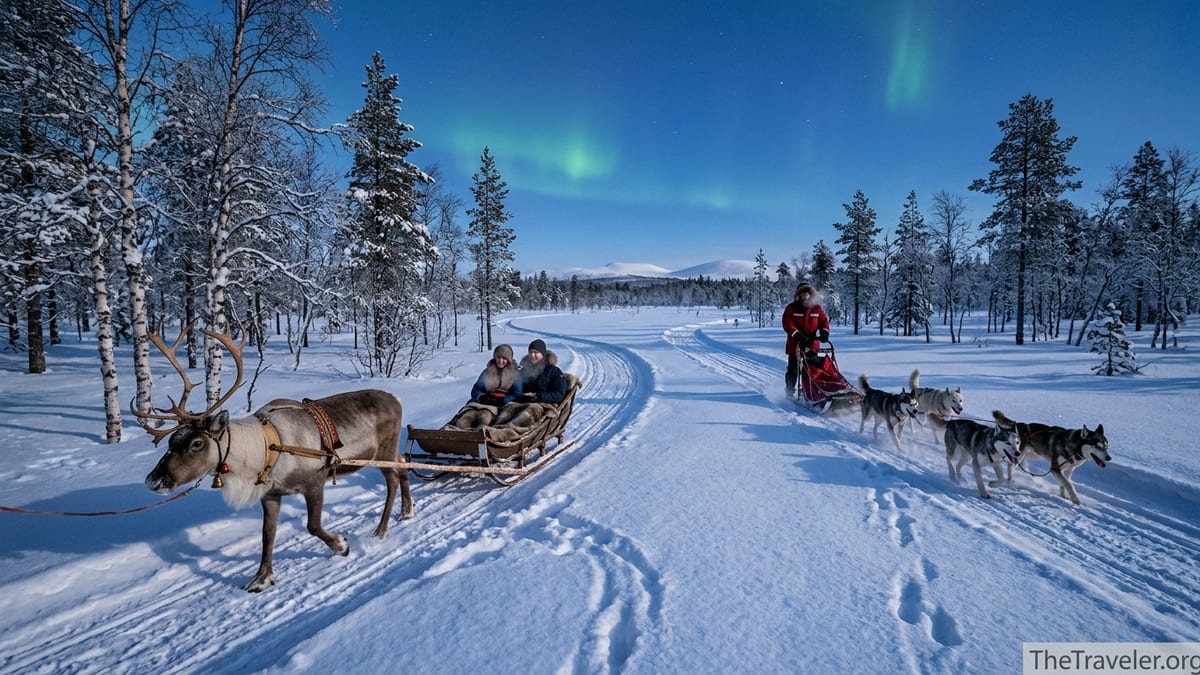
What a Reindeer Ride in Lapland Really Feels Like
A reindeer sleigh ride is one of the gentlest ways to meet Lapland’s winter. On a typical farm safari outside Rovaniemi, Levi or Saariselkä you sit in a wooden sleigh padded with reindeer skins while a single reindeer pulls you along narrow forest trails. The pace is slow and almost silent, the only sounds the runner blades on packed snow and the soft jingle of harness bells. On a 2 to 3 kilometre trail you might spend 30 to 45 minutes in motion, with the rest of the visit dedicated to feeding the animals, warming up by a fire and chatting with the herder about life in the Arctic.
In and around Rovaniemi, short tasters at Santa Claus Village are usually 400 to 800 metres long and last 5 to 15 minutes. These are walk-up experiences aimed at families who want a quick ride without leaving the village. Longer farm safaris require booking and often include hotel pick-up, a guided introduction to reindeer herding traditions, and hot berry juice in a kota hut afterwards. Similar formats exist in Levi and Ylläs, where tours often head into quiet birch and spruce forests just outside the ski resort area.
The atmosphere of a reindeer ride is introspective rather than adrenaline-filled. Many travellers describe it as the moment their Lapland trip finally “slows down.” You are usually tucked under blankets, with children snuggled between adults, and there is plenty of time to look at the snow-heavy trees or falling dusk. On some routes, especially in the Levi and Saariselkä areas, guides switch off headlights for short stretches so guests can experience deep Arctic twilight or, with luck, a band of northern lights overhead.
Because the ride is seated and the movement is gentle, reindeer experiences suit almost all ages, including infants carried on a parent’s lap and older relatives who might struggle with more physical activities. For many multi-generational families, this is the shared outing that everyone can enjoy together without worrying about fitness or coordination.
Inside a Husky Safari: Speed, Noise and White Wilderness
A husky safari is a very different kind of day out. Before departure the dog yard is a chorus of excited barking and howling as teams are harnessed. Most tours in Finnish Lapland give guests a chance to drive the sled themselves in pairs, swapping halfway. One person stands on the runners, using a foot brake and occasionally shifting weight to steer, while the other sits in the sled wrapped in blankets. Once the guide signals to go, the noise vanishes and you shoot forward into a landscape of frozen lakes, open fells and forest tracks.
In the Rovaniemi area, common entry-level tours include 5 kilometre “wild run” safaris and 10 kilometre half-day experiences, typically priced from around 150 to 250 euros per adult depending on distance, season and whether hotel transfers and lunch are included. Around Levi, Ylläs and Luosto, similar distances are offered, often heading onto open marshes and river flats that feel far wilder than their actual distance from the nearest road. Short 2 kilometre “kid-friendly” loops exist, but most travellers remember the longer safaris as the highlight of their Lapland week.
Driving a sled is physical, especially in deep or fresh snow. You might need to jog uphill behind the sled, lean into corners, and keep pressure on the brake to avoid closing up on the team ahead. The air temperature can be well below freezing and windchill is significant when you are gliding at speed. Good operators provide thermal overalls, boots and mittens, but you’ll still be grateful for thin glove liners and a balaclava under your hat. At rest points, guides often explain how the dogs are trained and rotated and invite guests to cuddle the team, something most huskies are visibly enthusiastic about.
Even on a moderate 10 kilometre route, the sense of distance and wilderness is stronger than on most reindeer rides. You may cross wide frozen lakes near Rovaniemi or weave through narrow forest corridors in the fells above Saariselkä. On evening departures between late autumn and early spring, there is a real possibility of seeing the northern lights if the sky is clear, though responsible kennels are careful to frame this as a bonus rather than a guarantee.
Costs and Value: What You Actually Pay
Prices for both reindeer and husky experiences have risen in recent seasons and can be a shock when you convert them into your home currency. In and around Rovaniemi, short reindeer rides at Santa Claus Village typically start in the region of 35 to 40 euros for children and 50 to 60 euros for adults for a few hundred metres. Longer farm-based reindeer safaris of 2 to 3 kilometres, including transfers and a farm visit, often run roughly 120 to 190 euros per adult in the 2025–2026 winter, with higher pricing in the peak holiday weeks.
Husky safaris are usually more expensive. Entry-level family rides of 2 to 5 kilometres where a guide drives can start under 100 euros per person, but the classic self-drive tours of 5 to 10 kilometres typically fall somewhere between about 150 and 250 euros per adult, depending on inclusions. In Levi, for example, a 10 kilometre self-drive tour that includes hot drinks and transfers can easily pass the 200 euro mark in the Christmas to New Year period. Evening safaris marketed as northern lights opportunities may cost a premium over day tours because they are longer and operate in prime hours of darkness.
When comparing value, it helps to consider not just headline price but how much active time you get and what the tour includes. A 150 euro husky trip that gives you 60 to 90 minutes of sled driving, warm gear, transfers and a kennel visit may feel better value than a 90 euro aurora bus tour where you stand in a frozen car park for two hours. Similarly, a 2.5 hour reindeer farm visit that folds in storytelling, feeding and a leisurely sleigh ride can be more satisfying than a series of very short, separate activities.
For a couple or family staying four or five nights, a realistic activity budget in Lapland often reaches several hundred euros per person once you add one major animal experience, one snowmobile tour and perhaps a northern lights outing. Some visitors therefore choose either a reindeer ride or a husky safari as their main “big-ticket” experience and enjoy free or low-cost activities such as sledging hills, winter walks and aurora watching near their accommodation on other nights.
Comfort, Accessibility and Age Suitability
Comfort is where reindeer rides and husky safaris diverge sharply. On a reindeer sleigh you are seated the whole time, usually wrapped in furs and blankets. The sleigh moves gently, with no sudden turns or jolts, which makes it suitable for younger children, older travellers and anyone nervous of speed. Parents commonly take babies or toddlers on their laps on shorter tours, especially at Santa Claus Village and similar family-focused venues. Many farms state there is effectively no minimum age for a calm, short ride as long as children are dressed warmly and accompanied by an adult.
Husky safaris demand more from participants. Even when children ride only as passengers, they must cope with the cold at higher windchill and the initial noise of dozens of dogs barking. For adults driving the sled, basic balance and mobility are required. Operators in Rovaniemi, Levi and other hubs usually advise that self-drive safaris are best for guests with average fitness and no serious back, knee or balance issues. Those less confident can often choose options where a guide drives, or they may sit with the guide on a larger sled pulled by a stronger team.
Motion sensitivity also plays a role. If you or a member of your group dislike fast movement or have a history of back or joint problems, the low, steady rhythm of a reindeer ride will likely be more comfortable than a dog sled that occasionally bumps over ruts and frozen tracks. On the other hand, travellers who find the idea of sitting still for long periods unappealing tend to enjoy the more active role of mushing a husky team.
Both experiences can be adjusted slightly for family needs. Many farms will split larger families into two sleighs or sleds travelling together, so that more nervous members can ride behind the guide while others take a more adventurous route or driving role. When booking, it is worth emailing the operator in advance with exact ages and any mobility concerns so they can recommend the most suitable format and, in some cases, schedule a quieter departure time.
Culture, Story and the Ethics Question
Reindeer are part of Lapland’s culture and economy in a way that goes far beyond tourism. Across northern Finland, Sweden and Norway, reindeer herding families manage semi-domesticated herds that graze over vast districts. In Finnish Lapland, for instance, the reindeer husbandry area is divided into dozens of herding cooperatives, and many tourism farms double as working herding operations for the surrounding forests and fells. When you visit a reindeer farm near Rovaniemi, Inari or Utsjoki, you are often stepping into a livelihood shaped over generations.
Guides typically share stories about seasonal migrations, how each animal is marked for ownership, and the modern realities of herding in a warming Arctic. Even short Santa Village rides usually end with a talk about how reindeer cope with the cold and what they eat in winter. For travellers interested in culture and traditional livelihoods, this interpretive element can be as important as the ride itself. In areas with strong Sámi presence, such as around Inari, you may also find experiences led by Sámi hosts who weave language, handicrafts and history into the visit.
Husky safaris, by contrast, are a newer, tourism-driven phenomenon in much of Finnish Lapland, though sled dogs have worked across the circumpolar north for centuries. Many kennels are run by local or foreign mushers who have moved north to work seasonal winters. This does not make the experience less authentic, but it shapes the stories you hear: training regimes, long-distance races, and the logistics of caring for dozens of energetic dogs in extreme cold. In Norway and some parts of Swedish Lapland, kennels sometimes combine tourism with participation in famous long-distance races, which can add another dimension for dog-sport enthusiasts.
Animal welfare is an understandable concern for many visitors choosing between activities. In recent years, Finnish authorities and local universities have worked with kennels to introduce welfare criteria and certificates for sled dog tourism, and similar guidelines are under discussion for reindeer tourism. As a visitor, look for operators that limit daily working hours for animals, rotate teams or individual reindeer, give clear information about rest periods, and are open about how they feed and house their animals. Small-group tours, longer rest breaks and calm, unrushed interactions in the yard or forest are positive signs.
When to Go and Matching to Your Travel Style
Both reindeer and husky experiences run from roughly late November until early April in most of Finnish Lapland, depending on local snow conditions. The heart of the season is December to March, when snow cover is usually reliable and temperatures can drop well below freezing. This is also the busiest and most expensive window, particularly around Christmas and New Year in Rovaniemi, Levi and other big resorts. Early December and the weeks after the New Year holidays can combine good snow with slightly lower prices and thinner crowds.
If northern lights are a key priority, aim for a trip between roughly late August and April, with the deepest winter months of December to March offering the longest nights. Evening husky and reindeer safaris marketed as aurora tours typically depart after dark and last several hours. On a clear night outside Levi or Saariselkä, you might find yourself pulled along a frozen river while green bands shift overhead. It is essential to remember that auroras are never guaranteed; plan the animal experience for its own sake and treat any light show as a bonus.
Choosing between experiences comes down to travel style. If you like quiet, story-rich encounters and want to involve very young children or older relatives, a reindeer farm visit plus sleigh ride is usually the best fit. A couple staying in Rovaniemi with a two-year-old and grandparents, for example, might book a 2 kilometre farm ride with campfire snacks and then focus the rest of their trip on low-key snow play and Santa activities.
If you are physically active, drawn to speed and keen on a “bucket-list” adventure you will still be talking about in ten years, a self-drive husky safari is hard to beat. A pair of friends staying in Levi for three nights might allocate one morning to a 10 kilometre husky tour and another to skiing, skipping the reindeer ride entirely. Many travellers who have budget and time ultimately choose to do both, scheduling a husky safari early in the trip and a more contemplative reindeer outing later when the pace of travel naturally slows.
Planning Tips and Booking Smart
Because peak season dates sell out quickly, it pays to decide early which activity matters more to you. In Rovaniemi, farm-based reindeer experiences and reputable husky safaris around Christmas and New Year often fill months in advance. Short reindeer rides at Santa Claus Village operate on a walk-up basis and rarely sell out, but they can involve queues and feel more like a theme-park attraction than a farm visit. If your heart is set on a longer, quieter ride through real forest, book before you arrange flights or hotels if possible.
When comparing offers, read descriptions carefully. A “husky experience” might mean anything from a five-minute loop where a guide drives and you sit in the sled, to a half-day self-drive adventure covering many kilometres. Likewise, a “reindeer visit” may focus on feeding and photos with a very short ride, or it may centre on a lengthy sleigh journey. Look for clear mentions of distance, active sledding time, group size and whether you drive yourself. If details feel vague, email the operator with specific questions.
Practical preparation also influences how much you enjoy the day. Even if tour companies provide outerwear, bring your warmest base layers, wool socks and thin gloves to wear under provided mittens. Chemical handwarmers can make a big difference for children, who cool down quickly when sitting still in a sled. For cameras and phones, remember that batteries drain fast in sub-zero temperatures; a small power bank inside an inner pocket is a wise addition. Finally, plan the rest of your day around the tour. After a long husky safari you will likely be cold and pleasantly tired, so scheduling a sauna or relaxed dinner rather than another demanding activity will help you appreciate the experience more fully.
If you are concerned about animal welfare or over-tourism, prioritise smaller-group operations away from the most crowded time slots. A morning husky tour outside the Christmas week in Luosto or Saariselkä, for example, may feel less hectic than a midday departure in Rovaniemi during the school holidays. Reading recent guest reviews with an eye for how animals are treated, how guides talk about their work, and whether the experience feels rushed can help you book with confidence.
The Takeaway
Reindeer rides and husky safaris are not competing versions of the same thing but complementary ways to meet the Arctic winter. One is slow, traditional and story-driven, woven into the rhythms of reindeer herding communities. The other is fast, physical and exhilarating, centred on athletic dogs and the thrill of mushing across white landscapes. Both can be highlights of a Lapland trip when matched to the right travellers, expectations and budget.
If you are travelling with small children, older relatives or anyone who prefers calm over speed, a reindeer sleigh ride on a working farm is likely to deliver the most memorable day. If you crave adventure and are comfortable with cold, movement and a touch of unpredictability, choose a self-drive husky safari and embrace the learning curve. With careful booking, realistic expectations and good winter gear, either experience can become the moment you think of first whenever someone mentions Lapland long after the snow has melted.
FAQ
Q1. Is a reindeer ride or a husky safari better for young children?
For most families with very young children, a reindeer ride is the easier choice. The movement is gentle, noise levels are low and kids can sit securely with a parent under blankets. Many farms welcome infants on short rides, while husky safaris usually have higher minimum ages for children to ride or participate in driving.
Q2. Which experience is more expensive overall?
Husky safaris are generally more expensive than reindeer rides, especially for self-drive tours of 5 kilometres or more. Expect husky trips to cost noticeably more per person than a comparable-length reindeer farm visit, although exact prices vary by resort, season and what is included.
Q3. Do I need to be very fit to drive a husky sled?
You do not need to be an athlete, but basic fitness and balance help. Drivers may need to jog short distances uphill, stand on the runners for an hour or more and use the brake effectively. If you have significant mobility or back issues, consider booking a tour where the guide drives and you ride as a passenger.
Q4. Can I see the northern lights on either tour?
Yes, if you book an evening or night-time tour during the aurora season and the sky is clear, you might see northern lights on both reindeer and husky trips. However, auroras are never guaranteed, so it is best to choose the activity for its own sake and treat any light display as a bonus.
Q5. Are reindeer rides and husky safaris ethical?
Many operators in Lapland work hard to meet or exceed animal welfare standards, with limits on working hours and clear rest periods. As a visitor, you can support better practices by choosing small-group tours, checking recent reviews and asking questions about how animals are housed, fed and rotated. If an operator seems evasive, consider booking elsewhere.
Q6. Will I be warm enough, or do I need special gear?
Most tour companies supply thermal overalls, boots and mittens, but you should still wear good base layers, a warm hat and wool socks. Temperatures on husky safaris in particular can feel much colder because of windchill. Bringing thin glove liners, a neck gaiter and handwarmers will make either experience more comfortable.
Q7. How far in advance should I book?
For dates around Christmas and New Year or popular school holiday weeks, book reindeer farms and husky safaris several months in advance, especially in Rovaniemi and Levi. Outside peak periods, you may find availability closer to your travel dates, but long farm safaris and reputable kennels can still fill quickly.
Q8. Can I do both a reindeer ride and a husky safari in one trip?
Yes, many visitors plan both experiences, often spreading them over different days. A common pattern is to start with a reindeer farm visit to ease into the climate and then book a more physically demanding husky safari once everyone is settled and confident with the cold.
Q9. What if I am nervous about animals or speed?
If you are uneasy around large groups of dogs, noise or fast movement, a reindeer ride offers a calmer environment with fewer animals and a slower pace. You can still interact with the reindeer at your comfort level. Some husky kennels can arrange quieter, guide-driven rides, but they will still involve excited dogs and higher speeds.
Q10. Which Lapland base is best for these activities?
Rovaniemi, Levi, Ylläs, Saariselkä and many smaller resorts across Finnish and Swedish Lapland all offer both reindeer and husky experiences. Larger hubs like Rovaniemi and Levi provide the widest choice of operators and tour lengths, while smaller villages can deliver a quieter, more intimate feel. Your choice of base can therefore shape not just the landscape you ride through but also how busy or peaceful the experience feels.