


In Finland’s north, two Lapland classics compete for hikers’ hearts: Riisitunturi National Park near Posio and Oulanka National Park near Kuusamo and Ruka. Both offer big views, silent forests, and long winter nights under the aurora, yet the experience on the ground feels very different. If you only have time for one, the choice you make will shape your entire Lapland trip. This guide breaks down scenery, trails, seasons, access, and costs so you can decide whether Riisitunturi or Oulanka is the better Finnish nature experience for you.
Get the latest updates straight to your inbox!
Getting Your Bearings: Where Riisitunturi and Oulanka Actually Are
Riisitunturi National Park lies in southern Lapland, in the municipality of Posio, roughly a 2-hour drive from Rovaniemi and just over an hour from Kuusamo Airport in good winter conditions. It is a compact park built around a single fell ridge, Riisitunturi, surrounded by old-growth spruce forest and open mires. Most visitors experience it on a single day hike or guided winter tour rather than a multi-day expedition.
Oulanka National Park sits further east, straddling the Kuusamo and Salla municipalities close to the Russian border. It is larger and more varied in terrain, with famous river canyons, hanging bridges, and roaring rapids. Oulanka is also home to Finland’s best-known long-distance route, the Karhunkierros (Bear’s Trail), an 80-plus kilometer trek that many hikers tackle over four to six days. Shorter classic routes like the 12-kilometer Pieni Karhunkierros loop make the park accessible even if you only have a single day.
In practical terms, most international visitors reach Riisitunturi from Rovaniemi or Kuusamo by rental car or a pre-booked tour, often combined with photography stops at the nearby Korouoma canyon. Oulanka, by contrast, is easily tied into a stay at Ruka ski resort or Kuusamo town. Regular local buses and seasonal trail buses connect Ruka and Kuusamo with Oulanka’s main trailheads and visitor center, so independent hikers can manage without a car more easily.
Understanding this geography is crucial. Riisitunturi feels like a quiet side trip deep in nature, while Oulanka integrates naturally into a broader Kuusamo and Ruka holiday that might also include downhill skiing, white-water rafting, or canoeing.
Landscape & Atmosphere: Intimate Fell vs Dramatic River Canyons
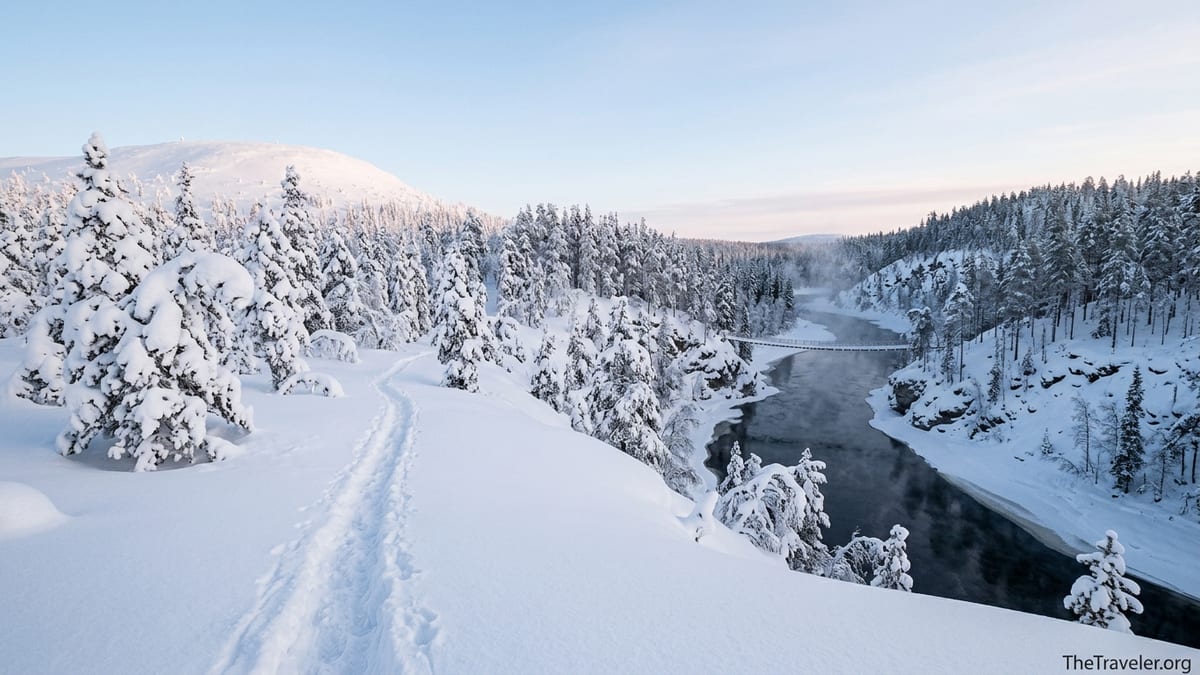
If you picture snow-laden trees standing like soft white statues on a rounded fell with huge horizons, you are thinking of Riisitunturi. The park is famous for its “tykky” trees, where wind and wet snow sculpt spruces into surreal shapes in midwinter. The primary summit route from the parking area to Riisitunturi’s top is only about 4 kilometers return, but the climb feels surprisingly wild as you rise above the tree line and look across unbroken forest to Lake Kitkajärvi and beyond.
Oulanka’s scenery is more varied and, in places, more dramatic. The Oulankajoki and Kitkajoki rivers carve through sandy banks, cliffs, and forested hills, producing a series of rapids and waterfalls such as Kiutaköngäs. On the Pieni Karhunkierros loop, hanging bridges sway over narrow gorges, and wooden stairs lead up and down steep valley sides. Longer sections of the Karhunkierros trail pass quiet pine forests, open mires, and ridge-top viewpoints, with rustic wilderness huts and lean-tos dotted along the way.
The atmosphere in Riisitunturi is intimate and almost otherworldly in winter. Many visitors come specifically for photography, setting up tripods at blue hour when the snow glows lavender and the sky slowly darkens. You are never far from the trailhead, yet the combination of deep snow, silence, and minimal development makes it feel remote. In summer, the same hilltops feel softer and more pastoral, with bogs and wild berries instead of frozen sculptures.
Oulanka feels more like a classic hiking destination. The infrastructure is more visible, with boardwalks, bridges, and well-developed campfire sites. In peak season you might share viewpoints with groups, rafting clients, and long-distance trekkers, but you also gain a strong sense of journey as the river landscape changes from section to section. If “big hike energy” and river drama appeal to you more than a single iconic viewpoint, Oulanka has the edge.
Seasonality: When Each Park Shines
Riisitunturi is arguably at its best from late December through March, when snow is deep, trees are bent under thick white layers, and daylight is short but magical. Winter tour companies based in Rovaniemi and Ruka sell half-day excursions that include transport, snowshoes, warm drinks, and sometimes a simple campfire lunch. Expect prices roughly in the range of 120 to 180 euros per adult for a 4 to 6 hour trip, depending on group size and inclusions. For independent visitors, renting snowshoes or winter spikes in Rovaniemi or Ruka and driving yourself to the park is popular, but you must be comfortable with icy Lapland roads and quickly changing weather.
In spring, usually April, Riisitunturi begins to transition. The snowpack softens, days lengthen, and conditions can swing between perfect firm snow and heavy slush that makes walking more tiring. By summer, the charm shifts toward midnight sun hikes, cloudberry bogs, and views over dark green forest. Trails can be muddy during the thaw, so waterproof footwear and gaiters are valuable, and mosquitoes can be noticeable around wetlands in early summer.
Oulanka has a broader multi-season appeal. The long-distance Karhunkierros trail and shorter loops traditionally see most use from late May through September, when bridges and sections that can be closed in snow are fully accessible. Early summer brings roaring rapids and fresh green foliage, while late August and September cloak the park in fall colors and cooler, mosquito-free air. Many hikers target early autumn for this reason, often combining their trek with a night in Ruka before or after the hike.
In winter, Oulanka is quieter and feels more remote, but it remains accessible. Guided snowshoe trips to viewpoints and short sections of trail are offered from Ruka and Kuusamo, and experienced winter campers sometimes ski or snowshoe longer sections of Karhunkierros. However, some bridges and facilities are not maintained in deep winter, and daylight hours are limited, so Oulanka’s full variety is best saved for the snow-free season unless you are keen on winter trekking.
Trails & Difficulty: Day Hikers vs Long-Distance Trekkers
Most visitors tackle Riisitunturi on one of two routes starting from the main parking area and small service building. The most popular is the summit loop, which climbs steadily from the car park to the fell top and returns by a slightly different line. It is often measured around 4 to 5 kilometers, with enough ascent to raise your heart rate but short enough to fit alongside other activities in a single day. In winter, the trail is usually marked with poles, and many walkers use snowshoes or at least sturdy winter boots with traction devices.
Because Riisitunturi is compact, it works extremely well for beginner hikers and photographers who want a “big view per kilometer” ratio. Families with children who can manage a 2 to 3 hour outing often report it as a highlight of their Lapland trip. The main technical challenges are cold, wind on the exposed summit, and occasionally slippery descents on hard-packed snow. In summer, the same loop becomes a straightforward half-day walk suitable for most moderately fit visitors.
Oulanka caters to a much broader range of hikers. At the easy end, you have short walks such as the Kiutaköngäs day trail, which might take an hour or two and rewards you with powerful river rapids close to the visitor center. The Pieni Karhunkierros loop of about 12 kilometers in the Juuma area introduces classic hanging bridges, steep but well-built staircases, and multiple scenic rest spots. Fit day hikers who are comfortable with steps and some elevation changes usually find it satisfying but not extreme.
At the demanding end lies the full Karhunkierros, running roughly 80 to 82 kilometers through Oulanka’s varied terrain between Hautajärvi and Ruka. Many hikers take four to six days to complete it, staying at free wilderness huts, simple lean-tos, or tent platforms. You carry a full backpack with sleeping gear, food, and stove, although there are occasional spots where you can purchase supplies or arrange baggage transfers. The trail is well marked yet physically demanding, with repeated elevation changes that add up over the days. For visitors who want a classic Nordic thru-hike, Oulanka is the clear winner over Riisitunturi.
Access, Transport & Costs: How Easy Is It to Visit?
Getting to Riisitunturi without a car is possible but less straightforward than reaching Oulanka. There is no year-round dedicated national park shuttle, and scheduled buses to the nearby town of Posio are limited. As a result, many visitors staying in Rovaniemi or Kuusamo choose a guided day trip that bundles transport, guiding, and equipment. A typical package might pick you up from a Rovaniemi hotel around 8:00 in the morning, drive about two hours to the park, lead a snowshoe loop to the summit, provide hot berry juice and snacks at a laavu (shelter), and return you to town by late afternoon.
If you rent a car, you can drive to Riisitunturi along maintained winter roads, though you should expect snow, darkness, and potential icy patches from November through March. Rental cars from Rovaniemi or Kuusamo Airport in winter commonly start around 60 to 100 euros per day for a small vehicle, with studded tires provided. Parking at the Riisitunturi trailhead is typically free, but there may be a voluntary maintenance fee for facilities, and you should budget for fuel and winter clothing rental if you do not bring your own gear.
Oulanka is significantly easier to reach on public transport. Buses run from Kuusamo town and the Ruka ski resort area toward Oulanka’s main access points and villages like Juuma. In summer, a dedicated Karhunkierros trail bus usually operates between Ruka, the Oulanka visitor center, and key trailheads, allowing hikers to start and finish the long-distance route without a car. Typical single bus fares within the Kuusamo and Ruka area vary but are often around 10 to 20 euros per adult, depending on distance and operator, which is far cheaper than a taxi for solo travelers.
Accommodation options also differ. Around Riisitunturi, you are more likely to stay in a cabin, lakeside guesthouse, or small lodge in Posio or rural surroundings, often self-catering. Around Oulanka, many hikers base themselves in Ruka, where you can choose between simple hostel beds, modern condo-style apartments, and full-service hotels with saunas and restaurants. Wilderness huts along Karhunkierros are generally free to use on a first-come, first-served basis, though many visitors carry a tent or book a private cabin at least for the last night back near Ruka to guarantee comfort.
Winter vs Summer Activities: Beyond Just Hiking
Riisitunturi in winter is primarily about snowshoeing, photography, and simply standing on the fell in silence watching the sky. On clear nights, the open summit is an excellent place to hunt for the northern lights, as long as you are comfortable navigating in the dark and respecting trail markers. Some guides organize late-afternoon or evening excursions that time your summit arrival for dusk, then give you the option to stay out longer if aurora forecasts look promising. Because there are no lifts or resort activities within the park itself, you come for nature, not nightlife or extra amenities.
In summer, Riisitunturi lends itself to leisurely day hikes with picnic stops and berry picking in season. Families sometimes combine a morning hike with an afternoon visit to Lake Kitkajärvi or a local café in Posio. Cyclists generally look elsewhere, as the trails are not designed for mountain biking, and the focus remains squarely on walking and nature observation.
Oulanka, on the other hand, underpins a much wider menu of activities. In summer, outfitters based around Ruka and Kuusamo offer guided rafting and family-friendly river floating on the Kitkajoki and Oulankajoki sections that run through the park. A half-day rafting trip can cost somewhere in the range of 60 to 100 euros per person, including transport, equipment, and warm drinks. Canoe and packraft rentals are also available for those with experience, allowing you to paddle quieter stretches and then continue on foot along the marked hiking trail.
Winter activities in Oulanka include guided snowshoe tours, cross-country skiing on prepared tracks outside the park combined with short snowshoe loops inside it, and photography trips to frozen rapids and ice formations. Because Ruka is a busy ski resort, many visitors pair a few days of downhill skiing with a day trip into Oulanka, making it a versatile base. If you want one location where you can hike, ski, paddle, and join organized excursions without renting a car, Oulanka and the Ruka area are generally more convenient than Riisitunturi.
Crowds, Comfort Level & Who Each Park Suits Best
Riisitunturi still feels relatively low key. On a clear afternoon in February, you might share the main route with several guided groups and independent visitors, but once you spread out along the fell, there is room for quiet contemplation. Facilities are basic: a parking area, dry toilets, a few shelters, and simple signage. There is no large visitor center, café, or cluster of commercial services at the trailhead. For many travelers, this simplicity is precisely the appeal. You trade convenience for a sense of wilderness that starts almost as soon as you step from your vehicle.
Because Riisitunturi’s routes are short and focused, the park suits people who want maximum scenic payoff with minimal logistics. Think couples on a Lapland honeymoon, photographers seeking iconic winter shots, or families confident in short winter walks but not ready for multi-day treks. It is especially good if you are already planning to rent a car or book private tours out of Rovaniemi and want something that feels off the beaten track compared with the busier Santa-themed attractions closer to town.
Oulanka, in contrast, can feel quite lively in peak summer and autumn, especially on the Pieni Karhunkierros loop and near popular campfire spots. At the same time, its size allows you to find solitude by walking longer distances or camping away from the main access points. The presence of a staffed visitor center during main seasons, clear trail maps, and a long tradition of hiking culture make it a comfortable choice for first-time international trekkers who want to experience wilderness without being completely on their own.
In terms of traveler profiles, Oulanka is ideal for backpackers and outdoor enthusiasts planning a dedicated hiking holiday, as well as families and groups staying in Ruka who want easy access to marked trails and guided river activities. If you are comparing “Which park offers more to do over several days without a car?”, Oulanka usually comes out ahead.
The Takeaway: Which Finnish Nature Experience Is Better?
If your dream is to walk among snow-buried spruces on a rounded fell, capture minimalistic winter photographs, and feel like you are briefly alone in an Arctic fairy-tale landscape, Riisitunturi is hard to beat. It delivers an intense, photogenic experience in just a few kilometers and works beautifully as a focused day trip from Rovaniemi or Kuusamo for those willing to book a guided excursion or drive themselves.
If, on the other hand, you want classic Nordic hiking and a wider range of activities, Oulanka is the stronger choice. Between the iconic Karhunkierros long-distance trail, the Pieni Karhunkierros day loop with its hanging bridges, and the rafting and paddling options on summer rivers, you could easily spend several days based in Ruka or Kuusamo without repeating the same outing twice. Public transport connections and trail infrastructure also make it friendlier to independent travelers without a car.
In many itineraries, the ideal solution is not “either/or” but “which first.” Travelers with a week in northern Finland might start with easier day walks and resort comforts around Ruka and Oulanka, then head deeper into Lapland to experience Riisitunturi’s quieter, more intimate fell landscape on a dedicated day. If you must choose only one, let your priorities decide: pick Riisitunturi for concentrated winter magic and photography, or pick Oulanka for multi-day trekking, variety, and easy logistics.
FAQ
Q1. Which park is better for first-time winter visitors, Riisitunturi or Oulanka?
For a short, photogenic winter experience, Riisitunturi is usually easier and more rewarding, especially on a guided snowshoe tour. Trails are shorter, the main viewpoints are close to the parking area, and guides from Rovaniemi or Ruka handle transport and safety. Oulanka also has winter tours, but its classic routes truly shine in the snow-free season.
Q2. I do not plan to rent a car. Which park is more practical to visit?
Oulanka is more practical without a car because buses connect Kuusamo and the Ruka ski resort with key trailheads and the visitor center during the main seasons. You can stay in Ruka, use local buses or seasonal Karhunkierros shuttles to reach the trails, and join guided activities starting right from town.
Q3. Which park offers the best chance to see the northern lights?
Both parks are far enough north that you can see the aurora on any clear, dark night in season. Riisitunturi’s open fell summit provides wide horizons and minimal light pollution, which many photographers love, while Oulanka has darker river valleys slightly away from Ruka’s resort lights. In either case, success depends more on weather and solar activity than on the specific park.
Q4. How many days should I allocate to each park?
Riisitunturi works well as a single long day trip or, at most, a two-day visit if you want to explore slowly and include nearby attractions like Korouoma canyon. Oulanka deserves at least one full day for Pieni Karhunkierros or other shorter routes, and four to six days if you plan to hike the entire Karhunkierros long-distance trail with overnight stays in huts or tents.
Q5. Is Riisitunturi suitable for children and less experienced hikers?
Yes, Riisitunturi is very suitable for families and newer hikers who are comfortable walking a few kilometers. The main challenge is winter weather: temperatures can drop well below freezing, and wind on the fell can be strong. Booking a family-friendly guided tour that provides winter clothing, snowshoes, and hot drinks is often the most comfortable option for first-timers.
Q6. What about facilities like toilets, shelters, and visitor centers?
Riisitunturi offers basic facilities such as a parking area, dry toilets, and a few shelters, but no large visitor center or café at the trailhead. Oulanka has a fully equipped visitor center in season with information displays, staff who can advise on conditions, and usually a small café, plus numerous marked campfire sites, lean-tos, and wilderness huts scattered along popular routes.
Q7. Can I camp overnight in either park?
Overnight options are more developed in Oulanka, where long-distance hikers use free wilderness huts, lean-tos, and designated camping areas along Karhunkierros and other routes. In Riisitunturi, most visitors stick to day hikes, and camping is more limited and best suited to experienced backcountry travelers who are familiar with Finnish outdoor regulations and winter conditions.
Q8. Which park is better if I want to combine hiking with a ski resort stay?
Oulanka is better for this combination because the Ruka ski resort sits on its doorstep. You can ski or snowboard during the day, then take a short bus or tour transfer to Oulanka for snowshoeing or hiking. Riisitunturi is further from major ski centers, so visiting it usually means a dedicated day trip rather than something you add onto a resort day.
Q9. Are guided tours necessary, or can I hike independently?
Confident hikers with proper gear can explore both parks independently using marked trails. However, in winter, especially for visitors unfamiliar with Arctic conditions, guided tours in Riisitunturi and Oulanka add a significant layer of safety and convenience. In summer and early autumn, many international visitors hike Oulanka’s trails independently using maps and park signage.
Q10. If I only have one free day in Lapland, which park should I prioritize?
If your visit is in deep winter and you are excited about iconic snow-laden trees and panorama shots, prioritize Riisitunturi. If you are traveling between late May and September, or want hanging bridges, river scenery, and a choice of shorter or longer hikes, choose Oulanka instead. Your decision should follow the season and the type of landscape that excites you most.