


More news on this day
Targeted cancellations on routes linking Rome and Milan with major US and European cities are the latest sign that Italy’s air travel disruption is spilling over into broader transatlantic and regional networks.
Get the latest news straight to your inbox!
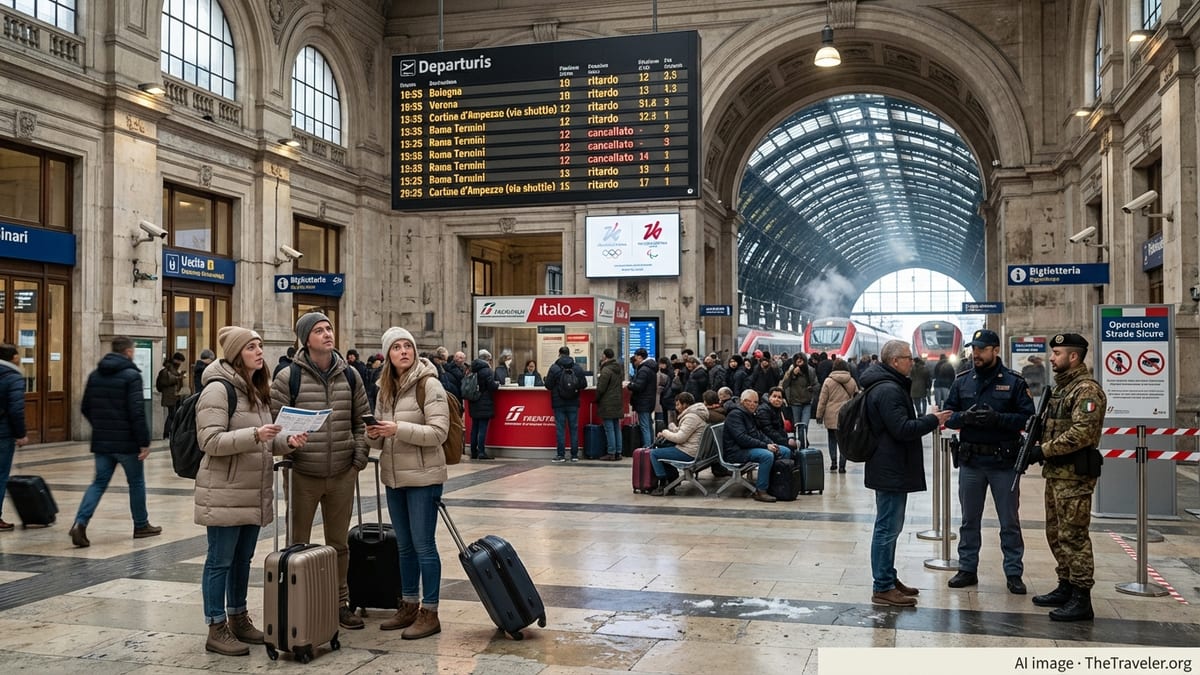
Six Long-Haul and Regional Routes Hit by Fresh Cancellations
Recent disruption data from Italy’s main hubs indicates that at least six routes have been affected by cancellations involving large network carriers such as American Airlines, United Airlines and British Airways, alongside other European operators. The routes include connections from Rome and Milan to Charlotte, Miami, Newark and Chicago in the United States, as well as Copenhagen and Iasi in Europe, highlighting how problems at just a pair of airports can reach far beyond Italian airspace.
Rome Fiumicino and Milan Malpensa serve as key gateways for transatlantic traffic, with seasonal and year-round services to major US hubs. Publicly available schedules show that carriers including American and United use the Italian gateways to connect travelers to Charlotte, Chicago, Miami and Newark, while European partners link Rome and Milan to Scandinavian and Eastern European cities such as Copenhagen and Iasi. When individual rotations are pulled at short notice, passengers not only lose their direct flights but often see onward connections within North America or Europe fall apart.
Travel monitoring services and consumer-rights platforms have reported a pattern of short-notice cancellations at Italy’s largest airports in recent weeks, including long-haul departures that typically form the backbone of peak-season travel. The affected flights sit within complex alliance and codeshare webs, meaning that a single canceled sector between Rome or Milan and a US hub can cascade into missed domestic connections across the United States or onward links from Copenhagen and Iasi.
The latest round of cancellations adds to a wider tally of disruption recorded across Italy since early spring. Earlier data from operational tracking services pointed to isolated cancellations on transatlantic routes from Rome and Milan, but recent figures suggest a more concentrated impact on connections that serve as feeders into broader US and European networks.
From Local Bottlenecks to Network-Wide Knock-On Effects
Operational bottlenecks at Rome and Milan have repeatedly demonstrated how issues in one country can reverberate across airline networks. Reports from travel rights organizations describe how delays and cancellations at Rome Fiumicino and Milan Malpensa can quickly propagate through European and transatlantic schedules as aircraft and crews arrive late for subsequent flights, stands become congested and turnaround times are compressed.
In practice, a canceled or heavily delayed departure from Rome or Milan to a US city such as Newark or Chicago may mean that passengers miss connecting flights deeper into North America. Similarly, passengers booked on services from Italy to Copenhagen or Iasi risk losing short transfer windows to regional destinations in Scandinavia or Eastern Europe. With many of these connections timed around banked waves of arrivals and departures, even a small schedule change can cause entire itineraries to unravel.
Tracking data from recent high-impact days at Rome and Milan has already shown how late-afternoon departures can trigger evening disruption at other European hubs. When westbound and northbound flights leave Italy behind schedule, aircraft arrive late into their next stations, potentially pushing crews toward duty-time limits and forcing airlines to trim later rotations or consolidate services. These dynamics help explain why a limited number of cancellations in Italy can translate into scattered disruption notices in airports far from Rome and Milan.
For carriers such as American, United and British Airways, which rely on coordinated timetables to balance long-haul and short-haul feeds, maintaining schedule integrity around Italian gateways has become increasingly challenging. Publicly available information indicates that some airlines have opted for preemptive cancellations on selected routes, including services touching Charlotte, Miami, Newark, Chicago, Copenhagen and Iasi, to avoid day-of-operation chaos across their broader networks.
Strikes, Staffing and Airspace Reroutes Intensify Pressure
The latest cancellations are unfolding against a backdrop of continued strain on Italy’s aviation system. In recent weeks, an air-traffic control strike and industrial action among ground staff have forced airlines operating at Rome, Milan and other Italian airports to scale back schedules. Published advisories describe hundreds of domestic and European flights being cut on peak strike days, with Italian carrier ITA Airways and several low-cost operators among those reducing operations.
These labor-related disruptions coincide with other structural challenges, including tight staffing levels and lingering schedule adjustments after a series of airspace restrictions and reroutes over parts of the Middle East earlier in the year. Industry-focused coverage has noted that detours on long-haul services into Europe can lengthen flight times, reduce flexibility for crew scheduling and leave airlines with less margin to recover when disruptions occur at their arrival points.
For international airlines serving Italy, this combination of strike risk and constrained operating buffers has created a difficult planning environment. Public schedules and airline advisories suggest that some carriers have preferred to consolidate frequency on certain days or temporarily reduce service on specific city pairs rather than risk ad hoc cancellations across the board. Routes linking Rome and Milan with high-demand US hubs and key European connectors have been among those singled out for targeted cuts.
Analysts following European aviation trends point out that Italy is not alone in facing such pressures, but its position as a Mediterranean gateway magnifies the impact. Rome and Milan sit at the crossroads of traffic flows between North America, Western Europe and the Eastern Mediterranean, so any reduction in capacity on their long-haul links can quickly be felt in booking patterns and connection options across multiple regions.
Travelers Advised to Monitor Schedules and Build in Flexibility
For passengers booked on upcoming flights between Italy and cities such as Charlotte, Miami, Newark, Chicago, Copenhagen and Iasi, recent patterns underline the importance of close schedule monitoring. Airline channels and airport information boards have been updating timetables frequently on days when industrial action or operational strain is anticipated, and some carriers have offered fee-free rebooking windows to encourage early changes.
Travel guidance from consumer advocates consistently highlights the benefits of longer connection times during periods of heightened disruption. Travelers connecting onward in the United States after flights from Rome or Milan to Newark, Chicago or Charlotte may wish to avoid tight domestic layovers, while those continuing from Copenhagen or Iasi to smaller European destinations could consider adding extra buffer time or even overnight stops.
Publicly available information on passenger rights also remains a key reference point. Under European air passenger regulations, travelers on flights departing from EU airports are often entitled to assistance in cases of long delay or cancellation, with compensation in some circumstances. Rights groups emphasize that entitlements can vary depending on the cause of disruption and encourage travelers to retain boarding passes, booking confirmations and any written notices received from airlines.
With the summer travel season approaching, the cancellations affecting Rome and Milan’s links to the United States and wider Europe provide an early test of how resilient airline networks will be in 2026. For now, the experience of passengers bound for hubs such as Charlotte, Miami, Newark and Chicago, as well as regional centers like Copenhagen and Iasi, suggests that flexibility and preparedness are likely to remain essential for anyone relying on Italy as a gateway.