


More news on this day
Passengers booked on LOT Polish Airlines’ early-morning Amsterdam to Warsaw service faced unexpected disruption after the LO270 flight was cancelled at Schiphol, leaving travelers stranded and scrambling to protect tight European connections.
Get the latest news straight to your inbox!
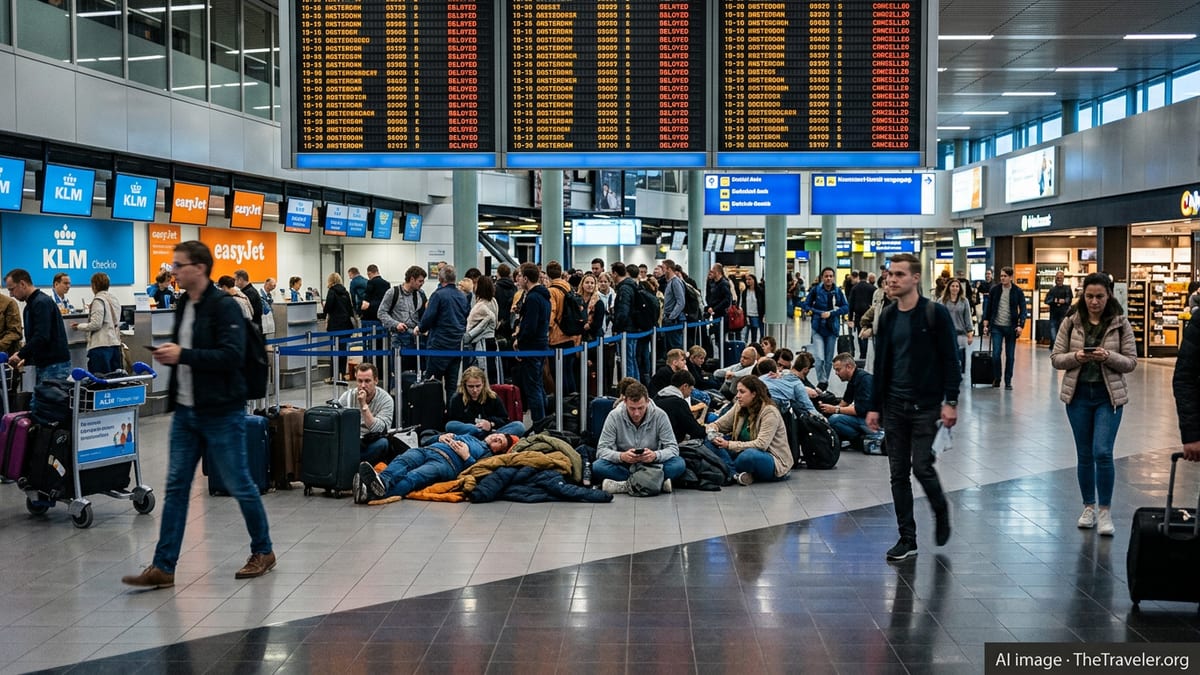
Morning Disruption Hits Key Amsterdam–Warsaw Shuttle
The LO270 Amsterdam to Warsaw flight, typically an early departure used by business travelers and transfer passengers across Central and Eastern Europe, was cancelled after an operational disruption in the morning departure wave at Amsterdam Schiphol Airport. Publicly available flight information, which normally lists LO270 as a 07:00 departure operated by an Embraer 195, showed the service as cancelled, interrupting what is usually a highly reliable shuttle between the Dutch and Polish capitals.
The cancellation comes at a sensitive time for Schiphol, where the early morning bank of departures underpins connectivity across the continent. Reports indicate that the disruption affected not only point-to-point travelers between Amsterdam and Warsaw but also a significant number of passengers using Warsaw Chopin Airport as a hub for further flights into the Baltics, Ukraine, and the wider Central and Eastern Europe region.
While Schiphol’s overall departure board showed the majority of early flights operating, the removal of a high-demand regional service such as LO270 has a disproportionate impact on travelers relying on carefully timed same‑day connections. Travelers reported crowding at departure desks and transfer zones as they sought rebooking options amid an already busy morning peak.
Impact on Warsaw-Bound Routes and Regional Connectivity
The Amsterdam–Warsaw link is a cornerstone of LOT Polish Airlines’ short-haul network and plays a key role in feeding its onward operations from Warsaw. A cancelled morning rotation from Amsterdam means that passengers booked onward to destinations such as Krakow, Gdansk, Vilnius, Riga, and Bucharest may miss same‑day connections, pushing itineraries into the afternoon or even the following day.
According to published schedules, LO270 is timed to arrive in Warsaw ahead of a dense wave of regional departures, enabling a one‑stop option from Amsterdam to dozens of cities in Central and Eastern Europe. When that first flight fails to operate, passengers either need to be moved to later LOT services from other European gateways or retimed onto subsequent flights out of Amsterdam, which can be challenging during a morning peak where seats are already limited.
For Warsaw itself, the cancellation of an inbound Embraer 195 segment also creates knock‑on effects for aircraft and crew utilization. Regional jets arriving from Western Europe are often turned around quickly to operate further rotations from the Polish hub. If a frame does not reach Warsaw as planned, airline planners must reschedule aircraft assignments, resulting in potential delays or equipment swaps on other routes.
Conditions at Schiphol and the Wider Operational Context
Schiphol’s recent operational history shows how quickly local issues can cascade into broader disruption. Airport communications and independent coverage in recent months have highlighted periods of runway maintenance, security bottlenecks, and staffing pressures across ground handling and technical services. While there is no single publicly confirmed cause linking those broader issues to this specific LOT cancellation, the episode underlines how sensitive morning banks are to even modest irregularities.
Industry analyses of European operations in 2026 point to persistent strains on airline fleets, including shortages of spare engines and maintenance slots, particularly affecting narrow‑body and regional aircraft. When a jet requires unscheduled maintenance or parts replacement, carriers sometimes have limited flexibility to substitute another aircraft on short‑notice, leading to cancellations on thinner routes where re‑accommodating passengers appears more manageable.
For travelers, the practical effects are similar regardless of the exact trigger: disruption at the origin airport translates into missed connections and extended layovers at hubs. Amsterdam’s role as a major transfer point intensifies the experience, as one cancelled service can intersect with tight minimum connection times and already busy security and immigration queues.
Passenger Experiences and Rebooking Challenges
Travelers affected by the LO270 cancellation at Schiphol faced a familiar sequence of challenges: sudden schedule changes, competition for scarce seats on alternative flights, and uncertainty around accommodation and expenses. Social media and traveler forums frequently describe scenes at Amsterdam where stranded passengers queue at service desks or attempt to use airline apps and websites that may be temporarily overloaded during peak disruption events.
Publicly available guidance for LOT Polish Airlines passengers suggests that in the event of a cancellation, travelers are usually offered rebooking on the next available service or, when possible, on partner airlines serving similar routes. However, in a concentrated morning peak, that next available option may depart several hours later or from a different European gateway, such as Frankfurt or Vienna, requiring an entirely re‑routed itinerary.
In addition, European air passenger rights regulations require airlines to provide care and assistance in the case of significant delays or cancellations, including meals and, where necessary, hotel accommodation. The practical delivery of this support can vary, especially when multiple flights at the same airport experience irregular operations simultaneously, stretching ground resources and communication channels.
What Affected Travelers Need to Know Now
For passengers whose Amsterdam–Warsaw plans were disrupted by the LO270 cancellation, the immediate priority is to secure a confirmed alternative itinerary. Public information from airlines and independent travel advisories consistently recommend using digital self‑service tools first, such as airline apps or booking‑site dashboards, to check new options before joining airport queues. These platforms typically show live seat availability and can often process date or routing changes without additional fees when a flight has been cancelled by the carrier.
Travelers are also being urged by consumer groups and passenger‑rights organizations to document all out‑of‑pocket expenses incurred as a direct result of the disruption. Receipts for food, local transport, and accommodation can be important when later submitting claims under both airline policies and European compensation rules, particularly when a cancellation leads to an overnight stay or substantial arrival delay at the final destination.
Looking ahead, analysts note that early‑morning regional services like LO270 are likely to remain vulnerable to operational pressures until staffing levels, maintenance capacity, and airport infrastructure fully catch up with the rapid post‑pandemic rebound in demand. For frequent travelers on key hub‑to‑hub routes such as Amsterdam to Warsaw, building additional buffer time into connections and keeping a close eye on real‑time flight status tools remains a prudent strategy, especially on days when airports are operating near capacity.