


The Roque de los Muchachos Visitor Centre on La Palma turns a scenic summit drive into a deeper journey through astronomy, geology and the Caldera de Taburiente landscape. Separate from the restricted scientific observatory buildings, this dedicated interpretive centre is designed for everyday travellers, including families and older visitors, who want to understand the skies and mountains around them without joining a technical observatory tour or committing to a long hike.
Get the latest updates straight to your inbox!
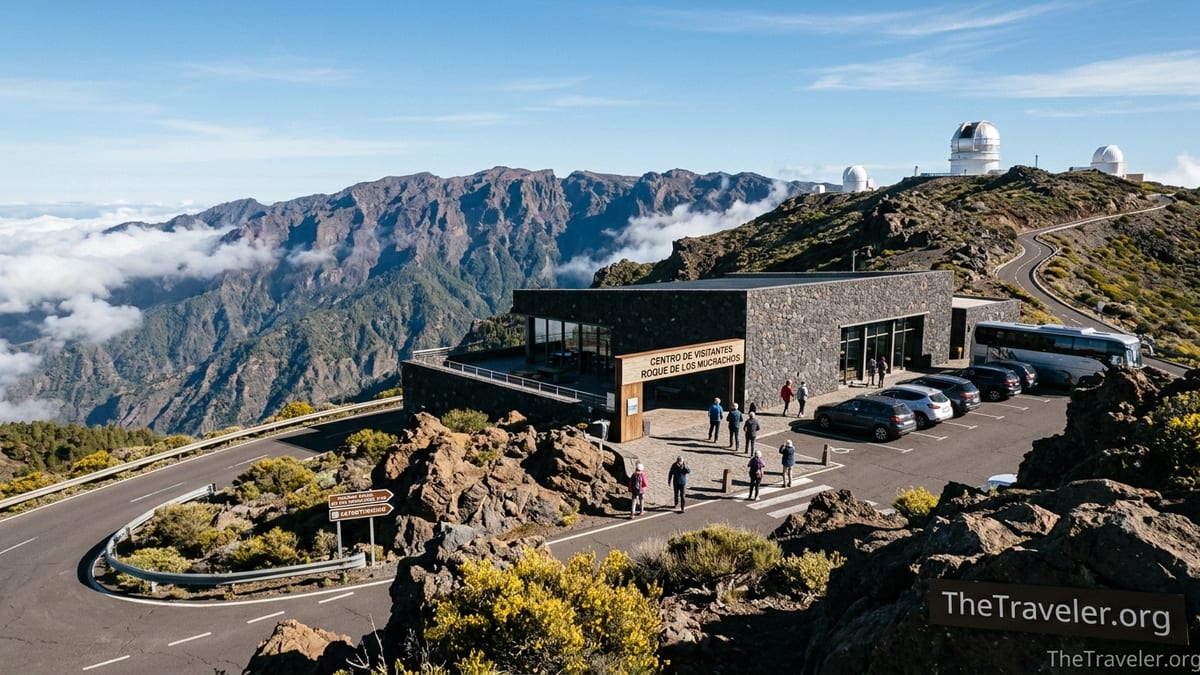
Understanding the role of the Roque de los Muchachos Visitor Centre
The Roque de los Muchachos Visitor Centre (Centro de Visitantes del Roque de los Muchachos) is an interpretive facility close to the island’s highest point at around 2,400 metres above sea level. Its purpose is to explain why La Palma’s skies are world class for astronomy, to interpret the work of the nearby telescopes and to introduce visitors to the unique environment of the Caldera de Taburiente and the high volcanic ridge.
Importantly for trip planning, the centre is not part of the restricted scientific observatory complex. The professional telescope domes of the Observatorio del Roque de los Muchachos sit further along the ridge and remain off limits except during prearranged guided tours. The visitor centre acts as a public gateway to this world, offering exhibits, models and audiovisual material that explain the observatory’s work without requiring access to any research buildings.
This makes the centre a standalone attraction for anyone driving the LP 4 mountain road, including travellers who may not wish to tackle summit trails or who are visiting with children or older relatives. The building itself is striking, clad in dark basalt to blend with the volcanic surroundings, and has been developed by the Cabildo de La Palma in collaboration with local authorities and the Instituto de Astrofísica de Canarias.
For many first time visitors to La Palma, a stop here provides context that enriches the rest of a holiday, from stargazing elsewhere on the island to coastal walks that reveal the same geology explained in its exhibition halls.
Location, access and parking at the summit
The visitor centre stands near the crest of the Roque de los Muchachos road, a short drive from the classic miradores that overlook the Caldera de Taburiente. It is signposted from the LP 4 as “Centro de Visitantes Roque de los Muchachos,” and is located slightly apart from the main Roque de los Muchachos viewpoint area where bus and car parking serve the cliff edge miradores.
In practice, most travellers will approach from Santa Cruz de La Palma or Los Llanos de Aridane via the LP 4, then follow the final switchbacks to the high ridge. From the popular Roque de los Muchachos mirador parking, it is typically only a few minutes’ drive to the visitor centre entrance. Walking between the mirador parking and the centre would take roughly 10 to 15 minutes each way at altitude for a reasonably fit adult, but most visitors choose to move the car because of the elevation, wind exposure and lack of continuous pavement.
The centre itself has its own dedicated parking immediately beside the building, which is suitable for private cars and visiting coaches. Spaces are limited but turnover is fairly steady because visits are normally timed in blocks of one to two hours. For families and older travellers, using the centre’s own car park is the most convenient option, as it allows direct step free access to the entrance and minimises time spent walking in thin air and strong sun.
Because this is a high mountain road, access can occasionally be affected by weather or maintenance. In winter or after storms the LP 4 may close temporarily due to ice, snow, wind or rockfall. Even when the road is technically open, visibility can change quickly. It is sensible to check local road conditions and any operating notices for the centre on the day of your visit, particularly outside the summer season.
What to expect inside: exhibitions and experiences
Inside, the Roque de los Muchachos Visitor Centre is arranged around several themed exhibition halls that together form an educational circuit. Official descriptions highlight three core areas. One zone focuses on the Canary Islands and the particular climatic and atmospheric conditions that make La Palma and this summit ideal for astronomical observation, including the island’s low light pollution and stable air layers.
A second main theme covers exploration of the universe. Here visitors find large scale graphics, models and audiovisual material that summarise the current understanding of galaxies, stars and planets, as well as the role that La Palma’s telescopes play in cutting edge research. Families can expect immersive projections and interactive elements designed to help children grasp concepts such as distances in space, the life cycle of stars and the way instruments capture faint light.
A third thematic area brings the story back to Earth, presenting the natural environment around Roque de los Muchachos. Exhibits interpret the Caldera de Taburiente, the volcanic geology of La Palma and the high mountain flora shaped by altitude, wind and occasional snow. This section helps visitors view the surrounding cliffs, ridges and pine forests with fresh eyes when they return outdoors to the miradores.
The centre also includes audiovisual rooms where short films and multimedia presentations are shown at intervals, and there are scale models of some of the observatory’s telescopes. At the time of writing, general entry operates on a straightforward walk in basis during opening hours, without compulsory guided tours or strictly timed slots, although organised groups can arrange guided visits. Policies can evolve, so visitors who prefer a guided experience should check whether scheduled tours or audio guides are offered during their travel dates.
Opening hours, seasonality and whether to book ahead
According to current official tourist centre information, the Roque de los Muchachos Visitor Centre usually opens daily from late morning to mid afternoon. Published guidance indicates that in winter the centre typically operates from 10:00 to 16:00, while in summer hours extend until around 17:00. Some English language summaries present a flat 10:00 to 17:00 timetable year round, so travellers should treat these times as an approximate window rather than a guarantee.
The key planning point is that the centre does not open early in the morning or in the evening, and it is not a night time stargazing venue. Most visitors will therefore combine it with a daytime drive to the summit and miradores. There is currently no widely advertised weekly closing day, but like any public facility it may close on specific holidays, for maintenance or due to adverse weather.
Advance online booking for standard individual visits is not consistently required and many visitors simply arrive and buy tickets on site at the reception desk. Group visits, school parties or special activities are more likely to need advance coordination with the Cabildo de La Palma or the centre’s management company. Because practices can change with new contracts or management arrangements, it is sensible to verify the latest booking recommendations on the official La Palma visitor centres information before setting out.
If you are planning a tight itinerary, consider calling the island tourist information service or checking the most recent opening times close to your travel dates. This is particularly important in winter and early spring, when occasional closures for snow or ice can affect the entire Roque de los Muchachos area.
Tickets, prices and how to buy
Current public information from local tourism sources indicates that admission to the Roque de los Muchachos Visitor Centre for non resident adults is in the region of 15 euros, with children paying approximately half that rate and children under 12 often admitted free. There are discounts for Canary Islands residents and for registered groups. Exact amounts can be adjusted by the island authorities from time to time, so these figures should be treated as a representative range rather than fixed prices.
Tickets are generally sold at an on site desk inside the building, where staff can also provide basic orientation and answer questions about the exhibitions. Some promotional materials mention combined or reduced entry when visiting more than one Cabildo managed attraction on the island, such as other interpretation centres or volcanic sites. These offers, when available, usually apply at the point of sale and may require you to keep your receipt from the first visit.
As with opening hours, price structures and concessions can evolve, especially as contracts for running the centre are renewed. Before travel, visitors should check the latest official tariff information for the island’s tourist centres or confirm by phone what the current adult, child and family rates are. This is particularly relevant for larger family groups, who may benefit from resident or group discounts if they meet eligibility criteria.
For everyday travellers driving up from coastal resorts, buying tickets on arrival is normally sufficient. Those joining organised island excursions may find that admission to the visitor centre is already included in their tour price, so it is worth confirming this with the tour operator in advance.
Facilities, accessibility and comfort at altitude
The Roque de los Muchachos Visitor Centre has been designed as a modern, accessible facility that can accommodate a broad range of visitors. The building is described as adapted for people with reduced mobility, with step free access from the car park, level circulation within the main exhibition floors and accessible restrooms. For families using pushchairs or visitors who rely on wheelchairs or walking aids, this makes the centre a far easier environment than some of the rocky outdoor miradores.
Standard visitor services include toilet facilities and a staffed reception area. A small shop or sales point offers locally themed products and astronomy related souvenirs, which can be a welcome distraction for children and a chance to support island initiatives. A full café or restaurant service is not heavily promoted in current information, and visitors should not assume that hot meals will be available. Bringing water and snacks from lower down the mountain remains wise, both for cost and convenience.
At more than 2,000 metres, altitude is a significant factor. The indoor setting provides shelter from strong winds, low temperatures and intense sun that are common on the ridge, and the building’s layout allows visitors who feel light headed or tired to sit and rest. Nevertheless, those with cardiovascular or respiratory conditions, or anyone not accustomed to altitude, should be prepared to move slowly, drink water and avoid rushing between exhibits.
Rest breaks are easy to incorporate as the exhibition spaces are divided into clear zones. Parents with small children may find that alternating brief stretches of focused attention with pauses at windows or quieter corners helps everyone adjust to the thinner air.
How long to visit and integrating the centre into your day
The island authorities do not currently impose strict time limits for individual visits, but practical guidance and visitor reports suggest that most people spend between one and two hours inside the centre. Families with school age children interested in the interactive elements often gravitate toward the longer end of that range, while older travellers who prefer a selective look at key displays may be content with just under an hour.
When planning a wider Roque de los Muchachos outing, it is sensible to allocate at least half a day for the summit area if you include the visitor centre and several miradores. One common approach is to drive first to the classic Roque de los Muchachos viewpoint, enjoy the panoramic views over the Caldera de Taburiente and the telescope domes, then continue to the visitor centre for a late morning or early afternoon visit. This order ensures you see the outdoor scenery in case clouds build later.
Another strategy, especially in colder or windier conditions, is to start at the visitor centre where you can warm up, learn about the landscape and understand the orientation of the caldera. You can then exit to the viewpoints with a clearer mental map, which helps older relatives or less mobile travellers appreciate what they are seeing even if they do not walk far from the parking areas.
If you have booked a separate observatory tour through an authorised provider, it is usually possible to combine that experience with a stop at the visitor centre on the same day, provided you leave enough time on the road. Observing strict timing is crucial because observatory tours and summit drives are both subject to weather and traffic conditions. Always factor in extra buffer time between any prebooked activity and your visitor centre stop.
Seasonal and weather considerations for summit travel
The Roque de los Muchachos ridge is famous for sunny skies but conditions are highly variable, and winter weather can be surprisingly harsh. The visitor centre offers an excellent refuge from wind, cloud and chill, allowing you to enjoy high mountain interpretation even when outdoor viewpoints are uncomfortable. Large windows and occasional terraces can still offer glimpses of the landscape during poor weather.
Nonetheless, the centre is not immune to extreme conditions. Heavy snowfall, ice, very strong winds or landslides can lead authorities to restrict or close the LP 4 road, especially on the highest sections near the observatory and the visitor centre. On such days the building may remain closed for safety reasons. Travellers visiting between late autumn and early spring should monitor local news, ask at accommodation or consult tourist information points regarding the status of summit access.
Temperature differences between the coast and the summit can be dramatic at any time of year. It is common to leave a warm beach in short sleeves and arrive at the visitor centre needing a jacket, hat and closed shoes. Families should pack layers for every member, including children who might become uncomfortable quickly in cold wind. Sun protection is equally important, as ultraviolet radiation is stronger at altitude and the reflection from pale rock surfaces can be intense.
Cloud inversions are another signature of La Palma’s mountains. On days when trade wind clouds sit below the ridge, the summit may be sunny but lower sections of road are damp and misty. Allow extra driving time in such conditions. The enclosed, well signposted environment of the visitor centre can be reassuring once you arrive, particularly for first time drivers in mountain areas.
Planning summary for families, older travellers and first time visitors
The Roque de los Muchachos Visitor Centre is especially valuable for families, older travellers and anyone visiting La Palma’s summit for the first time. Its clear explanations of astronomy and geology, accessible layout and sheltered environment make the high mountain world intelligible and enjoyable without demanding specialist knowledge or strenuous walking. Children gain a story that links the shining telescope domes they see outside with real discoveries about the universe.
When time at the summit is limited, deciding whether to prioritise the visitor centre or outdoor viewpoints depends on your group’s interests and the weather. On a clear, calm day, panoramic miradores over the Caldera de Taburiente are unforgettable and should not be rushed. In that case, many travellers choose to split their time roughly evenly between viewpoints and the centre. In cold, windy or cloud affected conditions, dedicating more of your stop to the indoor exhibits can be a more comfortable and rewarding choice.
For most itineraries, a realistic minimum is to allow about one and a half to two hours for the visitor centre itself, plus travel and viewpoint stops. Build in additional time if you are driving up and down from coastal accommodation the same day. Always travel with warm layers, sun protection, water and snacks, and be prepared for altitude by walking slowly and listening to your body.
Before setting out, readers should reconfirm three practical details: the centre’s current opening hours for their season, the latest ticketing method and prices, and the road status for the LP 4 to Roque de los Muchachos. With those checks complete, the visitor centre can turn a simple mountain drive into one of the most educational and memorable days of a La Palma holiday.