


More news on this day
Strong winds around Denver International Airport prompted federal air traffic officials to slow arrivals for several hours, causing hundreds of delays and a handful of cancellations that rippled across airline networks and disrupted weekend travel plans.
Get the latest news straight to your inbox!
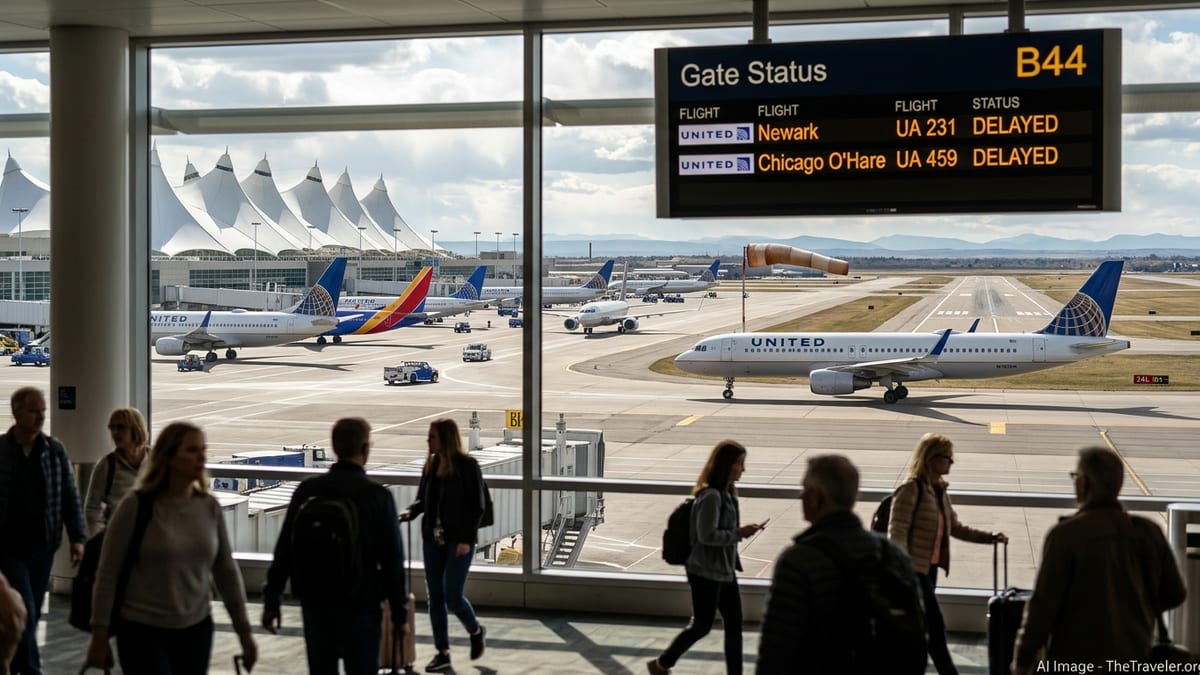
What the FAA ground delay meant for Denver flights
The Federal Aviation Administration confirmed that a traffic management program was instituted for flights arriving at Denver International Airport because of high winds in the area. Under such a program, aircraft destined for Denver are assigned controlled departure times from their origin airports to keep arrival flows within what controllers can safely handle in adverse conditions. While departures from Denver can continue, overall airport throughput typically drops, leading to delays both in and out of the hub.
During the affected period, flight status boards and tracking services showed Denver ranking among the more heavily affected U.S. airports for delays, with average arrival holds reported in the range of tens of minutes rather than isolated, short waits. Although the FAA advisory described average inbound delays on the order of a quarter of an hour, airlines’ own data and third party trackers recorded significantly more severe waits for some individual flights as operations compressed into fewer usable arrival slots.
The program was tied specifically to wind conditions rather than to a failure of airport infrastructure or air traffic control systems. That distinction matters for travelers because weather driven constraints tend to affect multiple airlines simultaneously, and in many cases limit the rebooking options carriers can offer, particularly on busy weekends when load factors are already high.
Scale of delays by airline and route
Data from flight tracking services indicated that several hundred Denver bound and Denver originating flights experienced departure or arrival delays during the weather disruption, with only a small number of outright cancellations. The largest impacts were concentrated among carriers that operate many daily frequencies at the airport, including major network airlines and their regional partners. That pattern is consistent with typical weather events at large hubs, where airlines with dense schedules are most exposed when airport acceptance rates are reduced.
Regional operators serving smaller communities along the Front Range and in neighboring states were among those reporting significant schedule adjustments. Because these flights often rely on tight aircraft and crew rotations, a delay on one sector can cascade into subsequent segments over the rest of the day. Travelers on shorter flights into Denver, such as those from nearby Rocky Mountain and High Plains cities, in some cases faced disproportionate disruptions relative to flying time, as aircraft were required to hold at their departure point until a controlled arrival slot into Denver became available.
On longer haul services, particularly from coastal hubs, airlines sometimes opted to absorb part of the delay in the air by flying at higher cruise speeds to recover time once en route. Even with such measures, many arriving flights reached Denver significantly behind schedule, and some connections fell below standard minimum times. Missed connections are often one of the most tangible impacts for passengers in this type of event, especially at a transfer heavy hub where itineraries are built around tight bank structures.
Weather conditions behind the disruption
The National Weather Service placed Denver and portions of the eastern Colorado plains under a high wind warning during the event, citing sustained winds in the 30 to 40 mile per hour range with stronger gusts. At Denver International, which sits on exposed high prairie east of the city, such winds can lead to significant crosswind components on certain runways and create low level wind shear and turbulence on approach and departure. Light snow showers in the area further reduced visibility at times, compounding the challenge for pilots and controllers.
Denver’s location near a convergence zone where mountain influenced northwesterly winds meet prevailing southeasterlies has long been recognized as a complicating factor for local aviation. In strong wind scenarios, air traffic managers may need to favor a particular runway configuration that is safest for the reported wind direction and strength, even if that choice reduces the number of arrivals the airport can accept each hour. When that happens, the FAA and airlines implement traffic management initiatives such as ground delay programs to avoid excessive airborne holding around the airport.
The combination of gusty surface winds, potential wind shear and reduced visibility also tends to increase the spacing between aircraft on final approach, further reducing the effective arrival rate. That means that even if only a small number of flights are technically outside their crosswind or tailwind limits, the overall schedule still slows. Conditions of this sort typically evolve across the day, and air traffic managers update restrictions as new observations and forecasts arrive, which is why travelers can see programs extended, shortened or rescoped with little notice.
Operational response at Denver International Airport
Denver International Airport itself remained open throughout the weather event, with no runway closures reported solely due to snow accumulation. Airport operations teams focused on monitoring runway friction, keeping taxiways clear and coordinating with air traffic control units and airlines as winds shifted. Existing contingency and irregular operations plans are designed for precisely this sort of situation, with responsibilities divided among the airport operator, carriers and federal agencies.
For airlines, the immediate response centered on adjusting schedules, revising crew pairings and repositioning aircraft as the scale of the delays became clear. At a hub airport like Denver, these operational decisions can involve trade offs between protecting long haul departures, maintaining connectivity for regional spokes and limiting overnight disruptions that would affect operations the following day. In some cases carriers arranged for larger aircraft on particular routes to help re accommodate passengers from earlier delayed or canceled flights once weather related restrictions began to ease.
Within the terminal, the most visible impact for travelers was crowding at gate areas and customer service counters as departure times slid and connection windows narrowed. While the number of cancellations remained relatively low compared with major winter storms or the nationwide technology related ground stop seen earlier in November, some passengers still faced considerable disruption, particularly those with tight onward itineraries or with limited remaining departures to their destinations later in the day.
What travelers can do during similar Denver wind events
For travelers with upcoming trips through Denver, the latest event underscores the value of checking both airline specific status updates and Federal Aviation Administration advisories on the morning of travel. A formal ground delay program for arrivals into Denver is a clear signal that system wide slowness is likely, not just isolated delays on one carrier. In that situation, travelers with connections may benefit from speaking with their airline early about alternative routings or later flights that offer a more comfortable connection window.
Weather induced delays are generally categorized as outside airline control, which limits mandatory compensation in the United States, though some carriers provide meal vouchers or hotel discounts case by case. Trip insurance policies and certain credit card benefits can help fill that gap for travelers seeking reimbursement for extra lodging or meals when overnight misconnects occur because of prolonged weather restrictions. Given Denver’s exposure to high wind, thunderstorms and snow at different times of the year, regular travelers through the hub often build in additional connection time, especially for evening flights that have fewer later alternatives.
Looking ahead, forecasts and official traffic management data indicate that operations at Denver typically normalize quickly once wind speeds ease and visibility improves. However, residual delays can linger into the next operating day as aircraft and crew are repositioned. Passengers with flights the day after a significant weather event should still monitor status closely, as early morning cancellations and schedule adjustments are sometimes used to restore overall network balance after a day of irregular operations.