


More news on this day
U.S. travelers returning from the Thanksgiving 2026 holiday are contending with lingering delays and scattered cancellations after a coastal nor’easter disrupted major East Coast airports on Thursday and a Saturday morning earthquake off Manhattan Beach, California, briefly rattled Los Angeles International Airport, adding fresh uncertainty at the end of one of the busiest travel periods in years.
Get the latest news straight to your inbox!
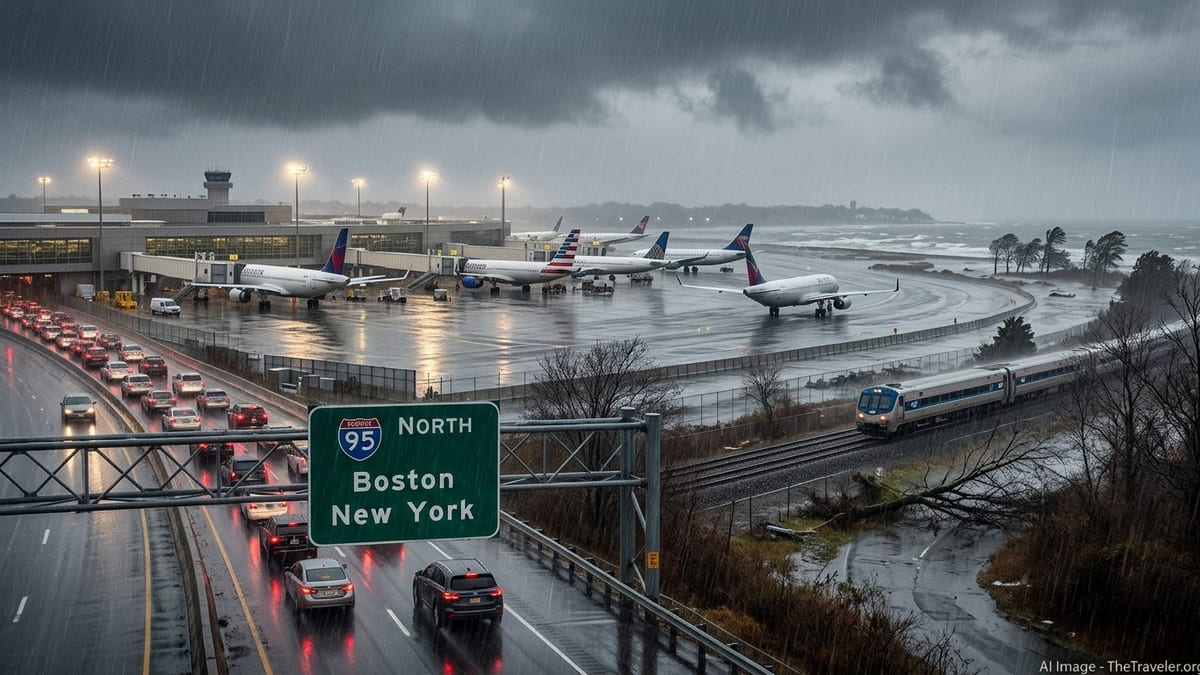
Nor’easter soaks I‑95 corridor and slows key hubs
The main driver of this weekend’s air travel problems remains the coastal storm that pushed north along the Eastern Seaboard on Thanksgiving Day, November 26, bringing strong winds, heavy rain and coastal flooding from the Carolinas into New England. National Weather Service briefings for the Mid‑Atlantic and Northeast, along with state emergency declarations in New Jersey and other coastal states, warned ahead of time that the system would peak on Thursday with hazardous crosswinds and low cloud ceilings at several of the country’s busiest airports.
By Thursday afternoon, airports in the New York City area were reporting extended arrival and departure spacing as the Federal Aviation Administration (FAA) implemented ground delay programs to keep traffic moving in poor visibility and gusty conditions. Local reports from the New York, Boston and Baltimore/Washington corridors described dozens of cancellations and many more delayed flights tied to wind gusts over 50 miles per hour at some airfields, as bands of heavy rain swept through at the height of the holiday. Power outages and flooded roadways in coastal communities added to the challenge of simply getting to and from the terminals.
The transportation impact has stretched well beyond the runways. Passenger rail operators in the Northeast reported weather‑related slow orders and delays where saturated soil and downed tree limbs interfered with overhead power lines, particularly in New Jersey and southeastern Pennsylvania. State and local agencies along the I‑95 corridor have continued to warn of residual standing water and sporadic road closures through the weekend as high astronomical tides combine with the storm’s leftover surge.
Record Thanksgiving volumes leave limited margin for disruption
Even as weather conditions improve in many areas, the timing of the nor’easter has amplified its effect on travelers because it coincides with the heaviest part of the Thanksgiving travel period. Federal aviation officials projected earlier in the week that U.S. air traffic around the holiday would be the busiest in more than a decade, with daily flight counts over 50,000 from Sunday, November 29, through Tuesday, December 1, as travelers fan back out across the country after long weekend visits.
Preliminary operational data published by the U.S. Department of Transportation show that weather has been responsible for a large share of delay minutes since the start of the week, particularly along the East Coast and in parts of the Midwest where an earlier system moved through before the nor’easter developed. At the same time, the near‑record number of scheduled flights has meant that even modest interruptions at one hub have quickly propagated across airline networks, leaving some passengers dealing with missed connections and rebookings far from any active storms.
Average delays so far have generally hovered around the half‑hour mark at the busiest times of day at major hubs, though some individual flights have faced substantially longer waits while airlines repositioned crews and aircraft. Because airlines and the FAA continue to adjust their statistics as reports are finalized, exact system‑wide numbers for the peak Thanksgiving window will not be confirmed for several days, but live tracking on Saturday pointed to a moderate level of nationwide disruption, with more than a thousand delays logged by early afternoon and scattered cancellations at large connecting airports.
Delays concentrated at Northeast and Midwest hubs, with ripple effects nationwide
Patterns on Saturday, November 28, mirrored typical Thanksgiving travel dynamics, with the brunt of delays concentrated at a handful of major hubs. In the Northeast, the trio of New York area airports, along with Boston Logan, experienced continued arrival and departure spacing as controllers managed residual low clouds and gusty winds left behind by the receding storm. Most flights were able to depart, but many left late, and passengers reported longer waits at gates and occasional tarmac holds during brief slowdowns in traffic flow.
In the Midwest, Chicago O’Hare, one of the country’s most important connecting hubs, recorded a high volume of delayed departures at various points on Saturday. Some of these disruptions reflected direct impacts from earlier weather in the region, while others stemmed from the knock‑on effect of delayed inbound aircraft and crews from the East Coast. Because O’Hare feeds itineraries across the United States and onto international routes, schedule problems there were quickly felt in distant markets with otherwise calm local weather.
Other giant connecting hubs, including Hartsfield‑Jackson Atlanta and Dallas Fort Worth, have also seen localized pockets of cancellations and rolling delays as carriers work through the backlog from Thursday’s nor’easter and accommodate heavy passenger loads. While the FAA has not implemented any nationwide ground stop related to this week’s weather, it has continued to apply targeted ground delay programs at individual airports where clouds, visibility or winds temporarily exceed safe capacity, and officials have cautioned that these restrictions may appear and disappear with little notice through the remainder of the weekend.
Offshore quake near Manhattan Beach rattles LAX but leaves flights largely intact
Just as airlines were managing the lingering weather fallout, Southern California experienced a separate jolt on the morning of Saturday, November 28, when a widely felt earthquake struck offshore near Manhattan Beach, several miles west of Los Angeles International Airport. The United States Geological Survey initially listed the event as a magnitude 4.7 to 5.0 quake located in coastal waters southwest of the city, a depth and location that allowed the shaking to be felt across much of the Los Angeles Basin.
Local media and eyewitness accounts described ceiling tiles shaken loose inside at least one LAX terminal, broken glass at parts of the terminal frontage and startled passengers temporarily pausing check‑in and security lines while the tremor passed. The Los Angeles Fire Department placed the city into its standard earthquake response posture, often referred to as “earthquake mode,” dispatching crews from neighborhood stations to inspect critical facilities, including airports, ports and major road corridors, for any structural damage or utility issues.
By early afternoon, authorities reported no significant injuries and no major structural problems at LAX tied to the quake, and the airport’s runways and taxiways remained open while engineers continued detailed inspections of terminals and parking structures. Flight‑tracking data showed that aircraft movements continued during and after the event, though individual flights may have experienced brief timing adjustments as pilots and controllers verified runway and taxiway status. Any temporary gate closures to facilitate inspections have added a layer of congestion in already crowded departure halls but have so far not resulted in widespread, quake‑specific cancellations.
What travelers should watch for through Tuesday
Looking ahead to the remainder of the Thanksgiving travel window, from Sunday, November 29, through Tuesday, December 1, aviation and weather agencies expect the U.S. system to remain under strain even as the East Coast storm moves further offshore. Forecasts indicate that additional disturbances over the central United States and into the Northeast could bring periods of rain, low clouds and gusty winds to some of the same regions already affected, as well as early‑season snow at higher elevations in the Rockies and parts of the interior Northwest.
For passengers, the combination of unsettled weather, residual congestion from earlier in the week and the scrutiny of airport facilities around Los Angeles after the quake means it is wise to build extra margin into travel plans for at least the next several days. Travelers are being advised by airlines and regulators alike to monitor flight status through carrier apps and airport information screens, pay close attention to gate and departure‑time changes, and allow additional time at security checkpoints, particularly at large connecting hubs such as New York area airports, Boston, Chicago O’Hare, Atlanta, Dallas Fort Worth and Los Angeles.
Because even small disruptions can cascade when flight schedules are tightly packed, passengers with critical connections or time‑sensitive plans may want to consider earlier departures where feasible, or to prepare back‑up options in case of missed onward flights. Consumer advocates also remind travelers that when a carrier cancels a flight or makes a significant schedule change and a passenger chooses not to travel, U.S. Department of Transportation rules generally entitle that passenger to a cash refund rather than a voucher. With storms still clearing from the Thanksgiving nor’easter, intermittent unsettled weather in the forecast and aftershocks possible near Los Angeles, those returning home through Tuesday should remain flexible and informed as the busy holiday period winds down.