


Rosario is one of Argentina’s most discussed cities: a handsome river port with major cultural attractions and a complicated security reputation. For international visitors planning 2027 trips, the key questions are whether Rosario is worth a stop and whether it is safe enough for independent travel. The answer to both is a cautious "yes" for informed travelers who choose where to stay, how to move around and when to be out with care. This guide draws on the latest government advisories and local information to help you make an evidence-based decision.
Get the latest updates straight to your inbox!
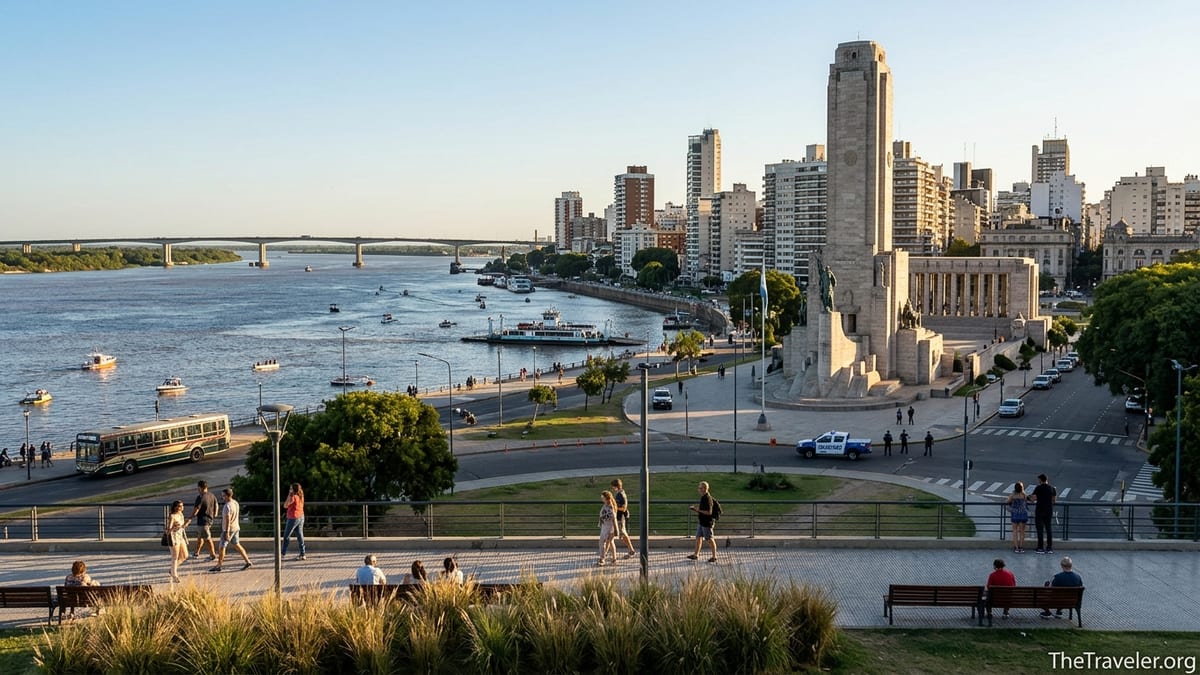
Rosario in 2027: Why Go, and How Safe Is It Really?
Rosario, in the province of Santa Fe, is Argentina’s third-largest urban area and an important river port on the Paraná. It is nationally significant as the birthplace of the Argentine flag and home to the Monumento Nacional a la Bandera, but it is also a university city with strong football culture, contemporary music venues and a developing waterfront. Visitors are drawn by riverside parks, leafy boulevards, museums in Parque de la Independencia and a food scene influenced by the surrounding agricultural region, from grilled meats to river fish.
Rosario’s reputation abroad is mixed. Over the last decade it has frequently appeared in international reporting on drug-related violence and organized crime. In 2024 and 2025, media often referred to Rosario as one of Argentina’s hardest-hit cities for gang conflict. In response to rising homicides, the national government deployed additional security forces to Rosario, a fact acknowledged in foreign travel advisories that ask visitors to exercise increased caution and monitor local news when in the city.
By mid 2026, the United States retained a countrywide advisory for Argentina but removed Rosario from a short list of “higher risk” localities, while still noting that criminal and drug-trafficking groups remain active and that street crime is a problem in urban centers including Rosario. Other governments, such as Canada, continue to recommend a high degree of caution in Rosario due to homicides linked to organized crime. These warnings do not say that tourists should avoid the city entirely, but they underline that conditions can change and that visitors must pay close attention to basic safety practices.
In practical terms, most short-stay visitors who base themselves in central or riverside districts and move mainly by registered taxis or reputable ride-hailing services report experiences comparable to those in other large Argentine cities: petty theft risk, some areas to avoid after dark and occasional visible police or federal security patrols. The main risk for travelers tends to be opportunistic theft rather than targeted violence, although visitors should understand that serious incidents related to organized crime do occur in parts of the metropolitan area that tourists rarely enter.
Understanding Current Safety Advisories and Local Realities
As of late 2026, major English-speaking governments advise “increased caution” or a “high degree of caution” in Rosario. Summaries highlight drug-related organized crime, cite periodic spikes in homicides and note that national authorities have reinforced security deployments in the city. At the same time, Argentina overall is not subject to the highest warning levels and there are no broad instructions for tourists to leave Rosario, which indicates that the risk is considered serious but manageable for visitors who take sensible precautions.
It is important to distinguish citywide statistics from the reality in areas most travelers use. Police and media reports suggest that a significant share of violent incidents occur in peripheral or specific inner-city neighborhoods associated with drug trafficking and poverty, rather than around the Monumento a la Bandera, downtown pedestrian streets or the main hotel corridors. That said, incidents are not strictly confined to one or two zones, so the idea that the center is “totally safe” would be misleading. Travelers should behave in Rosario much as they might in central Buenos Aires or Córdoba: alert to their surroundings, discreet with valuables and conservative about walking routes at night.
Local comments and reporting through 2025 and 2026 describe visible though uneven improvements in some residential districts following increased patrols, alongside persistent theft issues such as motorcycle “motochorro” snatch robberies. Residents commonly advise against using phones at the curb or while waiting at bus stops, and recommend keeping bags secured and closed in public places. These are practical, low-cost measures that reduce the chance of opportunistic theft and are advisable in Rosario just as in other major Latin American cities.
Because municipal and provincial crime data are published with delays and often in technical formats, a visitor planning for 2027 should not assume that a positive or negative trend from previous years will continue unchanged. Before traveling, check your own government’s Argentina travel advice and recent national news about Rosario in the weeks before departure. Once in the city, ask hotel staff or hosts about any current protest activity, football matches or local events that may temporarily alter security patterns or create large crowds on particular days.
Key Sights: From the Flag Monument to the Paraná Riverfront
The Monumento Histórico Nacional a la Bandera is Rosario’s defining landmark and the most likely starting point for a first visit. Opened in 1957 on the riverbank where General Manuel Belgrano first raised what became the Argentine flag in 1812, the complex combines a ceremonial plaza, towers and sculptural elements designed by architect Ángel Guido and collaborators. Visitors typically access the monument from the streets Córdoba or Santa Fe, entering a wide paved esplanade facing the Paraná. The surrounding Parque Nacional a la Bandera is open as a public space day and night, though it is more comfortable and secure-feeling in daylight and early evening.
From the monument, the Paraná River waterfront continues north as a string of parks and promenades. Sections near Parque de España and La Florida beach area offer lawns, stairways down to the river edge and views across to the islands of Entre Ríos. Small kiosks and cafes operate seasonally along the costanera. During weekends and summer evenings, local families and groups of friends gather here to drink mate, cycle or skate, a sign that the atmosphere is relaxed when conditions are stable. As always, visitors should keep bags near their feet, avoid leaving belongings on benches unattended and stay in well-lit stretches after dusk.
Parque de la Independencia, a large green space south of the downtown area, functions as Rosario’s central park. It contains tree-lined avenues, a small boating lake, sports facilities and several key cultural institutions, including the Museo Histórico Provincial “Dr. Julio Marc”, which holds collections of colonial art, pre-Columbian textiles and artifacts related to national history. This park is popular for daytime strolls, picnics and weekend family outings. Visitors often combine a walk here with stops at nearby cafes along Bulevar Oroño or Avenida Pellegrini.
Boulevard Oroño itself, with its wide median planted with palms and old mansions converted into bars or offices, is one of Rosario’s most appealing urban walks. North of the park it leads toward the river area, while to the south it connects to residential districts. In daylight, walking significant segments of Oroño is a pleasant way to understand the city’s layout. After dark, many locals continue to use the boulevard near busy intersections and restaurant zones, but visitors should keep to stretches with active foot traffic, especially on quieter weekdays.
Culture, Food and Football without the Clichés
Rosario’s historical significance centers on its role in Argentina’s independence period and its development as a 19th-century export port. The flag connection is most visible at the Monumento a la Bandera and during the annual Día de la Bandera celebrations every 20 June, which bring official ceremonies and large crowds to the riverfront. The city’s wealth during the railway and grain boom is reflected in its eclectic architecture, from neoclassical civic buildings near the central plaza to industrial structures along the port.
Beyond history, Rosario has a strong contemporary cultural life. The city’s theaters, independent music venues and cultural centers host rock, folklore, jazz and electronic music scenes. Travelers interested in live music can look for schedules at venues along the Pichincha corridor or in converted warehouses near the river. Spanish-language listings and posters in cafes are often the best way to find current shows. Because some nightlife streets can feel different late at night than in early evening, visitors who are unfamiliar with the city may wish to arrive and depart by taxi or ride-hail rather than walking several blocks after midnight.
Rosario’s cuisine reflects its agricultural hinterland and river setting. Traditional parrillas serve beef cuts like ojo de bife and bife de chorizo, but menus may also feature surubí or boga, freshwater fish from the Paraná prepared grilled or baked. In Pichincha and along Bulevar Oroño you will find a mix of contemporary bistros, pizza places and cafes serving medialunas and espresso for breakfast. Prices fluctuate with inflation, but as of late 2026 a sit-down lunch menu in a mid-range restaurant often falls in a band that many visitors from North America or Europe consider moderate for a major city, while takeaway empanadas and street snacks remain relatively affordable.
Football is an important part of local identity, with two major clubs, Rosario Central and Newell’s Old Boys. Matches can generate intense atmospheres, especially during clásicos between the two. Security operations on match days include road closures and heavy police presence near stadiums. For visitors, attending a game with a reputable tour operator or a trusted local is preferable to independently navigating high-tension fixtures. Even if you do not attend a match, be aware that crowd behaviors and traffic disruptions can affect certain neighborhoods before and after kick-off.
Where to Stay: Central, Waterfront and Other Popular Areas
Most international visitors choose to stay in or near the central grid between the river and Bulevar Oroño, where hotels, apartments, offices and shops cluster. This area offers convenient access on foot or via short taxi rides to the Monumento a la Bandera, the pedestrian shopping streets and the main cultural institutions. Daytime foot traffic is high, and you are likely to see a mix of office workers, students and shoppers. At night, some blocks quieten significantly while others around busy avenues and bar clusters remain active. Choosing accommodation on a well-lit street near an avenue such as Pellegrini, Corrientes or Córdoba simplifies after-dark arrivals by car.
The waterfront districts near Parque de España and further north toward La Florida appeal to travelers who prioritize river views and green space. In these areas, options may include boutique hotels, furnished apartments and riverside dining spots. While daytime strolling along the parks is part of the attraction, it is still wise to confirm from your host which stretches feel comfortable after sunset. In practice, many visitors use the riverfront for daylight walks and return by taxi in the evening, particularly if carrying cameras or other valuables.
Neighborhoods around Parque de la Independencia and the southern reaches of Bulevar Oroño offer a slightly more residential feel while remaining central enough for quick taxi rides to key sights. These zones can work well for visitors interested in running or walking in the park early in the morning. As with any South American city, the boundary between lively and less advisable blocks can be quite sharp, so rather than relying on outdated generalizations about “safe” and “unsafe” barrios, ask your accommodation provider for up-to-date guidance on which corners and side streets to avoid at night.
At the budget end, hostels and simple guesthouses operate in various parts of the central area. When evaluating cheaper options, consider not only the nightly rate but also the location in relation to bus stops, taxi access and night noise. A very inexpensive room on an isolated or poorly lit block may increase your taxi costs or stress levels, while a slightly more expensive option closer to a busy avenue could feel more practical for solo travelers returning after dinner.
Getting There from Buenos Aires: Train, Bus and Car
Rosario lies roughly 300 kilometers northwest of Buenos Aires. Overland journeys typically take between four and six hours, depending on mode of transport and traffic. For many travelers, the long-distance bus remains the most flexible option, with multiple companies operating between Buenos Aires and Rosario at different times of day and night. Services usually depart from the Retiro bus terminal in Buenos Aires and arrive at Rosario’s main bus station, located a short taxi ride from the central area.
Comfort levels on Argentine long-distance buses vary from standard “semi-cama” seating with partial recline to “cama” and “cama ejecutivo” options with wider seats and more legroom. Fares are updated frequently with inflation, but recent examples from local travelers suggest that one-way tickets between Rosario and Buenos Aires have been quoted in the tens of thousands of Argentine pesos for semi-cama, with higher prices for full-recline amenities. Because of rapid economic changes, it is essential to check current prices on company websites or at terminals close to your travel date and to consider buying tickets a few days in advance for popular holiday periods.
Argentina’s state-operated Trenes Argentinos runs an intercity train on the Mitre Line between Buenos Aires Retiro station and Rosario Norte. Timetables as of early 2026 list at least one daily service, with journey times often in the range of six to seven hours. Schedule PDFs and official information show tiered fares in Argentine pesos by station and class, with “primera” and “pullman” seating categories. The train can provide a scenic and economical route, but it is slower than the highway bus and seats may sell out in advance around long weekends. Tickets are usually purchasable online through the operator’s system or at station ticket offices with identification.
Driving a rental car between Buenos Aires and Rosario is another possibility for confident drivers. The main highway route uses national roads that are paved and widely used, passing flat agricultural landscapes and service stations. However, foreign visitors should carefully weigh road safety factors such as long-distance truck traffic, varying driving styles and fatigue on straight stretches. It is common advice for travelers unfamiliar with the region to plan drives in daylight, avoid excessive speed and refuel well before running low, since some stations may have queues or limited hours.
Getting Around Rosario: Transport, Walking and When to Take a Car
Within Rosario, many key attractions, including the Monumento a la Bandera, central plazas, segments of the riverfront and parts of Bulevar Oroño, lie within a couple of kilometers of each other. Fit visitors who enjoy urban walking can realistically connect several sights on foot, especially during daylight hours in the cooler seasons. Nonetheless, the precaution in Rosario, as in other Argentine cities, is not to walk aimlessly across quiet areas at night or through unfamiliar neighborhoods with low foot traffic, particularly carrying visible cameras, laptops or large backpacks.
Registered taxis are widely available, identifiable by official markings and meters. They can be hailed on the street, picked up at taxi ranks outside major hotels and stations or ordered by phone. In recent years, ride-hailing services have become an important part of urban mobility in Argentina, operating under varying local regulations. In Rosario, many residents make routine use of such apps to move between nightlife zones and home, which indicates that they are a practical option for visitors as well. Using an app has the advantage of route tracking, fare estimates and electronic payment, which some travelers feel increases transparency and safety.
The city also has an extensive public bus network, known locally as colectivos, which locals rely on heavily. Fares are generally low by international standards and are paid with reloadable smartcards that you can buy and top up at kiosks. For visitors staying only a day or two, the learning curve for routes and card purchase may outweigh the cost savings compared with taxis or ride-hailing. Buses can also be crowded at peak hours, which increases pickpocketing risk. Unless you are comfortable with Spanish-language route information and busy urban buses, using them mainly for daytime trips and avoiding carrying passports or large sums of cash on board is sensible.
At night, particularly after around 21:00 or 22:00 outside peak dining streets, most visitors will feel more at ease taking a car rather than walking more than a few blocks, especially if traveling alone or returning from riverside areas to accommodation slightly inland. For example, a route from a restaurant in Pichincha back to a hotel near Plaza San Martín that might be an easy 20-minute walk by day is often more comfortably done by taxi late at night. The additional cost is modest relative to overall trip expenses and can reduce both real and perceived risk.
Practical Itineraries: One and Two Days in Rosario
With one full day in Rosario, a practical itinerary is to focus on the historic center and the riverfront, minimizing cross-city travel. After breakfast near your accommodation, head to the Monumento a la Bandera mid-morning, when light is good for photos and the plaza is active but not overly hot in summer. Spend time exploring the monument, ascending any accessible viewing platforms if operating, and walking through the adjacent park. From there, continue along the river toward Parque de España, taking breaks at benches or cafes as needed. Plan a sit-down lunch either in the downtown area or along Bulevar Oroño, reached by a short taxi ride if you prefer to avoid long midday walks.
In the afternoon, move toward Parque de la Independencia by taxi or bus. Visit the Museo Histórico Provincial Julio Marc if open on your chosen day, allowing at least an hour to appreciate the collections. Afterwards, stroll through different sections of the park, such as the boating lake or formal gardens, before returning to your accommodation to rest. For dinner, choose a restaurant in central Rosario or Pichincha recommended by your hotel or recent local reviews. Use a taxi or ride-hail both ways after dark, especially if dining late in Argentine style.
With a second day, you can add more specialized interests or a river-focused experience. In the morning, consider returning to the riverfront north of the central monument, exploring additional parks and viewpoints. Depending on operating conditions and schedules, river excursion boats such as those departing near the Parque Nacional a la Bandera area may offer short trips across to the Paraná islands or along the city’s waterfront, providing panoramic views of Rosario’s skyline and the Rosario-Victoria Bridge. Check service availability, departure times and safety standards locally, as river levels and regulations can affect whether boats run at particular times of year.
For the second afternoon and evening, focus on Rosario’s contemporary urban life. Walk a representative stretch of Bulevar Oroño during daylight to see the historic mansions and residential buildings, stopping for coffee or ice cream. Later, you might visit a cultural venue, small theater performance or live-music bar identified through local listings. Always plan return transport in advance: agree a meeting point on a well-lit corner for a taxi, or ensure your phone has data and battery to request a ride-hail. This approach allows you to enjoy Rosario’s creative side while managing exposure to late-night street risks.
Costs, Seasons and Weather Considerations
Budgeting for Rosario in 2027 requires accepting that Argentine prices can change quickly. As of late 2026, long-distance bus tickets from Buenos Aires to Rosario are generally less expensive than equivalent internal flights within large countries, but the exact peso amount fluctuates with inflation and fuel costs. Intercity train tickets have been advertised in structured fare tables by station and class, often significantly cheaper than bus fares, though with fewer departures and longer journey times. Urban taxis and ride-hailing fares are modest by many international standards but are periodically adjusted.
Accommodation options range from budget hostels and basic hotels to mid-range business properties and a handful of higher-end offerings. International visitors paying in foreign currency often find that per-night rates, converted at current exchange rates, compare favorably to mid-sized European or North American cities, though this can change. To budget realistically, check rates for specific dates three to six months before travel using Argentine and international booking channels, and factor in an additional cushion to cover inflation between booking and arrival.
Rosario’s climate features hot, often humid summers and cooler, drier winters. December through February can bring high temperatures and intense midday sun, especially along the open riverfront and in large parks. During these months, plan outdoor sightseeing for early morning and late afternoon, leaving indoor museum visits and rest periods for the hottest hours. Spring and autumn, particularly September to November and March to May, usually offer more comfortable conditions for long walks and outdoor cafe seating.
Because summer thunderstorms can develop rapidly along the Paraná, pay attention to local weather forecasts and be prepared to alter river or boat plans if conditions deteriorate. Heat also increases the desirability of shaded routes and the need to carry water, which in turn raises the question of carrying bags. A small cross-body daypack kept zipped and worn in front in crowded conditions balances comfort with security and is preferable to large open-top totes or visible camera bags.
Rosario as a Stop on a Wider Argentine Itinerary
Rosario’s position between Buenos Aires and Córdoba makes it a logical overland stop for travelers moving across central Argentina. Many itineraries link Buenos Aires with Córdoba, Mendoza or the northwest by bus or car; inserting one or two nights in Rosario breaks up the journey and adds a different urban flavor focused on river life and provincial culture. For travelers already interested in Argentina’s political and social history, a visit to the Flag Monument and related museums deepens understanding of national symbols introduced in Buenos Aires.
The city also serves as a base for modest-scale excursions along the Paraná. Boat operators from Rosario offer trips to nearby islands for day use, where you might find simple riverside restaurants serving grilled fish and time for swimming on hot days when conditions are safe. The viability of such excursions depends on river levels, navigation alerts and business conditions, which can shift seasonally. Travelers should verify that any operator they consider adheres to local safety regulations, provides life jackets and does not overload vessels, and they should be prepared to cancel or modify plans if circumstances look questionable on the day.
For some visitors, especially those on very short Argentina stays of under ten days, the question is whether Rosario adds enough distinct value compared with focusing entirely on Buenos Aires plus perhaps a classic side trip to Iguazú Falls or wine regions. Rosario’s strengths lie in its more relaxed riverfront environment, lower density of foreign tourists and insight into a different model of Argentine city. Those particularly interested in football culture, 20th-century urban history or spending time in parks and along the river in a less touristy context may find Rosario very rewarding despite its security complexities.
On the other hand, travelers who feel anxious about crime, who prefer heavily touristed environments with dense sightseeing checklists, or who have very limited time may reasonably choose to skip Rosario in favor of destinations with simpler reputations and logistics. Argentina offers many options, from Salta in the northwest to Bariloche in Patagonia, and personal risk tolerance is a legitimate factor in building an itinerary.
Dedicated Safety Guidance for 2027 Visitors
Given Rosario’s specific context, a realistic personal safety plan is an essential part of trip preparation. First, handle valuables conservatively. Keep passports, extra credit cards and the majority of your cash in a hotel safe or concealed money belt, carrying only what you expect to spend that day plus a photocopy or image of your passport. Avoid displaying high-end cameras, jewelry or watches in the street; use simple bags that do not immediately mark you as a wealthy visitor, and keep phones mostly in pockets or bags, not in your hand as you walk or ride.
Second, think of nighttime movement as an area where you can significantly reduce risk through planning. For dinners, shows or gatherings that end after dark, arrange your return by registered taxi or ride-hailing service from the door of the venue rather than walking several blocks to look for a car. If you are out late in a bar district and feel uncomfortable about your surroundings, do not hesitate to leave earlier or move to a busier street to request transport. In residential areas, deserted corners can feel very different at night than in the afternoon, so try to schedule exploratory walks for daylight hours.
Third, be prepared for changing conditions. Local police deployments, political demonstrations or sudden crime incidents can briefly affect specific streets or neighborhoods. Ask hotel staff for current advice when you arrive, and again if you plan to explore new areas later in your stay. Keep an eye on local media or municipal announcements about transport disruptions or major events, and follow instructions from authorities if you encounter cordoned-off areas or operations.
International visitors should record local emergency numbers on their phones and on paper. In Argentina, the national emergency number 911 is widely used for police, fire and medical emergencies. It is also wise to have the contact details of your embassy or consulate in Buenos Aires and to maintain travel insurance that covers medical care, theft and trip disruption. When dealing with minor scams such as unofficial “helpers” offering to sell tickets at terminals or insisting on unnecessary services, a simple and firm refusal is usually the best response; use only clearly identified ticket counters, official machines or online channels to purchase transport and attraction entries.
Who Will Enjoy Rosario, and Who Might Skip It?
Rosario in 2027 is a city of contrasts: architecturally striking and scenically located, culturally rich and socially complex, with security dynamics that demand realistic awareness but do not preclude meaningful tourism. Travelers who are likely to appreciate Rosario most are those with some prior experience in large Latin American or Mediterranean cities, who are comfortable navigating urban environments that mix beauty and grit, and who value river landscapes, parks and local cultural life more than ticking off famous international icons.
Independent travelers interested in Argentina’s modern history, football culture, music or everyday city life outside the capital can find Rosario both enlightening and enjoyable. Couples or friends planning a multi-stop overland itinerary between Buenos Aires and Córdoba may use it as a rewarding pause to break up long bus rides. Budget-conscious visitors may also find that Rosario offers good value on accommodation and dining relative to more internationally famous cities, provided they stay attentive to their surroundings and flexible with evolving local conditions.
On the other hand, first-time international travelers who feel nervous about crime, families with very young children whose routines require frequent pram walks after dark, and visitors with extremely tight schedules might reasonably choose to focus their time elsewhere in Argentina. The country has destinations where security discussions are less prominent and where touristic infrastructure is more clearly defined. Opting out of Rosario is not an admission of defeat; it is a valid preference aligned with risk comfort and trip goals.
Ultimately, the question “Is Rosario worth visiting and is it safe enough?” does not have a universal answer. For informed, moderately streetwise travelers willing to follow conservative urban safety habits, stay in central or river-adjacent areas, move mostly by registered cars at night and keep valuables discreet, the city can offer a distinctive and memorable perspective on Argentina. For those who prefer environments with lower perceived risk or more straightforward reputations, other Argentine destinations may be a better match in 2027.