


More news on this day
Passengers booked on the Ruby Princess sailing from San Francisco on July 2, 2026, experienced a late start to their Alaskan voyage after embarkation was pushed back to allow for an intensified deep cleaning operation in the wake of a norovirus outbreak on the previous cruise.
Get the latest news straight to your inbox!
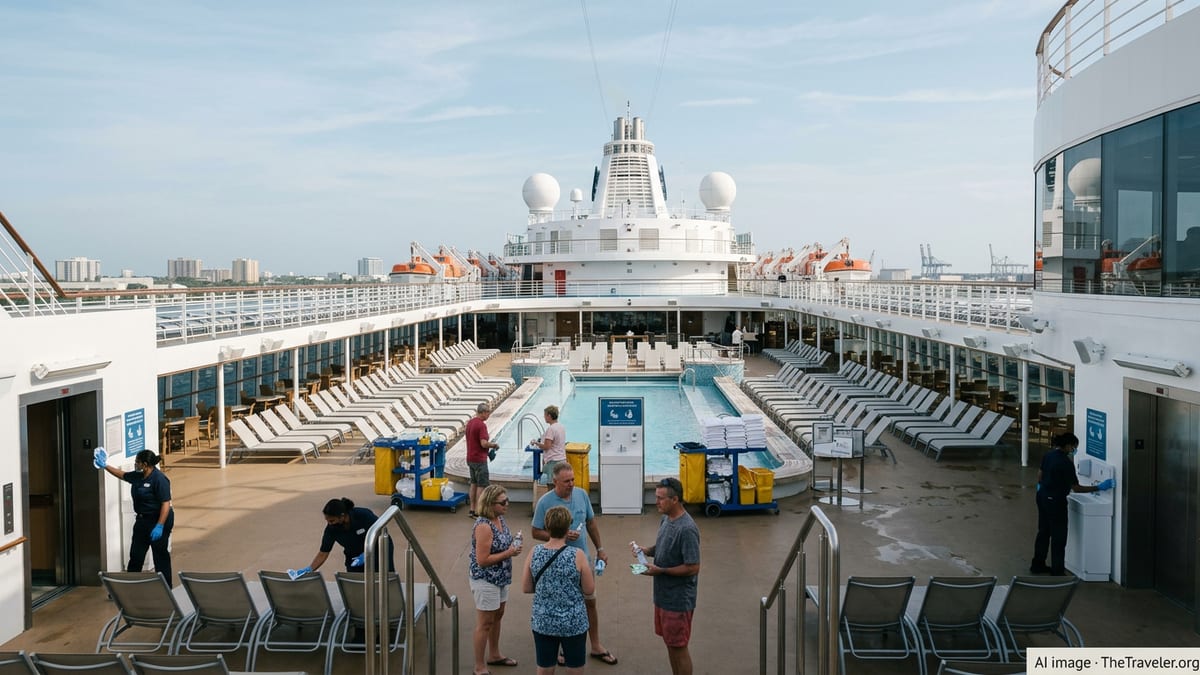
Deep Cleaning Follows Reported Norovirus Cases
Publicly available information from health and cruise tracking sources indicates that more than 100 passengers and crew reported gastrointestinal illness during the Ruby Princess voyage that departed San Francisco on June 12, 2026, and returned to the city on July 2. Norovirus was identified as the likely cause of the outbreak, with affected travelers reporting symptoms such as vomiting and diarrhea.
Reports indicate that enhanced sanitation measures were in place during the latter part of the June 12 to July 2 sailing, including increased disinfection of high-touch surfaces and isolation of symptomatic guests and crew. The ship nevertheless completed its scheduled itinerary, returning to San Francisco on time to prepare for its next 10-night Alaska and Canada departure.
As the vessel turned around in San Francisco on July 2, passengers scheduled to embark received notifications and online updates indicating that boarding would be delayed while crews carried out an expanded deep cleaning protocol throughout public spaces and cabins.
Embarkation Window Compressed for July 2 Sailing
According to cruise schedule listings, Ruby Princess was slated to depart San Francisco on a 10-night Alaska itinerary on July 2, 2026. Passengers typically receive staggered arrival times within a multi-hour boarding window, but travelers posting publicly on cruise message boards and social platforms described a compressed embarkation period following the decision to extend cleaning.
Some accounts referenced a roughly two-hour delay to the start of check-in and boarding at the San Francisco cruise terminal, with arrival times in cruise apps or documentation adjusted closer to midday. Passengers reported being asked to arrive later than initially planned so shipboard teams could complete sanitation tasks before new guests entered stateroom corridors and common areas.
Cruise documentation and general practice across the industry indicate that final boarding usually closes one to two hours before scheduled departure. With the deep cleaning effort narrowing the embarkation window, guests were encouraged through published guidance and app updates to monitor their assigned arrival times closely and allow extra flexibility in their travel plans to the pier.
Health Protocols and Onboard Mitigation Measures
Publicly available information from health agencies and cruise reporting sites describes standard procedures for managing suspected norovirus activity at sea. These measures typically include isolating symptomatic guests and crew, reinforcing handwashing and use of sanitizing gel, and intensifying cleaning of restrooms, buffet areas, elevators, and other high-traffic spaces.
During the June 12 to July 2 Ruby Princess voyage, reports indicate that these protocols were put into effect, with crew increasing visible cleaning and encouraging passengers to practice strict hand hygiene. Travel industry coverage notes that stool samples from ill travelers were collected for testing, consistent with routine outbreak investigation steps.
At turnaround in San Francisco, the deep cleaning operation reportedly focused on guest cabins, dining venues, lounges, and children’s facilities, with an emphasis on surfaces such as railings, door handles, elevator buttons, and restroom fixtures. Cruise watchers highlighted the temporary inconvenience to embarking guests while also pointing out that an extended sanitation effort is considered a key mitigation tool when a ship prepares to sail immediately after a voyage affected by gastrointestinal illness.
Passenger Experience at the San Francisco Terminal
Travelers sharing their experiences online described a mix of frustration at the late notice and appreciation for the enhanced hygiene steps. Some passengers reported receiving updated arrival guidance shortly before heading to the port, prompting changes to rideshare, parking, or luggage drop-off timing.
Others commented that, once boarding started, terminal operations moved relatively quickly, with check-in, security, and embarkation flowing at an accelerated pace to ensure the ship could still target its scheduled departure window. Posts suggested that terminal staff and ship personnel worked to direct guests to the appropriate lines while reminding them of hand hygiene practices upon entering the vessel.
Several frequent cruisers noted that delayed boarding for deep cleaning has become a more familiar occurrence when gastrointestinal issues are reported on a previous sailing. For some, the delay was viewed as an acceptable trade-off for greater reassurance that the ship had undergone intensive sanitation before a fresh group of travelers boarded.
Broader Context: Norovirus and Cruise Travel
Health authorities routinely point out that norovirus circulates widely on land and at sea and that cruise outbreaks represent a small fraction of total reported cases worldwide. However, the closed environment of a cruise ship, shared dining spaces, and frequent use of communal facilities can amplify its impact once introduced by an infected individual.
Cruise line materials and independent travel advice consistently stress preventive steps for passengers, including thorough handwashing with soap and water, using hand sanitizer at dining venues, avoiding public areas when ill, and promptly reporting gastrointestinal symptoms to onboard medical staff. These measures are designed to complement the cleaning and disinfection protocols carried out by crew.
The Ruby Princess incident on the June 12 to July 2 sailing adds to a series of gastrointestinal events tracked across the cruise sector in 2026. Travel analysts note that as ships continue to sail at or near full capacity in popular regions such as Alaska, Caribbean, and Europe, proactive communication about health risks and responsive measures like deep cleaning and adjusted boarding times are increasingly central to managing passenger expectations.