


More news on this day
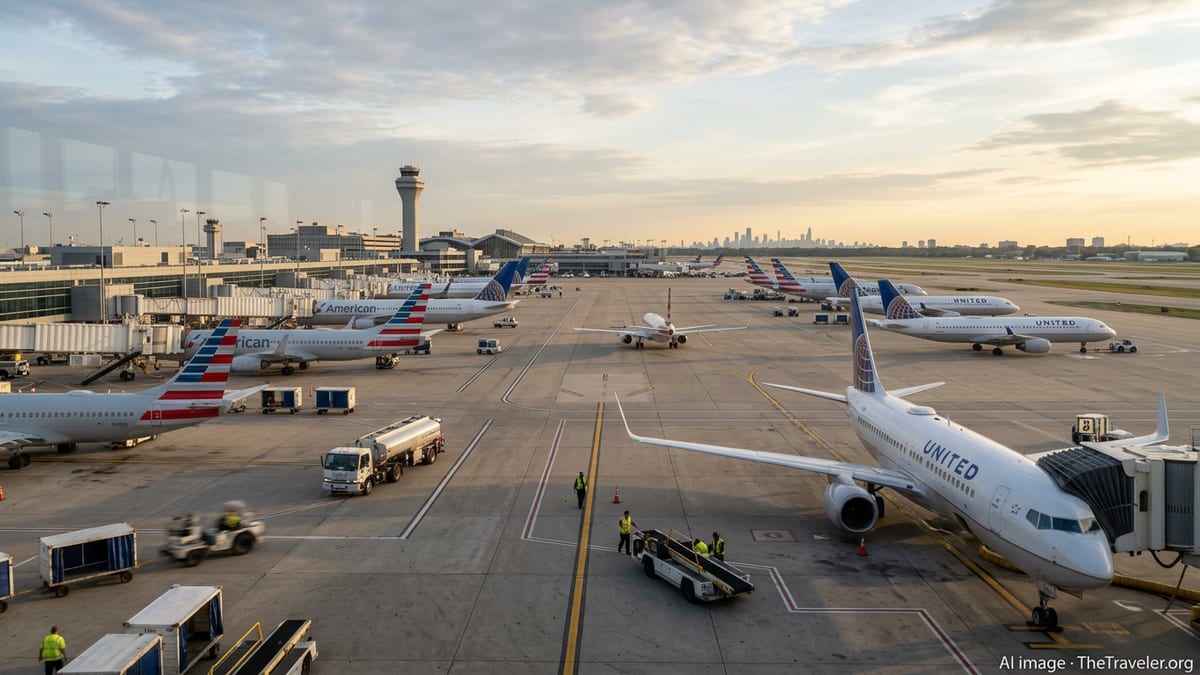
Severe weather and air traffic constraints around Chicago O’Hare International Airport on July 2 triggered a fresh wave of disruption, with publicly available flight tracking and airport data indicating 222 delays and five cancellations affecting United, SkyWest, American, Jazz and other carriers, rippling across domestic and international routes.
Get the latest news straight to your inbox!
O’Hare Operations Strained As Delays Mount
Data compiled from live airport dashboards and flight tracking platforms on July 2 show O’Hare once again under heavy operational strain, with delays clustering through the early morning and midday banks when United and American run some of their densest schedules. Regional affiliates such as SkyWest and Jazz, operating on behalf of the major airlines, were particularly exposed because of tight turn times and aircraft rotations.
The 222 delayed flights and five cancellations recorded at O’Hare translated into mounting queues at check in, lengthy waits at security, and busy gate areas as aircraft waited for departure slots. While overall cancellation numbers remained relatively low, the concentration of delays created rolling knock on effects for crews and aircraft positioned to operate later flights across the United States, Canada, Brazil, Germany and additional long haul markets.
Operational patterns indicate that smaller regional jets and narrowbody aircraft bore the brunt of the disruption, especially on short haul hops into Midwest and East Coast cities. As those flights pushed back later into the day, their late arrivals began to threaten onward international departures that rely on O’Hare’s hub structure to feed passengers from dozens of spoke airports.
Publicly available information from flight performance trackers also suggests that multiple United and American departures experienced schedule changes in the hour leading up to takeoff, reflecting the dynamic adjustments carriers were forced to make as weather and traffic management programs evolved over the course of the morning.
Weather, Air Traffic Management And Staffing Pressures
The turbulence at O’Hare followed a pattern familiar to summer travelers in the Midwest. Earlier in June, severe thunderstorms over northern Illinois prompted ground stops and widespread disruption, and the latest round of delays occurred against a backdrop of unstable weather patterns and congested airspace over a key national hub. Even moderate convective activity in the region can prompt reroutes, holding patterns and reduced arrival and departure rates.
Federal air traffic initiatives designed to manage congestion at major hubs also played a role. When flow control programs are put in place, airlines receive revised departure times and speed or route restrictions, which cascade into departure and arrival delays. For an airport on the scale of O’Hare, a modest reduction in hourly capacity during peak periods can quickly convert into dozens of delayed flights, especially when carriers like United and American operate tightly banked schedules.
Industry analysts note that staffing remains a contributing factor, both in the air traffic system and across airline operations. Even when airlines avoid large scale cancellations, smaller staff imbalances can slow down aircraft turnarounds, baggage handling and ramp operations, and limit the ability to recover from an early wave of delays later in the day. At O’Hare, such constraints are amplified by the sheer complexity of coordinating hundreds of daily movements across multiple terminals and partner airlines.
Recent summers have underscored how these forces interact, with O’Hare periodically experiencing surges of delays when storm cells, air traffic initiatives and airline staffing challenges converge during peak travel windows. The latest figures for July 2 fit squarely within that emerging pattern.
Network Impact Across North And South America
Because O’Hare functions as a central hub for United and a major connecting point for American, disruptions there can quickly spread across their domestic and international networks. Regional operators such as SkyWest and Jazz feed traffic into and out of the hub, meaning late departures from Chicago translate into late arrivals at small and midsize airports throughout the United States and Canada.
Flight data for July 2 show delayed departures from O’Hare to cities including Grand Rapids, South Bend, Milwaukee and other regional destinations, each of which then affects subsequent legs operated by the same aircraft. Some of these aircraft were scheduled to continue on to longer haul services, creating a risk of missed connections for travelers bound for Canada and Latin America.
Long haul services to Brazil and Germany, typically operated by widebody aircraft, also felt the strain as their passenger loads depend heavily on inbound connections from domestic and regional flights. When those feeder flights arrive late, ground handling teams must compress boarding and turnaround processes or accept delayed departures in order to accommodate connecting passengers. The July 2 disruption window coincided with key transatlantic and southbound departure times, heightening the risk of knock on impacts outside North America.
Publicly accessible tracking tools indicated that while most long haul departures from O’Hare were ultimately able to leave the gate, several did so behind schedule, leaving travelers facing late night and early morning arrivals at their final destinations and increasing the likelihood of missed onward connections in overseas hubs.
United, American, SkyWest, Jazz And Partner Carriers Under Pressure
United and American, the two dominant carriers at O’Hare, were at the center of Thursday’s operational challenges. United has significantly expanded its O’Hare schedule for the 2026 summer season, with hundreds of daily flights and dozens of international routes, increasing both its strategic presence at the hub and its exposure when conditions deteriorate. American and its regional affiliates, operating from neighboring terminals, face a similar vulnerability when storms and traffic initiatives converge.
SkyWest, which operates flights for both United and American under various regional brands, found itself on the front line of the delays. Short haul services into nearby Midwest cities showed schedule adjustments and rolling departure time changes, consistent with aircraft and crew being held in sequence while controllers managed flows into constrained airspace. For passengers, this often translated to multiple gate announcements and revised boarding times over the course of the morning.
Jazz, a key regional operator in the Canadian market, was affected primarily through cross border connections. When O’Hare based flights heading north left late, downstream services within Canada faced additional pressure to absorb late connecting passengers or risk leaving them behind. Similar dynamics played out for other regional and codeshare partners on routes linking O’Hare with secondary markets across the continent.
While no single carrier experienced an overwhelming wave of cancellations on July 2, the combined effect of dozens of delayed departures across the United, American, SkyWest, Jazz and partner networks underscored how interdependent hub operations have become, and how quickly a localized capacity crunch can ripple across multiple airlines and geographies.
What Travelers Experienced And How To Prepare
For travelers passing through O’Hare on July 2, the disruption was most visible in long queues at departure boards and frequent schedule updates on airline apps. Many passengers reported extended time spent on board aircraft waiting for departure clearance or sitting at gates while crews awaited revised departure slots. Those with tight connections faced particular uncertainty, especially if they were scheduled to transfer from regional jets onto long haul flights bound for Brazil, Germany or other international destinations.
Travel advocates point out that such episodes highlight the importance of building extra time into itineraries that connect through busy hubs during the peak summer season. Selecting longer layovers, opting for early morning departures when possible, and monitoring weather forecasts for key hubs such as Chicago can help reduce the risk of missed connections when storms or air traffic initiatives constrain operations.
Publicly available guidance from consumer groups also emphasizes the value of tracking flights in real time through airline apps and independent flight tracking services. During events like the July 2 O’Hare disruption, these tools can provide earlier visibility into creeping delays, allowing travelers to proactively rebook, adjust ground transportation or notify hotels of late arrivals.
As airlines and regulators continue to refine schedules, staffing and air traffic procedures, observers expect O’Hare to remain a bellwether for how the broader North American system copes with the growing combination of heavy demand, complex hub operations and increasingly volatile summer weather.