


More news on this day
Flight disruptions at Tweed New Haven Airport this week left passengers reporting long delays and sudden schedule changes after a runway lighting problem limited nighttime operations and forced some inbound flights to divert.
Get the latest news straight to your inbox!
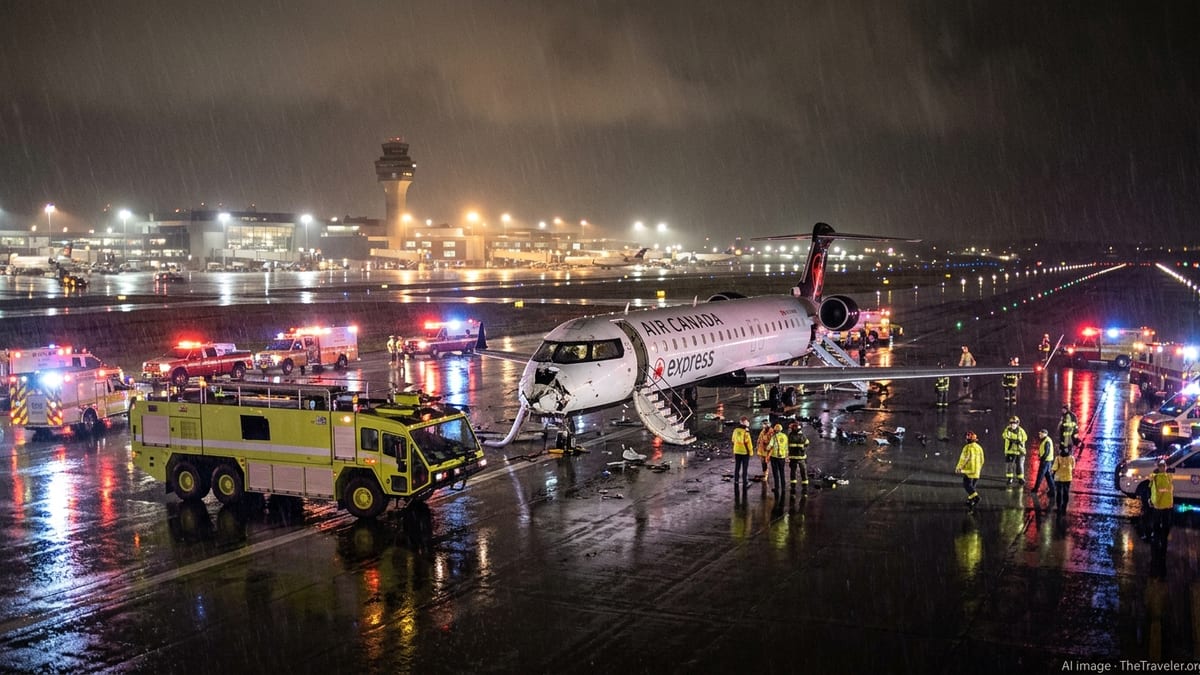
What travelers reported, and what published coverage indicates happened
Published local coverage and passenger-shared airline messages circulating online point to a runway lighting issue that developed Monday evening, September 14, 2026, affecting operations at Tweed New Haven Airport, also known as HVN. The disruption was especially consequential for evening arrivals, when airfield lighting is essential for safe approaches and landings.
According to published coverage, some flights were unable to complete their planned arrivals at Tweed and were instead routed to alternate airports, including Bradley International Airport in Windsor Locks, Connecticut, and Albany International Airport in New York. Those diversions created knock-on effects for Tuesday schedules because aircraft and crews were out of position for subsequent departures.
For travelers, the immediate experience was less about a single cancellation and more about accumulating delays: boarding times moved repeatedly, departure times slid further back, and rebooking or ground transportation became necessary for some passengers whose flights ended up elsewhere.
Why a runway lighting problem can halt an airport’s evening rhythm
At smaller airports, a technical issue affecting the runway environment can quickly constrain the entire operation. When portions of runway or approach lighting are unavailable, an airport may need to restrict arrivals after dusk, adjust the types of operations allowed, or pause certain movements until the issue is corrected or mitigations are in place.
Tweed’s role as a growing commercial airport amplifies the impact. Publicly available airport planning documents describe the primary runway, Runway 02-20, as 5,600 feet long today, a length that already places a premium on precise operating conditions for the aircraft that serve the airport. When weather, visibility, or airfield systems add limitations, the buffer to absorb delays is thin.
Published coverage also indicated the runway issue followed a period of stormy weather in the region. When irregular operations stack up, a single evening of diversions can cascade into the next day’s schedule, particularly when the same aircraft is expected to fly multiple legs through the airport.
The ripple effects: diversions, rebookings, and a compressed flight schedule
For airlines, diversions are expensive and operationally complex. A flight that lands at an alternate airport must still get passengers to their intended destination, either by later repositioning the aircraft to Tweed, rebooking travelers on subsequent flights, or arranging ground transportation where feasible. Even when travelers ultimately arrive, the experience often involves longer total travel time and additional uncertainty.
Published reporting described hours-long delays into Tuesday, with some departures pushed back significantly. A single delayed morning departure can also disrupt later flights, especially at airports where airlines run tight rotations and do not have spare aircraft parked nearby.
This dynamic is particularly visible at Tweed because many flights are tied to a limited pool of aircraft and a relatively compact daily schedule. When one inbound plane is late or diverted, the outgoing flight that depends on that aircraft can inherit the delay, and passenger congestion can build quickly inside a smaller terminal.
What Tweed’s infrastructure plans show about long-term constraints
Publicly available information about Tweed’s development plans underscores that the airport is in the middle of a broader growth and modernization effort. The airport’s project materials describe a new terminal planned at roughly 84,000 square feet, alongside a runway extension proposal that would bring Runway 02-20 to a total length of 6,575 feet.
Those plans speak to the airport’s underlying challenge: demand has grown, but day-to-day operations can still be sensitive to disruptions, whether they come from weather, equipment failures, or the tight sequencing of flights. A runway lighting issue is a reminder that aviation infrastructure is not only about runway length and terminal space, but also about the reliability of systems that support safe operations after dark.
Separately, an FAA environmental assessment for a runway and taxiway rehabilitation effort has described the current runway geometry and displaced thresholds, illustrating how technical runway characteristics shape operating margins and the ability to recover quickly when conditions change.
What passengers can do when Tweed flights are delayed or diverted
When delays are tied to airfield limitations, passengers often have limited control over timing, but there are practical steps that can reduce disruption. Travelers with checked bags may want to monitor airline notifications closely, since diversion outcomes can affect baggage delivery timing and where bags are made available.
For evening flights, it can also help to plan ahead for the possibility of an alternate landing. Bradley International Airport is about an hour from the New Haven area by car in light traffic, while Albany is substantially farther, so diversion outcomes can change ground-transport needs dramatically. Travelers relying on rideshares or late-night pickups may want a backup plan and a clear contact strategy.
More broadly, the week’s disruption highlights a tradeoff many passengers make when choosing a convenient local airport: shorter drives and easier parking on good days, but fewer alternative flight options when something goes wrong. At an airport with a limited schedule, a delay can quickly become an overnight issue if the next available flight is not until the following day.