


More news on this day
Morning commuters faced severe disruption after an emergency incident blocked a busy rail line today, forcing trains to be halted while response teams secured the area and assessed the situation.
Get the latest news straight to your inbox!
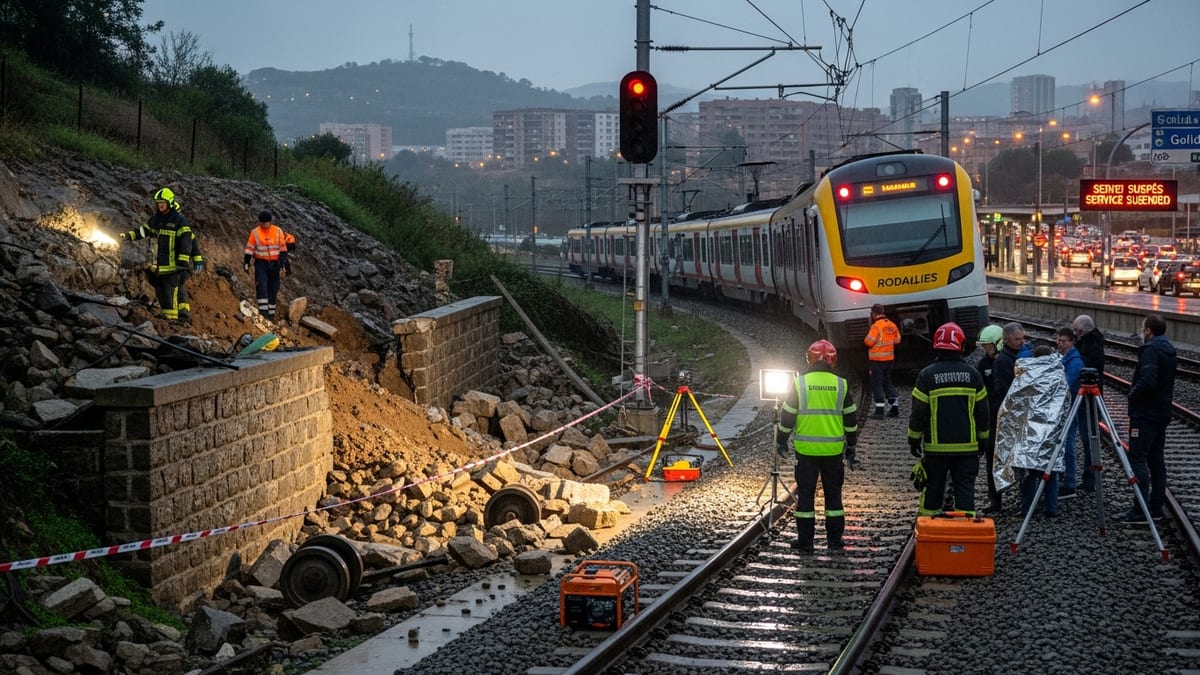
Services halted as line blocked in morning peak
Reports from rail operators and local media indicate that trains were brought to a standstill shortly after the morning rush began, when an emergency incident led to the complete blockage of a key section of track. Services in both directions were held while rail staff and emergency responders moved in, and no immediate estimate for reopening was available in the first hours after the incident.
Passengers on board affected trains described being held outside stations for extended periods while signals remained at danger and staff awaited clearance to move. On some services, trains were reversed back to the nearest station so that passengers could disembark and seek alternative routes.
Rail control centers activated standard incident protocols, which typically include placing additional signal protection around the affected area and suspending nearby movements until the track can be inspected. Publicly available information shows that such steps are common when there are concerns about safety on or near the line, and can lead to knock-on delays far beyond the location of the original blockage.
Although full details of the incident were not immediately clear, the blockage occurred at a critical point on the network, which meant that even a short interruption rapidly led to overcrowded platforms, altered stopping patterns and extended journey times across multiple routes.
Severe delays, diversions and cancellations spread across network
As the morning progressed, disruption rippled through the wider rail system. Trains that would usually run through the affected area were either cancelled, diverted over slower lines or turned short at intermediate stations. This resulted in gaps in the timetable, with long intervals between services followed by sudden surges of passengers attempting to board already crowded trains.
According to publicly available performance data from recent rail incidents, a full blockage during peak hours can reduce service frequency on a corridor by more than half, even after the immediate emergency has been contained. That pattern appeared to be reflected today, with operators warning that journey times could remain extended well into the late morning and midday periods.
Commuters who rely on precise connections to other rail lines or local buses reported missed links and extended waits. In some corridors, replacement bus services were arranged where practical, although road congestion near key stations limited how much relief those could provide during the busiest time of day.
Rail user groups highlighted that many passengers were still contending with residual disruption long after initial social media alerts suggested that the line had reopened. Even once trains are allowed to move again, it can take several hours for rolling stock and crew to return to their scheduled positions and for a stable timetable to be restored.
Passenger experience marked by crowding and limited information
For those already en route, the most immediate impact of the emergency line blockage was uncertainty. Travellers described busy concourses and platforms as people checked departure boards and announcement screens for updates, often receiving only general information about an ongoing incident and the instruction to allow extra time.
Published guidance for major rail incidents indicates that front line staff may themselves have limited detail while control teams focus on safety-critical actions such as securing the track and coordinating with responders. That can leave passengers relying on a mix of station announcements, operator apps and social media accounts to piece together the scale of the disruption.
Overcrowding was reported on several alternative routes as travellers attempted to reroute around the blocked line. Trains that normally see moderate passenger loads during the shoulder of the peak quickly filled to capacity, with some people waiting for multiple services before being able to board.
Accessibility advocates note that sudden platform changes and packed carriages can be particularly challenging for passengers with reduced mobility, those travelling with young children or luggage, and individuals who depend on step-free routes or assistance. When incidents unfold quickly, the usual arrangements for pre-booked support can be difficult to deliver consistently across a disrupted network.
Standard safety protocols guide emergency rail responses
Rail safety frameworks in many countries require that any significant obstruction, signalling fault, or incident on or near the tracks triggers a conservative response that prioritizes protection of life over timetable reliability. This typically includes halting trains on adjacent lines, confirming that power to affected sections is safely managed, and only gradually restoring movements once inspections are complete.
Publicly available guidance from transport regulators and rail safety agencies shows that such protocols, while frustrating for passengers, are designed to prevent more serious outcomes. In past events, rapid halts and controlled evacuations have reduced the risk of secondary collisions, derailments or contact with live equipment.
Once the immediate emergency steps are in place, rail operators usually move to an intermediate phase focused on clearing stranded trains, reorganizing crew duties and recalculating how many services can realistically run through constrained sections. During this period, passengers often continue to experience short-notice cancellations and significant gaps between trains, even after an initial message has gone out that the incident is over.
Analyses of previous major rail disruptions suggest that full recovery of normal service can lag several hours behind the technical resolution of the incident itself, particularly when the blockage occurs during the morning peak and rolling stock is scattered away from its planned positions.
Calls for clearer communication and more resilient timetables
In the wake of this morning’s disruption, passenger groups and transport commentators renewed calls for clearer, more consistent communication during major rail incidents. Suggestions in recent public discussions include more precise estimates of likely delays, better differentiation between minor delays and full line blockages, and plainer language to explain why services must be held even when passengers cannot see activity on the tracks.
Rail planning specialists have also pointed to the challenges of operating dense peak-hour timetables that leave little room to absorb unexpected events. Where lines are running close to capacity, a single blocked section can rapidly have network-wide consequences, especially when there are limited alternative routes or crossovers available.
Some recent studies into unplanned transit disruptions have proposed building more operational flexibility into schedules, including longer turnaround times at key terminals and strategically placed spare trains and crews. These measures can increase running costs, but advocates argue that they help networks recover more quickly when rare but high-impact emergencies occur.
For commuters affected this morning, attention will now turn to whether operators can restore a reliable pattern of service in time for the afternoon rush, and whether lessons from today’s line blockage will feed into broader efforts to make the rail network more resilient when the unexpected happens.