


More news on this day
Rail passengers faced widespread disruption this morning after an emergency incident blocked a busy train line, forcing services to halt and triggering significant delays through the commuter peak.
Get the latest news straight to your inbox!
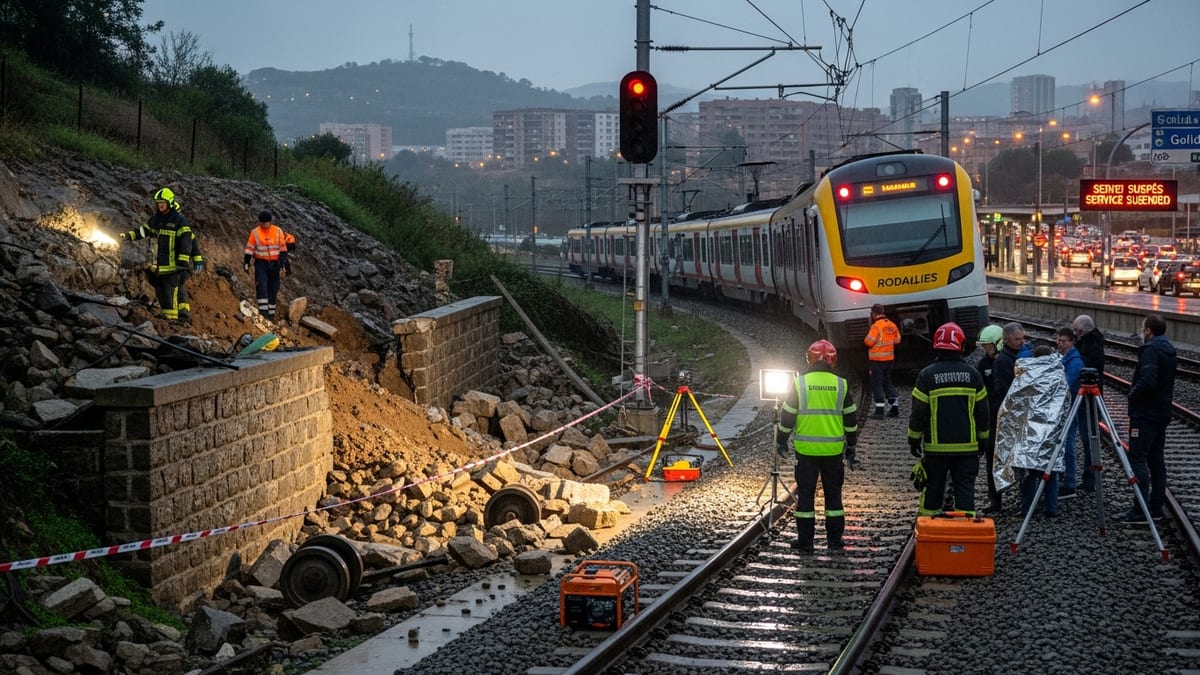
Services halted as emergency response blocks the line
Published information from rail operators shows that trains were brought to an abrupt stop shortly after the start of the morning peak, when an emergency incident led to a full blockage of a key rail corridor. Signalling data and operator updates indicate that all traffic through the affected section was suspended while response teams were sent to the scene.
Real-time journey planners and operator bulletins reported that no trains were able to pass the incident location in either direction for a period, with some services held at signals and others terminated short of their destinations. In several cases, trains remained at a stand between stations while staff awaited permission to move.
Passenger reports shared on social media describe carriages remaining stationary for extended periods, coupled with on-board announcements referring to an emergency further up the line. Some travellers noted that doors were kept closed and traction power appeared to be isolated while the situation was assessed.
According to publicly available disruption summaries, the line was gradually reopened after safety checks were completed, but trains were required to pass the affected area at reduced speed. This created a bottleneck that continued to affect services even after the initial blockage was lifted.
Knock-on disruption spreads across the morning peak
Once the line was blocked, control rooms began to regulate services across the wider network to prevent congestion in the vicinity of the incident. Data from live departure boards shows that several early trains were cancelled outright, while others were turned back short of the normal terminus to keep rolling stock in circulation.
Commuters on parallel routes also experienced delays as operators attempted to route additional services over alternative lines where capacity allowed. In a number of cases, stopping patterns were altered so that trains could run semi-fast through less busy stations, in an effort to regain time and restore a regular interval timetable.
Travel apps monitored during the disruption indicated that journey times on some routes more than doubled, particularly for passengers who needed to change trains near the incident site. Crowding increased on the first services able to run through the area, as travellers from several cancelled or heavily delayed trains attempted to board at once.
Even after the obstruction was cleared, residual delays persisted for much of the morning. Industry performance data from previous incidents of this type suggests that the impact of a full line blockage can take several hours to unwind, as displaced trains and crews are brought back into the correct positions for their scheduled workings.
Limited alternatives and guidance for stranded passengers
Journey planners and operator channels advised passengers not to travel on the affected line where possible, particularly during the height of the disruption. Some travellers reported being advised to work from home or delay their journey until later in the morning, once more details of the incident and its likely duration became available.
Where arrangements could be made, ticket acceptance was introduced on selected bus and other rail services, although capacity on these alternatives varied. Passengers attempting to use replacement routes described extended queues for local buses and slow road journeys on already congested corridors that parallel the rail line.
Information shared through operator websites and social media feeds encouraged passengers to check their journey before leaving home and to allow additional time if travel was essential. Some travellers noted that live maps and crowd-sourced updates from fellow passengers provided the most immediate picture of conditions on the ground.
Industry guidance for managing unplanned incidents highlights the importance of rapid, clear communication about which routes are open, the scale of delays and any available alternatives. Observers of this morning’s disruption pointed to the challenges of sharing precise estimates while an emergency response is still under way and circumstances at the scene are evolving.
Safety checks and investigations expected to continue
Once the line was reopened to traffic, rail staff carried out additional inspections of the affected infrastructure, according to operational updates published after the incident. Trains were instructed to run at reduced speed through the area while checks were completed on track, signalling equipment and power systems.
In previous cases where a line has been blocked by an emergency event, follow-up technical examinations have been required to confirm that no hidden faults were introduced during the disruption. Industry reports on earlier incidents show that even where physical damage is limited, signalling and control systems may need to be tested before full line speed can be restored.
Published performance analyses from transport research bodies note that unplanned blockages of this kind can significantly reduce service frequency in the short term and have lingering effects across a full operating day. Recovery plans typically involve gradually re-spacing services, prioritising the busiest flows and reinstating normal stopping patterns as capacity allows.
Further updates from operators are expected as the circumstances surrounding this morning’s incident are examined in more detail. For now, publicly available information indicates that trains are moving again through the affected section, but passengers are being advised to check the latest service information, as delays and short-notice alterations remain possible while the network returns to normal.