


More news on this day
Ryanair has highlighted a group of popular European holiday airports where passengers are already facing some of the longest queues and delays under the European Union’s new biometric Entry/Exit System for non-EU travellers.
Get the latest news straight to your inbox!
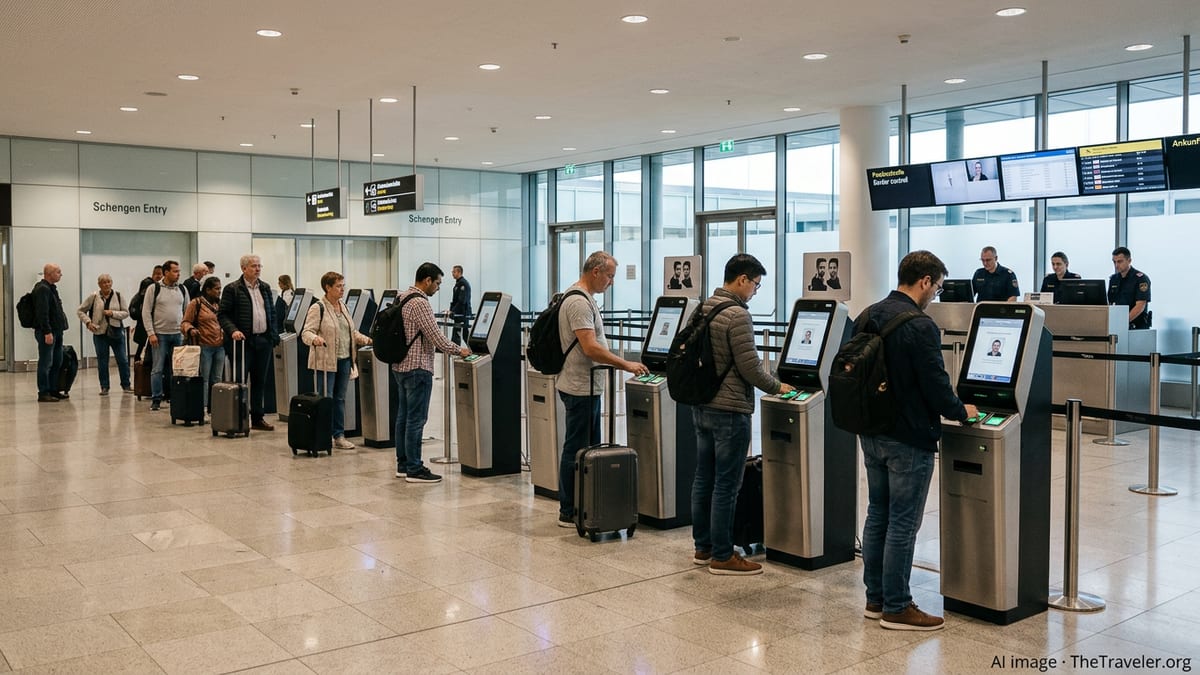
Seven airports singled out for severe EES disruption
According to recent coverage of Ryanair’s latest warning, the airline has identified seven airports where the impact of the EU’s Entry/Exit System, or EES, is proving particularly acute. Tenerife South, Palma de Mallorca, Alicante and Malaga in Spain, Milan Bergamo in Italy, Krakow in Poland, and Paris Beauvais in France are described in reports as experiencing the most significant queues and processing delays under the new regime.
These airports are all major gateways for leisure traffic from the United Kingdom and other non-Schengen countries, meaning they handle large volumes of passengers who now require biometric registration at the border. Reports indicate that in peak periods, travellers are already facing waits stretching well beyond an hour as border checkpoints process fingerprints, facial images and entry records for each non-EU arrival.
Ryanair’s assessment, reflected across multiple news outlets, points to a combination of high passenger volumes, infrastructure constraints and the early stages of EES implementation as the main drivers of disruption. The airline has characterised these seven locations as being on the front line of the new system’s growing pains as the summer holiday peak approaches.
What the EU Entry/Exit System changes for travellers
The Entry/Exit System became fully operational across the Schengen zone earlier this year, replacing manual passport stamping for non-EU nationals with a digital register of movements. On a first trip into the Schengen area, travellers from the UK, the United States and other non-EU countries must provide biometric data, including fingerprints and a facial image, in addition to passport details.
Once enrolled, these records are checked on subsequent journeys, with border officers required to verify identity against the database when passengers enter or leave the zone. Authorities expect the system to improve security, support the enforcement of stay limits and streamline checks in the long term, but the change also lengthens the time needed to process each passenger, particularly on first entry.
Industry reporting suggests that the impact is being felt most sharply at busy leisure airports where facilities and staffing levels were calibrated for much faster stamp-based checks. Even marginal increases in transaction time per passenger can translate into queues that grow rapidly when several widebody flights arrive at once, and this effect is now being amplified as peak summer schedules ramp up.
Warnings of "queue chaos" and calls to delay the rollout
Ryanair has used its latest communication to renew calls for European governments to pause or soften EES implementation during the key summer months. The airline and other industry bodies have warned in public letters and statements that, without immediate adjustments, airports will struggle to manage the combination of higher traffic volumes and more complex checks.
Travel industry analyses describe queue times at some European borders reaching several hours during busy periods since the system went live, with smaller and regional airports often under the greatest strain. Aviation groups argue that many border facilities were not fully adapted for biometric capture in time, resulting in bottlenecks at passport control and pressure on frontline staff.
Ryanair has previously urged individual governments in countries such as Portugal and Italy to suspend the new procedures until September, citing evidence of congested arrival halls and lengthy waits for holidaymakers. Recent coverage indicates that, at certain hubs, queues have even spilled outside terminal buildings, raising concerns about passenger welfare in high temperatures.
Impact on flight punctuality and passenger experience
Although the new checks occur at border control rather than the boarding gate, prolonged queues are beginning to affect flight operations. Travel reports note that some passengers have missed departures after being held up in passport lines, particularly at airports that funnel all non-EU travellers through a limited number of biometric kiosks.
Ryanair has stated publicly that it does not plan to routinely delay departures for travellers stuck at border control, arguing that holding flights would quickly undermine schedules across its network. This stance is likely to sharpen the impact of EES border delays on individual passengers, especially those with tight connections or early-morning flights following late-evening arrivals.
For now, consumer advice from travel platforms and passenger rights organisations generally recommends allowing significantly more time at departure airports within the Schengen area, and being prepared for extended waits on arrival. Some commentators suggest that, until EES processes are refined and staffing levels adjusted, travellers should build in a generous margin for border control on both ends of their journey.
Summer outlook as EU and industry seek fixes
The warnings from Ryanair come as aviation associations, airport groups and airlines across Europe collectively press for greater flexibility in how EES is applied during peak travel periods. An open letter from industry bodies this week described the system as reaching a critical point, citing examples of queues lasting up to five hours at some border posts and urging temporary suspension or waivers at times of intense demand.
European institutions have acknowledged the concerns and are reported to be engaging with carriers and airports on possible short-term measures, including additional staff, revised staffing patterns and technical adjustments aimed at speeding up biometric capture. However, there has so far been no indication that the overarching requirement for EES registration will be removed before or during the main summer season.
For travellers, this means the airports highlighted by Ryanair are likely to remain among the most challenging entry and exit points in the weeks ahead, particularly on weekends and other peak holiday travel days. While the system is intended to deliver a smoother and more secure experience in the long term, the immediate picture for non-EU passengers is one of longer lines, tighter time margins and a premium on careful advance planning.