


More news on this day
American Airlines is preparing a major overhaul of its domestic cabins, planning to install seat-back entertainment screens and expand premium seating across hundreds of narrowbody aircraft in a bid to compete more aggressively for higher-yield travelers.
Get the latest news straight to your inbox!
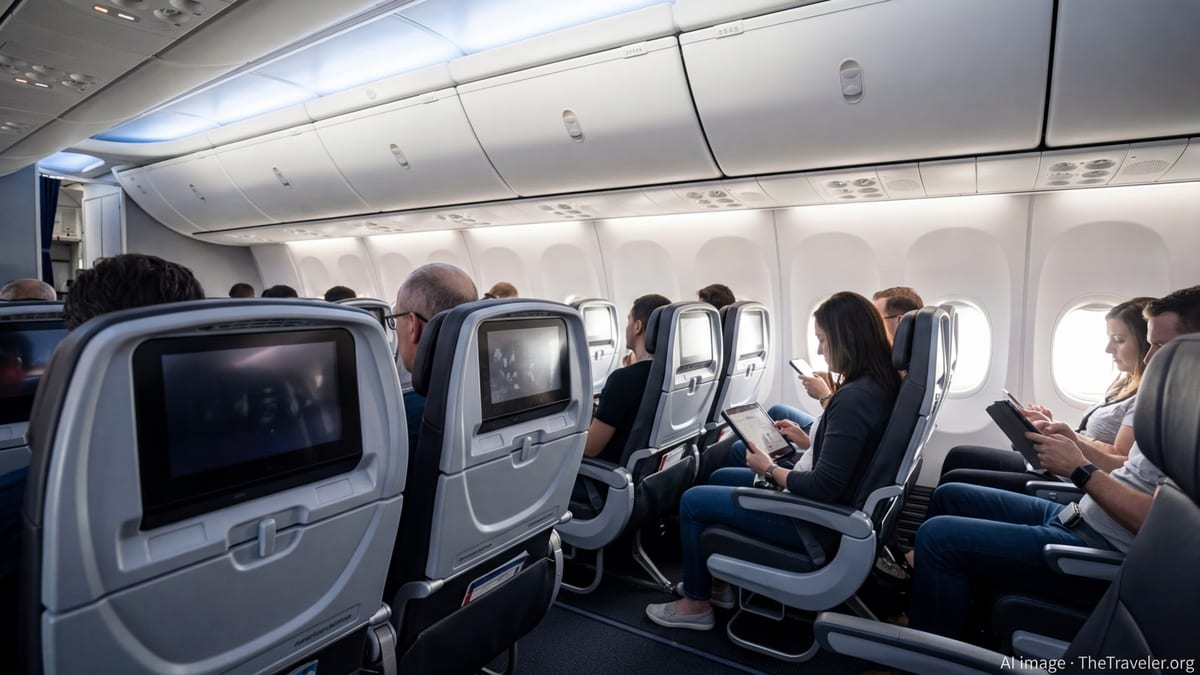
Reversing Course on Seat-Back Screens
Publicly available information indicates that American intends to install modern seat-back entertainment systems across its narrowbody fleet, a notable shift from the strategy it pursued for much of the past decade. The carrier had previously removed many built-in screens in favor of a bring-your-own-device model that relied on personal phones, tablets and laptops connected to onboard Wi-Fi.
The new plan centers on a next-generation platform featuring 4K-capable displays at every seat, paired with Bluetooth connectivity for personal headphones and USB-C power for charging. Reports indicate that the systems are being positioned as an integrated part of the onboard experience, offering both traditional on-demand content and more personalized features.
American is expected to roll the technology into future deliveries of Boeing and Airbus single-aisle aircraft, while also including it in retrofit programs that will update the interiors of existing jets. The scale of the project, covering hundreds of planes, would represent one of the airline’s most extensive investments in in-flight entertainment since it began slimming down screens from domestic aircraft several years ago.
Industry observers note that the move brings American closer in line with major competitors that continued to emphasize embedded entertainment. For travelers who favored built-in screens over streaming to their own devices, the new strategy signals a clear effort to reposition the airline’s cabins as more premium, even on shorter routes.
More First Class and Extra-Legroom Seats
In tandem with its entertainment upgrades, American is also preparing a broad expansion of premium seating on narrowbody aircraft. According to airline communications and related coverage, the plan calls for adding more domestic First Class seats and increasing the number of extra-legroom Main Cabin Extra seats on both new and retrofitted planes.
Upcoming deliveries of larger single-aisle jets, such as the Boeing 737 MAX 10, are expected to arrive with denser premium layouts than older models, including a higher count of First Class seats. Certain Airbus A321neo aircraft are also slated for reconfiguration to increase the share of the cabin dedicated to premium seating, reflecting what the industry views as sustained demand for more space and comfort at the front of the plane.
At the same time, American has signaled that Main Cabin Extra will play a bigger role across the fleet. Plans described in public materials include retrofitting a majority of narrowbody aircraft to create additional rows of extra-legroom seating, giving more customers access to perks such as earlier boarding, extra space and a complimentary beverage.
By devoting a larger proportion of each aircraft to higher-yield seats, American is effectively reshaping the economics of its domestic network. The strategy mirrors a broader North American trend, where airlines have progressively added premium options as they seek to capture more revenue from passengers willing to pay for added comfort without moving into long-haul business class products.
Connectivity, Power and a More Integrated Cabin
The forthcoming seat-back systems are part of a wider modernization push that also includes upgrades to power, connectivity and cabin aesthetics. Previous announcements from the airline have highlighted the rollout of high-speed Wi-Fi across both mainline and regional fleets, as well as the addition of AC and USB power at seats to support an increasingly device-dependent customer base.
With the new plan, seat-back screens, Bluetooth audio and USB-C charging are expected to operate alongside existing Wi-Fi networks, creating what American has described in earlier materials as a more seamless digital experience. Travelers will be able to mix streaming from their own subscriptions with free on-board entertainment libraries, while also accessing real-time flight maps and other information via the screen in front of them.
The airline has also been refreshing cabin interiors on widebody aircraft, introducing its Flagship Suite business-class product and updated Premium Economy seats. Although those initiatives primarily affect long-haul flying, the same design language and technology features are gradually filtering into domestic cabins. The addition of embedded screens on narrowbodies is likely to make the experience feel more consistent across the network, especially for frequent flyers who connect between domestic and international services.
For the broader in-flight entertainment sector, American’s decision underscores a renewed emphasis on hardware after years when many carriers prioritized streaming-only solutions. Manufacturers of seat-back systems and connectivity providers have been investing in lighter, more power-efficient equipment, which helps reduce the fuel and maintenance penalties that once led airlines to rip out heavy screens.
Competitive Pressure and Changing Customer Expectations
Analysts point to competitive dynamics as a key driver of the policy shift. Rival full-service carriers that maintained or expanded seat-back entertainment have often promoted their cabins as more comfortable and customer-friendly, using the presence of screens as a visible differentiator on social media and in advertising. In that context, American’s move can be read as an effort to narrow a gap in perceived quality.
Customer expectations also appear to be changing. While personal devices remain ubiquitous, surveys and informal feedback suggest that many passengers still value a dedicated screen, particularly on longer domestic legs where battery life and device fatigue become concerns. For families, built-in screens can also simplify managing multiple passengers’ entertainment needs without juggling phones and tablets.
American’s more recent messaging has focused heavily on improving satisfaction scores and winning back travelers who had begun to associate the brand with sparse cabins and limited amenities. Investments in upgraded lounges, new bedding and enhanced onboard dining are part of that campaign. The decision to place seat-back screens in every narrowbody seat and to carve out more room for premium seating fits squarely within this push to present a more upscale proposition.
Ultimately, the success of the strategy will depend on execution: how quickly aircraft can be retrofitted, how reliable the new technology proves to be in daily service and whether demand for premium and extra-legroom seats grows in line with the expanded supply. For now, the planned changes signal that one of the largest airlines in the world is betting that travelers still value a physical screen in the seat in front of them, and that a cabin with more premium seats can deliver stronger returns while promising a more comfortable journey.