


More news on this day
A Ryanair passenger who said they were left “stranded” in Tenerife after becoming stuck in lengthy airport queues has drawn renewed attention to mounting bottlenecks at popular Spanish holiday airports.
Get the latest news straight to your inbox!
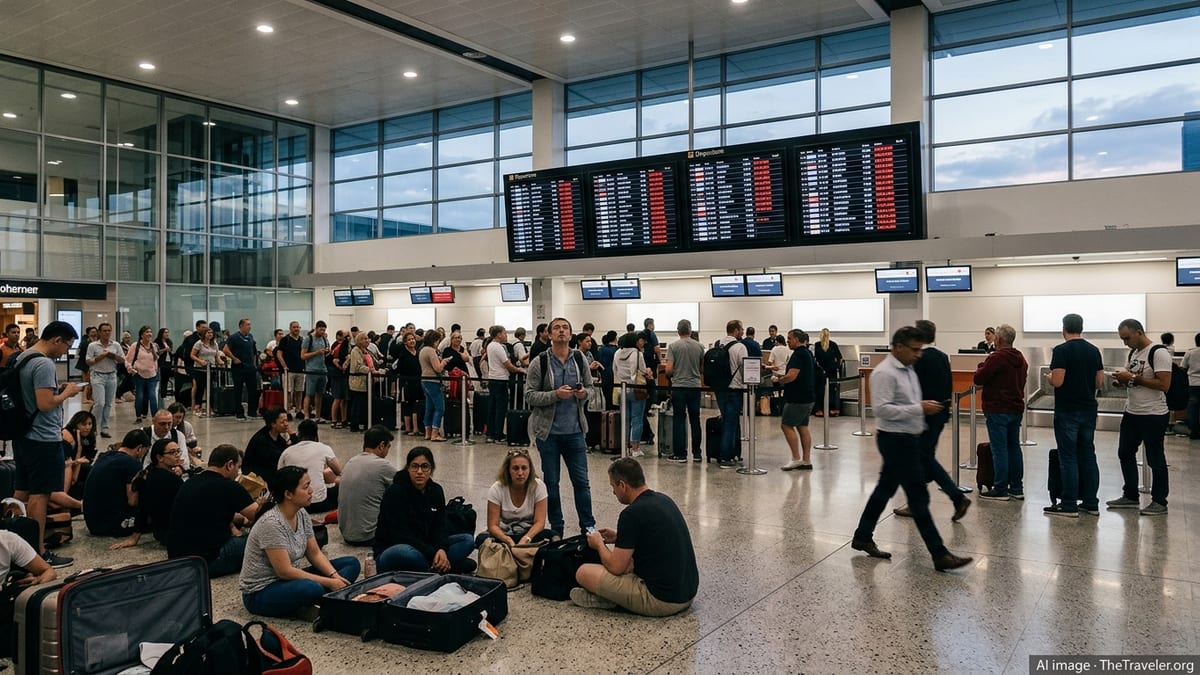
Viral complaint puts Tenerife South queues under scrutiny
Reports circulating on social media and travel forums describe a Ryanair customer at Tenerife South Airport who missed their flight after being held in slow moving lines at border and security checkpoints. The passenger, who was returning to the United Kingdom, said they arrived at the terminal with what they believed was adequate time but became trapped in congested queues that barely moved before boarding closed.
The account echoes wider testimony from British holidaymakers who describe chaotic scenes at the island’s main airport, particularly at evening peak times. Travellers report snaking lines for passport control, with families and older passengers forced to stand for prolonged periods in hot, crowded halls. Some say the pressure of making departures, while watching the clock run down, turns what should be a relaxed end to a beach holiday into an ordeal.
The latest incident has resonated in the United Kingdom because it involves one of the country’s most heavily used budget carriers on a classic winter sun route. Tenerife remains a mainstay of low cost airline schedules, and even isolated cases of missed flights feed into a broader perception among travellers that airports serving mass tourism destinations are struggling to keep pace with demand.
While individual circumstances vary, publicly available information suggests that a combination of high passenger volumes, post Brexit passport checks and periodic staffing shortfalls at Spanish airports has created conditions where relatively minor disruptions can quickly cascade into long delays at key pinch points.
Long standing congestion issues at Tenerife South
Recent coverage in Canary Islands media highlights that Tenerife South Airport has faced repeated complaints about long queues at passport control and arrivals halls, particularly affecting non Schengen passengers. Local reports describe crowds of British tourists packed into narrow corridors for extended periods, with some travellers characterising the conditions as uncomfortable and stressful.
Regional politicians and tourism bodies have previously raised concerns about staffing levels for border police and the physical layout of the terminal. Calls have been made for Spain’s central authorities to increase personnel and upgrade facilities so that flows of visitors from major markets such as the United Kingdom can be processed more efficiently during peak holiday seasons.
Aviation focused outlets have also documented periodic disruption at Tenerife South linked to operational or weather related challenges that place additional pressure on the terminal. When flights are bunched together by delays or diversions, arrivals and departures can coincide in short bursts, intensifying congestion at security lanes, check in zones and boarding gates.
For passengers, these structural issues are largely invisible until they arrive at the airport. Many rely on standard guidance to reach the terminal around two to three hours before departure, only to find that queues can occasionally extend beyond what that buffer will comfortably absorb.
Ryanair operations meet post Brexit border reality
Ryanair has a substantial presence across Spain and the Canary Islands, marketing low fares to a large base of British and Irish holidaymakers. In recent seasons the airline has both expanded and trimmed its Spanish operations in response to airport fee structures and changing demand patterns, but Tenerife remains one of its core leisure destinations.
At the same time, the post Brexit requirement for British nationals to undergo full external border checks into and out of the Schengen area has lengthened processing times at many European airports. Local coverage from Tenerife and other Spanish resorts has repeatedly pointed to queues at passport control as a major pain point for UK travellers, especially when several flights from Britain arrive or depart in close succession.
In other parts of Spain and Portugal, Ryanair has publicly urged airports and border agencies to address delays by improving staffing levels or expanding the use of electronic gates where possible. Airline statements in those contexts frame the issue as one where passengers “suffer” in line while infrastructure struggles to handle peak flows, arguing that bottlenecks sit largely outside the carrier’s direct control.
The Tenerife complaint fits into this wider picture of friction between high throughput low cost airline operations and ground systems that are often operating close to capacity. When queues build unexpectedly, passengers can find themselves caught between airline cut off times for boarding and formalities they cannot bypass or accelerate.
Growing catalogue of missed flights linked to airport queues
Beyond Tenerife, recent months have seen a series of high profile incidents in which Ryanair passengers reported missing flights or being left behind after lengthy waits at passport control or security. Coverage from Lanzarote in February described nearly ninety travellers being unable to board a Bristol bound Ryanair service after becoming stuck in border queues, with the aircraft reportedly departing with many empty seats.
Online travel forums and consumer sites carry similar accounts from airports in Germany, Portugal and elsewhere, where passengers say they arrived well before departure but were delayed by lengthy lines at immigration or by unexpected closures and police controls at boarding gates. In several of these cases, travellers claimed they received limited information in real time and were later advised that responsibility for the disruption lay with airport authorities rather than the airline.
These narratives have fuelled a wider debate among holidaymakers about how much time is truly “enough” at busy leisure airports, particularly during school holidays. Some frequent flyers now recommend arriving even earlier than airlines suggest, prioritising immediate clearance of security and exit checks over shopping or dining airside.
However, consumer advocates point out that there are practical limits to how early passengers can realistically arrive, especially when they rely on shared transfers or public transport timetables. For many, the combination of fixed transfer schedules and fluctuating airport performance leaves a narrow margin for error.
Calls for clearer guidance and shared responsibility
The Tenerife Ryanair passenger’s experience has prompted renewed calls from travellers for clearer, airport specific guidance on queue times and cut off points. Some tourism observers argue that both airlines and airport operators should provide more granular, route based advice so that holidaymakers understand when they genuinely need to be at check in, security and passport control during busy periods.
Airports in Spain and other European countries have begun experimenting with tools such as real time queue length displays, pre booked security slots and expanded use of electronic gates to reduce pressure on manual checkpoints. Nonetheless, implementation varies widely between destinations, and many smaller or seasonal airports are still reliant on traditional queuing systems.
Industry analysis indicates that resolving the tensions highlighted in Tenerife will require coordinated action between national authorities overseeing border control, airport operators managing terminals and airlines that set boarding rules and departure deadlines. Each party has a role in ensuring that surging visitor numbers do not translate into an ongoing pattern of missed flights and stranded passengers.
For now, the advice filtering through from recent incidents is cautious. Travellers heading home from popular resorts such as Tenerife are increasingly being told, through airline notifications and word of mouth, to allow more time than they might once have considered necessary, and to move quickly through to security and passport control as soon as they arrive at the terminal.