


Prospective expatriates considering Thailand often underestimate how much routine paperwork can affect daily life. While immigration status, work authorization and housing are separate strategic issues, the mechanics of dealing with Thai forms, documentation and public‑sector systems shape how smoothly an expat can live and work in the country. Understanding the common paperwork problems in advance helps determine whether a move to Thailand will feel administratively manageable or persistently frustrating.
Overview of Thailand’s Administrative Environment for Expats
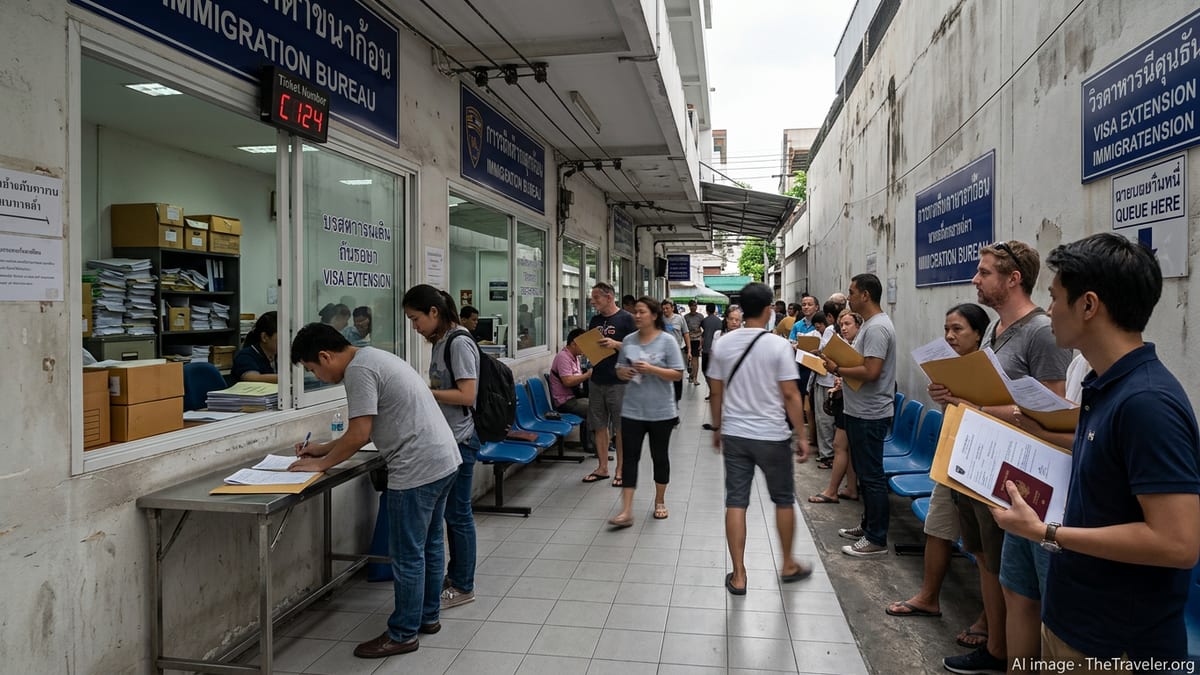
Thailand’s administrative environment combines relatively clear formal rules with practical implementation that can be inconsistent across offices and provinces. Regulations are published at national level, but the way immigration, transport or local government offices interpret document requirements, signatures or copies can differ, even within the same city. This creates a recurring challenge for expatriates who expect standardized, fully digital workflows.
Foreign residents typically interact with Thai paperwork systems for identity documentation, address registration, stay notifications, driving licences, vehicle registration and business or employment records. Most of these areas have introduced partial online processes, mobile applications or appointment systems, but these tools still coexist with paper forms, original signatures and in‑person submissions. As a result, expats often face duplicated data requests and overlapping forms that ask for near‑identical details in slightly different formats.
For relocation planning purposes, the key risk is not a single large bureaucratic barrier but the cumulative effect of repeated, low‑intensity friction: extra copies, unexpected certifications, system outages and differing interpretations of rules. These issues can consume working time, create uncertainty about compliance and, in some cases, lead to fines when deadlines are missed because systems fail or guidance is unclear.
Understanding these patterns allows potential movers to assess whether they have, or can easily access, the time, language support and administrative tolerance to navigate Thai paperwork over the long term.
Address Registration and TM30 Notification Challenges
One of the most distinctive paperwork issues for foreigners in Thailand is address reporting. Separate from visa status, authorities require notification when a foreigner stays at a residence. This is commonly handled via the TM30 form, which must be filed when a foreigner stays in accommodation such as hotels, serviced apartments or private rentals. Regulations specify that the “house master, owner or possessor” of the property is responsible for filing the notification, generally within a short window such as 24 hours of arrival, although practical enforcement can vary by location.
For expats, problems arise because the legal duty rests on the landlord or property manager but the practical consequences often fall on the foreign tenant. Some immigration offices reportedly refuse certain services, such as processing stay‑related applications, when the TM30 history is incomplete, even if the expat had no practical way to compel a non‑resident landlord to file the form. In multi‑unit condominiums, owners who live overseas or use third‑party brokers may not understand the requirement, and building staff may not have clear instructions on who is responsible for the paperwork.
Another frequent complication is re‑notification after travel. Even when an expat returns to a previously reported address, some offices expect a fresh TM30 notification after each international trip or after domestic stays in other provinces. While central policy has been adjusted over time to reduce repetitive filings, on‑the‑ground practice remains uneven, so foreigners may be told that a new notification is required when they believed their existing registration was sufficient.
Digital channels exist for TM30 submission, but these systems can be technically unstable or limited in who can register as a user. For example, some platforms are designed primarily for hotels and guesthouses, not individual condo owners. Combined with occasional system downtime and language‑only Thai interfaces, this creates a situation where many TM30 filings still depend on manual forms and personal visits to immigration or local police, increasing the risk of missed deadlines and associated fines.
90‑Day Reporting Systems and Online Platform Failures
Foreigners who remain in Thailand long term on most stay permissions must confirm their current address with immigration at intervals commonly described as “90‑day reporting.” While the underlying rule is straightforward in principle, the paperwork implementation has generated persistent difficulty for many expats. Reports can be submitted in person using a dedicated paper form, by post under specific conditions, or through an online system that has been upgraded several times in recent years.
The online reporting platform is intended to reduce queues at immigration offices, but user experience reports indicate recurring issues. Common problems include applications being rejected without clear explanation, submissions remaining in “pending” status far longer than the typical processing window, and access difficulties when the site is taken offline for maintenance or when new versions are deployed. Some expats also note that after re‑entering Thailand, immigration offices insist that the first 90‑day report after arrival must be done in person, even if previous reports under the same identity number were accepted online.
Because the law prescribes penalties when reports are late, technical failures of the online system create real compliance risk. Expatriates who submit early may only discover rejection after the due date has passed, leaving in‑person reporting as the only option and sometimes triggering fines despite the individual’s attempt to comply. There have also been instances where official mobile apps or websites displayed incorrect status information, such as falsely indicating overstay or providing outdated reporting deadlines, due to delayed synchronization between immigration databases and public portals.
For relocation feasibility, the implication is that long‑term residents must allocate buffer time around each reporting deadline and be prepared for contingency visits to immigration offices. Those with demanding work schedules or who live far from their assigned immigration branch may find this recurring paperwork obligation disproportionately disruptive, especially when processes vary between provinces or when new versions of the online system are rolled out without comprehensive multilingual guidance.
Document Copies, Translations and Certification Requirements
Across multiple Thai agencies, a recurring pain point for expatriates is the quantity and specificity of supporting documents required. Applications for procedures such as address registration changes, driving licence issuance, vehicle registration, or certain local registrations frequently require multiple photocopies of passports, arrival stamps, stay pages, marriage certificates, work authorizations or rental contracts. Each copy often must be signed by the applicant, and in some cases each page of a multi‑page document must carry a separate signature.
Where foreign‑language documents are involved, certified translations into Thai or, in some cases, English are typically required. For example, converting a foreign driving licence to a Thai licence usually demands a translation if the original licence is not in Thai or English, accompanied by separate certification from an embassy or consulate or from a licensed translation service. Document translation and certification costs can become material when families relocate together, since each adult may need their own set of translated licences, marriage documents or birth certificates.
A further complexity is the requirement for “original” or “recent” supporting documents. Some offices insist on rental contracts or employer letters issued within a specific timeframe, such as 30 days, even when the substantive situation has not changed. Others require physical residence confirmation letters from local authorities or embassies that have their own appointment and documentation queues. Differences between urban and provincial offices are significant: central Bangkok offices may have clearer English information sheets but longer waiting times, while provincial offices may be faster but more demanding about local formatting of addresses or Thai‑language spellings.
Overall, the administrative model is heavily paper‑based, even when data has previously been uploaded to an online portal. Expats should therefore expect to maintain organized sets of physical documents and up‑to‑date copies, and should not assume that a digital file or a previously submitted scan will be accepted in lieu of a fresh paper copy signed in ink.
Thai Driving Licence and Transport‑Related Paperwork Issues
Obtaining or converting a driving licence is a frequent early priority for long‑term expats and illustrates several typical paperwork challenges. The Department of Land Transport requires multiple supporting documents, often including a passport with valid stay permission, a residence certificate or address confirmation, photographs, and if converting from a foreign licence, the original licence plus certified translations when it is not in Thai or English. Regulations have been updated so that more foreign applicants must sit a written theory test even if they hold a valid foreign licence, which adds another procedural step that must be scheduled and documented.
Common problems include applications being rejected due to minor inconsistencies in address wording between immigration records and landlord letters, missing middle names or different transliterations of non‑Thai names across documents. For example, if a rental contract spells a street name differently from the address printed on a residence certificate, some offices will insist on reissuing one of the documents before the licence can be processed. Additionally, appointment systems may require online bookings, but not all provincial offices maintain updated calendars, leading to walk‑in queues despite nominal online scheduling.
Renewing licences introduces further paperwork, particularly when moving from temporary two‑year licences to longer validity periods. Some offices ask for fresh health certificates issued within a few days of the application, while others do not. Foreigners who change province or address in the meantime often have to update registration records before renewal can proceed. In families where multiple members drive, coordinating documentation for several parallel applications can be time‑consuming and may require repeated visits if one person’s paperwork is not accepted.
Vehicle registration and compulsory insurance add another layer of forms, stamps and copies. While dealers frequently handle initial registration for new vehicles, expats who purchase used cars or motorcycles privately must work directly with the Department of Land Transport. Any discrepancy in chassis numbers, prior owner details or colour descriptions between the vehicle book and current condition can trigger requests for inspections, correction forms and extra affidavits, extending processing times unpredictably.
Language Barriers, Inconsistent Guidance and Informal Workarounds
Language plays a central role in how complex Thai paperwork feels to expatriates. Many official forms and instructions are available only in Thai, and English‑language versions, when they exist, may be outdated or incomplete. Front‑desk staff in provincial offices may have limited English, leading to misunderstandings about which documents are mandatory and which are optional. This can result in expats making repeated trips because requirements are clarified only at the point of submission.
Another systemic issue is inconsistent interpretation of the same regulation between offices, or even between officers within a single office. For instance, one branch may accept a scanned landlord letter printed and signed by the tenant, while another branch insists on the owner’s original wet‑ink signature. Some officers may accept digitally generated bank letters or utility bills as proof of address, whereas others require stamped originals or government‑issued residence certificates. Because appeal processes are largely informal, expats often depend on peer communities, social media groups or third‑party agents to understand current practice in a given location.
This environment gives rise to widespread use of visa and document services, local fixers or employer HR departments to manage paperwork on behalf of foreigners. While such intermediaries can reduce stress, they introduce additional cost and sometimes create dependency: expats may not fully understand the procedures affecting their own legal status or obligations. There is also variability in quality among service providers, and errors made by intermediaries still count against the expat if deadlines are missed or incorrect information is submitted.
From a relocation planning standpoint, individuals with limited Thai‑language skills and minimal employer support should expect to invest significant personal time in learning document terminology, checking requirements in advance and, when possible, visiting offices early in the day with complete sets of copies and translations. Those unwilling or unable to manage this ongoing administrative learning curve may experience higher stress levels or be more reliant on paid assistance.
The Takeaway
Common paperwork problems in Thailand do not generally take the form of insurmountable legal barriers, but they can materially affect quality of life and time management for expatriates. Address registration through TM30, periodic 90‑day reporting, heavy reliance on hard‑copy documents, evolving driving licence rules and the combination of language barriers with inconsistent application of regulations all contribute to an administrative environment that many foreigners experience as fragmented and occasionally unpredictable.
For potential movers, an honest assessment of tolerance for bureaucracy is essential. Those who have employer HR teams, local partners or the budget to engage professional document services will find Thai procedures more manageable. Independent professionals, retirees or remote workers without local support must factor in the learning curve and recurrent time investment required to stay compliant with routine paperwork obligations.
Ultimately, Thailand remains administratively accessible for expats who are systematic, patient and prepared with complete documentation. However, anyone evaluating relocation should treat paperwork management as a core component of the decision, not an afterthought. Clarity about these demands upfront can prevent later frustration and allow a more realistic comparison of Thailand with alternative destinations that may offer either more streamlined digital administration or, in some cases, even more complex bureaucratic environments.
FAQ
Q1. How serious are TM30 address reporting problems for expats in Thailand?
The seriousness depends on the immigration office and the type of service needed. In many cases, missing TM30 notifications result in small fines and extra paperwork rather than major legal problems, but some offices may delay stay‑related applications until the TM30 history is corrected.
Q2. Does every long‑term foreign resident have to complete 90‑day reporting?
Most foreigners staying in Thailand on long‑term permissions must report their address periodically, often described as every 90 days, but exact obligations and exemptions can differ by stay category. It is important to confirm requirements for the specific status held.
Q3. How reliable is the online 90‑day reporting system in practice?
Reliability has improved compared with earlier years, but expats still report occasional system outages, unexplained rejections and delayed approvals. Many experienced residents treat the online system as a convenience rather than something to rely on close to the deadline.
Q4. Why are so many document copies and signatures required for simple procedures?
Thai administrative practice remains strongly paper‑based, and agencies often need to keep physical files for audit or verification. As a result, multiple signed copies of passport pages, contracts and certificates are standard, even when information has already been provided digitally.
Q5. Are certified translations always necessary for foreign documents?
Certified translations are usually required when key documents such as driving licences, marriage certificates or birth certificates are not in Thai and, in some cases, not in English. Requirements vary by office, so it is common to prepare translations for any important non‑Thai documents before complex applications.
Q6. How much time should expats expect to spend on routine paperwork each year?
Time investment varies widely. A typical long‑term resident might spend several full or partial days per year on address reporting, stay confirmations, licence issues and related paperwork, with additional time needed when systems change or when living far from immigration and transport offices.
Q7. Can employers or agents fully remove paperwork burdens for expatriates?
Employers and agents can significantly reduce administrative workload by preparing documents, booking appointments and liaising with officials. However, expats usually must still attend key submissions in person, sign forms and provide original documents, so some personal involvement is unavoidable.
Q8. Are paperwork procedures more difficult in provincial areas than in Bangkok?
Provincial offices can be faster and less crowded, but they may offer less English‑language support and can apply rules more rigidly. Bangkok offices tend to have more experience with foreign applicants but longer queues and more formal queue systems, so the experience differs rather than being uniformly easier or harder.
Q9. How do language barriers most commonly affect paperwork outcomes?
Language barriers often lead to misunderstandings about which documents are required or how forms should be completed. This can cause rejected applications or repeated visits. Using interpreters, bilingual colleagues or carefully prepared samples of completed forms can reduce these issues.
Q10. What practical steps can prospective expats take before arrival to reduce paperwork problems?
Before arrival, it is useful to collect multiple originals of key civil documents, obtain certified translations where appropriate, scan and securely store digital copies, and clarify with any future employer how much administrative support will be provided. Understanding TM30 and 90‑day reporting concepts in advance also helps set realistic expectations.