


More news on this day
Thousands of air travelers across the United States are facing long lines, missed connections, and unexpected overnight stays as more than 3,000 flight delays and over 100 cancellations stack up at major hubs including Atlanta, Chicago, Dallas, New York, San Francisco, and Newark, disrupting operations for Delta Air Lines, American Airlines, Southwest Airlines, SkyWest, United Airlines, and other carriers.
Get the latest news straight to your inbox!
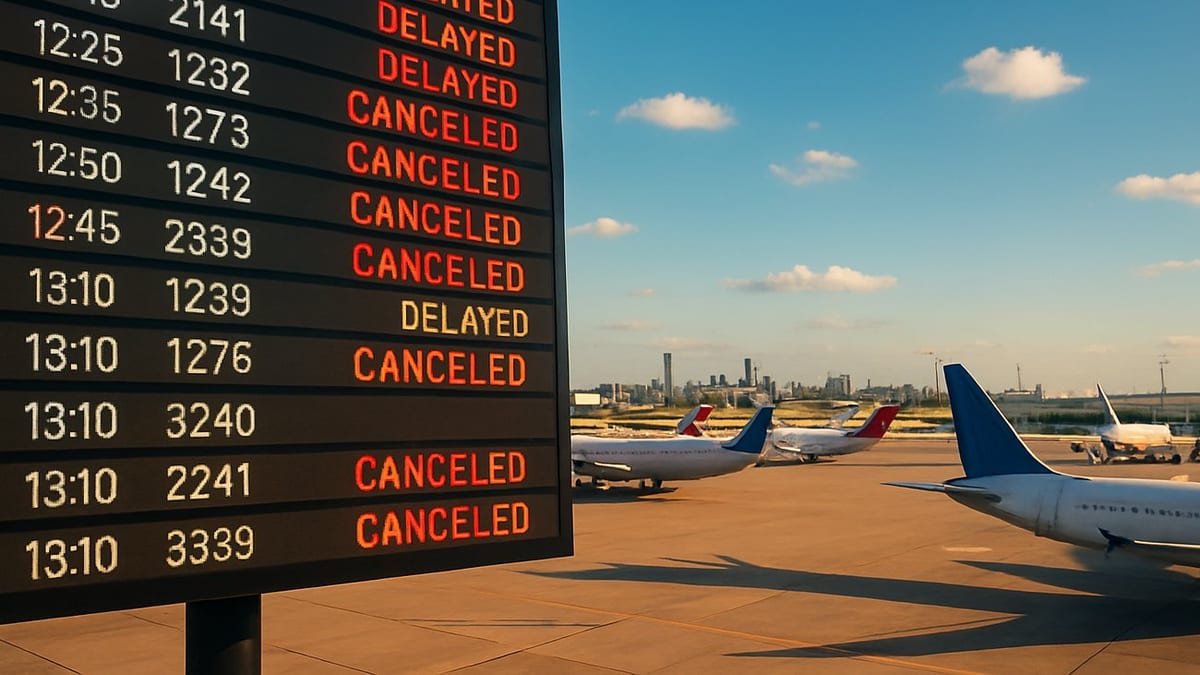
Major Hubs Log 3,052 Delays and 109 Cancellations
Publicly available tracking data for Sunday, April 19, 2026, indicates that U.S. airports are collectively recording 3,052 delayed departures and arrivals along with 109 cancellations, concentrating disruption at some of the country’s busiest hubs. Operations at Atlanta Hartsfield Jackson, Chicago O’Hare, Dallas Fort Worth, New York area airports, San Francisco International, and Newark Liberty are showing some of the highest counts.
The elevated numbers reflect how quickly congestion can develop when several major hubs encounter the same weather patterns or airspace constraints on the same day. Even when most flights eventually operate, delays of 30 minutes to several hours can force passengers to miss connections, overfill later departures, and create rolling backups that take much of the day to unwind.
Data from aviation and transportation agencies over recent years has consistently ranked airports such as Atlanta, Chicago, Dallas, Newark, and San Francisco among the nation’s most delay prone, largely because they handle such high volumes of traffic. When irregular operations hit multiple of these hubs at once, travel plans for passengers across the country can be affected, even if they are flying between secondary or regional airports.
Today’s statistics, while not as extreme as those seen during major winter storms or holiday meltdowns, underscore how quickly systemwide disruption can build when a relatively modest number of cancellations is paired with a much larger wave of late departures.
Delta, American, Southwest, United and Regional Partners Hit Hard
The delays and cancellations are spread across the country’s largest carriers, including Delta Air Lines, American Airlines, Southwest Airlines, and United Airlines, as well as regional operators such as SkyWest that fly many routes under big airline brands. Because these airlines concentrate traffic at key hubs, any operational slowdown in Atlanta, Chicago, Dallas, New York, San Francisco, or Newark can cascade across their networks.
Delta customers are seeing pressure around Atlanta, the airline’s largest hub, and New York area airports, where even relatively short ground holds can stack up into rolling delays. American’s operations at Dallas Fort Worth are also showing elevated disruption, with late arriving aircraft and crew rescheduling pushing back departure times on connecting flights.
Southwest, which relies heavily on point to point flying rather than a traditional hub and spoke structure, is still feeling the effects as aircraft and crews circulate through congested airports such as Chicago Midway, Dallas Love Field, and select secondary cities. United and its partners are facing bottlenecks at Chicago O’Hare, Newark, and San Francisco, where busy transcontinental and international schedules leave limited slack when irregular operations emerge.
SkyWest and other regional carriers, which operate many shorter routes on behalf of larger airlines, tend to feel outsized impacts because a single delayed aircraft can affect multiple small city flights in sequence. Travelers on these routes can face limited rebooking options when frequencies are low and aircraft are tightly scheduled.
Weather, Congested Airspace and Tight Schedules Drive the Disruption
While no single catastrophic event is driving today’s numbers, a combination of unsettled spring weather, airspace constraints, and tightly packed schedules appears to be behind the widespread disruption. Reports indicate that scattered thunderstorms, low cloud ceilings, and shifting wind patterns are prompting temporary ground delays and slower arrival rates at several major hubs.
Air traffic management programs designed to keep flows stable can require airlines to space out arrivals and departures more than usual, leading to queues of aircraft waiting for takeoff slots and longer taxi times both on departure and arrival. When these measures affect multiple large airports at once, even short slowdowns can result in hours of knock on effects.
Industry data from recent seasons shows that as carriers have rebuilt and expanded schedules, some major hubs are operating close to capacity during peak hours. Under these conditions, minor disruptions that might once have been absorbed by extra buffers now translate more quickly into late flights and missed connections, particularly on busy Sundays when leisure and business travelers are both on the move.
Travel analysts note that similar patterns have appeared around other recent weather systems, where a mix of storms and already crowded schedules produced thousands of delays across the country even when the number of outright cancellations remained comparatively modest.
Passengers Face Long Lines, Rebooking Challenges and Limited Options
For travelers on the ground, today’s statistics translate into crowded terminals, full customer service lines, and higher competition for remaining seats. Passengers attempting to make tight connections through hubs such as Atlanta, Chicago, Dallas, or Newark are among the most affected, as delays into the hub often leave too little time to reach departing flights at distant gates or concourses.
Publicly available information from travel providers and consumer advocates indicates that many rebooking options are now shifting to later in the day or even into Monday, April 20, as earlier flights fill up with displaced travelers. Families and groups traveling together may find it particularly difficult to secure seats on the same new itinerary, especially on routes with limited daily frequencies.
Airlines typically encourage passengers to use mobile apps and websites to explore self service rebooking tools during large disruption events. Guidance from travel insurers and consumer organizations also stresses the importance of keeping receipts and documentation of delays in case of eligible claims or goodwill accommodations.
With hotel rooms near key airports often in high demand on days like this, some travelers may turn to nearby secondary airports or alternative routings, such as flying into Oakland instead of San Francisco or using smaller New York area airports when possible, to reach their destinations sooner.
What Travelers Can Do If Their Flight Is Affected Today
For passengers booked to travel on April 19, 2026, travel experts suggest checking flight status early and often, starting several hours before departure, particularly for itineraries that connect through Atlanta, Chicago, Dallas, New York, San Francisco, or Newark. Many airlines permit same day changes or standby options when disruption is widespread, which can help flexible travelers move to flights less likely to be affected.
Some carriers also activate formal travel waivers during periods of significant operational strain, allowing passengers to change flights within specified dates and city pairs without additional fees. While waiver terms vary by airline and event, monitoring carrier alerts and news updates can help travelers understand their options before heading to the airport.
At the airport, published guidance from airlines and travel media recommends confirming options in an app first, then approaching service counters or customer service phone lines with a clear set of preferred alternate flights. Travelers stranded overnight may wish to ask about available hotel or meal vouchers while also checking coverage terms with any travel insurance policy or credit card they used to book the trip.
With delays and cancellations still evolving throughout the day, the overall picture can change by the hour. For now, the concentration of 3,052 delays and 109 cancellations at key U.S. hubs serves as another reminder that even on days without a single major storm or headline grabbing meltdown, the nation’s air travel system remains highly sensitive to a mix of weather, congestion, and tight scheduling.