


Salzburg is compact, walkable, and wrapped in mountains, but choosing how to explore it is less straightforward. From short Old Town walks to full-day lake excursions and highly tailored private guides, the options can feel overwhelming. This guide compares Salzburg’s main types of tours in 2026, using real prices, example routes, and on-the-ground details so you can match the right experience to your time, budget, and travel style.
Get the latest updates straight to your inbox!
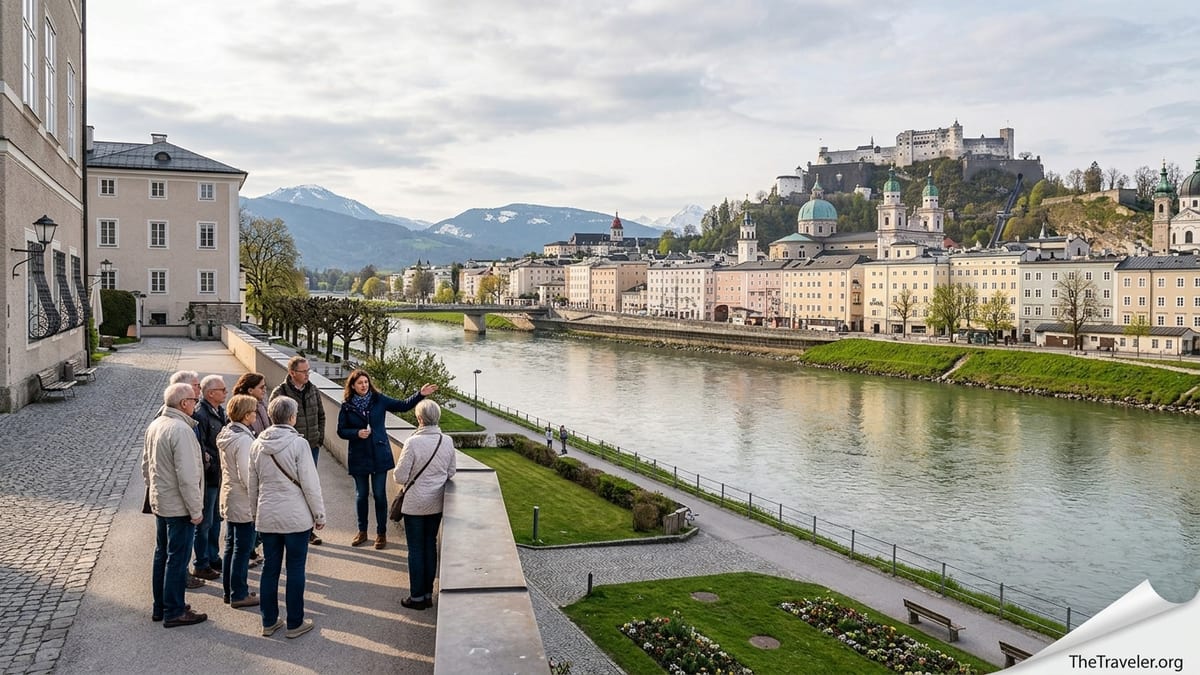
How Salzburg Tours Work in 2026
Salzburg has an unusually dense ecosystem of licensed guides, small local outfits, and big international tour brands. The city’s historic core is small enough to cross on foot in 20 minutes, which makes walking tours a natural starting point. At the same time, many of the region’s highlights, from Hallstatt to the Eagle’s Nest, are 1 to 2.5 hours away, so day trips and private drivers also play a major role in how visitors experience the city.
Most organized tours cluster around a few key meeting points. Mirabellplatz and the nearby Mirabell Gardens are the classic starting locations for city walking tours and the famous Sound of Music tours. The main station area is used more for regional excursions, while private guides will usually arrange to meet at your hotel or a central landmark such as the Mozart Residence or the Cathedral square.
Prices in 2026 reflect the city’s popularity. A 2-hour classic walking tour in English with an officially licensed Salzburg guide typically costs around 200 to 260 euros per group, depending on the provider and language. For example, the Salzburg Guide Service lists a 2-hour city walking tour at about 207 euros for German and slightly more for other languages, while a private guide such as Salzburg for You charges about 260 euros for a 2-hour custom walk. Group bus tours to nearby sights like Hallstatt usually start around 60 to 100 euros per person, and full-day private excursions with a driver-guide are often 400 to 700 euros per day per vehicle, not including entrance fees.
Booking patterns are seasonal. In July and August and around Christmas markets and Mozart Week in January, many popular tours sell out several days ahead, especially English-language city walks and Sound of Music excursions. In shoulder seasons like late April or October, you can often still book walking tours a day or two before, but private drivers and specific day trips may require more advance planning if you want a particular guide or language.
Walking Tours: Best For First-Timers and Short Stays
If you have only one full day in Salzburg, a walking tour is usually the smartest investment. Two hours with a local guide will orient you in the Old Town’s maze of alleys and baroque squares, explain the layers of archbishop-princes, Mozart, and The Sound of Music, and help you decide which churches, museums, or viewpoints deserve a deeper visit on your own.
A typical 2-hour “classical city walking tour” follows a loop from the Mirabell Gardens, across the river, and into the Old Town. You might start at the Pegasus Fountain and flower beds where modern Sound of Music tours gather, then cross the Makartsteg footbridge, pausing to look back at the Hohensalzburg Fortress perched above the rooftops. From there, good guides thread through Getreidegasse to show Mozart’s Birthplace, duck into hidden courtyards, and end near the Cathedral, DomQuartier complex, or Residenzplatz. Licensed guide associations in Salzburg publish routes around this length, and private guides echo similar patterns with individual twists.
In 2026, standard rates for such private walking tours hover between 200 and 260 euros per group for about 2 hours, covering up to roughly 20 to 25 people. Salzburg Guide Service lists a 2-hour walking tour at just over 200 euros for German and slightly more for other languages, while independent guides such as Salzburg for You price a 2-hour city walk at about 260 euros. These fees are for guiding only; any entrances you decide to add, such as DomQuartier or the fortress, are paid separately on the spot.
Beyond the basics, niche walking tours have expanded. You will find culinary walks that combine Old Town history with stops for coffee and cake or local snacks, photography-focused walks that start in Mirabell Gardens and roam through the lanes at golden hour, and themed walks centered on baroque architecture, Salzburg’s music heritage, or even modern art installations. A 2.5 to 3-hour food walk with tastings can start around 280 euros per group, with participants paying roughly 30 to 40 euros per person for food and drink along the way. A scheduled “photo walk” organized through the local tourism office in 2026 is priced around 42 euros per person for a small group, starting at the Pegasus Fountain in Mirabell Gardens.
Group Day Trips from Salzburg: Lakes, Mountains, and Famous Villages
Once you have walked the Old Town, the most popular next step is a day trip into the surrounding Alps and lake region. The classic destinations are Hallstatt in the Salzkammergut lake district and Berchtesgaden and Königssee just over the German border, often paired with the Eagle’s Nest in summer months. These trips can be done independently by bus and train, but organized tours remain popular because they connect multiple sights in one day, smooth over transfers, and provide commentary along the way.
Group coach tours to Hallstatt from Salzburg in 2026 typically cost around 60 to 100 euros per person, depending on length and inclusions. Many follow a 6 to 8-hour pattern: departing late morning or early afternoon from a central city location such as Mirabellplatz, driving via lakes like Fuschl and St. Gilgen, offering a few viewpoint stops, and then allowing two to three hours of free time in Hallstatt itself. Travelers who prefer a shorter outing sometimes book a 3-hour scenic lake tour at the lower end of the price spectrum, while full-day combinations that include stops at additional lakes, salt mines, or viewpoints end up toward the upper end.
Berchtesgaden and the Eagle’s Nest often feature in combination tours, with coaches leaving Salzburg mid-morning. Rates for 2026 are usually in the 80 to 100 euro range per person. A typical itinerary includes a drive to Berchtesgaden, a visit to the salt mines or the Dokumentation Obersalzberg museum, and, if the high-mountain road is open, the lift up to the Eagle’s Nest viewpoint. Because the shuttle road is closed in winter and can be weather dependent in shoulder seasons, tours may switch to an alternative like the salt mines and Königssee lake cruise. Operators tend to note these conditions clearly, but you should confirm road status if the Eagle’s Nest is a must-see for you.
For travelers who want Alpine scenery without committing to a long day, several tour companies run half-day excursions to nearby lakes such as Wolfgangsee or Mondsee, often marketed as a lake and mountain panorama tour. These outings usually last about 4 hours and cost somewhere in the 50 to 80 euro range per person. They generally include a short lakeside walk, photo stops, and sometimes a brief boat ride in high season, with commentary focused on nature, local history, and film locations.
Private Guides and Driver-Guides: Tailoring Salzburg to You
For families, small groups of friends, or visitors with specific interests or mobility needs, hiring a private guide or driver-guide can turn Salzburg into a fully customizable experience. Official Salzburg guides publish standard fees for walking tours and excursions in 2026: about 279 to 303 euros for a half-day excursion of up to 4 hours and 426 to 465 euros for a full-day excursion of up to 8 hours, plus any entrance fees and transport costs. Independent guides with their own vehicles often quote comparable or slightly higher door-to-door prices that fold transportation into the package.
A typical private day out might begin at your hotel at 9 a.m., continue with a 90-minute drive through the Salzkammergut lake district to Hallstatt with stops in Fuschl am See and St. Gilgen, and include a guided walk through Hallstatt’s old lanes, the market square, and the lakeside promenade. After a lunch of lake fish or Austrian classics, your guide might suggest a short detour to Gosausee for mountain views before returning to Salzburg around 6 p.m. A full-day service like this for up to six people in a van generally lands somewhere in the 500 to 700 euro range, before meals and entrance fees, which can make economic sense for groups compared to six separate coach-tour tickets.
Within the city, private guides offer special themed walks at slightly higher prices than standard tours. In 2026, a 2-hour themed city walk might cost around 290 euros per group, reflecting extra research and customization. Examples include a music heritage walk that connects Mozart’s Birthplace and Residence with concert venues, an in-depth baroque churches circuit that enters multiple interiors, or a contemporary Salzburg walk that follows the Walk of Modern Art and newer neighborhoods.
Booking a private guide is straightforward but benefits from a bit of lead time. Many guides belong to the Salzburg Guide Service, which coordinates bookings and publishes common conditions such as payment on the day in cash, group size limits of around 25 guests, and small surcharges for late-evening tours after 8 p.m. Independent guides often maintain their own online calendars and will respond directly with proposals for your dates, interests, and language requirements. If you are traveling in peak months or with more than ten people, contacting a guide at least a few weeks before arrival increases your chances of securing your preferred time and theme.
The Sound of Music and Other Themed Experiences
For many visitors, Salzburg is inseparable from The Sound of Music, and local operators have built an entire branch of the tour industry around it. The classic Sound of Music bus tours, offered by several companies in 2026, generally cost around 80 to 100 euros per person for a 4-hour outing. Tours typically start near Mirabell Gardens, where you will see the Pegasus Fountain and the hedge tunnel from the Do-Re-Mi sequence, then continue by coach to filming locations such as Leopoldskron Palace across the lake, Hellbrunn Palace with its pavilion replica, and the lakeside village of Mondsee, whose church interior stood in for Maria and the Captain’s wedding.
For fans who prefer a slower pace, private Sound of Music experiences are also common. A licensed guide might lead a 3-hour walking and public transport tour that combines Mirabell Gardens, parts of the Old Town, and a visit to Hellbrunn Palace, charging a guiding fee in the 260 to 320 euro range per group. Some private drivers offer full-day Sound of Music circuits that weave in lake viewpoints and picnic stops, with prices closer to the higher end of private excursion rates. These private options can be particularly attractive for multigenerational groups where not everyone is a die-hard fan but the scenery and gentle walking appeal to the whole party.
Other themed tours have gained ground in recent years. Food-oriented tours introduce visitors to coffeehouse culture, local pastries, and traditional taverns, often in small groups so tastings can remain relaxed and conversational. Street art and photography tours appeal to repeat visitors who have already seen the major sights and want to explore quieter corners of the city, from the left bank neighborhoods to contemporary art installations along the river. These tours usually fall into the 40 to 70 euro per person range for scheduled small-group outings, or around 280 to 380 euros per group for private versions.
Seasonal events also shape the tour landscape. Around Advent, many guides offer Christmas market walks through the Old Town squares and up to Hohensalzburg Fortress, often combining history with mulled wine tastings and stories about Alpine holiday traditions. During Mozart Week in January and the Salzburg Festival in summer, music-focused walks and behind-the-scenes experiences multiply, sometimes packaged with chamber concerts in venues like Mirabell Palace or the Cathedral area. Prices vary widely, but the pattern is consistent: the more exclusive and small-scale the event, the closer the price gets to private guiding levels.
Cost, Value, and How to Choose the Right Tour
When you compare Salzburg’s options side by side, three main variables shape your choice: budget, time, and how much structure you want. For a budget-conscious solo traveler or couple staying one or two nights, a shared walking tour or a scheduled photo walk around 40 to 50 euros per person provides an affordable introduction, leaving the rest of the day free for self-guided exploration. Many travelers in this category choose one city tour and then use regional buses or trains for a do-it-yourself day trip to Hallstatt or Berchtesgaden, buying individual tickets and moving at their own pace.
For small groups and families, the math shifts. A private 2-hour walking tour at around 260 euros quickly becomes good value if you split it between four or five people and want a specific language or theme. Similarly, a full-day private driver-guide excursion at about 600 euros that comfortably seats six works out close to 100 euros per person, comparable to or slightly more than a group bus tour, but with door-to-door pick-up, flexible timings, and room to customize stops. In practice, many travelers with young children or grandparents find that the ability to adjust the day on the fly is worth the premium.
Time also matters. If you only have one full day in Salzburg, cramming in both a city tour and a long excursion is tiring. In that case, a half-day city walk plus a short lake or mountain panorama trip might offer a better balance. With three days, a common pattern is one day focused entirely on Salzburg’s Old Town, one day trip to Hallstatt or Berchtesgaden, and one flexible day for museums, fortress visits, or a Sound of Music tour, adjusting around weather forecasts.
Finally, consider your tolerance for crowds and structure. Group tours to Hallstatt and the Eagle’s Nest can feel busy in July and August, and photo stops may be brief. Independent travel by train and lake boat can be more relaxed if you are comfortable reading timetables and accepting some uncertainty. Private guides sit in the middle: they bring structure, local knowledge, and problem solving, but can also leave more space for quiet moments, unscheduled detours, and spur-of-the-moment café stops than a rigid coach timetable allows.
Practical Booking Tips and What to Expect On the Day
Regardless of which type of tour you choose, a few practical steps will make your day in and around Salzburg smoother. First, check language specifics carefully. Many city tours in peak season offer English and German departures, with other languages such as Italian, Spanish, or French more likely to be handled by private guides or by request. Official guide associations and independent guides list languages clearly in their profiles, and if you need a specific combination, it is wise to ask several weeks in advance.
Second, watch for what is and is not included in the price. In 2026, most published guiding fees in Salzburg explicitly exclude entrance tickets, meals, and public transport. For example, a 3-hour private walking and Hellbrunn excursion might quote a flat guiding fee of around 260 euros, with guests paying their own entrance to Hellbrunn Palace and any bus tickets. Group coach tours, by contrast, usually include transport and guiding, but may treat cable cars, boat rides, and certain museum entries as optional extras to be paid on the day. Reading the inclusion list closely prevents surprises when you are already halfway up a mountain.
On the day itself, meeting points tend to be straightforward. For Old Town walking tours, expect to gather at recognizable landmarks such as the Pegasus Fountain in Mirabell Gardens, the Mozart statue in Mozartplatz, or outside a main church or museum. For regional excursions, tour buses typically line up along Mirabellplatz or near the main station, with staff holding clipboards or small signs. Private guides normally offer hotel pick-up within the central zone and will clarify a specific lobby time that accounts for walking to the first sights before crowds build.
Weather is another practical consideration. Salzburg’s microclimate means rain showers are common even in summer, and winter walking tours can be brisk. Guides generally operate in all but the worst conditions, adapting by choosing more sheltered streets, church interiors, or museum courtyards. For mountain day trips, especially to the Eagle’s Nest or higher cable car viewpoints, heavy rain, fog, or snow can affect visibility and operating schedules. Reputable operators will outline weather-related alternatives or cancellation policies in advance, so checking those terms before booking is worthwhile.
The Takeaway
Salzburg’s size and setting make it a city where a single good tour can shape your entire impression of the place. A focused 2-hour walking tour helps first-timers read the Old Town’s layers of history instead of just drifting past pretty façades. Group coach trips unlock the lakes, mountains, and famous villages that lie just beyond the city’s edges, from Hallstatt’s steep alleys to Berchtesgaden’s dark history and sweeping viewpoints. Private guides and driver-guides stitch these elements together into tailored days that match the pace and interests of your particular group.
Choosing among them comes down to how you like to travel. If you enjoy structure and stories, a mix of one city walking tour and one themed or scenic day trip is often perfect for a three-day visit. If you prefer freedom, you might rely on a single private guide to give you a deep orientation on day one, then spend the rest of your time hopping on regional buses, exploring the fortress and museums with your new context in mind, and lingering in cafés along the Salzach. With realistic expectations about prices, inclusions, and timing, Salzburg’s tour options in 2026 offer enough flexibility for both spontaneous travelers and meticulous planners.
FAQ
Q1. Are Salzburg walking tours worth it if I only have one day in the city?
Yes, a 2-hour walking tour is one of the most efficient ways to use a short stay. Guides cover Mirabell Gardens, river crossings, Old Town squares, and key stories in a compact loop, leaving you the afternoon to revisit favorite spots, tour the fortress, or sample cafés with a better sense of orientation.
Q2. How much should I budget for a private walking tour in Salzburg in 2026?
For a private 2-hour city walk with a licensed guide, expect roughly 200 to 260 euros per group, usually valid for up to about 20 people. Themed tours, extra time, or additional languages may add modest surcharges, and entrance tickets to churches or museums are paid separately.
Q3. What is the price range for day trips from Salzburg to Hallstatt or Berchtesgaden?
Shared coach tours to Hallstatt typically run around 60 to 100 euros per person depending on length and stops. Berchtesgaden and Eagle’s Nest combinations usually cost about 80 to 100 euros per person. Private driver-guides for a full day tend to land in the 500 to 700 euro range per vehicle, which can be cost-effective for groups.
Q4. Can I visit Hallstatt or Berchtesgaden on my own without a tour?
Yes, both are accessible by public transport, using a mix of trains, buses, and in Hallstatt’s case, a short lake boat ride from the station. Traveling independently offers more flexibility in timing and photo stops but requires comfort with schedules and occasional transfers. Many travelers opt for a tour in one direction and independent travel for a second visit or different destination.
Q5. When is the best time of year to book Salzburg tours?
High season runs from late spring through early autumn and again around Advent and Christmas markets. In July, August, and festival periods, popular walking tours and Sound of Music excursions can sell out days in advance. Booking city walks a week or two ahead and day trips several weeks ahead provides more options, while shoulder season visits in April, May, September, and October offer more same-week availability.
Q6. Do Salzburg tour prices include entrance fees and meals?
Usually not. Guiding fees for walking tours and private excursions generally cover only the guide’s time. Entrance tickets to attractions such as Hellbrunn Palace, Hohensalzburg Fortress, salt mines, or museums are almost always extra. Group coach tours sometimes include specific entries, but meals are normally at your own expense unless clearly stated otherwise.
Q7. Is a Sound of Music tour essential if I am not a huge fan of the film?
Not essential, but the routes pass through some of the region’s most scenic lake and countryside views. If you enjoy landscapes and gentle commentary, you may still appreciate the tour, even if the film references are only mildly interesting. Alternatively, you could choose a general lake and mountain tour that focuses more on geography and history than on movie locations.
Q8. Should I tip tour guides in Salzburg?
Tipping is appreciated but not strictly obligatory. For a group walking tour, adding a few euros per person if you enjoyed the experience is common. For a private guide or driver-guide, rounding up the fee or adding around 5 to 10 percent, depending on length and service quality, is a reasonable guideline.
Q9. How far ahead should I book a private guide in Salzburg?
In busy months or if you need a specific language or theme, contacting private guides four to six weeks before your visit is sensible. For off-season dates or common languages such as English and German, you may find availability with shorter notice, but popular time slots like late morning and early afternoon still fill first.
Q10. Are Salzburg tours suitable for travelers with limited mobility?
Many are, but it is important to communicate needs in advance. Private guides can adapt routes to flatter streets, elevators, and accessible viewpoints, and some coach tours are able to accommodate folding wheelchairs or mobility aids. The Old Town does have cobblestones and some slopes, so discussing specific limitations with the operator will help ensure a comfortable experience.