


More news on this day
Travelers moving through San Diego International Airport on Tuesday, September 22, encountered unusually long ticketing lines and crowded terminals after a technical malfunction disrupted check in systems, slowing passenger processing while flights continued to operate.
Get the latest news straight to your inbox!
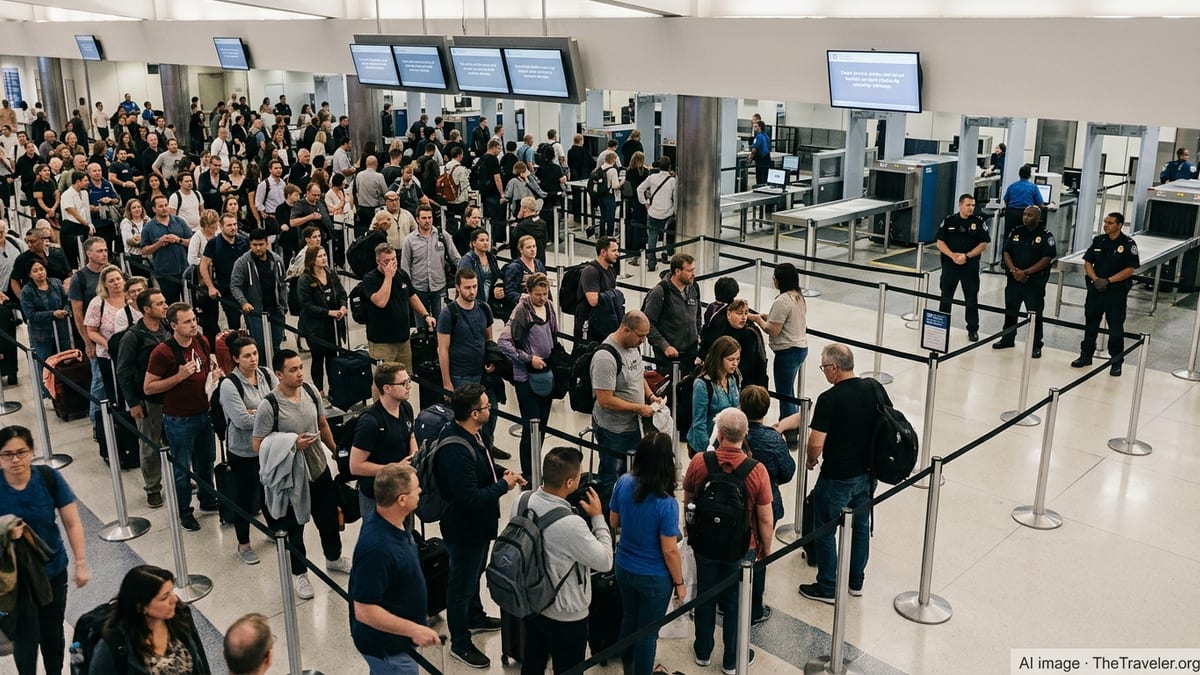
Ticketing breakdown slows morning departures
According to published coverage from outlets including Hindustan Times and U.S. local media, the disruption began early on Tuesday, September 22, when an information technology system used for ticketing and check in at San Diego International Airport experienced a failure. The issue affected both Terminal 1 and Terminal 2, where airlines share common computer networks to issue boarding passes, check bags and handle itinerary changes.
Reports indicate that the malfunction did not affect flight operations or runway activity, but it did slow the process of getting passengers from the curb to the gate. Travelers arriving for early morning departures found ticket counters moving at a much slower pace than usual, with some self service kiosks unavailable or intermittently functioning. Coverage from regional broadcasters and online news summaries describes long queues forming in front of airline counters and stretching deep into the public areas of the terminals.
Newsradio 600 KOGO and other local outlets reported that the outage emerged around 5:30 a.m. Pacific time, coinciding with one of the airport’s busiest daily travel windows. Historical wait time data compiled from federal security statistics shows that San Diego’s peak volumes often cluster around the 5 a.m. hour, when large numbers of business and connecting flights depart, making any technology disruption during that period especially visible to passengers.
By midmorning, published updates described crowds still working their way through ticketing, even as flight boards continued to show on time departures. The impact therefore fell primarily on those who needed to check baggage, resolve reservations at a staffed counter or obtain printed documentation before proceeding to security.
IT outage details and operational response
Publicly available reporting consistently attributes the disruption to an information technology failure that affected airline ticketing systems rather than air traffic control or core airport safety infrastructure. Coverage from Hindustan Times and other international and U.S. outlets characterizes the problem as a technical malfunction or IT system failure that limited access to the tools airlines typically use for check in and bag processing at San Diego International Airport.
Local news partners citing airport communications note that primary airline computer networks at San Diego were knocked offline and that carriers shifted to emergency backup procedures. In practice, that meant many counter agents used tablets or iPads to verify reservations and issue documents, while some processes reverted to paper for bag tags and boarding passes. These backup methods kept passengers moving but at a significantly slower rate than under normal automated conditions.
As of the latest public updates on Wednesday, September 23, there has been no detailed official explanation released in open sources regarding the exact system or vendor involved, nor any public indication that the incident was linked to cybersecurity issues or a broader regional infrastructure problem. Coverage instead frames the outage as a contained technology failure within the airport’s ticketing and check in environment.
Despite the visible disruption inside the terminals, live data aggregating Federal Aviation Administration status reports listed San Diego International Airport as operating on time on Wednesday, suggesting that any residual effects were limited primarily to the immediate aftermath on Tuesday morning and did not evolve into widespread flight delays or cancellations.
Impact on passengers and where delays were felt
Accounts compiled by regional news sites and aviation focused outlets describe check in lines extending toward terminal entrances and, at times, out the doors as agents worked through the backlog. Passengers who arrived early for morning departures encountered the most significant congestion, with some reports noting that it took considerably longer than usual to drop bags or make changes at the counter.
Travelers who had already checked in online or through airline mobile apps and who were traveling with only carry on luggage appear to have been less affected, based on information shared in travel news coverage. With boarding passes already in hand, those passengers could proceed more quickly to security once they reached the terminal, although they still had to navigate crowded public spaces near the ticket counters.
The most acute delays were reported at the staffed ticketing areas in both Terminal 1 and Terminal 2, where the outage slowed down each individual transaction. Because many carriers use common technology platforms for check in at San Diego, a single IT failure can affect multiple airlines at the same time, magnifying its impact during peak departure banks.
Security screening, overseen separately from airline ticketing, did not appear in public reports as the main source of Tuesday’s problems, although longer ticketing times naturally pushed more passengers into later time windows for Transportation Security Administration queues. That dynamic is particularly significant at San Diego International Airport, which regularly experiences early morning surges at security based on its departure schedule.
Guidance issued to travelers during the disruption
As the outage continued on Tuesday morning, the airport used social media channels and media partners to circulate advice to travelers. Public posts reviewed by news organizations show that around 8:30 a.m. Pacific time, San Diego International Airport encouraged passengers to arrive earlier than usual and to check their flight status directly with their airline, either through official mobile apps or websites.
Coverage in Hindustan Times and U.S. outlets highlights that the airport emphasized two main points. First, flights were continuing to arrive and depart, meaning passengers should not assume their journeys were canceled solely because of the crowds in the terminal. Second, travelers were urged to use digital tools for check in and flight status wherever possible, in order to reduce pressure on the already congested ticket counters.
Advice shared through public reporting also underscored the value of building in extra time when heading to the airport while the cause of the outage was still under review. Even once systems begin to recover, ticket counters often take additional time to clear accumulated backlogs from earlier in the day, and passengers with complex itineraries or checked baggage typically face the longest waits.
By Wednesday, travel data services tracking nationwide airport performance were listing San Diego as operating without significant delays, suggesting that the immediate operational guidance for extended lead times may ease as systems return to normal. However, travelers with flights in the days following an outage often continue to be advised, in public facing information, to monitor airline notifications closely in case of residual schedule adjustments.
What the outage reveals about San Diego’s growing hub
The incident comes at a time when San Diego International Airport is managing both rapid growth in passenger numbers and significant infrastructure changes. The airport handled tens of millions of travelers in recent pre pandemic and recovery years, according to its own traffic reports, and continues to publish monthly data for 2026 that show sustained demand across domestic and international routes.
San Diego has also seen expanding service from major carriers. Public statements from airlines describe record levels of scheduled departures during the peak summer and early autumn period of 2026, with additional routes and higher frequencies to cities across the western United States. At the same time, the facility is in the midst of a multiyear Terminal 1 replacement project, with new gates already in operation and further phases under construction.
In that context, Tuesday’s outage underscores how dependent modern, high throughput terminals are on complex IT systems that must coordinate across airlines, airport operators and federal agencies. When a shared platform falters during a peak period at a busy single runway airport like San Diego, the result can be visible almost immediately in the form of long lines and stressed facilities, even if aircraft continue taking off and landing on schedule.
Publicly available information reviewed so far does not indicate longer term structural consequences from this week’s disruption. However, the incident is likely to feature in ongoing regional discussions about resilience, backup systems and passenger communication strategies as San Diego International Airport continues to expand its role as a key gateway for Southern California travelers.