


More news on this day
Travelers at San Diego International Airport confronted significant disruption today as publicly available data showed 66 delayed flights and six cancellations, hitting services operated by SkyWest, Jazz Aviation, Southwest Airlines and other carriers and affecting passengers bound for Vancouver, London, Nashville, Boston and Baltimore.
Get the latest news straight to your inbox!
Ground Delay Programs Ripple Across Single‑Runway Hub
San Diego International Airport, a busy single‑runway hub, experienced cascading schedule issues as a ground delay program combined with morning marine cloud and low visibility. Federal aviation system updates for June 9 indicated that San Diego was subject to flow restrictions, limiting arrivals and departures and forcing airlines to push back departure times or hold aircraft on the ground.
Operational reports describe the airport as highly constrained, with growing traffic funneled through one runway and tight taxiway space. In such conditions, even modest weather or air‑traffic restrictions can trigger a knock‑on effect through the day. Flights departing late from San Diego arrive late into downline airports, further tightening crew schedules and aircraft rotations.
By midday, departures and arrivals across multiple airlines were showing extended delays of 30 to 90 minutes. Some services had already logged substantial arrival delays into San Diego on June 8 and early June 9, leaving little room to recover before today’s disruption intensified.
According to operational data published for the National Airspace System, San Diego’s status placed it among several US airports managing delays related to weather patterns and traffic constraints, underscoring how a localized issue can quickly become a system‑wide problem for carriers.
Impact on Key US Routes to Vancouver, London and Major Hubs
The disruption proved especially acute for passengers using San Diego as a gateway to international and cross‑country destinations. Connections toward Vancouver and London, as well as domestic links to Nashville, Boston and Baltimore, were all affected as departure times slid and aircraft remained out of position.
Publicly available scheduling information shows that carriers rely on San Diego to feed transborder services to Vancouver via partner networks, including flights operated by regional affiliates for larger brands. Jazz Aviation operates many of the Air Canada Express services that connect US airports with Vancouver, while SkyWest provides feeder operations under major US airline banners. When San Diego departures fall behind schedule, travelers aiming for onward flights from hubs such as Vancouver, Denver or Los Angeles face an elevated risk of missed connections.
On the transatlantic side, passengers using San Diego to connect to London through major US and Canadian hubs also saw itineraries tighten. Even a delay of 45 to 60 minutes on a first leg from San Diego can erase planned connection time at congested airports, leading some itineraries to require rebooking.
Travel data for June 2026 already reflects a busy summer travel period on routes linking the US West Coast with British Columbia and the United Kingdom. Today’s disruption adds further strain to an already compressed schedule, with airlines attempting to juggle aircraft utilization, crew duty limits and high load factors.
SkyWest, Jazz Aviation and Southwest Among Most Visible Operators
Flight‑tracking and airline status pages highlighted SkyWest, Jazz Aviation and Southwest Airlines among the most visible carriers affected in and out of San Diego. SkyWest operates under the brand of several major US airlines, including Alaska and others, meaning that disruptions attributed to SkyWest can show up under multiple mainline logos on airport departure boards.
Alaska‑branded flights operated by SkyWest on June 9 listed schedule adjustments and delays into and out of San Diego. These regional jet services are central to feeding larger hubs where passengers transfer to cross‑country and international flights. Delays on these segments increase the likelihood of misaligned connections further along the journey, especially for travelers heading to Vancouver or Eastern US cities.
Jazz Aviation, which operates shorter‑haul services for Air Canada, connects Vancouver with a number of US cities and plays a similar feeder role for transborder itineraries. Schedule disruptions at US origin points such as San Diego place additional stress on already busy Vancouver operations, where previous weekends have seen high volumes of delayed flights, according to publicly available records.
Southwest Airlines, one of San Diego’s largest carriers, also recorded notable schedule pressure. Flight‑tracker information for Southwest routes touching San Diego in the June 7 to June 9 window showed repeated late departures and arrivals, some stretching to 40 minutes or more. With Southwest operating dense networks to Baltimore, Nashville and other key domestic hubs, delays at San Diego propagated quickly through its point‑to‑point system.
Passengers Face Missed Connections, Long Lines and Limited Options
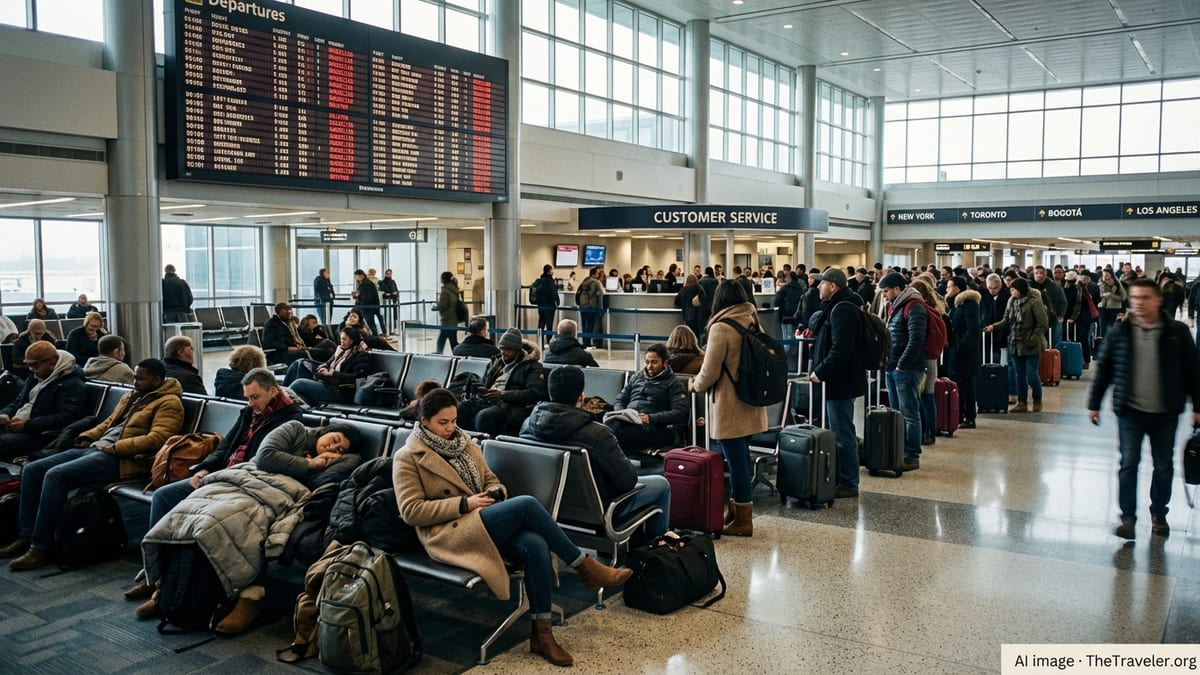
The 66 delays and six cancellations translated into full gate areas, extended check‑in queues and anxious passengers watching departure boards for updates. When delays cluster around mid‑day and evening departure banks, options for same‑day rebooking become limited, particularly on already full summer flights.
Reports from recent disruption episodes at San Diego describe travelers waiting several hours in line at service desks when cancellations occur late in the day, as remaining seats on alternative flights quickly disappear. Today’s pattern showed similar risks, with passengers on affected flights to major hubs such as Denver, Los Angeles, and Phoenix challenged to preserve onward connections to Vancouver, London, Boston, Baltimore and Nashville.
For travelers whose flights were among the six cancellations, rebooking often involved routing through different hubs or even shifting to different carriers where interline agreements and available seats allowed. In some instances, publicly available guidance suggests that travelers may need to accept overnight stays or substantial rerouting to complete their journeys.
With many itineraries built on tight connection windows at busy hubs, a single ground delay program at San Diego can unwind carefully planned travel days. Families, business travelers and cruise passengers all face the possibility of missed events and added accommodation costs as they work around the disruption.
What Today’s Disruption Signals for the Summer Travel Season
Today’s operational strain at San Diego International Airport offers a preview of challenges that may intensify as the peak summer travel season progresses. Industry data for 2026 point to strong demand, with airlines operating near or at capacity on many North American and transatlantic routes.
San Diego’s single‑runway configuration leaves limited margin for recovery when ground delay programs or low‑visibility conditions appear. Recent commentary in public forums has repeatedly highlighted congestion at the airport, emphasizing how quickly small schedule slips can accumulate into system‑wide disruption.
Airline status tools, mobile apps and real‑time trackers have become increasingly important for passengers navigating such conditions. Published travel guidance for major carriers recommends that passengers monitor their flight status frequently on the day of travel, allow extra time for connections, and consider earlier departures when possible to avoid the heaviest evening delay patterns.
For routes linking San Diego with Vancouver, London, Nashville, Boston and Baltimore, today’s 66 delays and six cancellations serve as a reminder that even routine weather and air‑traffic restrictions can ripple across continents. Travelers planning trips through San Diego in the coming weeks may benefit from flexible schedules, backup plans for key connections, and close attention to evolving airport conditions.