


For business and luxury travelers, the journey from Santiago’s Arturo Merino Benítez International Airport (SCL) to Las Condes sets the tone for the entire stay. This stretch of roughly 27 kilometers can be quick and comfortable when you choose well, or stressful and confusing if you do not. With a mix of official taxis, private transfer companies, and ride hailing apps such as Uber and Cabify operating under different rules, knowing how they compare on comfort, time, price, and safety is essential.
Get the latest updates straight to your inbox!
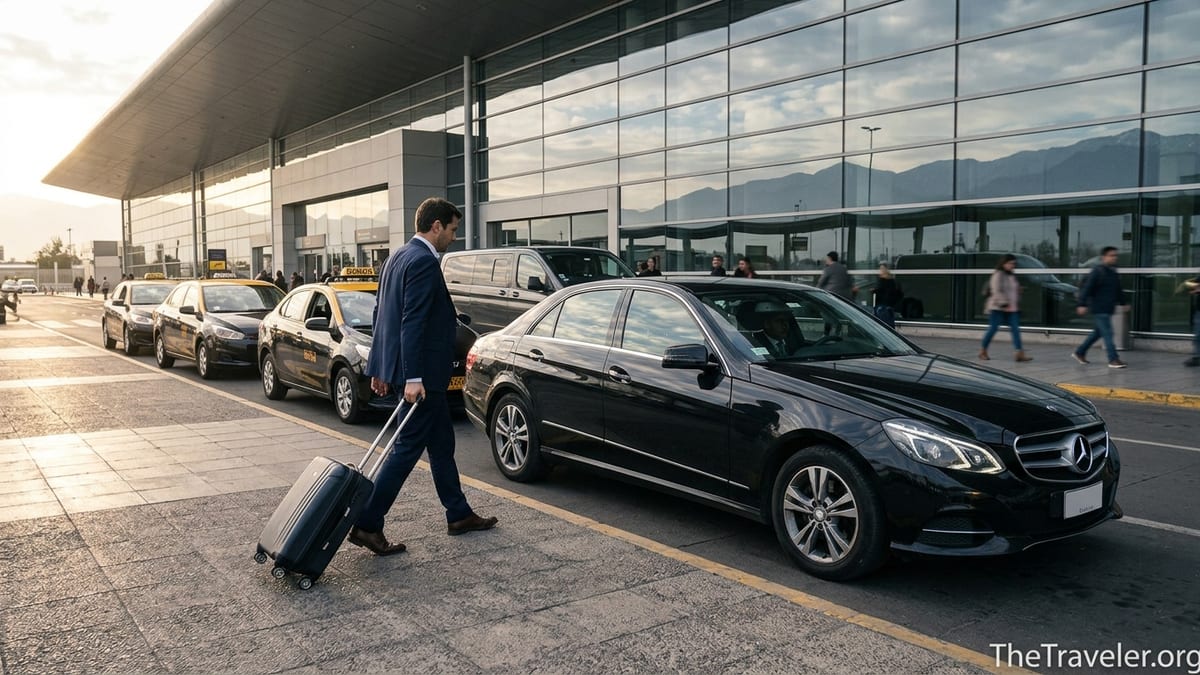
Understanding the Route from SCL to Las Condes
Arturo Merino Benítez International Airport sits to the northwest of Santiago, while Las Condes anchors the city’s upscale northeastern quadrant. The two are linked by modern toll expressways, including Costanera Norte and Vespucio Norte, which run along the Mapocho River and around the city. In normal traffic, a direct car transfer from the terminal to a business hotel in El Golf or Nueva Las Condes usually takes about 25 to 35 minutes. At peak evening rush, especially when there are incidents on Costanera Norte, the same trip can stretch past 45 minutes.
Las Condes itself is spread out. Getting to an address near the Apoquindo business corridor and El Golf metro station is faster than reaching farther eastern neighborhoods such as Los Dominicos or the shopping cluster around Parque Arauco and Alto Las Condes. That extra distance can add 10 to 15 minutes in heavy traffic. When you prebook a car, it helps to give the exact hotel name, for example The Ritz-Carlton Santiago in El Golf or a tower near Parque Araucano in Nueva Las Condes, so the company can quote a realistic travel time.
Business travelers often arrive after long-haul flights from North America or Europe, landing in the early morning or late at night. At these times the expressways are usually fluid and the 26 to 27 kilometer drive is closer to the lower end of the time range. However, occasional road works on Costanera Norte or security checks near the airport can still cause delays, so allow at least 60 to 75 minutes between scheduled landing and any important meeting in Las Condes.
The route also involves tolls, which may or may not be bundled into your fare depending on what type of transfer you choose. Official airport taxis and most private transfer companies price tolls into their flat rates, while some ride hailing options show them as a separate line item. Knowing this prevents surprises when you review your expense report later.
Official Airport Taxis: Regulated Convenience at a Price
Stepping out of customs at SCL, you will encounter official taxi and shuttle counters before you even reach the sliding doors to the arrivals hall. These desks belong to regulated operators that have contracts with the airport. Staff typically speak at least basic English, and fares are either fixed per zone or calculated using a transparent tariff table. For a private sedan to Las Condes, you can expect to pay somewhere in the region of what many business travelers regard as an upper mid‑range fare for a 30 kilometer urban transfer, with the exact amount depending on the specific company and time of day.
Dedicated services marketed as “Taxi Oficial Aeropuerto” and long‑standing shuttle brands such as Transvip and similar operators focus heavily on airport runs and are accustomed to carrying suit‑wearing travelers who need receipts and punctuality. Most desks accept international credit cards. You pay at the counter, receive a voucher with the agreed price and destination, and then a dispatcher walks you to a clearly marked pick‑up lane. This structure limits the scope for the classic “taxi surprise” at the end of the ride and makes official taxis a strong choice for first‑time visitors or those arriving late at night.
Vehicle quality is generally reliable rather than ostentatious. Expect four‑door sedans similar to a Toyota Corolla or Hyundai Elantra, often a few years old but clean and mechanically sound. If you are traveling with two checked suitcases and carry‑on bags, this configuration is usually sufficient. For three or four travelers with large luggage, the counter can assign a station wagon or minivan at a higher flat rate. The main drawback for cost‑conscious corporate policies is that official airport taxis are rarely the cheapest option, sometimes costing more than an equivalent ride hailing trip requested a few minutes later.
From a safety perspective, these taxis are among the lowest‑risk choices. The cars and drivers are registered with airport authorities and are subject to periodic checks. You wait in a monitored area with visible security staff, and the route into town follows the main expressways. For executives traveling alone, especially at off‑hours, that peace of mind often justifies the premium over less formal alternatives. Many global firms with offices in Santiago explicitly recommend official airport taxis in their traveler guidance for arrivals after dark.
Prebooked Private Transfers: Tailored for Corporate and Luxury Travel
For travelers who value predictability and service over shaving a few dollars off the fare, prebooked private transfers are often the most comfortable choice. Several Santiago‑based companies specialize in airport to hotel transfers for corporate clients, operating fleets of late‑model sedans, executive SUVs and vans. When booked in advance, a uniformed driver typically waits at the arrivals hall with a tablet or sign showing your name or company, assists with bags, and escorts you directly to the vehicle parked in the official car park.
Pricing for private transfers runs from only slightly above official taxi rates for a standard sedan to considerably more for premium brands or large SUVs. A solo executive heading to a business hotel near El Golf might pay in the range that global travel managers consider comparable to a private car in cities like São Paulo or Mexico City, while a group of four colleagues sharing a black SUV to a serviced apartment complex in Nueva Las Condes will generally find the per‑person cost quite reasonable. Some operators allow you to pay online in advance in US dollars, which can simplify expense reporting and limit the need to handle local currency on arrival.
Private transfers are also the most flexible from a service point of view. If your flight is delayed, reputable companies monitor arrival times and adjust pick‑ups at no extra charge within a reasonable window. They can provide bilingual drivers on request, child seats for families, and even in‑car amenities such as bottled water, phone chargers and wifi hotspots. For a C‑level executive arriving for meetings at corporate headquarters in Las Condes, being able to step straight into a quiet, air‑conditioned car with a driver who knows the exact building and where to drop you at the security gate can be worth every extra peso.
For luxury hotel guests, concierge teams at properties in Las Condes and neighboring Vitacura often have preferred transfer partners. A guest staying at a five‑star property like a Ritz‑Carlton‑branded hotel, a luxury collection tower, or a high‑end serviced residence can email the concierge with flight details and have a car meeting them on arrival. The vehicle may not bear the hotel logo but is usually vetted by the property for service standards and insurance coverage. This is a straightforward way to avoid evaluating multiple transport websites yourself while still arriving in comfort.
Uber and Cabify: App‑based Flexibility with Extra Airport Nuances
Once you leave the airport bubble, ride hailing apps dominate everyday mobility in Santiago. Uber and Cabify both operate widely in the capital, including Las Condes, and are popular among residents for rides to and from the airport. For business travelers used to tapping a familiar app and charging the fare to a corporate account, this can be an attractive option, especially outside peak arrival times. In many cases, an app ride from SCL to Las Condes comes out somewhat cheaper than a walk‑up official taxi or private transfer booked through a hotel.
However, there are regulatory nuances at the airport itself. Rules about where ride hailing drivers can pick up passengers change over time, and enforcement can be inconsistent. Many frequent travelers report that while using Uber or Cabify to or from the airport is common, app drivers often prefer to meet riders at specific meeting points such as the departures level or a separated curb to avoid conflicts with traditional taxis. For visitors who do not speak Spanish or who are tired after a long flight, coordinating such a meet‑up via messaging in the app can be stressful.
Cabify has leaned into the airport segment by offering specific “Airport” and “Van” categories in Santiago and by working with licensed taxi and van fleets. At SCL there is often a branded counter in the arrivals area where you can book a prearranged ride or shared van at fixed prices, then follow staff to a designated pick‑up area. This hybrid model, part app and part traditional dispatch, can be a good compromise for travelers who want clear pricing and a receipt but also appreciate the user experience of managing bookings on their phone for the return trip.
For ride hailing, the best practice is to check the latest guidance in the app on the day of travel and to read recent user comments for Santiago. If the app suggests a specific meeting point such as a signed “Meeting Point” near an elevator or a particular exit door, follow those instructions rather than improvising. When traveling for business, it is worth allowing extra buffer time between landing and your first appointment in Las Condes in case your driver has to circulate or change the pick‑up spot. For your return to the airport, using Uber or Cabify from your hotel in Las Condes is usually straightforward, as pick‑ups in the city are less sensitive than at the terminal itself.
Travel Time, Traffic Patterns and Planning for Meetings
In pure distance terms, SCL to Las Condes is not a long journey, but Santiago’s traffic patterns mean that your choice of transfer and departure time can make a significant difference. Inbound flights from Europe that land between 8:00 and 9:00 in the morning often coincide with the tail end of rush hour on Costanera Norte and Avenida Kennedy, two of the main arteries into Las Condes. A drive that takes 25 minutes at 11:00 can easily take 45 minutes if you depart the airport around 8:30.
For executives heading straight into morning meetings at office towers in El Golf or along Apoquindo, it is prudent to assume you will not leave the arrivals hall until at least 45 minutes after landing. Immigration queues, baggage delivery and customs checks vary by day. Adding a further 45 to 60 minutes for the road transfer means that scheduling a meeting in Las Condes less than two hours after a scheduled arrival is risky. Many local corporate hosts in Santiago will suggest a late‑morning start or even propose meeting at your hotel to give you time to refresh.
Evening rush hour can also be intense, especially on Thursdays and Fridays when locals head out to malls and restaurants in Las Condes and neighboring Vitacura. If you land at 18:00 and book a car immediately, you are likely to hit heavy traffic on the approach to the business districts and to shopping areas such as Parque Arauco. In such cases, official taxis and private transfers that can use the expressways efficiently and whose drivers are experienced at choosing the least congested ramps offer an advantage over less experienced app drivers who may follow sub‑optimal routes.
For your return journey from Las Condes to the airport, most hotel concierges recommend leaving at least three hours before an international flight and a minimum of two hours for domestic connections. That allows for unpredictable congestion, toll payment queues, and any delays at the terminal. Regardless of whether you choose a private transfer, an official taxi booked through your hotel, or a ride hailing app, inform your driver that you are catching an international departure so they understand that you are on a tight but realistic schedule.
Where to Stay in Las Condes and How It Affects Transfers
Las Condes is not a single uniform neighborhood but a patchwork of distinct zones that cater to different types of business and luxury travelers. The El Golf area, centered around Isidora Goyenechea and Apoquindo, is the traditional financial district, packed with office towers, flagship bank headquarters, and high‑end hotels. Staying here places you within walking distance of many corporate offices and gives you a straightforward transfer route from the airport: the car exits Costanera Norte, connects to Apoquindo or Presidente Riesco, and drops you near your tower or hotel entrance.
Further east, Nueva Las Condes and the surroundings of Parque Araucano have emerged as a modern business hub with glass‑fronted office buildings and serviced residences. Hotels here appeal to extended‑stay guests, regional project teams and families who appreciate being next to major shopping centers and green spaces. The extra distance from the airport is small but noticeable in peak traffic, and some drivers unfamiliar with the office complex layouts may take a few minutes to find the correct tower entrance. Prebooked private transfers and hotel‑arranged taxis generally handle these addresses more smoothly than ad hoc rides hailed at the airport.
Luxury‑focused travelers sometimes choose to base themselves even farther east, near Los Dominicos or in residential pockets close to the foothills of the Andes, trading a slightly longer commute for quieter surroundings. While these areas still sit within the Las Condes commune, they push total driving time from the airport closer to 40 to 50 minutes in normal conditions. In such cases, a comfortable vehicle with space to stretch out after a long flight becomes more important, tipping the scales toward private transfers or upgraded taxi categories rather than the smallest available car.
Wherever you stay, it is wise to confirm in advance how your hotel usually handles airport arrivals. Properties in El Golf often suggest specific partners and may be able to add the transfer charge directly to your room bill, a convenience for travelers whose companies prefer a single consolidated invoice. In contrast, if you are staying at a serviced apartment or Airbnb in Las Condes, you will need to organize your own airport transport and keep digital receipts from whatever service you choose for reimbursement.
Luggage, Comfort and Vehicle Types
For many business travelers, luggage consists of a single checked suitcase and a cabin roll‑aboard plus a laptop bag. Any official taxi, prebooked sedan or standard app ride category can handle this without difficulty. Issues arise when you are carrying bulky items such as conference materials, product samples, or sports equipment for a weekend in the Andes. In these cases, it is critical to select the right vehicle type rather than hoping everything will fit into the trunk of a compact sedan.
Most airport taxi counters at SCL can arrange station wagons or minivans on the spot for a modest supplement if you show up with more luggage than a standard car can accommodate. Private transfer companies often offer explicit classes such as “Executive Sedan,” “SUV” or “Van 7 pax,” with clear indications of how many large and small bags each can handle. Ride hailing apps in Santiago mirror this structure with categories ranging from basic to larger vehicles and airport‑specific vans. For example, a shared van option might be appropriate for a small team traveling to the same hotel with multiple suitcases each.
If comfort is the priority, especially after an overnight flight, a larger vehicle with better legroom and smoother suspension will improve your first impression of Santiago. Leather seats, dual‑zone climate control and a quiet cabin are more likely in executive sedans and SUVs than in the smallest taxi category. While the difference in cost between a compact car and an executive sedan can look significant on paper, spread across several travelers or balanced against the value of arriving well rested to a full day of meetings, many companies find it justifiable.
Whichever service you choose, it can help to message the driver in the app or note in your booking that you have “two large and two small suitcases” or similar. This prompts dispatchers to assign the right vehicle and avoids awkward repacking at the curb. In the rare event that the assigned car is clearly too small for your group and luggage, it is better to request a change before leaving the airport parking area, especially if you are transporting sensitive equipment or documents that should not ride on laps or be forced under seats.
Safety, Scams and Night‑time Arrivals
Santiago has a reputation as one of the safer major cities in the region, and the road between SCL and Las Condes is generally considered secure, especially when using regulated providers. That said, isolated cases of overcharging and unlicensed taxi operations do occur, particularly in the chaotic area just outside the arrivals hall doors. The most important safety rule is to avoid accepting unsolicited offers from individuals who approach you inside or outside the terminal offering cheap rides to the city.
Official airport taxis, branded transfer counters and prebooked private cars use clearly marked desks and uniforms. They issue printed or digital vouchers before you get into the vehicle, specifying destination and price. If someone tries to hurry you straight to the parking lot without any documentation or attempts to negotiate an off‑meter cash fare far below what the official counters quote, it is best to decline. Hotel concierges in Las Condes consistently recommend arranging airport rides either through the hotel itself, through recognized operators or via well known apps rather than stepping into a random vehicle.
For night‑time arrivals, many corporate security policies encourage employees to use only vetted, traceable services. An official taxi arranged at the airport counter, a private transfer with the driver’s details sent in advance, or a ride hailed through a major app that logs the route and driver ID all fall into this category. Solo travelers may want to sit in the back seat, keep bags on the seat next to them rather than in the front passenger footwell, and ensure that doors are locked once on the highway. It is also prudent to avoid displaying laptops or high‑end phones at the curbside when you first exit the terminal.
Within Las Condes itself the risk of street crime is relatively low compared with many other Latin American districts, particularly in business areas like El Golf and around major malls. Still, basic precautions apply. When you arrive at your hotel after dark, step straight from the vehicle into the lobby rather than lingering on the sidewalk with your luggage. If your driver seems unsure of the exact address in a quieter residential part of Las Condes, ask them to wait until you are safely inside the building before leaving. These simple habits contribute as much to a smooth trip as your choice of transfer provider.
The Takeaway
For business and luxury travelers heading from Santiago Airport to Las Condes, the key decision is not whether you will reach your hotel, but how predictably and comfortably you will do so. Official airport taxis provide a regulated, straightforward solution right in the arrivals hall, ideal for first‑time or late‑night visitors who want minimal friction and are prepared to pay a bit more for that certainty. Prebooked private transfers, often arranged through your hotel or a specialist company, add layers of convenience such as meet‑and‑greet service, executive‑class vehicles and proactive flight monitoring that are particularly attractive for senior executives and groups.
Ride hailing apps like Uber and Cabify, widely used across Santiago, offer flexibility and often lower fares, especially for return trips from Las Condes to the airport. However, they come with extra nuances at the terminal itself, from meeting points to evolving regulatory rules. Whichever mode you favor, planning around traffic patterns, choosing a vehicle suited to your luggage and comfort needs, and prioritizing reputable providers over ad hoc offers will ensure that your first and last impressions of Santiago support, rather than undermine, the purpose of your visit.
In practical terms, if you are arriving after a long‑haul flight for important meetings in El Golf, arranging a private transfer or using an official taxi counter at SCL will almost always be the least stressful path. If you are returning to the airport from a well‑known hotel in Las Condes during the day, an app ride becomes more attractive. By understanding how each option performs on time, comfort, price and safety, you can tailor your airport transfers to match both your corporate travel policy and your personal expectations of a smooth, efficient journey.
FAQ
Q1. How long does it usually take to get from Santiago Airport to Las Condes by car?
In normal traffic, the drive takes about 25 to 35 minutes. During peak rush hours or in case of incidents on the expressways, it can stretch to 45 minutes or a little more.
Q2. Are official airport taxis at SCL safe for solo business travelers at night?
Yes, official airport taxis are regulated, operate from clearly marked counters inside the terminal, and are generally considered a safe option for solo travelers, including at night.
Q3. Is it cheaper to use Uber or Cabify instead of an official taxi from the airport?
In many cases, rides requested through Uber or Cabify can be somewhat cheaper than official walk‑up taxis, but prices fluctuate with demand, and you may need extra time to coordinate the pick‑up point.
Q4. Can I book a private transfer from SCL to my hotel in Las Condes before I travel?
Yes, several companies and hotel concierge desks offer prebooked private transfers. You can arrange a sedan, SUV or van in advance and often pay online before you arrive.
Q5. Which part of Las Condes is best for business travelers?
The El Golf and Apoquindo corridor is the classic financial district, with many corporate offices and upscale hotels. Nueva Las Condes near Parque Araucano is another strong choice for modern offices and longer stays.
Q6. How should I plan my timing if I have a meeting soon after landing in Santiago?
Allow at least two hours between scheduled landing and any important meeting in Las Condes to account for immigration, baggage, customs and possible traffic on the way into the city.
Q7. What is the best option if I am carrying a lot of luggage or equipment?
If you have bulky or numerous bags, it is advisable to request a station wagon, SUV or van via a private transfer, taxi counter or app category that specifically supports larger vehicles.
Q8. Are there any common taxi scams at Santiago Airport I should watch out for?
The main risk is from unlicensed drivers approaching travelers with unsolicited offers. Always use official counters, prebooked cars or well known apps, and avoid entering vehicles without clear identification or written pricing.
Q9. Can I charge my airport transfer to my hotel bill in Las Condes?
Some upscale hotels in Las Condes can arrange transfers through preferred partners and add the cost to your room bill, but this is not universal, so confirm with the property in advance.
Q10. Is ride hailing from my Las Condes hotel back to the airport straightforward?
Yes, using Uber or Cabify from hotels and offices in Las Condes to the airport is usually straightforward, as city pick‑ups are less restricted than at the terminal, though you should still allow enough time for traffic.