


More news on this day
Indian Railways’ tourism arm IRCTC is promoting a dedicated Sapta Jyotirlinga Yatra that turns a complex multi-state pilgrimage into an 11-day all-inclusive journey aboard a Bharat Gaurav tourist train, drawing attention from spiritual travelers across India and abroad.
Get the latest news straight to your inbox!
What the Sapta Jyotirlinga Yatra Offers Pilgrims
The Sapta Jyotirlinga Yatra is structured as a circuit that links seven prominent Jyotirlinga temples associated with Lord Shiva, operated as a themed Bharat Gaurav tourist train. Publicly available information shows that itineraries typically span 10 nights and 11 days, with departures scheduled around peak pilgrimage seasons such as Maha Shivaratri and the Hindu month of Shravan.
IRCTC documentation indicates that the rail tour is designed as a turnkey package, bundling rail travel, hotel accommodation, vegetarian meals, local sightseeing and transfers into a single booking. For many pilgrims, this format reduces the logistical challenge of planning separate train tickets, hotel stays and surface transport across several states within a relatively short window.
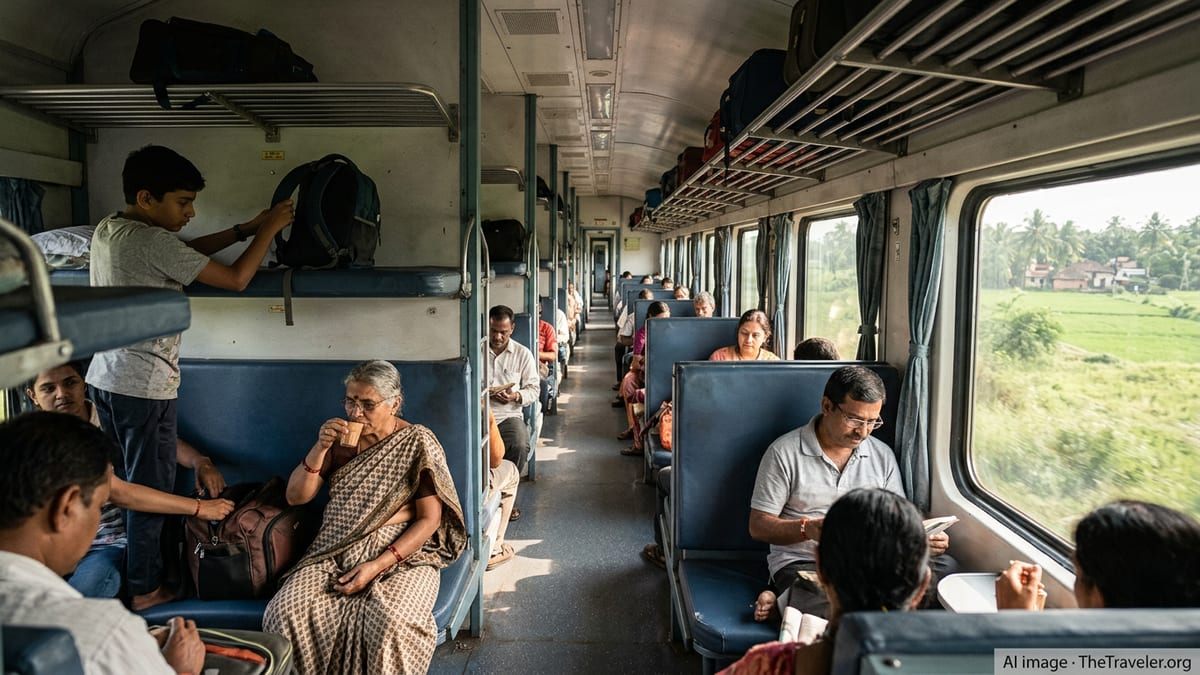
The service is positioned as a mid-range pilgrimage product, using refurbished LHB coaches configured for tourism rather than regular passenger traffic. Operators promote the onboard experience as simpler than luxury tourist trains, but with reserved berths, catering arrangements and basic comfort features that appeal to family groups, senior travelers and first-time long-distance pilgrims.
Fares are published in slabs depending on class and occupancy, with recent reports highlighting lead-in pricing in the lower-to-mid five-figure rupee range per person for sleeper or air-conditioned classes. The tariff generally covers most on-tour essentials, while optional personal expenses and certain local activities remain extra.
The 11-Day Route and Key Jyotirlinga Stops
The Sapta Jyotirlinga Yatra has been advertised in different regional variants, but the core promise remains the same: to cover seven revered Jyotirlinga shrines in a single continuous journey. Packaged itineraries accessed through IRCTC tourism brochures feature a mix of temples in Maharashtra, Madhya Pradesh, Gujarat, Telangana and Andhra Pradesh, depending on the specific circuit.
Commonly featured shrines include Mahakaleshwar in Ujjain, Omkareshwar in Madhya Pradesh, Trimbakeshwar near Nashik, Bhimashankar and Grishneshwar in Maharashtra, Parli Vaijnath in the Marathwada region, and Mallikarjuna at Srisailam in Andhra Pradesh. Some circuits also integrate additional religious or heritage stops such as the Statue of Unity or prominent Shakti peethas to broaden the appeal.
The 11-day schedule is tightly timed, with night runs by train and daytime excursions by coach to temple towns from nearby railheads. Passengers typically sleep on board while the Bharat Gaurav rake covers the longest distances, disembarking in the morning for darshan, sightseeing and meals before returning to the train or transferring to hotels for overnight stays.
Because the route spans multiple climate zones and involves travel through both large cities and smaller pilgrimage centers, advisory notes from IRCTC emphasize the need for appropriate clothing, footwear and medication, especially in hotter months when temple queues can involve extended periods outdoors.
Onboard Facilities, Accommodation and Meals
Bharat Gaurav tourist trains like the one used for the Sapta Jyotirlinga Yatra operate with dedicated tourist configurations that differ from regular express services. Coach compositions usually include non air-conditioned sleeper, air-conditioned 3-tier and sometimes AC 2-tier options, alongside pantry and service coaches. Interiors are simple but reserved exclusively for tour passengers, with fixed berths and assigned coach marshals.
According to IRCTC package descriptions, the tour typically provides standard hotel accommodation in non-rail segments, often on twin or triple sharing basis, with dormitory use in a few short freshen-up halts where full hotel check-in is not practical. Properties are positioned in the budget to mid-range category, selected primarily for proximity to temple areas and coach access rather than luxury amenities.
All-inclusive vegetarian catering is a core element of the package, with breakfasts, lunches and dinners arranged either on board or at partner hotels and restaurants. Tea, coffee and drinking water are supplied at intervals, while packaged snacks and specialty items remain a personal expense for travelers. Operators also underline that alcohol and non-vegetarian food are not part of the tour environment.
Basic travel insurance is bundled into most current packages, and group escorts accompany passengers from the originating station through to the final drop-off. While the experience does not match luxury train standards, many recent passengers posting on social platforms describe the combination of predictable schedules, group arrangements and onboard security as a key advantage for elderly devotees and solo travelers joining larger groups.
Booking, Pricing and Who the Yatra Suits
Bookings for the Sapta Jyotirlinga Yatra are handled through IRCTC’s tourism channels, including its dedicated tour booking portal, regional tourism offices and selected partner agents. Packages are announced as part of the Bharat Gaurav portfolio and are identified by specific tour codes and circuit names, which travelers are advised to verify carefully before payment.
Pricing varies by class of travel and occupancy, and by the exact circuit chosen. Recent coverage of similar seven-Jyotirlinga itineraries references entry-level fares starting in the range of roughly 17,000 to 25,000 rupees per person in non air-conditioned or lower air-conditioned classes, with higher charges for upper classes or single occupancy. Dynamic factors such as demand, season and additional inclusions can influence the final tariff.
The package is particularly suited to travelers who prioritize convenience over highly customized itineraries. Families traveling with elderly parents, groups from smaller towns and first-time domestic tourists often see value in an all-in-one solution that minimizes language barriers and on-the-spot bargaining in unfamiliar destinations.
Independent travelers who prefer flexible stays at each shrine, or who want to combine the Jyotirlinga circuit with trekking, homestays or extended heritage exploration, may find the fixed timetable restrictive. For them, the Bharat Gaurav circuit can serve as a reference template for building a custom route using regular trains and local transport.
Practical Tips Before Boarding the Bharat Gaurav Train
Prospective passengers are encouraged to study the detailed day-by-day itinerary, coach layout and inclusion list before confirming their booking, as small differences between circuits can significantly affect daily routines. Details such as check-in times, distance from railhead to temple, likely crowd levels and whether early morning or late-night darshan is planned can shape the overall experience.
Travel advisories highlight the importance of packing light yet strategically for the 11-day journey. Pilgrims typically carry modest luggage that can be stowed under berths, along with temple-ready attire, shawls for early mornings, comfortable walking footwear, refillable water bottles and personal medicines. For summer departures, sun protection and electrolyte supplements are frequently recommended.
Given the group nature of the tour, travelers should be prepared for fixed reporting times, shared meals and coordinated coach movements. Those with limited mobility or specific dietary needs are advised to review the fine print and consult publicly available information on accessibility before securing tickets, as some shrines require climbing steps or walking considerable distances from the parking area.
Finally, while the Sapta Jyotirlinga Yatra is organized to be as streamlined as possible, temple operations and local conditions can change at short notice. Pilgrims are therefore advised to monitor IRCTC updates close to the date of departure and to allow a margin of flexibility in connecting travel plans at the start and end of the tour.