


More news on this day
Travelers across northern and central Europe are facing extended disruption after three flights operated by SAS and Air France’s regional brand HOP were suspended at Paris Charles de Gaulle Airport, triggering delays and missed connections on key routes to Glasgow, Amsterdam, Copenhagen and Krakow.
Get the latest news straight to your inbox!
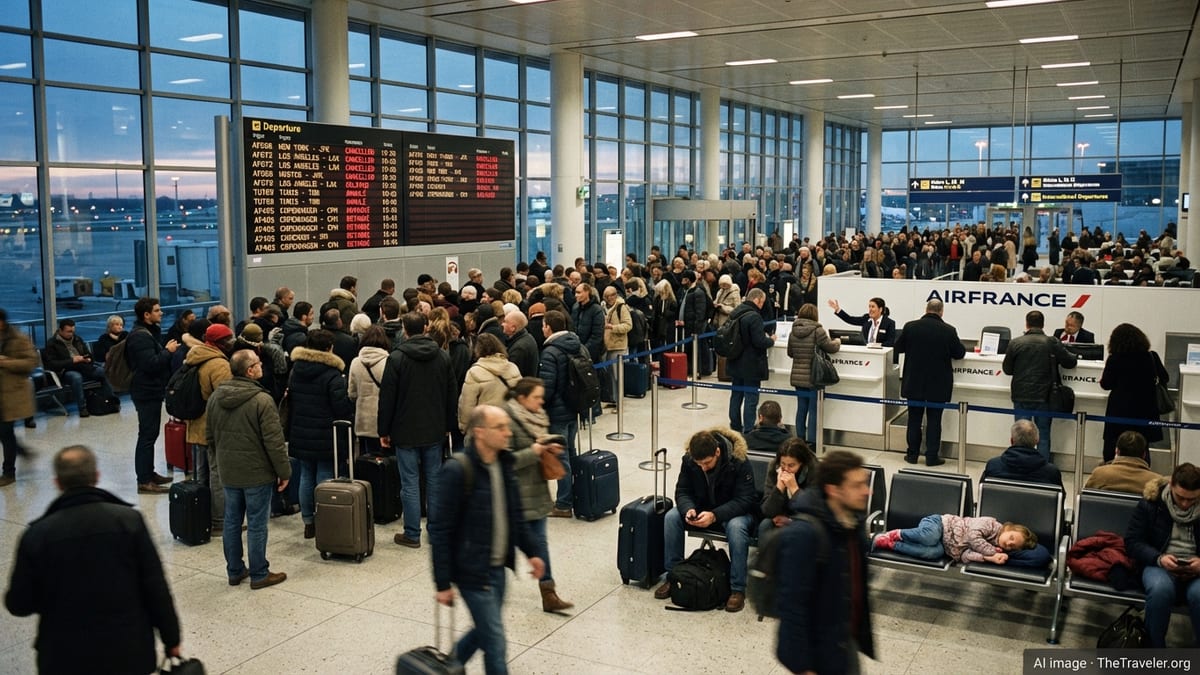
Targeted Cancellations Ripple Across Northern Europe
According to publicly available operational data and flight-tracking information, the suspensions centered on departures from Charles de Gaulle that serve as crucial feeders into wider European networks. One affected service involved SAS links between Paris and its Scandinavian hub in Copenhagen, a route that typically offers multiple daily departures and onward connections to destinations such as Amsterdam and Krakow. Another involved regional HOP flights aligned with Air France’s network at Charles de Gaulle, with passengers bound for Glasgow and other UK and European cities relying on timed connections.
Published coverage indicates that the three suspended flights were pulled from the schedule on short notice, leaving aircraft out of position and connection banks disrupted. As a result, passengers who had planned to travel on through-tickets from Paris to Glasgow, Amsterdam, Copenhagen and Krakow found themselves rebooked onto later departures, alternative routings, or in some cases next-day services when same-day options were not available.
The impact has been most visible at transfer points, where even a small number of cancellations can quickly break carefully constructed connection patterns. With SAS using Copenhagen as a major hub for intra-European traffic and HOP feeding Air France’s network at Charles de Gaulle, the loss of three flights at a peak period created a cascade of missed links, particularly on morning and evening waves.
Travel forums and social media posts from affected passengers describe long queues at service desks in Paris and at downline airports, as travelers sought rerouting to maintain business trips, holidays and family visits. While many were accommodated on later same-day departures, others reported overnight stays when onward flights to cities such as Krakow and Glasgow had already departed.
Copenhagen Hub Under Strain as SAS Adjusts Operations
SAS has spent the past several seasons positioning Copenhagen as its primary international hub, with a dense schedule of flights connecting Scandinavia to major European cities including Amsterdam and Krakow. Timetables and previous network announcements show multiple daily rotations between Copenhagen and both cities, as well as frequent services to Paris Charles de Gaulle that act as feeders and onward links.
The suspension of SAS-operated flights between Paris and Copenhagen temporarily weakened this structure. Passengers who had started their journeys in Paris faced missed onward services from Copenhagen to Amsterdam and Krakow, as connection windows evaporated once the inbound SAS legs were removed from the schedule. Even where seats were available on later departures, the need to reaccommodate large numbers of travelers meant that some flights quickly filled.
Publicly available information on SAS’s disruption-handling guidance notes that travelers whose flights are cancelled are typically offered rebooking on the next available departure or alternative routings when possible. In practice, the combination of full winter and early spring loads, limited spare capacity, and the late timing of the suspensions meant that many itineraries had to be reassembled across multiple carriers and hubs, adding complexity and additional time in transit.
Operational data from recent months shows that SAS has already been fine-tuning its schedules in response to higher fuel costs and seasonal demand shifts. The additional strain created by pulling three Charles de Gaulle flights, even temporarily, highlights how sensitive the network has become to targeted changes on key hub-to-hub routes.
HOP Feeder Cuts Complicate Links to Glasgow and Amsterdam
On the French side of the disruption, HOP’s role as a regional connector into the Air France system at Charles de Gaulle meant that its suspended flights had knock-on effects well beyond Paris. Many passengers from smaller French and neighboring European airports use HOP services to reach Charles de Gaulle before continuing onward to cities such as Glasgow and Amsterdam on mainline Air France or partner flights.
Reports indicate that one or more of the suspended flights were HOP-operated feeders, prompting missed long-haul and medium-haul connections once those passengers failed to arrive in Paris on schedule. In the case of Glasgow, for example, services from Charles de Gaulle are typically timed around morning and early afternoon departure banks, leaving limited options to rebook travelers if a regional inbound leg is removed without sufficient notice.
Amsterdam, a key destination for both business and leisure travelers from France and Scandinavia, was similarly affected. With many itineraries constructed around carefully sequenced Paris and Scandinavian connections, the removal of a single feeder or hub flight at Charles de Gaulle translated into a series of missed departure slots further down the line, particularly on days when load factors were already high.
Airline schedulers can often absorb one-off disruptions through spare capacity or re-timed services, but when multiple flights are suspended in a tight window the system becomes far less flexible. In this case, the combination of HOP and SAS adjustments at Charles de Gaulle led to an unusual degree of fragmentation across several city pairs at once.
Passengers Face Rebooking, Legal Rights and Compensation Questions
The wave of cancellations and delays at Paris Charles de Gaulle has again raised questions among travelers about their rights under European air passenger regulations. EU rules typically provide for assistance, rerouting and in some cases financial compensation when flights are cancelled or heavily delayed, depending on the cause of the disruption and the timeline of notification.
Recent commentary from consumer advocates and travel-rights specialists highlights that passengers are often unsure whether a suspension is treated as an operational decision within an airline’s control or as an event linked to external factors such as air traffic restrictions or severe weather. That distinction is crucial in determining whether compensation is due in addition to rerouting and care such as meals and accommodation.
In the current situation involving SAS and HOP at Charles de Gaulle, publicly available information has so far referenced operational adjustments and scheduling changes, without a single clear external trigger. As a result, many affected passengers are expected to file claims with their carriers and, in some cases, escalate disputes to national enforcement bodies if they believe their compensation requests have been wrongly denied.
Specialists advise travelers caught in similar events to retain boarding passes, booking confirmations, written notices of cancellation, and receipts for hotels and meals. These documents can be important when submitting claims to airlines or to card issuers offering trip interruption coverage, particularly in complex multi-leg itineraries involving multiple airlines and hubs.
What Travelers Should Expect in the Coming Days
Although the suspensions at Charles de Gaulle were limited to three flights, the interconnected nature of European air networks means that residual delays and schedule adjustments can continue for several days. Aircraft and crew displaced by missed rotations often need to be repositioned, while airlines may modify upcoming departures to restore balance across their fleets.
Passengers booked with SAS, HOP or partners on routes touching Paris, Copenhagen, Amsterdam, Krakow or Glasgow over the next few days are being encouraged through public advisories and online tools to check their flight status frequently. Same-day schedule changes are not uncommon when carriers are working through a backlog of disrupted itineraries.
Industry data from recent seasons suggests that carriers increasingly respond to cost pressures and capacity constraints by trimming selected flights instead of reducing entire routes. While this approach can preserve overall network breadth, it also makes localised disruptions like the current Charles de Gaulle suspensions more likely to affect specific connection banks, particularly around early-morning and late-evening waves.
For now, most operations at Charles de Gaulle, Copenhagen, Amsterdam, Krakow and Glasgow appear to be running close to published schedules, but the events surrounding the three suspended flights underline how even limited cuts on key hub corridors can quickly reverberate across Europe’s already crowded skies.