


More news on this day
Swiss Federal Railways is evaluating potential sites for new sidings around Zurich as part of a broad capacity upgrade for the Zurich S-Bahn, aiming to accommodate more trains on the busy commuter network over the next decade.
Get the latest news straight to your inbox!
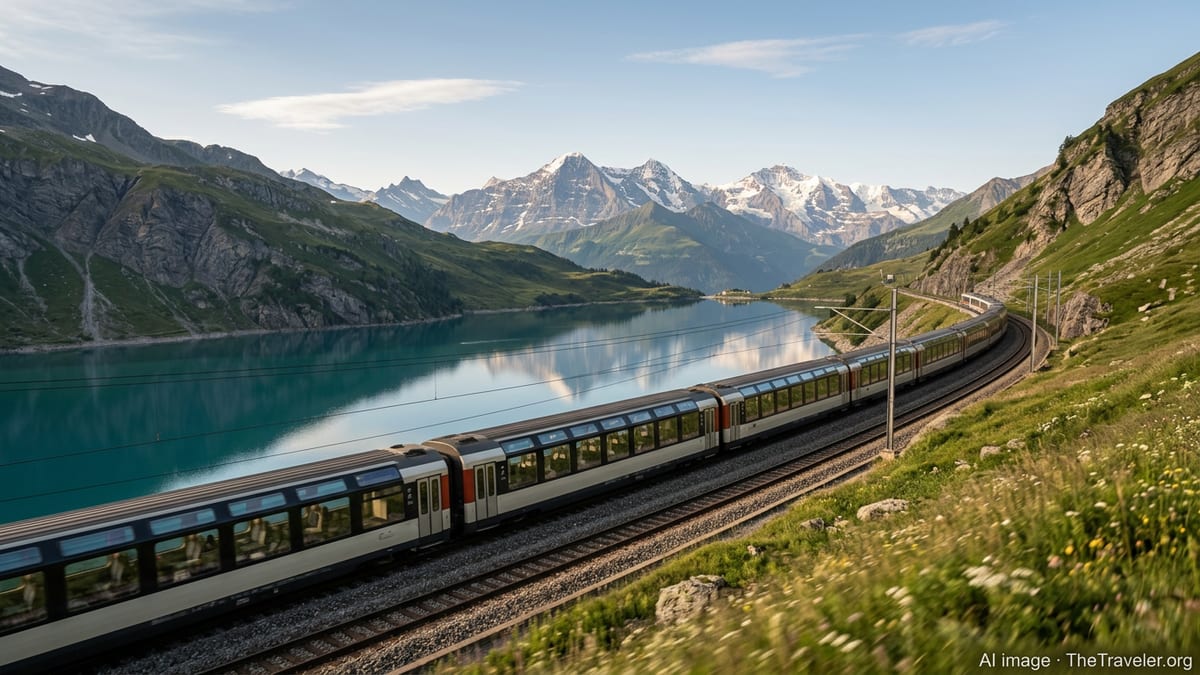
Sidings as a key element in Zurich rail expansion
Additional sidings are viewed as a crucial but often overlooked component of the Zurich S-Bahn expansion. Sidings are auxiliary tracks where trains can be parked, turned around or held between journeys, freeing up mainline capacity for through services. In a dense commuter network such as Zurich’s, the number and location of sidings influence how many trains can operate in the peak and how flexibly operators can respond to disruptions.
Publicly available planning documents indicate that SBB is assessing options for sidings in the wider Zurich area in parallel with high profile infrastructure schemes such as the MehrSpur Zurich–Winterthur corridor and capacity works at major nodes. The aim is to align storage and turning facilities with future service patterns, including an expected increase in S-Bahn frequencies and the introduction of new rolling stock tailored to the region.
Early technical work focuses on identifying locations that can be integrated into the existing track layout with minimal impact on passenger operations and surrounding neighborhoods. In practice this means looking near junctions, existing yards and stations that already handle intensive commuter traffic, where additional sidings could be connected without major land take.
The search for new sites also reflects a broader shift in how SBB manages capacity around Zurich. Instead of relying mainly on longer trains to absorb demand, planners are increasingly looking at running more trains per hour, which requires both extra track capacity on core routes and enough sidings to position units precisely where they are needed at the busiest times of day.
Linked to MehrSpur Zurich–Winterthur and node upgrades
The assessment of new sidings is closely tied to the large scale MehrSpur Zurich–Winterthur project, which will progressively increase capacity on one of Switzerland’s busiest corridors. Preparatory work for that scheme is now underway, with four track sections and the future Brütten tunnel expected to relieve a key bottleneck north of Zurich. As more S-Bahn and long distance services are scheduled over this route, additional stabling and turnaround facilities will be required to support the intensified timetable.
According to published coverage, SBB has started enabling works across the project perimeter, including the creation of construction and installation areas and adjustments to railway technology. These activities highlight the space pressures around existing tracks, which in turn shape where sidings can realistically be added. The search for suitable locations therefore forms part of the same long term capacity strategy that underpins the corridor upgrade.
The focus is not limited to the main line towards Winterthur. Capacity studies in recent years have highlighted constraints at key S-Bahn nodes such as Zurich Stadelhofen, Zurich Altstetten and Zurich Seebach, where multiple suburban lines converge. Improvements at these stations, including platform extensions, additional underpasses and revised track layouts, must be coordinated with siding locations so that arriving trains can be cleared quickly from passenger platforms.
Planners are also taking account of upcoming changes in the service pattern. Timetable adjustments scheduled around the end of 2026, linked to infrastructure works, are expected to shift some S-Bahn operations and stopping patterns. Aligning new sidings with these revised flows is intended to keep empty movements to a minimum and preserve punctuality while work progresses on the larger expansion schemes.
Supporting new rolling stock and higher frequencies
The siding study is emerging at the same time as a major renewal of the Zurich S-Bahn fleet. SBB has launched procurement of new double deck trains and is introducing updated regional units with higher capacity, improved acceleration and modern passenger amenities. These vehicles are expected to enter regular operation on the Zurich network in the early 2030s.
The new trains are designed to support tighter timetables and faster turnarounds, but they also bring fresh demands on stabling areas. Modern multiple units typically require dedicated servicing facilities for cleaning, inspections and minor maintenance. This is prompting SBB to look not only at the number of sidings but also at their configuration, access routes and proximity to depots and workshops.
Higher S-Bahn frequencies will further increase the importance of efficient storage. In the peaks, short layovers between trips leave little margin for delays, so sidings must be positioned where units can enter and exit without conflicting with other trains. By carefully aligning siding locations with planned headways, operators aim to maximise the use of new rolling stock while preserving the network’s reputation for punctuality.
There is also a strategic dimension. As Zurich’s population and commuting catchment continue to grow, the S-Bahn has become the backbone of mobility for the metropolitan region. Additional sidings are part of a toolbox that also includes extra tracks, modern signalling and digital timetable planning, all intended to allow more trains to run without eroding reliability.
Balancing operational needs with urban and environmental concerns
Finding new siding sites in and around Zurich is challenging in spatial, urban planning and environmental terms. Much of the railway land close to the city centre is already in intensive use, while surrounding districts are experiencing strong pressure for housing, offices and public spaces. Any expansion of rail infrastructure must therefore be coordinated with local planning frameworks and community expectations.
Publicly available information on SBB real estate projects shows that land around several stations in the canton of Zurich is being redeveloped for mixed use districts with housing, retail and offices. In such locations, new sidings must be carefully integrated so that noise, visual impact and barrier effects are limited. This can involve using existing corridor space more intensively, favouring compact track layouts and considering noise protection measures.
Environmental considerations also shape decision making. Switzerland’s climate and land use policies encourage rail as a low emission mode, but they also demand the careful use of land and the protection of local ecosystems. When potential siding locations touch green spaces or sensitive areas, additional assessment is typically required to evaluate impacts such as soil sealing, drainage changes and habitat disturbance.
Stakeholder engagement is expected to be a significant part of the process as specific sites are shortlisted. Municipalities, cantonal authorities and residents’ groups generally have an interest in how new tracks might affect local development, traffic and quality of life. Aligning operational needs with urban priorities is likely to influence both which sites move forward and the design of any future facilities.
Next steps in a long term rail capacity strategy
The current assessment of siding locations forms an early stage in what is likely to be a multi year planning effort. Initial technical studies typically narrow down the field of potential sites based on operational feasibility, land availability and cost. Later stages may involve more detailed designs, formal consultation and regulatory approval before construction can begin.
Given the long lead times involved in major rail projects in Switzerland, new sidings intended to support future S-Bahn expansions are unlikely to appear overnight. Instead they will be phased in alongside other infrastructure works, rolling stock deliveries and timetable changes that together shape the evolution of the Zurich rail node through the 2030s.
For travellers, the process may be most visible through temporary changes to S-Bahn services during construction, as well as through the gradual arrival of new trains and improved station facilities. Behind the scenes, however, the careful positioning of a relatively small number of additional sidings could play a disproportionate role in determining how many trains can ultimately be operated through Zurich each hour.
As SBB refines its concepts and moves towards more concrete proposals, the balance between operational robustness, urban integration and financial viability will likely determine which siding locations are pursued. The decisions taken in the coming years will help fix the framework within which the Zurich S-Bahn can grow to meet the transport demands of a larger and more mobile metropolitan region.