


More news on this day
Thousands of air passengers across Europe and beyond are facing missed connections, overnight waits and rebooked itineraries after a fresh wave of disruption at Amsterdam Schiphol Airport led to 24 flight cancellations and 211 delays, snarling services operated by KLM, SAS, United Airlines, Delta Air Lines and several other carriers on routes to major hubs including Chicago, New York, Houston, Mumbai, London, Stockholm and Porto.
Get the latest news straight to your inbox!
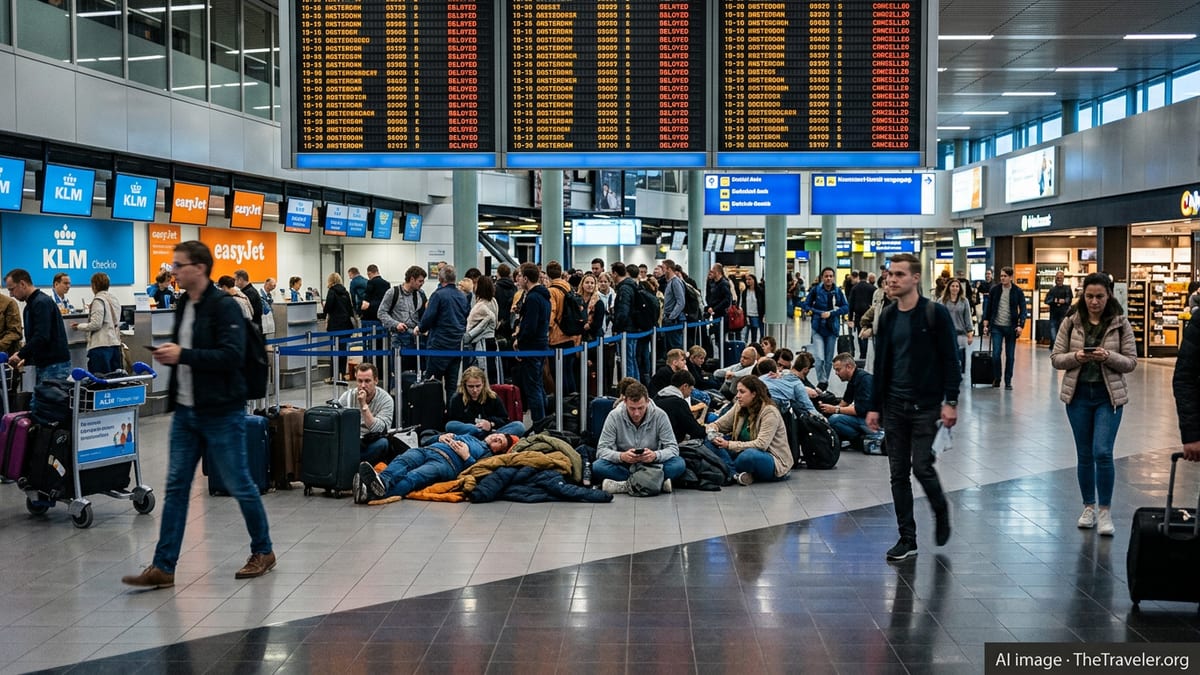
Schiphol Operational Pressures Ripple Across Global Network
Publicly available flight tracking data for 24 June 2026 shows Amsterdam Schiphol among Europe’s most affected hubs, with dozens of cancellations and hundreds of delayed departures and arrivals recorded in a single operating day. Regional tallies indicate that 24 flights linked to Schiphol were cancelled and at least 211 experienced significant delays, forming part of a wider pattern of 2,207 delays and 189 cancellations across European airspace.
Airlines using Schiphol as a primary hub or key gateway, including KLM, SAS, United Airlines and Delta Air Lines, have been prominent among the disrupted operators. KLM in particular has led regional disruption metrics in recent days, with data aggregators listing the Dutch flag carrier at the top of delay and cancellation rankings on 24 June. The disturbance has extended beyond Europe, affecting transatlantic links and long haul connections to Asia.
Schiphol’s role as a major transfer node has amplified the consequences of even a relatively modest number of cancellations. With thousands of passengers booked on connecting itineraries through Amsterdam, aircraft and crew running behind schedule have triggered missed onward legs, forcing widespread rebooking and creating pressure on already busy peak summer services.
Key Routes Hit: From Chicago and New York to Mumbai and Stockholm
Flight status boards on 24 June showed disruption across a broad mix of destinations, including several of the most heavily used long haul corridors. Transatlantic services linking Amsterdam to Chicago, New York and Houston were among those affected, with delayed departures in Europe contributing to late arrivals in the United States and tighter aircraft rotations on subsequent sectors.
Connections to major non European hubs have also been caught up in the disruption. Long haul flights between Amsterdam and Mumbai reported extended delays, while services to London and Stockholm faced schedule changes that complicated regional and intra European itineraries. Additional knock on effects were registered on routes to southern Europe, with Porto and other leisure destinations experiencing late operations during an already busy holiday period.
These route level impacts mirror broader network patterns identified across the continent in recent weeks. Data from independent passenger rights services highlights persistent congestion at leading hubs such as Amsterdam, Frankfurt, London Heathrow and Barcelona, where simultaneous delays and cancellations have strained both ground infrastructure and airline operational buffers.
Multiple Carriers Grapple With Delays and Cancellations
The latest disruption at Schiphol has not been limited to a single airline. While KLM’s hub dependent model leaves it particularly exposed when Amsterdam schedules slip, alliance and codeshare partners have also been drawn in. United Airlines and Delta Air Lines, which both operate joint venture services across the North Atlantic in cooperation with KLM and Air France, reported knock on delays tied to late arriving aircraft and revised departure slots.
Scandinavian operator SAS has similarly been affected on its services linking Amsterdam with key Nordic gateways such as Stockholm. Earlier in June, the carrier had already faced operational stress elsewhere in its network, and additional delays at Schiphol have added further complexity to crew and fleet planning for northern European routes during the peak travel season.
Other European and intercontinental airlines using Amsterdam as a destination or transfer point have seen more moderate yet still significant disruption. Tightly timed morning and evening banks, designed to maximise connection opportunities, have proven particularly vulnerable when inbound aircraft run late, leading to short notice gate changes and missed transfer windows for connecting passengers.
Passengers Face Long Queues, Rebookings and Compensation Questions
For travellers, the statistics have translated into long queues at service desks, extended waits in departure lounges and uncertainty about onward plans. Social media posts and public discussion forums on 24 and 25 June describe passengers stranded overnight in Amsterdam after missed connections, while others report being rebooked onto flights one or two days later as limited remaining seat capacity constrains options.
Passenger rights organisations note that under European regulations, travellers on eligible flights that are heavily delayed or cancelled for reasons within an airline’s control may be entitled to fixed sum compensation, in addition to rerouting or refunds. Guidance published in recent days by consumer advocacy platforms stresses that entitlement depends on factors such as notice period, length of delay on arrival and the precise cause of disruption, which can vary from staffing and technical issues to broader air traffic constraints.
Information pages maintained by airlines such as KLM advise affected customers to use digital self service tools where possible to manage rebookings and vouchers, reflecting the scale of demand on call centres and airport help desks during major disruption events. Travellers are being urged by consumer groups to retain boarding passes, booking confirmations and records of additional expenses to support any future claims.
Schiphol’s Summer Outlook Under Scrutiny
The latest wave of cancellations and delays at Amsterdam comes at the start of the busy summer period, heightening concern among travellers and industry observers about the airport’s ability to maintain stable operations in the weeks ahead. Recent travel seasons have already exposed bottlenecks at several European hubs, with staff shortages, air traffic control capacity issues and tight aircraft utilisation contributing to volatile day to day performance.
Analysts tracking European air travel trends suggest that even small incidents, such as localized weather or minor technical disruptions, can have disproportionate effects when networks are running close to full capacity. With KLM and its partners operating dense schedules through Schiphol and other major carriers adding seasonal frequencies to leisure destinations, room for recovery after irregular operations remains limited.
As airlines adjust timetables and refine contingency plans, passengers booked to travel via Amsterdam in the coming days are being encouraged by publicly available guidance to check flight status regularly, allow extra time for connections and consider earlier departures where flexibility exists. The events of 24 June, when 24 cancellations and 211 delays at Schiphol contributed to thousands of stranded passengers and missed connections across Europe, underline how quickly pressure at a single hub can reverberate throughout the global aviation system.