


More news on this day
A SkyWest Airlines regional flight operating as SKW6410 from Shreveport to Dallas diverted to Waco Regional Airport after encountering operational disruption along the busy North Texas corridor, according to flight-tracking data and local media reports.
Get the latest news straight to your inbox!
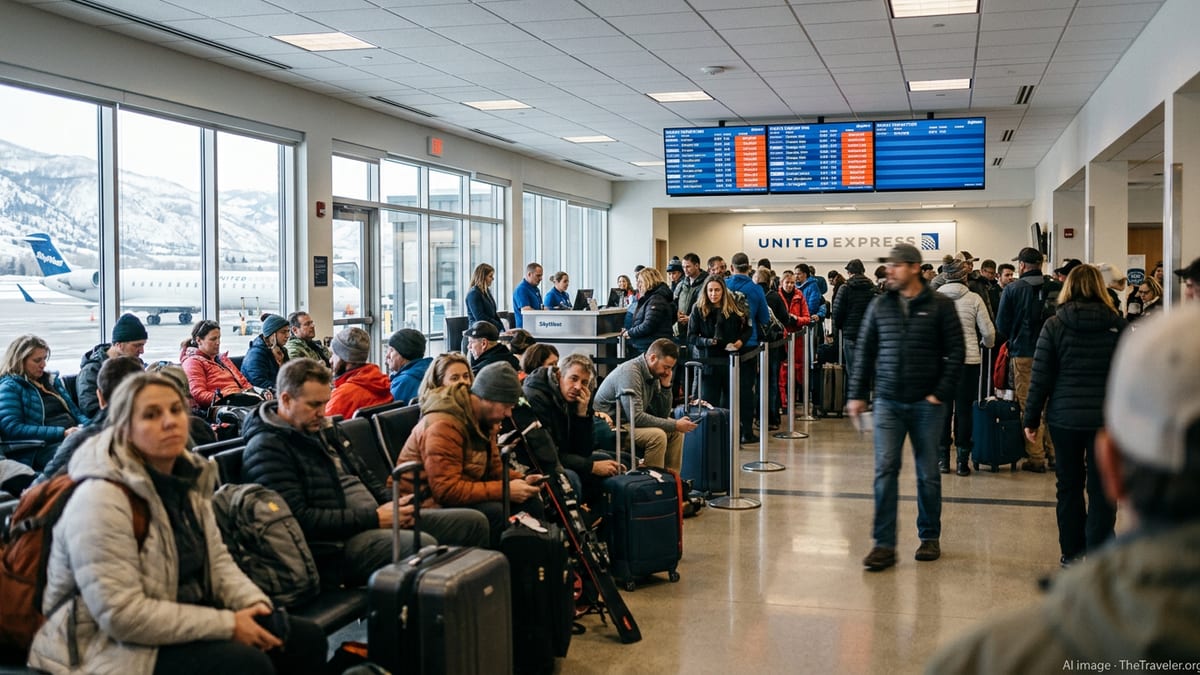
Routine Shreveport–Dallas Hop Turns Into Waco Diversion
Publicly available flight-tracking information shows that SkyWest Airlines flight SKW6410 departed Shreveport Regional Airport on its short scheduled sector to Dallas Fort Worth International Airport before turning away from the Dallas area and heading south toward Waco. The aircraft subsequently landed at Waco Regional Airport, where it remained on the ground while conditions and airline operations in North Texas stabilized.
The flight, operated under a major carrier’s regional code-share, normally covers the roughly 190 kilometer route between Shreveport and Dallas in under an hour. On this occasion, route data indicate an irregular flight path consistent with diversion procedures, suggesting that the crew opted for Waco as an alternate when continuing to Dallas was no longer viable.
Initial indications from public operational data point to wider disruption in the Dallas Fort Worth airspace, rather than an isolated technical issue with the aircraft. Similar regional flights into major North Texas airports have recently experienced holding patterns, extended routings and diversions as airlines worked around congestion and weather-related constraints.
There have been no publicly available reports of injuries linked to the diversion, and airport operations at Waco Regional appeared to accommodate the unexpected arrival without major interruption to local traffic.
Weather, Congestion and the North Texas Air Traffic Bottleneck
The diversion of SKW6410 fits into a broader pattern of recent disruptions in and around Dallas area airports, where storms and traffic volume have periodically strained the regional air traffic system. Flight tracking and passenger accounts across multiple platforms in recent weeks describe inbound flights being rerouted to a range of alternate airports when thunderstorm cells or ground congestion limit arrivals into Dallas Fort Worth and Dallas Love Field.
North Texas sits at the intersection of several high-density air corridors, and Dallas Fort Worth functions as one of the country’s largest connecting hubs. When storms build along these corridors, traffic management initiatives can quickly lead to extended holding, ground stops and rerouting. In that environment, shorter regional services like the Shreveport to Dallas route are often among the first to be delayed, canceled or diverted.
Aviation researchers have long noted how disruptions at a major hub can cascade through regional networks, with relatively small operational decisions compounding into broader delays. Studies of the United States airport system describe how adverse weather and congestion at a few critical nodes can quickly propagate across multiple states, forcing airlines to use secondary airports to keep aircraft and crew moving.
For travelers on SKW6410, Waco’s role as an alternate airport reflects both its proximity to Dallas and its ability to receive regional jets on short notice, offering a practical safety valve when the primary hub becomes temporarily saturated.
Waco Regional’s Strategic Role as an Alternate Airport
Although Waco Regional Airport serves a comparatively small local market, aviation and transportation planning documents describe it as operating within the broader North Central Texas air system. Located roughly midway between Dallas and Austin, the airport offers a paved runway suitable for the regional jets commonly used on short-haul routes such as Shreveport to Dallas.
Traffic studies of the Waco catchment area show that a significant share of local passengers routinely drive to Dallas Fort Worth or Dallas Love Field to access a wider range of nonstop flights. That pattern underlines how Waco functions as part of a multi-airport region where travelers, airlines and air traffic managers make tactical choices among several fields depending on conditions and capacity.
In disruption scenarios like the SKW6410 diversion, Waco’s position along major interstate and highway corridors can benefit passengers who find themselves unexpectedly offloaded there. Travelers can potentially continue by ground to Dallas, Austin or other regional destinations once airline operations and personal arrangements are in place.
For airport managers in Waco and similar mid-size cities, the occasional diversion of regional and mainline flights underscores the value of maintaining infrastructure, staffing and emergency response capabilities that can flex beyond normal scheduled activity.
What the Diversion Means for Travelers on Regional Routes
For passengers booked on short regional segments such as Shreveport to Dallas, the SKW6410 diversion is a reminder that even brief flights are subject to the same complex web of operational risks as long-haul services. Weather, congestion in hub airspace, aircraft routing and crew duty limits can all combine to alter a flight plan within minutes, sometimes sending travelers to an unplanned city.
Travel advisors often recommend that passengers on regional legs into busy hubs build extra connection time into itineraries, particularly during seasons when convective weather is common. Diversions like the one involving SKW6410 can quickly erase tight connection windows, even when the original departure appears to be on schedule.
Publicly available information on SkyWest’s operating model shows that, like other regional carriers, the airline is paid by its major partners to operate flights on a contracted basis, with performance metrics such as completion factor playing a key role. In that context, diverting to an alternate airport such as Waco can help ensure a safe outcome while still keeping the aircraft positioned to resume service once conditions allow.
For travelers, awareness of these dynamics can inform decisions about travel insurance, checked luggage, and digital tools for monitoring flight status and rebooking options when irregular operations emerge.
Ongoing Scrutiny of Regional Reliability in the Dallas Corridor
The SKW6410 diversion comes amid heightened public attention to the reliability of regional flights serving major hubs, including those in the Dallas area. Frequent flyers and industry observers have noted a series of disruptions affecting smaller markets that depend heavily on regional aircraft to connect with national and international networks.
Shreveport, categorized as a smaller outstation in several airline network planning documents, typically has fewer spare aircraft and crew available on site compared with a large hub. When an aircraft or crew becomes unavailable, or when hub arrivals are constrained, airlines may have limited options to keep the schedule intact, increasing the likelihood of diversions, cancellations or extended delays.
Analysts point out that as demand in North Texas continues to grow, pressure on hub capacity is likely to persist, making alternate airports such as Waco, Oklahoma City and others important safety and reliability valves for airlines operating within the region. How carriers and airports manage these diversion events will remain a focus for travelers and local officials seeking predictable access to the national air network.
While the full sequence of events that led SKW6410 to divert to Waco has yet to be detailed in official summaries, the incident highlights the interconnected nature of regional aviation in the Shreveport to Dallas corridor and the crucial role that secondary airports play when the system comes under strain.