


More news on this day
A Smartwings Boeing 737 MAX 8 operating flight QS1286 from Prague to Tel Aviv Ben Gurion International Airport diverted back to the Czech capital on Sunday, with publicly available flight data and local media reports indicating an engine-related problem that prompted an emergency response on landing.
Get the latest news straight to your inbox!
Flight QS1286 Returns to Prague Shortly After Departure
Flight-tracking data for Smartwings service QS1286 show the Boeing 737 MAX 8 departed Václav Havel Airport Prague on the evening of 9 August 2026 bound for Tel Aviv, before leveling off and turning back toward Prague instead of continuing on its scheduled route to Ben Gurion International Airport. The aircraft remained in the vicinity of its departure airport long enough to burn fuel and prepare for a safe landing.
Online aviation observers noted that the aircraft briefly transmitted a squawk code associated with in-flight emergencies before commencing its return to Prague. The change in transponder code, combined with the abrupt change in routing, drew attention on flight-tracking platforms typically used by enthusiasts to monitor real-time air traffic.
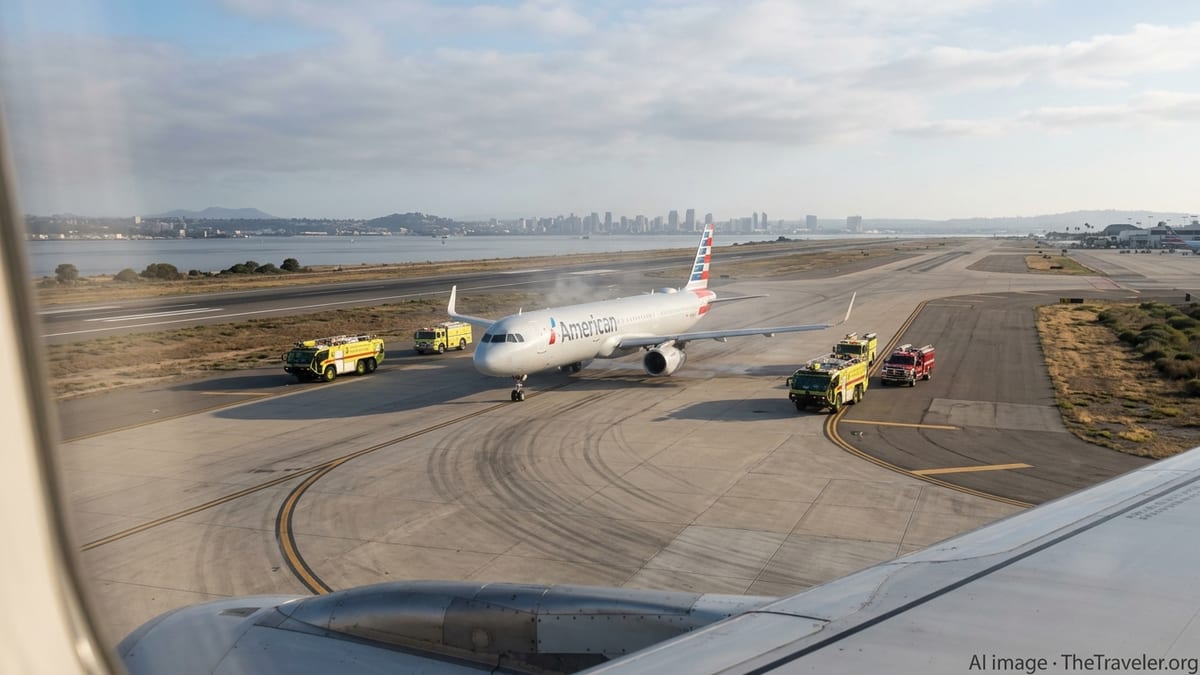
Publicly available information indicates that the aircraft landed back in Prague, where it was met by emergency services positioned along the runway in anticipation of a possible technical issue. Images shared by bystanders at the airport showed multiple fire trucks and support vehicles moving toward the aircraft after touchdown.
Initial accounts from local Czech news coverage referenced an engine malfunction as the cause of the diversion, although the precise nature of the technical problem and the sequence of cockpit indications have not been detailed in publicly accessible documentation.
Reports Point to Engine Malfunction and Precautionary Response
According to summaries in Czech-language news reports and discussions among aviation followers online, the diversion of QS1286 has been linked to an engine-related problem identified after departure. The aircraft continued to fly on at least one functioning engine, consistent with the design requirements for modern twin-engine commercial jets, which are certified to operate safely with a single engine in the event of a failure.
Accounts from individuals at Prague Airport described the aircraft coming to a stop on the runway with rescue vehicles surrounding it before it was eventually moved away. The positioning of airport fire and rescue assets along the runway corresponds with standard airport procedures when crews report a possible engine issue or request priority handling.
There have also been unverified claims in online forums that the incident may have involved more than one engine event during the flight. At this stage, no detailed technical bulletin or official accident preliminary note has been made publicly available to clarify exactly what occurred in each phase of the short flight.
As of the latest publicly accessible reports, there have been no indications of injuries among passengers or crew. The incident appears to have been contained to an air turnback and precautionary response on the ground, with the aircraft remaining intact and under control throughout the diversion.
Passengers Face Disruption on Prague to Tel Aviv Leisure Route
The Prague to Tel Aviv route is a popular leisure and visiting-friends-and-relatives corridor, particularly in peak summer months, and Smartwings markets these flights primarily to holidaymakers and tour groups. A mid-route diversion therefore represents a significant disruption for travelers, many of whom are connecting to hotel stays or onward ground transportation in Israel.
Following a diversion of this type, passengers are typically rebooked on alternative services, either with the same airline once a replacement aircraft is available or with partner carriers operating comparable routes. Publicly accessible booking systems showed subsequent Smartwings departures between Prague and Tel Aviv remaining scheduled, suggesting that the airline aimed to absorb stranded passengers into later flights.
The incident also temporarily reduced available capacity on a seasonal market where load factors are often high. For travelers, that can translate into delays of several hours or even an overnight stay in Prague while the airline arranges hotel accommodation and revised itineraries, depending on the timing and duration of the operational disruption.
For Ben Gurion Airport, the return of QS1286 to Prague meant the non-arrival of one of the scheduled inbound holiday flights from Central Europe that normally feed the evening arrival bank into the Tel Aviv terminal complex.
Spotlight on Smartwings and the Boeing 737 MAX 8
Smartwings, a Czech leisure carrier with a network focused on Mediterranean and Middle Eastern destinations, operates a fleet dominated by Boeing 737 variants, including the 737 MAX 8. Publicly available fleet lists and company materials show that the MAX family forms a significant portion of its narrowbody operations.
The Boeing 737 MAX 8 type has been under prolonged public scrutiny following two fatal accidents involving other operators several years ago, which led to a global grounding of the model before regulators cleared it to return to service after design and training changes. Since its reintroduction, thousands of commercial flights have been completed worldwide, although isolated technical events on individual aircraft continue to receive intense attention.
A technical issue on a MAX 8 therefore tends to attract more notice than a similar event on older aircraft types, especially when it involves a visible emergency response at an international airport. Online discussion about QS1286 quickly referenced the model’s past, even though no public information so far links this diversion to the flight control software issues that were central to earlier investigations into the type.
Aviation safety analyses published in recent years have generally highlighted that modern commercial jets, including the 737 family, are engineered to manage engine failures or other isolated system malfunctions without immediate danger to passengers. Diversions of this nature are typically categorized as serious operational incidents rather than large-scale accidents when they do not result in injuries or structural damage.
Investigative Process and Operational Follow-up
In cases where flights divert because of potential technical problems, civil aviation regulators and internal airline safety departments typically review data captured by onboard systems, crew reports, and maintenance findings to determine what happened and whether any corrective actions are required. That process may range from a relatively quick engineering review to a more formal incident investigation, depending on the severity and classification of the event.
For a leisure airline such as Smartwings, a technical diversion on a flagship route to a major hub like Tel Aviv also carries commercial and reputational implications. Past events involving the carrier have been examined closely in local media and by aviation commentators, leading to heightened interest whenever one of its flights returns to its departure airport under emergency procedures.
Any official findings that may eventually be published about the QS1286 diversion are likely to focus on the technical root cause of the reported engine problem and the flight crew’s decision-making in managing the situation. Publicly accessible commentary so far indicates that the aircraft landed safely back in Prague and that emergency services were deployed as a precaution, which aligns with conservative safety practices in contemporary commercial aviation.
Until more detailed documentation is made available, QS1286 stands as another example of how mechanical issues, while disruptive and attention-grabbing for travelers, are usually managed within established procedures designed to prioritize safety over schedule on busy international routes.