


More news on this day
A Delta Air Lines flight from Boston to Chicago operated by an Airbus A220-300 diverted to Detroit, with publicly available tracking information indicating the change of course was a precautionary operational decision rather than an emergency incident.
Get the latest news straight to your inbox!
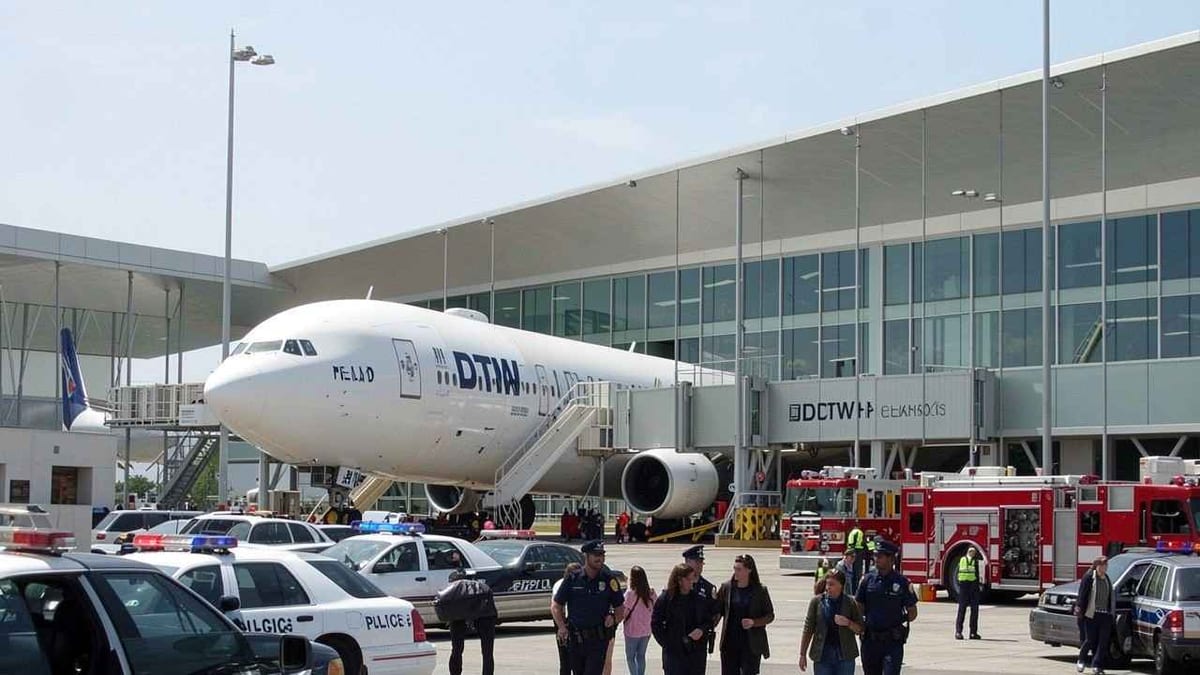
Midcontinent Diversion on Busy Northeast–Midwest Corridor
The diverted service was part of Delta’s frequent schedule linking Boston and Chicago, a corridor that routinely sees heavy business and connecting traffic. The Airbus A220-300, one of the newer narrowbody types in Delta’s fleet, departed Boston as planned before turning off its filed route and heading for Detroit, according to live flight-tracking data and aviation enthusiast reports.
Flight-tracking records show the aircraft climbing normally after departure and proceeding west before altering course and descending toward Detroit Metropolitan Wayne County Airport. The aircraft landed there without incident. No irregular altitude profiles or abrupt maneuvers appeared in publicly available flight traces, a pattern consistent with a controlled diversion.
Delta routinely uses Detroit as a key hub for flights across the Midwest and beyond, and the airport offers extensive maintenance facilities and staffing. Aviation analysts note that when issues arise in flight, routing to a large hub such as Detroit allows flexibility for both technical checks and onward passenger rebooking.
At the time of the diversion, other flights in the broader region were also adjusting routings and altitudes, a reminder of how quickly network conditions can shift across the busy airspace connecting New England and the Midwest.
Possible Factors Behind the Decision to Divert
As of the latest available information, no single cause has been definitively attributed to the diversion. Publicly accessible flight-tracking and operations data do not indicate a declared emergency. In similar situations on domestic routes, diversions are often linked to a mix of factors that can include weather along the planned route, technical checks, or passenger and crew considerations.
Meteorological charts for the region around the time of the flight show areas of unsettled weather and convective activity along parts of the Northeast and Great Lakes corridor. In such conditions, airlines sometimes choose to shorten exposure to turbulence or storms by setting down at a hub that is already nearby on the network map, such as Detroit for a Boston to Chicago pairing.
Operationally, a diversion can also allow ground teams to inspect a system or component that has triggered an advisory in the cockpit, even if it does not require an emergency landing. Industry practice favors conservative decision-making, as even relatively minor anomalies are often checked at maintenance bases with the full support of engineering staff and spare parts inventories.
Passenger issues have occasionally prompted diversions on other carriers and routes, ranging from medical situations to disruptive behavior. However, there has been no widely reported indication that such an event occurred on this specific Boston to Chicago service, and available information points instead to a routine, precautionary decision.
Detroit’s Role as a Strategic Diversion Hub
Detroit Metropolitan Wayne County Airport plays a central role in Delta’s route network, functioning both as a major connecting hub and as a preferred location for handling irregular operations. Its position between the East Coast and the Midwest makes it well suited to receive flights transiting in either direction when routing changes are needed.
For a Boston to Chicago flight, Detroit offers several advantages as a diversion point. It sits relatively close to the direct track between the two cities, it has extensive Delta staffing and maintenance resources, and it handles a high volume of daily departures to Chicago and the rest of the country. That combination allows crews and operations planners to minimize both airborne time and disruption to the broader schedule.
Once on the ground in Detroit, passengers from a diverted flight typically have multiple options for continuing their journeys. Airline scheduling systems can place travelers on later departures to Chicago, reroute them via other hubs, or arrange overnight accommodations if onward connections are no longer possible the same day. Publicly visible schedule data for the period around the diversion show a healthy number of Detroit to Chicago frequencies, improving the odds of same-day reaccommodation.
Aviation network research highlights that diversions into large hubs are often managed with fewer knock-on delays than those into smaller airports with limited staffing. Detroit’s status within the network helps contain broader disruption and keeps aircraft and crews within Delta’s core operating footprint.
A220-300: A Modern Workhorse on Short and Medium Routes
The Airbus A220-300 involved in the diversion is part of a relatively young aircraft family that has become a mainstay of Delta’s narrowbody operations. The type is known for its fuel efficiency, modern cockpit systems, and comfortable cabin layout suited to short and medium-haul domestic routes like Boston to Chicago.
Industry data describe the A220 family as having strong dispatch reliability, with advanced avionics designed to detect and report deviations in aircraft systems early. In practice, that can lead to precautionary diversions when sensors or onboard computers flag conditions that warrant a closer look by technicians, even when the aircraft remains fully controllable and stable in flight.
The aircraft’s design, including features such as a high degree of component redundancy and a robust flight management system, supports conservative operational decisions. When crews are presented with evolving conditions, whether related to technical indicators or route weather, diverting to a well-equipped maintenance hub is consistent with standard risk management practices.
The A220-300’s range and performance also give planners flexibility in choosing diversion points. On a relatively short sector like Boston to Chicago, Detroit offers a convenient midpoint where the aircraft can land with ample fuel reserves while still remaining aligned with the airline’s hub structure.
Managing Passenger Impact and Broader Operational Context
For travelers, diversions can be disruptive, particularly when they result in missed connections or late-night arrivals. Research into airline delays and diversions across the United States shows that such events, while relatively infrequent, play a significant role in overall passenger experience and network reliability.
In cases like the Boston to Chicago diversion, publicly available information indicates that the aircraft landed safely at Detroit and that subsequent flights operated as scheduled, suggesting that the incident was contained to a single rotation. Large hubs typically have established procedures for rebooking affected passengers and providing updates through mobile apps, airport displays, and customer service channels.
On a network level, one diverted narrowbody flight can affect aircraft positioning, crew duty limits, and gate availability. However, airlines with sizable hub operations like Detroit have more options to swap aircraft, adjust rotations, or crew another segment, which can reduce the risk of cascading disruptions across the network.
While diversions inevitably raise questions among travelers, industry statistics and the handling of this Boston to Chicago event underscore that precautionary route changes are a built-in safety and reliability feature of modern air transport. In this case, the Airbus A220-300’s unscheduled stop at Detroit illustrates how airlines leverage key hubs to balance operational caution with efforts to keep passengers moving toward their destinations.