


Booking a yacht charter today is easier than ever, yet the first real decision most skippers and sailing travelers face is deceptively simple: use a platform like SEARADAR, or go directly to charter companies yourself. Both routes can get you onto the same boat in the same marina, but the experience, risk level, and even total trip value can be very different. Understanding those differences before you put down a multi‑thousand‑euro deposit can save you money, time, and stress once you actually reach the dock.
Get the latest updates straight to your inbox!
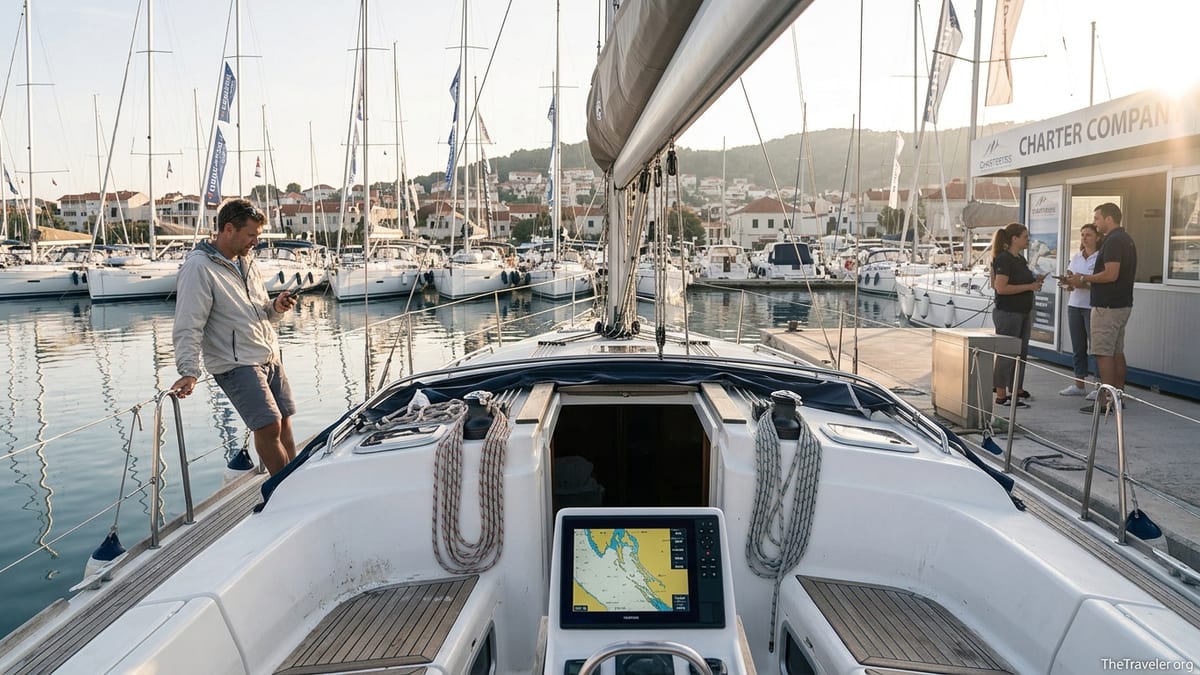
What SEARADAR Actually Does (Beyond Being “Just a Website”)
SEARADAR describes itself as a concierge service for sailboat captains rather than a basic listing site. In practice, that means it behaves more like a digital yacht charter broker: you send your dates, destination, and preferences, and its team searches across multiple charter companies to shortlist boats that match your brief. The company, founded in 2017 and headquartered in Vilnius, focuses on bareboat and skippered sailing yachts rather than motor yachts or party boats, which makes it especially relevant for Mediterranean and Caribbean sailing holidays.
Instead of browsing dozens of individual charter company websites in Croatia, Greece, Italy, or Turkey, a traveler can let SEARADAR’s staff and software compile options in one place. For example, a skipper planning a week out of Split in early September might give a budget of around 3,000 to 3,500 euros for a 40‑foot monohull. SEARADAR will typically surface a handful of comparable Bavaria, Beneteau, or Jeanneau yachts from different local fleets, including details such as year of build, equipment list, and security deposit.
The platform’s focus on service is backed by strong online feedback. Recent public reviews often highlight staff availability on WhatsApp, help with check‑in issues, and support when boats are switched or delayed. At the same time, some reviewers mention last‑minute vessel changes or communication gaps when local charter operators run into problems. This reflects an important reality: SEARADAR does not own the boats. It sits between you and a network of independent charter companies and can be as good as the underlying partners it works with in each destination.
For many travelers, the appeal is simple. Instead of emailing five or six operators in Lefkas or Sardinia and manually comparing their offers, they can ask SEARADAR to do that legwork and then review a curated shortlist. The trade‑off is that they accept an intermediary in the relationship with the final charter company, which has real consequences if something goes wrong or if they need to negotiate special terms.
How Booking Direct With Charter Companies Works in Real Life
Booking directly means dealing with the charter operator that actually owns or manages the boat. These can range from large regional fleets with hundreds of yachts in Greece or Croatia to small family‑run companies in places like the Balearic Islands or the Seychelles that manage a dozen boats. When you book direct, you typically find the boat on the operator’s own website or via email recommendations after you send a general inquiry.
In practice, a direct booking often starts with you narrowing down a region and port, then searching “yacht charter Athens base,” “bareboat charter Trogir,” or similar terms. You identify three or four reputable companies, send each an inquiry with your dates and boat size, and receive detailed offers. Those offers might include a 2020 Bavaria 41 at 3,200 euros for a July week from Lavrion, a slightly older 2017 model at 2,700 euros, and perhaps a newer Oceanis 40.1 for around 3,600 euros, each with different discount structures and extras.
Once you choose, you sign the charter contract directly with the operator. Your deposit and final payment go straight to the company that will hand you the keys at check‑in. Any negotiation about early boarding, a reduced security deposit, free outboard engine, or inclusion of bed linen happens person‑to‑person with the base or their booking staff. If there is a last‑minute technical issue, such as a broken engine or damaged mast, that same company is responsible for offering you a replacement boat, refund, or compensation.
For experienced charterers who already know local operators and bases, this direct relationship is a major advantage. They may have sailed with the same Croatian fleet three summers in a row, trust its maintenance standards, and enjoy loyalty discounts or priority access to in‑demand boats during school holiday weeks. However, for a first‑time charterer, comparing dozens of operators and contracts in an unfamiliar language and legal system can be intimidating and time‑consuming.
Price, Fees, and Value: Is SEARADAR Really More Expensive?
A common assumption is that using a broker‑style intermediary like SEARADAR will always cost more than booking directly because “someone has to pay the middleman.” In the yacht charter world, that is not usually how it works. Large charter operators typically pay commissions to agencies and platforms out of their own margin, much like hotels compensating online travel agents, while keeping the public price the same.
In practical terms, that means the base weekly rate for a particular yacht in, say, Corfu in June is often identical whether you see it on SEARADAR or on the charter company’s own site. The difference lies in who earns commission behind the scenes. Some travelers even report that SEARADAR secured extra discounts for filling last‑minute gaps or shoulder‑season weeks, shaving a few hundred euros off the official price. A skipper looking at a Dufour 430 at 3,000 euros for late May might end up paying 2,700 to 2,800 euros after negotiated reductions via a brokered platform.
Where costs can diverge is in extras and payment terms. For example, one charter company might offer a non‑refundable booking deposit of 30 percent with final payment 30 days before departure, while another insists on 50 percent upfront and the rest 45 days before. Some operators charge extra for Wi‑Fi, outboard engines, and bed linen, while others bundle them into the price. SEARADAR’s team can compare these side by side for you, but if you are booking direct, you must read each contract carefully to understand the real total cost.
Travelers should also consider value beyond headline price. If your yacht charter costs 4,000 euros for the week, plus flights, provisioning, and insurance, the difference between paying 3,900 or 4,050 euros is relatively small compared with the impact of a poorly maintained boat or a weak response when something breaks. In some cases, a slightly higher price through a platform that monitors partners and chases support on your behalf may represent better value than saving a few euros with an unknown operator.
Risk, Support, and What Happens When Things Go Wrong
Yacht charters involve complex logistics: boats can be damaged on the previous week, weather can delay handovers, and technical failures can appear during your trip. The crucial question is who stands in your corner when something goes wrong. With SEARADAR, you generally have two layers: the local charter company that runs the base and the SEARADAR support team that can intervene if you feel the operator is not handling an issue fairly.
Imagine arriving in Athens for a Saturday check‑in only to learn that your reserved 2019 Bavaria 45 suffered rudder damage the previous week. The base offers you a smaller 2015 model or a larger but more worn‑out boat. If you booked direct and do not like the proposed solution, you must negotiate on your own, possibly in a busy marina office while several other crews are also waiting to check in. With SEARADAR involved, you can call or message their team, who may already know what alternative yachts are available in the area and can push for a better outcome or partial refund.
On the other hand, involving an intermediary can sometimes slow down communication, especially if messages pass from you to SEARADAR, then to the charter company, and back again. Some online reviews mention frustration when urgent base issues were first reported to the platform instead of directly to the local staff. The most practical approach is often a combination: talk to the base immediately about technical or safety problems, while keeping SEARADAR in the loop when contractual or financial questions arise.
Booking direct does not automatically mean higher risk. Many established charter operators in Croatia, Greece, France, and Spain are professional, responsive, and well insured. If you research carefully, read recent independent reviews, and confirm what happens in case of cancellation or technical failure, you can be well protected. The added risk comes mainly from the possibility of choosing an unknown or poorly reviewed company because its quote looks attractive, without an intermediary to warn you about red flags.
Transparency, Choice, and How Much Homework You Want to Do
One of SEARADAR’s clear strengths is choice. It can access fleets from many different operators in popular sailing hubs. For a skipper planning a family charter in Croatia, that might mean comparing boats from large national fleets based in Split and Biograd with smaller local operators in Sibenik or Zadar, all within a single conversation. You can specify that you want a 2020 or newer three‑cabin Bavarian or Jeanneau with in‑mast furling and a bow thruster, and SEARADAR can filter options accordingly.
Choice, however, does not always equal transparency. On an aggregated platform, you may see the final price and key specs but not the name of the underlying charter company until later in the process. This can make it difficult to research the base’s reputation independently at the early stage. A direct booking, by definition, is fully transparent about who you are dealing with from the first email or call.
Travelers who enjoy research often prefer the direct route. They like reading detailed base reviews, searching for photos of specific boats on sailing forums, and even contacting previous charterers. They may build a personal list of “trusted operators” in each country and stick to them, accepting slightly limited choice in exchange for high confidence. Others simply do not have time. For them, outsourcing the market scan to SEARADAR makes sense, particularly in regions with hundreds of similar yachts and overlapping fleets.
In between these two extremes lies a hybrid approach that many experienced sailors quietly use. They start by using SEARADAR or similar services for an overview of what is available and typical pricing, then drill down to identify the underlying charter companies for the most attractive offers. With that knowledge, they can decide whether to keep working through the platform for its support benefits or reach out directly to the operator if they feel a direct relationship will serve them better.
Real‑World Scenarios: When SEARADAR Shines and When Direct Wins
Consider three common scenarios. In the first, a group of friends from London wants to charter a catamaran in the Cyclades for the first time in mid‑July, one of the busiest and windiest times in the Aegean. They are flexible on the exact base and catamaran model, but they want strong English‑speaking support and clear guidance on Meltemi‑season itineraries. In this case, using SEARADAR can be very attractive. The platform can quickly identify Lagoon or Bali catamarans in Athens, Lavrion, or Paros, advise which bases handle check‑ins efficiently during peak season, and suggest skippers experienced in that region.
In the second scenario, a German skipper has been chartering monohulls out of Palma de Mallorca every October for a decade, usually from the same two operators based in the city’s main marinas. He knows their fleets, maintenance standards, and staff, and he already receives small loyalty discounts and occasional free extras such as an outboard engine or early check‑in. For him, booking direct is often the better option. He can email his regular contact, ask which 38‑ to 40‑foot yachts are free on his preferred dates, and secure a deal in a few messages.
The third scenario involves a last‑minute charter. A couple in Paris decides in late May that they want to sail in Croatia in two weeks. Many popular boats are already booked, and prices vary widely between remaining options. Here, SEARADAR’s access to multiple fleets and willingness to negotiate can be valuable. They might find that while the official list price for a 2019 Sun Odyssey 419 in Split is 2,700 euros for the week, a charter company with a gap in its calendar is willing to accept 2,200 euros if the platform brings them a confirmed booking. The couple benefits without needing to email a dozen bases themselves.
On the flip side, there are situations where direct booking can avoid complications. Some travelers have reported confusion when changes or cancellations were communicated by the intermediary but not promptly reflected in the charter company’s own system, especially during extremely busy weeks like August change‑overs in Croatia. If you prefer a single point of truth and are comfortable negotiating on your own, dealing directly with the operator can remove one potential source of miscommunication.
How to Decide: A Simple Framework for Your Next Charter
Rather than assuming that one channel is always better, it helps to look at your own experience, risk tolerance, and time budget. Start by asking how familiar you are with the destination and the yacht charter process. If you are planning your very first bareboat charter in a complex region like the Cyclades or Dalmatian coast, and you are not yet comfortable reading charter contracts, a concierge‑style service such as SEARADAR can provide valuable hand‑holding. The ability to ask basic questions about security deposits, weather norms, and marina logistics before you commit can prevent expensive mistakes.
Next, consider how much time you are willing to spend on research. Serious comparison of three or four different operators, each with their own price sheets, extras, and terms, can easily absorb several evenings. If you enjoy this, booking direct might be rewarding and empowering. If you are already juggling work, flights, and family schedules, outsourcing the search to a brokered platform saves hours, even if you could theoretically shave a small amount off the price by negotiating directly.
Finally, think about your appetite for confrontation if things go wrong. Some travelers prefer to argue their own case face‑to‑face with a base manager if the reserved boat is not available or if major systems fail during the week. Others would rather have a third party escalate on their behalf. Neither approach is inherently superior; it is a matter of personality and comfort. Whichever route you choose, document agreements in writing and keep copies of emails, payment confirmations, and the signed contract.
In many cases, the smartest strategy is to treat SEARADAR as an expert partner rather than as an automatic default. Use it when you want to scan a new region, compare multiple fleets, or have an extra layer of support, and book direct when you have a trusted operator relationship and a straightforward itinerary.
The Takeaway
SEARADAR and direct booking with charter companies both lead to the same goal: time under sail on a boat that matches your expectations. The route you choose affects how much work you do upfront, how much independent research you need to carry out, and who stands beside you if problems arise. SEARADAR excels at saving time, expanding your options across fleets, and providing a concierge‑style buffer between you and local operators, particularly valuable for newer charterers or complex, peak‑season trips.
Booking direct, on the other hand, offers maximum transparency and control. You know exactly which company you are dealing with, you negotiate terms yourself, and you can build long‑term relationships that may reward you with upgrades, flexibility, and personalized treatment in future seasons. For repeat charterers or those who already have a short list of trusted operators in popular regions, this path often feels natural.
Ultimately, the decision is less about which method is “right” in absolute terms and more about which aligns with your travel style. If you value simplicity, guidance, and a single point of contact that can scan the market on your behalf, SEARADAR is a strong tool. If you enjoy hands‑on planning, negotiation, and direct relationships with local businesses, booking with charter companies yourself will suit you better. Many experienced sailors blend both approaches, turning to SEARADAR for inspiration and backup when exploring new waters, and going direct when they are returning to familiar ports.
FAQ
Q1. Will I always pay more if I use SEARADAR instead of booking direct?
Not necessarily. In many cases, charter companies pay commissions to platforms out of their own margins, so the public price you see is similar or even identical. Sometimes SEARADAR can negotiate additional discounts for filling gaps in a fleet’s calendar, but you should always compare total costs, including extras and payment terms, rather than assuming one channel is automatically cheaper.
Q2. Can SEARADAR get me a better boat than I could find on my own?
SEARADAR does not own boats, but it can access a wider range of fleets than you are likely to contact individually, especially in busy regions like Croatia or Greece. That broader view can surface higher‑spec or better‑maintained yachts at similar price points, particularly if you are flexible on base or dates. However, if you already know a specific operator and boat you like, booking directly with that company can be just as effective.
Q3. Who helps me if something breaks on the boat during my trip?
If you book through SEARADAR, the primary responsibility for technical issues lies with the local charter company that owns or manages the boat. You should contact the base or their emergency number first so they can arrange repairs or assistance. SEARADAR can support you in parallel, especially if you feel the response or proposed compensation is not fair. When you book direct, you deal only with the charter company for both repairs and any post‑trip claims.
Q4. Is booking direct safer for my deposit and payments?
Both options can be safe if you choose reputable companies and follow their payment instructions carefully. With SEARADAR, your contract and payment flow are clearly outlined, and funds ultimately go to the charter company providing the boat. When booking direct, you pay the operator directly according to their schedule. The key is to avoid unknown companies with limited track records, use secure payment methods, and keep written documentation of all terms, regardless of channel.
Q5. Can I choose my skipper through SEARADAR or do I need to arrange that separately?
SEARADAR can usually arrange professional skippers as part of your booking, often recommending individuals who regularly work with specific fleets or regions. This is especially useful in destinations with demanding conditions, like the Cyclades during Meltemi season. When booking direct, you can request a skipper from the charter company’s roster or bring your own if the operator allows it, but you may need to do more of the vetting yourself.
Q6. What if I already know a charter company I trust; should I still use SEARADAR?
If you have a strong relationship with a particular operator and are happy with their boats and service, booking directly with them often makes sense. You may benefit from loyalty discounts, more flexible change policies, or informal perks like early check‑in. You can still use SEARADAR when you want to explore new destinations or compare that operator’s offers with the wider market to confirm you are getting competitive value.
Q7. How does SEARADAR make money if I do not pay a visible service fee?
Like many charter agencies and platforms, SEARADAR typically earns commissions from the charter companies when it brings them confirmed bookings. This model allows the service to be free at the point of use for travelers, while operators treat the commission as a marketing and sales expense. As a customer, you should focus on total package value, not just whether commission is involved behind the scenes.
Q8. Can I inspect or research the actual charter company behind a SEARADAR offer?
Yes. Once SEARADAR presents specific boat options, you can ask which charter companies operate those yachts and then research them independently by name. Looking up recent reviews, photos, and feedback from other sailors is good practice, whether you ultimately book through SEARADAR or direct. If a company’s reputation worries you, you can request alternatives or choose a different operator.
Q9. Does SEARADAR help with itinerary planning and paperwork, or just the boat booking?
SEARADAR positions itself as a concierge, so its team often assists beyond the booking itself. That can include suggesting itineraries suited to your experience level, advising on local weather patterns, and explaining required licenses or crew lists. Many direct charter companies also provide this support, but service levels vary. If you want more guidance, a brokered platform or a particularly service‑oriented operator will be more helpful than a low‑touch, price‑only provider.
Q10. Which option is better for a first‑time bareboat charter: SEARADAR or direct?
For a first‑time bareboat charter, many travelers find SEARADAR or a similar brokered service more comfortable because of the extra guidance and wider choice. The team can explain contracts, deposits, insurance options, and local norms, reducing the risk of misunderstandings. Once you gain experience and identify operators you like, you can gradually move toward more direct bookings if you prefer handling details yourself.