


Booking a yacht charter through SEARADAR can turn a regular vacation into a standout sailing holiday, but only if you understand how the process really works before you pay a deposit. SEARADAR acts as a specialist concierge between you and charter fleets worldwide, which is convenient, but it does not automatically protect you from the common mistakes that sink first-time charters. Knowing what can go wrong before you choose a boat, route and dates will save money, stress and awkward surprises at the marina.
Get the latest updates straight to your inbox!
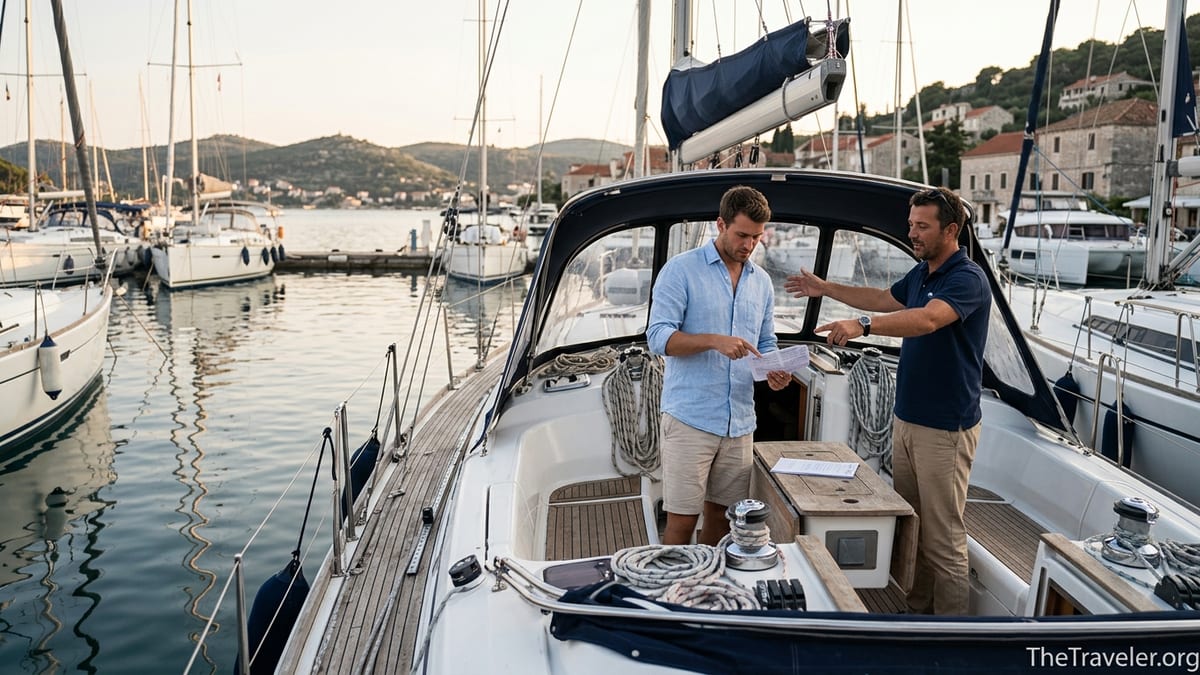
Understand What SEARADAR Actually Does For You
SEARADAR positions itself as a “personal sailing assistant,” matching you with charter yachts in destinations like Croatia, Greece, Turkey, Italy and the Caribbean. In practice, that means SEARADAR does not own the boats you see in your offers. Instead, its team works with a network of local charter operators and uses your preferences to source options, negotiate, and handle much of the communication. When you receive a proposal for a 2020 Bavaria Cruiser 46 in Split or a Lagoon 42 in Athens, that vessel belongs to a third-party fleet, and the contract you ultimately sign is typically with that fleet company, not SEARADAR itself.
A frequent mistake is assuming SEARADAR has full control over everything that happens once you arrive at the marina. For example, if you land in Dubrovnik in August and discover check-in is delayed because cleaning is behind schedule, it is the local base team, not SEARADAR, who controls when you can board. SEARADAR can help escalate and translate if needed, but it cannot override local operational realities. Managing your expectations about who does what will help you communicate more clearly and know whom to contact if something goes wrong.
Another misunderstanding is about responsibility for the yacht’s condition. If you arrive to a bareboat in Corfu and find a malfunctioning autopilot or a worn-out genoa, the charter base is responsible for fixing or documenting these issues during check-in. SEARADAR can advise you on what to record and what is reasonable to request, but you still need to do a careful inspection and work with the base staff directly. Treat SEARADAR as your expert broker and advocate, not as the owner or operator of the yacht itself.
Before you confirm any booking, read the documentation SEARADAR provides to see whose terms and conditions will govern your charter, and ask your assistant to clarify under whose jurisdiction any dispute would fall. This is especially important when you book in countries where contract law and consumer protections may be different from those at home.
Do Not Fixate Only on the Base Price
One of the biggest shocks first-time charterers report is how quickly the real cost rises above the advertised weekly rate. If SEARADAR sends you an offer for a Beneteau Oceanis 45 in the Cyclades for 3,000 euros in June, it is tempting to assume that is your near-final spend. In reality, you need to think in terms of the all-in cost, which includes mandatory extras, fuel, mooring, food, transfers and a refundable security deposit or damage waiver. Depending on where you are sailing and how you charter, those extras can easily add 30 to 50 percent on top of the base price.
Take a typical seven-day bareboat charter in Croatia on a 40-foot monohull. Aside from the base fee, you will usually pay a transit log or “charter pack” that covers final cleaning, linens and basic consumables, often in the range of 150 to 300 euros per charter. Then there is fuel, which for a moderate week of motoring might add 100 to 200 euros when you refill the tank on return. Marinas in popular spots such as Hvar or Korčula can cost 80 to 150 euros per night in peak season for this size of yacht, while quieter town quays and mooring buoys might range from 30 to 60 euros. Over a week with a mix of marinas and anchoring, it is realistic to add several hundred euros just in berthing fees.
On crewed charters and larger yachts, the extra layer of cost can be even more pronounced. For instance, a family booking a 100-foot motor yacht in the Western Mediterranean for around 50,000 euros for the week might be surprised to learn that the Advance Provisioning Allowance, often set at about 30 to 40 percent of the base fee, needs to be wired before boarding to cover fuel, food, drinks, port fees and incidentals. On a charter like this, the APA alone can exceed 15,000 euros, and any unused balance is refunded after the accounts are reconciled.
Before you decide a SEARADAR offer is within budget, ask your assistant to provide a realistic estimate of total trip cost for your specific plan, including typical fuel consumption for that yacht model and average marina prices along your proposed route. Request a breakdown that distinguishes mandatory costs, like end-cleaning and local taxes, from discretionary ones such as restaurant meals and paid water toys. A clear all-in picture at the quoting stage helps you compare SEARADAR options fairly and prevents you from stretching for a boat that later feels unaffordable once add-ons are factored in.
Match Yacht Type and Size to Your Real Plans
Another common mistake is choosing a yacht because it looks beautiful in the photos rather than because it fits your group, skill level and route. SEARADAR often presents several options side by side, such as a 2021 Lagoon 40 catamaran, a 2018 Bavaria Cruiser 41, and a newer 45-foot performance cruiser. They all photograph well, but they behave differently on the water and feel very different for eight people spending a week aboard in July heat.
Cats are popular because they offer more deck and salon space, high stability and shallow draft, which is ideal for families in the Ionian or the Seychelles. However, a 40-foot catamaran can be significantly more expensive than a similarly sized monohull and may incur higher marina fees because of its beam. Monohulls tend to heel under sail and offer less deck space, but they are cheaper to charter, often more enjoyable for active sailors and easier to find in smaller Mediterranean harbors. Booking a cat purely because it feels “luxury” can backfire if your itinerary includes tight town quays where securing a wide beam is stressful or expensive.
Capacity is another trap. A listing might say a yacht “sleeps 10” thanks to four double cabins plus a convertible salon. On paper, that means your group of 9 adults and 1 child fits. In practice, an adult couple on the salon bed will have almost no privacy, and lockers fill quickly with bags and provisions. A real-world example is a 4-cabin, 43-foot yacht in Sardinia booked by three couples plus two teenagers and a skipper. With one cabin used by the skipper and minimal storage, the teenagers ended up sleeping in the salon surrounded by wet gear, which felt more like camping than cruising.
Before confirming through SEARADAR, carefully review the detailed layout and ask for a cabin plan rather than relying on marketing images. Be honest about your group: couples vs singles, adults vs children, early risers vs night owls. If you are hiring a skipper through SEARADAR, remember they need their own cabin, not just a berth in the salon. When in doubt, choose a yacht that offers one extra berth beyond your guest count, rather than trying to squeeze the maximum number of bodies into the minimum hull.
Respect Experience, Weather and Seasonality
SEARADAR can make it feel easy to book a bareboat charter with just a few uploaded licenses and a short form describing your sailing experience. It is tempting to be overly optimistic, especially if you have sailed dinghies for years or crewed on friends’ boats. The reality is that handling a 45-foot charter yacht in gusty Meltemi winds around the Cyclades or in crowded Croatian marinas is very different from pottering around a sheltered bay.
A recurring error is booking a demanding region in peak season as a first-ever bareboat trip. Consider a skipper from northern Europe who has only sailed small keelboats on lakes, yet books a July bareboat in Mykonos because SEARADAR’s quote is attractive. When force 6 winds appear and the harbors are crammed, the holiday quickly shifts from relaxing to intimidating. In cases like this, seasoned charter brokers often recommend either a more sheltered area, such as the Saronic Gulf or the Ionian Sea, or adding a professional skipper for at least the first few days.
Seasonality also affects both price and comfort. Booking a SEARADAR yacht in late July or early August in the Mediterranean typically means higher base rates, fierce heat, and harbors that fill by early afternoon. The same 3-cabin cruiser in Croatia might cost substantially less in late May or mid-September, when the sea is still swimmable and the marinas calmer. A couple who booked a 38-foot monohull in Split in early June through SEARADAR, for example, found lower prices, easy mooring, and pleasantly cool nights compared with friends who sailed the same route in August and struggled to find space in Hvar without arriving before midday.
Be candid with SEARADAR about your actual miles logged as skipper, the largest boat you have handled and your comfort with Med-mooring, crosswinds and night sailing. Ask their team to recommend regions and months that match your skills and risk tolerance, and do not hesitate to accept a suggestion for a skipper if there is any doubt. Paying extra for professional help is cheaper than dealing with an insurance claim or damaging your confidence after a stressful week at sea.
Read Contracts, Deposits and Cancellation Terms Carefully
Because SEARADAR works with different fleets, the fine print can vary significantly from one offer to the next, even if the boats are in the same marina. A mistake many travelers make is focusing on dates and price while ignoring payment schedules, security deposit rules and cancellation conditions. These details matter a lot if your plans change or if there is damage during the charter.
Most Mediterranean fleets expect 50 percent of the charter fee at booking and the remaining 50 percent 30 to 45 days before embarkation. If you book a 4,000 euro yacht in April for a September charter, that means tying up 2,000 euros immediately and the balance by mid-summer. Security deposits for typical 38 to 45-foot yachts are often in the range of 1,500 to 3,000 euros, blocked on your credit card at check-in, with higher amounts for larger or newer boats. Some fleets offer a damage waiver in place of or in addition to a reduced deposit, which can be useful for less experienced crews but increases your total cost.
Cancellation policies also differ. Discounted “non-refundable” offers might save you several hundred euros on the base rate but leave you exposed if a family emergency, airline strike or unexpected health issue forces you to cancel. A traveler who grabbed a last-minute deal on a catamaran in Sardinia, for example, learned only afterward that canceling within 60 days meant losing 100 percent of the charter fee unless the boat was re-booked by another client. In contrast, some standard-rate charters allow partial refunds according to a sliding scale, or at least offer to move dates within the same season subject to availability.
Before paying any deposit through SEARADAR, request the full charter contract and read at least the sections covering payment schedule, inclusions and exclusions, security deposit, damage handling, and cancellation. If anything is unclear, ask your SEARADAR assistant to paraphrase the key points in plain language. It is also worth checking whether you need additional travel insurance or a specialized yacht charter insurance policy to cover cancellation or high deductibles, particularly for more expensive bookings.
Clarify What Is Really Included Onboard
Photos and brief descriptions in a SEARADAR offer can make it seem like every yacht comes with the same inventory of linens, kitchen equipment, safety gear and water toys. In practice, there are real differences between fleets, and assuming too much can lead to unnecessary purchases or disappointment. An American family arriving in Athens expecting beach towels, a paddleboard and snorkeling sets for everyone, for example, may discover that only basic bed linens and a dinghy are standard, with everything else available as paid extras or not at all.
Basic safety equipment such as life jackets, flares, fire extinguishers and a first-aid kit should always be aboard, but comfort items vary. Some older charter yachts have aging mattresses, limited fans and no cockpit cushions, while newer premium fleets pride themselves on high-quality bedding and sun pads. Kitchen gear can also range from sparse to comprehensive: one 40-foot yacht in the Balearics might provide a single dull knife and a couple of pots, while a similar boat in Croatia comes with a full set of cookware and a coffee press, making self-catering far easier.
The same goes for tech and toys. Autopilots, chart plotters at the helm and Bluetooth speakers are common on modern charter yachts, but not universal. Water toys such as stand-up paddleboards, kayaks, inflatable platforms and electric scooters are often add-ons. Charterers who book expecting a full “floating villa” setup can be frustrated when they realize everything beyond the bare hull and sails is an optional extra. This can be especially annoying if you only discover it at check-in, when alternative rentals are limited and prices higher.
When you narrow your SEARADAR shortlist, ask your assistant for a current, detailed inventory from the fleet for each specific yacht. Confirm whether items like cockpit cushions, snorkeling sets, towels, inverter, USB charging points and a sunshade are included, and which toys or additional equipment can be reserved in advance. For important items such as child-sized life jackets or a safety net for small children, obtain written confirmation that they will be on board, or plan to bring your own where practical.
Communicate Your Itinerary and Preferences Early
SEARADAR is designed to tailor suggestions to your style of travel, but it can only do that if you share enough detail at the beginning. A common mistake is entering minimal information in the request form, then discovering later that the chosen yacht and base do not align with your real itinerary or expectations. For example, you might dream of quiet anchorages and small tavernas in the Dodecanese but end up booked out of a busy Athens marina, adding long first and last days under engine just to reach the area you want.
Route planning is not only about scenery; it is also about daily distances, prevailing winds and backup options. A group of friends who booked a one-week charter from Split imagined hopping from Hvar to Vis to Korčula and back, with time for long lunches and swims. In reality, the distances and marina arrival times meant they were often motoring hard in the afternoon to secure berths before they filled, and they skipped several coves they had hoped to visit. Sharing your preferred pace, daily sailing hours and tolerance for early starts will help SEARADAR and the local base suggest a more realistic route.
Preferences around food, nightlife and activities also influence the best yacht and base. A family who values early dinners and child-friendly beaches has different needs from a group seeking beach clubs, late nights and trendier harbors. The first group might be happier starting from a quieter base in Lefkada or on a smaller Croatian island, while the second could favor Mykonos, Ibiza or Split, even at higher cost. Being as specific as possible with SEARADAR about what you want to do when you are not sailing leads to offers that better match your vision of the trip.
Once you reserve your yacht, use SEARADAR’s assistance to refine the itinerary together with the local skipper or base manager. Share any non-negotiables, like a particular island or a family celebration date, alongside your flexibility elsewhere. This collaborative approach helps avoid the disappointment of realizing halfway through the week that your must-see spot is unrealistic given the weather or distances involved.
The Takeaway
Booking a yacht through SEARADAR can be an efficient and reassuring way to organize a sailing holiday, especially if you are new to chartering or exploring an unfamiliar region. However, the platform is not a magic shield against the realities of yacht ownership, weather, local regulations and fine print. The most common frustrations stem from misunderstandings about cost, responsibility, yacht suitability and what is actually included once you step aboard.
To set yourself up for a smooth experience, treat SEARADAR as a knowledgeable broker and partner. Ask for an all-in budget estimate, match the yacht and region to your experience level, read the charter contract carefully, and request an up-to-date inventory of equipment and extras. Communicate your route preferences and group dynamics early, and be realistic about what a week at sea will feel like for everyone on board.
With that groundwork in place, SEARADAR’s global network and personal support can genuinely add value, helping you compare yachts across multiple fleets and destinations without having to chase down dozens of separate operators. The better informed you are before you commit, the more likely your charter will feel like the relaxed, unforgettable escape you imagined when you first started dreaming of waking up to a new horizon each morning.
FAQ
Q1. Is SEARADAR a yacht owner or just a broker?
SEARADAR operates as a broker and concierge, matching you with yachts owned by third-party charter fleets and helping manage communication and paperwork, but it does not typically own the boats itself.
Q2. How far in advance should I book a yacht through SEARADAR?
For popular Mediterranean destinations in July and August, it is sensible to start planning 8 to 12 months ahead for the best choice of yachts, while shoulder-season charters in May, June, September or October may be available closer to departure.
Q3. What extra costs should I expect beyond the base charter fee?
Typical extras include a transit log or charter pack, fuel, marina and mooring fees, local taxes, optional skipper or hostess, water toys, and a refundable security deposit or damage waiver.
Q4. Can SEARADAR help if I do not have much sailing experience?
Yes. You can request a professional skipper, and SEARADAR can suggest more sheltered regions and suitable yachts so that you still enjoy a safe and comfortable holiday even without being an experienced sailor.
Q5. What happens if bad weather disrupts my planned route?
Routing decisions are ultimately made with your skipper or, on bareboats, at your own discretion within safety limits; SEARADAR can offer general advice and help you coordinate with the local base, but cannot override safety-related changes.
Q6. How big a security deposit should I expect to pay?
On typical 38 to 45-foot charter yachts, deposits often range from roughly 1,500 to 3,000 euros, with higher amounts for larger, newer or more valuable boats, usually taken as a credit card pre-authorization at check-in.
Q7. Are towels, bedding and kitchen equipment always included?
Basic bedding is usually included, but towels, beach towels and specific kitchen tools vary by fleet and destination, so you should ask SEARADAR for a detailed inventory for your exact yacht before you pack.
Q8. Can I choose a specific yacht model instead of “or similar”?
In many cases you can reserve a particular boat, such as a named Lagoon 42 or Bavaria Cruiser 41, but during busy periods some fleets reserve the right to substitute a similar or larger yacht if required, so it is important to read your contract.
Q9. What is the difference between bareboat and crewed charters with SEARADAR?
Bareboat charters are for qualified skippers who sail the yacht themselves, possibly with friends as crew, while crewed charters include a professional skipper and often additional crew such as a cook or hostess, at extra cost.
Q10. How do cancellations and refunds usually work?
Policies vary by fleet, but many contracts become increasingly restrictive as departure approaches, with non-refundable deposits or partial refunds only, so you should review terms carefully and consider travel insurance that covers charter costs.