


More news on this day
A derailment on Seattle’s Link light rail system has led to a suspension of train service along a busy segment of the network, disrupting thousands of weekday trips and pushing riders onto buses, rideshares and alternative rail connections across the region.
Get the latest news straight to your inbox!
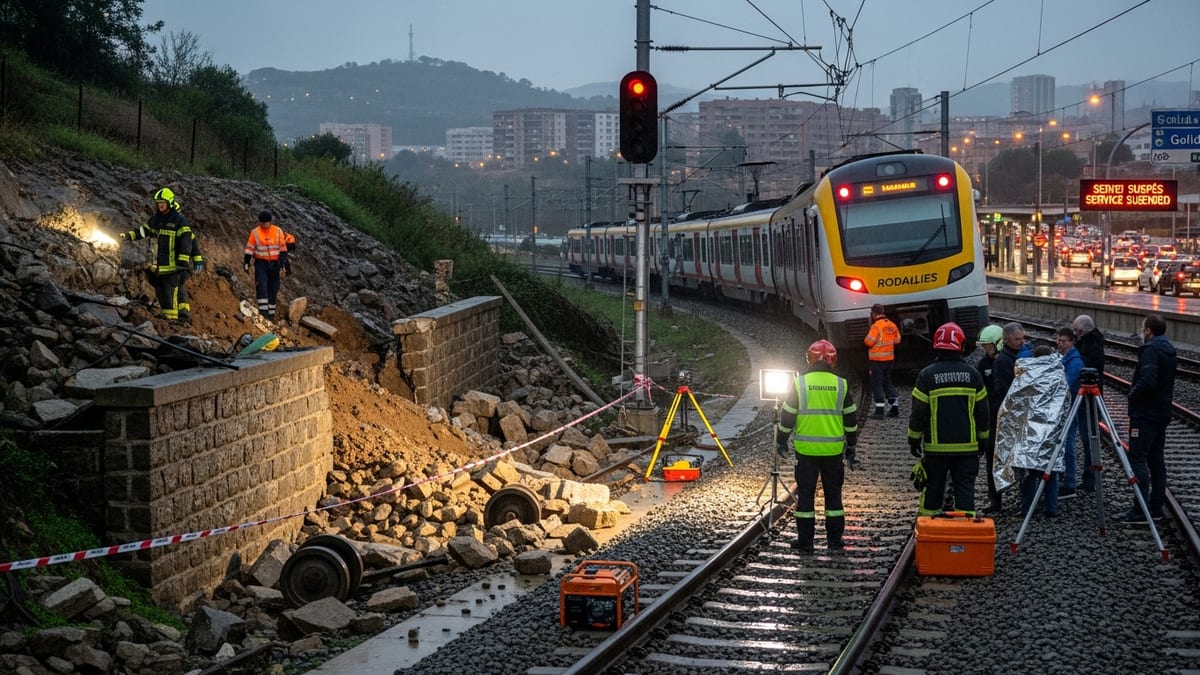
Derailment disrupts core Seattle light rail corridor
Initial reports indicate that a southbound Link light rail train left the tracks along a central portion of the 1 Line, prompting an immediate shutdown of service through the affected area while crews assessed the damage. Early information from transit alerts and local coverage describes a low-speed incident with the train remaining upright, but with at least one car derailed enough to block both tracks.
The derailment occurred on a corridor that carries thousands of daily riders between dense neighborhoods, downtown employment centers and key transfer points for buses and commuter rail. In response, trains are currently turning back on either side of the incident site, creating two shorter service segments rather than continuous rail service through Seattle.
Transit planners have treated the event as a full line break in the system’s spine, similar to previous mechanical failures and overhead power problems that have forced prolonged shutdowns between Northgate, Capitol Hill and stadium-area stations. While the circumstances differ, the latest derailment has a comparable effect on riders who rely on a predictable, all-day rail connection through the city.
Regional coverage notes that investigators are focusing on potential track or switch issues in the immediate area, while also reviewing recent maintenance activity. Mechanical faults, signaling problems and infrastructure wear have all featured in earlier service disruptions on the Link network, but derailments remain relatively rare compared with other types of incidents.
Suspended segments, shuttle buses and reduced frequencies
Light rail service is currently suspended through the derailment zone, with trains operating only on the open portions of track to the north and south. Riders traveling across the gap must transfer to a temporary bus bridge, a strategy Sound Transit has used repeatedly during past tunnel repairs, rail replacement work and signal upgrades.
North of the closure, trains are reported to be running at reduced frequencies as equipment is short-turned and stored where track space allows. South of the incident, service is similarly constrained, with schedules adjusted to reflect single-direction movements around work zones and staging areas. Passengers can expect longer waits, more crowded trains and added transfer time as the modified pattern remains in place.
Bus shuttles are making frequent trips between affected stations, stopping at or near each closed rail platform so that riders can transfer without needing to navigate unfamiliar streets. The pattern resembles previous bus bridges used during planned tunnel closures, when 1 Line trains have been suspended between Capitol Hill and Stadium or SODO to accommodate rail repair and signaling projects.
Transit agencies are also leaning on the existing bus network to absorb displaced riders. Regular King County Metro and Sound Transit Express routes that parallel the light rail corridor are experiencing heavier loads, particularly during peak periods, as commuters switch from trains to surface streets along Rainier Valley, the downtown core and key arterial corridors.
Alternate routes for airport, university and stadium trips
With the derailment blocking a central link in the system, riders are having to piece together new travel patterns on short notice. Travelers heading to Seattle–Tacoma International Airport from neighborhoods north of the closure are being encouraged, through publicly available trip-planning tools, to combine truncated rail service with shuttle buses and connecting routes such as Route 574 and other airport-focused lines where available.
University of Washington and Northgate riders are particularly affected when the disruption interferes with the north tunnel approach, as earlier incidents have shown. When trains cannot run directly between the university campus and downtown, riders must use a mix of shuttle buses, surface routes and remaining rail segments, often adding significant time to trips that typically rely on a quick, high-frequency tunnel connection.
For those traveling to stadium events or the International District, published coverage of prior shutdowns suggests that riders may benefit from transferring to frequent bus lines serving downtown and SODO, then walking a short distance to venues. When trains have been suspended between Capitol Hill and Stadium in the past, buses running along 3rd Avenue and the SODO busway have served as the primary alternatives.
Ferry passengers who typically connect through Pioneer Square or Chinatown stations are also adjusting. The network around Colman Dock and Pier 50 features multiple bus options, but the loss of direct rail access complicates timed transfers to Washington State Ferries and King County Water Taxi services, prompting many travelers to leave earlier than usual or seek park-and-ride options on the system’s outer segments where trains remain in operation.
Information tools, rider alerts and planning tips
In the hours following the derailment, riders have relied heavily on digital tools and alerts to navigate the disruption. Sound Transit’s service alerts page, local transit apps and social media accounts are providing regular updates on suspended segments, expected repair timelines and the routes used for bus bridges.
Trip planners that allow users to filter for “bus only” or to exclude rail are proving especially useful. Guidance published for earlier Link disruptions explains that, during major outages, a direct bus route may in some cases be faster than waiting for delayed trains or navigating multiple transfers between short-turning rail segments and shuttle buses.
Rider feedback shared in public forums highlights recurring concerns about wayfinding at transfer points, with some passengers reporting confusion when trying to locate temporary shuttle stops near stations. Previous disruptions have led to calls for clearer signage, more prominent staff presence at busy hubs and real-time information screens that reflect the altered network rather than a standard rail map.
Experts studying unplanned rail disruptions in urban systems note that reliable, easily understood guidance can significantly reduce the impact of events like derailments. Clear instructions on when to stay on the train, when to transfer, and which surface routes offer the most direct bypass of a blocked segment help distribute crowds and prevent bottlenecks at a small number of stops.
Safety checks, investigation and the road to full service
Before full rail service can resume through the derailment site, inspectors must complete a detailed review of the track, signaling system and the train involved. Agencies typically follow a step-by-step process that includes re-railing and removing the affected train, examining wheel and rail conditions, testing switches and crossovers, and confirming that the overhead power system and communications equipment are operating normally.
Past incident reports for the Seattle region show that even once physical repairs are complete, agencies often run trains through the affected area under a “slow order” while additional monitoring is in place. This means that riders may experience lingering delays and timetable adjustments even after the official suspension is lifted.
Safety reviews following major service disruptions have emphasized the importance of learning from each incident to prevent recurrence. Recent audits and resiliency assessments of the Link system have looked at how equipment faults, extreme weather and infrastructure wear interact, and how training, maintenance protocols and system design can be adapted to reduce the risk of derailments or other serious events.
For now, riders are advised, through publicly accessible alerts and coverage, to build extra time into their trips, check for the latest information before leaving home and be prepared to switch between trains and buses as crews work to restore continuous light rail service through Seattle’s core corridor.