


More news on this day
The United States has issued a fresh security alert urging its citizens in the Middle East to exercise caution and heightened vigilance, as regional tensions, military activity and the risk of retaliatory attacks continue to disrupt travel and raise concerns about the safety of Americans across the region.
Get the latest news straight to your inbox!
Latest US Security Alerts Focus on Middle East Risks
Recent security notices from the United States government highlight the Middle East as a primary area of concern, with alerts urging Americans in the region to remain alert to the possibility of sudden escalations. Publicly available security messages describe a climate shaped by ongoing conflict involving Iran and its regional allies, missile and drone activity, and the targeting of locations associated with the United States.
A worldwide caution published in the first half of 2026 advised Americans to exercise increased vigilance globally, with particular emphasis on the Middle East. Subsequent security alerts, including a late July update, reiterated that Americans currently in the region should be prepared for heightened risk environments and rapidly changing conditions, especially in countries that host US military facilities or are directly involved in the current regional crisis.
Coverage in US and international media indicates that the alerts are framed as precautionary responses to what officials describe publicly as an elevated threat landscape, rather than as an indication that specific attacks on American travelers are imminent. However, the language urging caution and heightened vigilance underscores concern about the possibility of opportunistic or retaliatory attacks on Western-linked targets.
Airspace Closures, Flight Disruptions and Evacuation Planning
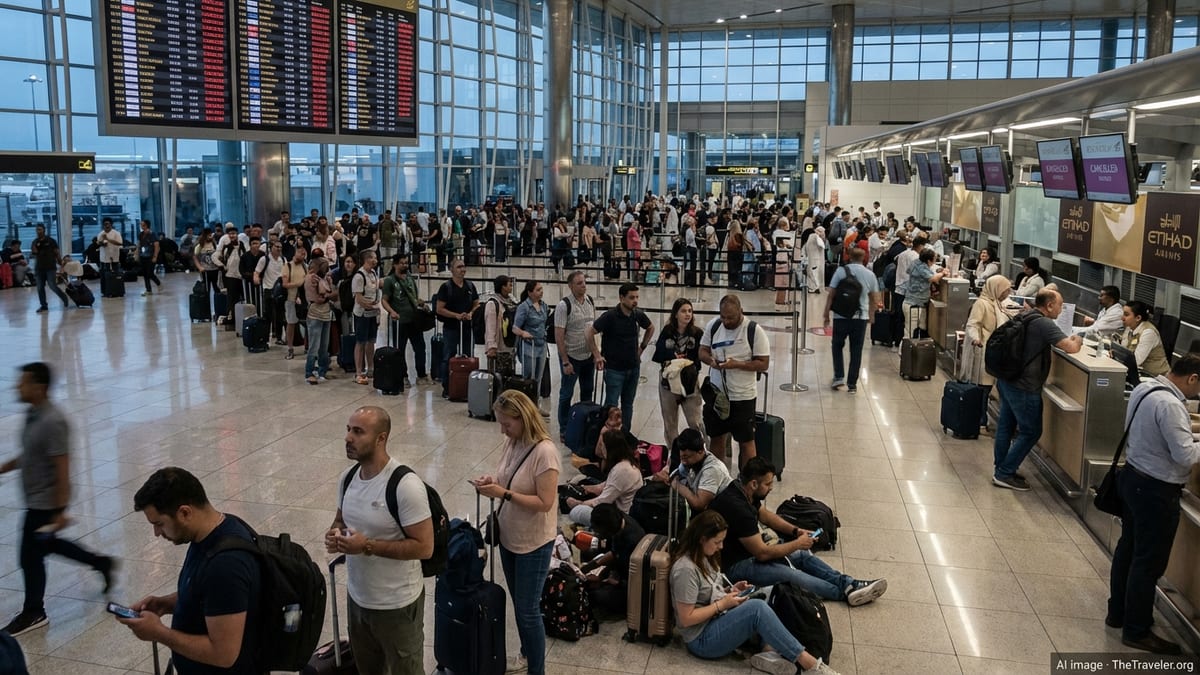
One of the most immediate implications for travelers is the increased potential for air travel disruption. Security alerts and aviation advisories issued since late February 2026 emphasize that airspace over parts of the Middle East has periodically closed or been restricted following missile and drone activity linked to the Iran conflict, forcing airlines to reroute or cancel services at short notice.
Industry analyses and risk briefings describe flying through parts of Middle Eastern airspace as a higher risk endeavor while the regional crisis continues, particularly around conflict zones and key maritime chokepoints. Global aviation regulators have issued notices cautioning commercial operators about conflict-zone airspace, contributing to a patchwork of reroutings that can extend flight times, increase costs and leave passengers facing last minute schedule changes.
Publicly available guidance notes that Americans in the Middle East are being encouraged to maintain flexible travel plans, keep essential documents and funds accessible and be ready to depart if security conditions deteriorate further. In some countries, US missions have previously facilitated departure options or crisis intake forms for citizens seeking assistance, reflecting lessons learned from evacuations earlier in the 2026 Iran war.
Country-Level Advisories and Regional Hotspots
Alongside the global caution, the State Department’s country-specific advisories for several Middle Eastern states remain elevated. Recent alerts and published summaries emphasize that Bahrain, Israel, the West Bank, Jordan, Kuwait, Oman, Qatar, Saudi Arabia and the United Arab Emirates are categorized at higher advisory levels such as “reconsider travel,” primarily due to risks tied to terrorism, missile and drone threats, and the potential for sudden conflict-related disruptions.
Security messaging repeatedly underlines that locations associated with the United States and Americans may be of particular interest to groups aligned with Iran or other non-state actors. This includes diplomatic facilities, foreign bases, international hotels, major transport hubs and popular expatriate districts. While such sites are often heavily guarded, they can also become focal points for protests or attempted attacks during spikes in regional tension.
At the same time, the actual experience on the ground can differ significantly from one city to another. Business and tourism centers such as Dubai, Doha and parts of Saudi Arabia and Oman continue to operate busy airports, hotels and events, but with an overlay of increased security, more visible policing and heightened screening. Travel experts note that this dual reality, where daily life appears normal yet risk indicators are elevated, can make it difficult for visitors to accurately gauge their exposure.
Practical Guidance for Americans Traveling or Residing in the Region
Security alerts advise Americans in the Middle East to adopt a more deliberate approach to personal safety. This typically includes staying informed through reputable news outlets, maintaining a low profile, avoiding large gatherings and demonstrations, and varying routes and routines where possible. Travelers are also encouraged to keep family or trusted contacts updated on itineraries and to maintain charged communication devices and backup power sources.
Public guidance stresses the importance of closely monitoring local security alerts from US embassies and consulates, which often provide more granular information than the overarching worldwide caution. These posts may issue country- or city-specific messages regarding curfews, protest activity, localized strikes, or disruptions to public transportation and airport operations.
Travel risk consultants suggest that visitors review the security posture of their accommodations, including access controls, emergency exits and shelter-in-place options, and consider arranging airport transfers with reputable providers rather than relying on ad hoc arrangements on arrival. Business travelers and organizations with staff in the region are increasingly updating contingency plans that cover temporary relocation, remote work options and emergency communication protocols.
Impact on Tourism and Regional Travel Plans
The renewed emphasis on caution has added another layer of complexity for tourism and corporate travel across the Middle East. While the region has invested heavily in attracting international visitors, the combination of conflict-related headlines, airspace disruptions and formal advisories has prompted some travelers to postpone or reroute trips, particularly those involving multiple-country itineraries or long-haul connections through regional hubs.
Travel industry reporting indicates that demand patterns are shifting rather than collapsing, with some travelers opting for destinations perceived as further removed from conflict zones, or choosing itineraries that avoid overflying certain parts of the region. Airlines and tour operators are adjusting schedules, building in additional contingency time and updating terms to reflect the increased likelihood of last minute changes.
Analysts note that the extent of any long-term impact will largely depend on how the broader regional crisis evolves in the coming months. For now, the message from official advisories and travel risk assessments is that trips to the Middle East require more planning, flexibility and situational awareness than in calmer periods, and that Americans in particular should heed calls for caution and heightened vigilance as the security environment remains fluid.