


More news on this day
Light rail service across central Seattle was severely disrupted Sunday after a Link train derailed near the International District/Chinatown area, suspending service on major segments of the 1 and 2 lines and forcing riders to scramble for alternate routes at the height of the weekend travel period.
Get the latest news straight to your inbox!
Service Suspended Across Core Link Segments
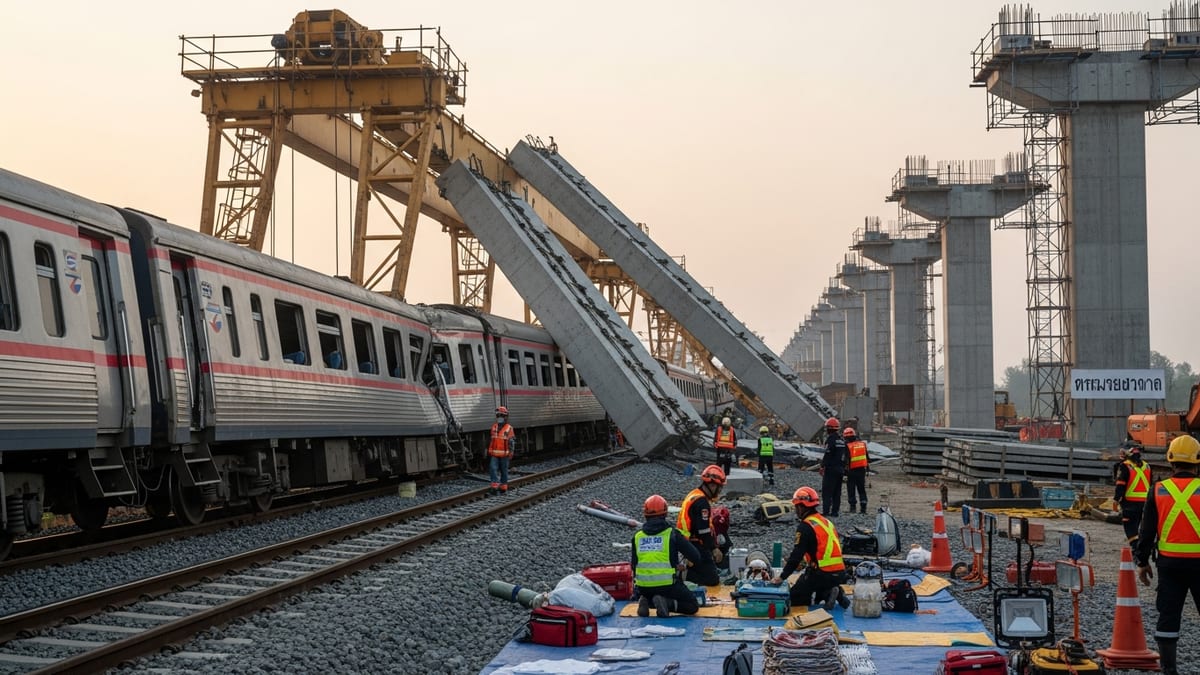
Reports from riders and publicly available service alerts indicate that Link light rail operations were halted through the heart of the system following the derailment near the International District hub on Sunday, August 2. Initial accounts describe a train leaving the downtown tunnel alignment and coming to rest partially off the tracks, blocking a critical junction used by both north–south and east–west trains.
Service on the 1 Line, which normally runs between Northgate and points south toward SeaTac and beyond, was suspended through central Seattle shortly after the incident. Coverage from local outlets and rider reports suggest that trains were turned back at outer stations, leaving the downtown core, Stadium and Judkins Park areas without light rail service for several hours while crews assessed the damage.
The disruption also affected the newer 2 Line connection between South Bellevue and downtown. Because both lines share key infrastructure and tracks in the affected area, the derailment had a cascading effect on eastside service, with trains reportedly terminating short of downtown and shuttle arrangements varying by time and location.
Publicly available information shows that the suspension came on the heels of several high-profile outages earlier in the summer linked to power issues and maintenance work, intensifying scrutiny of the Link network’s resilience during peak travel periods.
Bus Bridges, Reroutes and Crowded Transfers
With trains unable to move through the downtown segment, transit agencies turned to a familiar playbook: hastily arranged bus bridges and reroutes. Social media posts and rider accounts describe lines forming at key transfer points such as Northgate, Westlake and Stadium, where passengers were directed to special replacement buses or to regular bus routes that parallel sections of the light rail corridor.
Riders reported that limited fleets and traffic congestion constrained the speed and capacity of the substitute service. Some shuttle buses reportedly operated as short-turn loops between adjacent stations, while others made longer trips into downtown, resulting in inconsistent wait times and crowding. People traveling to or from SeaTac International Airport faced extended travel times and additional transfers, as trains were not able to run their normal one-seat ride into the terminal area during the height of the disruption.
Published guidance from regional transit agencies in recent years has emphasized that bus bridges are intended as a short-term backstop rather than a full replacement for high-frequency rail. The Seattle experience on Sunday mirrored similar incidents in other cities, where surface traffic, driver availability and limited vehicle capacity have made it difficult to match the throughput of a multi-car light rail train operating every few minutes.
Suggested Alternate Routes for Stranded Riders
As news of the derailment spread, experienced commuters and transit observers began circulating practical alternatives using the existing bus network. Riders headed between downtown and Northgate were directed toward frequent bus routes along Third Avenue and Aurora Avenue, with particular attention on lines that already connect central Seattle to the U District and North Seattle neighborhoods.
For passengers attempting to travel between downtown and the Rainier Valley or further south, publicly available schedule information highlights several King County Metro routes that follow corridors near Link stations, including services running along Rainier Avenue South and Martin Luther King Jr. Way. These bus lines, while slower and more subject to congestion than trains, offer continuous service through many of the same neighborhoods that rely on light rail.
Eastside riders affected by the 2 Line disruption were encouraged to use regional express buses crossing Lake Washington, which connect downtown Seattle with South Bellevue, Mercer Island and Redmond. Although some of these routes have been restructured in anticipation of expanded rail service, current timetables still provide regular service along Interstate 90 and State Route 520 that can substitute for the train when rail is unavailable.
Transit advocates have also pointed to local streetcar and trolleybus lines within Seattle’s core as options for shorter downtown trips while rail remains out of service. However, these services typically offer lower capacity and less frequent headways than Link, limiting their usefulness during major rail outages.
Safety Checks and Recovery Operations Under Way
According to early coverage by local media and transportation-focused outlets, crews spent much of Sunday stabilizing the derailed train, inspecting tracks and overhead power equipment, and determining whether any structural damage occurred in the tunnel approaches and at-grade segments near the International District. Recovery operations in similar incidents typically involve specialized equipment to re-rail train cars and extensive inspections before any test trains are allowed back onto the affected tracks.
While there were no immediate reports of life-threatening injuries associated with Sunday’s derailment, authorities are expected to examine data recorders, track conditions and recent maintenance work as part of a formal investigation. Past rail safety reports in Washington have underscored the importance of strict operating procedures, track geometry checks and signal system reliability to reduce the risk of derailments and collisions.
The incident also raises questions about the robustness of contingency planning for Seattle’s light rail network. Transportation safety analyses published in recent years note that urban rail systems worldwide are vulnerable to disruptions from equipment failures and external events, and recommend detailed passenger routing plans and real-time information tools to reduce crowding and confusion when service is suddenly suspended.
In the short term, the priority remains restoring limited operations through the affected segment. However, the scale of the derailment and the central role of the International District junction in Link’s overall layout may require phased reopenings, with single-tracking or reduced frequencies before full service can resume.
Ongoing Rider Frustration and Calls for Reliability
The derailment comes at a sensitive moment for Seattle’s transit network, as agencies roll out new lines and schedule changes intended to expand rail access regionwide. Rider discussions in recent weeks have already highlighted concerns about recurring service interruptions, planned maintenance windows and the reliability of interim shuttle arrangements.
Many regular Link users describe building extra time into trips to account for the possibility of delays or last-minute closures, especially on weekends and during major events. The latest incident is likely to intensify calls for clearer real-time communication, stronger backup plans and investments that reduce the risk of derailments and power failures along critical segments.
Publicly available planning documents for upcoming service changes reference potential adjustments to late-night service, weekend closures and track maintenance strategies as the network grows. Sunday’s disruption is expected to feed into that conversation, providing a fresh example of how a single failure point near downtown can ripple across both the north–south spine and the emerging eastside connection.
For now, agencies are advising riders to monitor updated service alerts, prepare for longer travel times and consider parallel bus routes while crews work to clear the derailed train and verify that tracks and power systems are safe for the gradual return of trains through central Seattle.