


Budva is Montenegro’s liveliest coastal resort, a compact mix of medieval stone walls, busy beaches and late-night clubs. It divides opinion: some travelers love the energy, others find it crowded and commercial. This guide focuses on the practical details that matter in 2026: how Budva’s Old Town feels today, which beaches are worth your time, where to find nightlife that suits your style, what you can expect to pay, how parking works, and whether Budva is the right choice for your Montenegro itinerary.
Get the latest updates straight to your inbox!
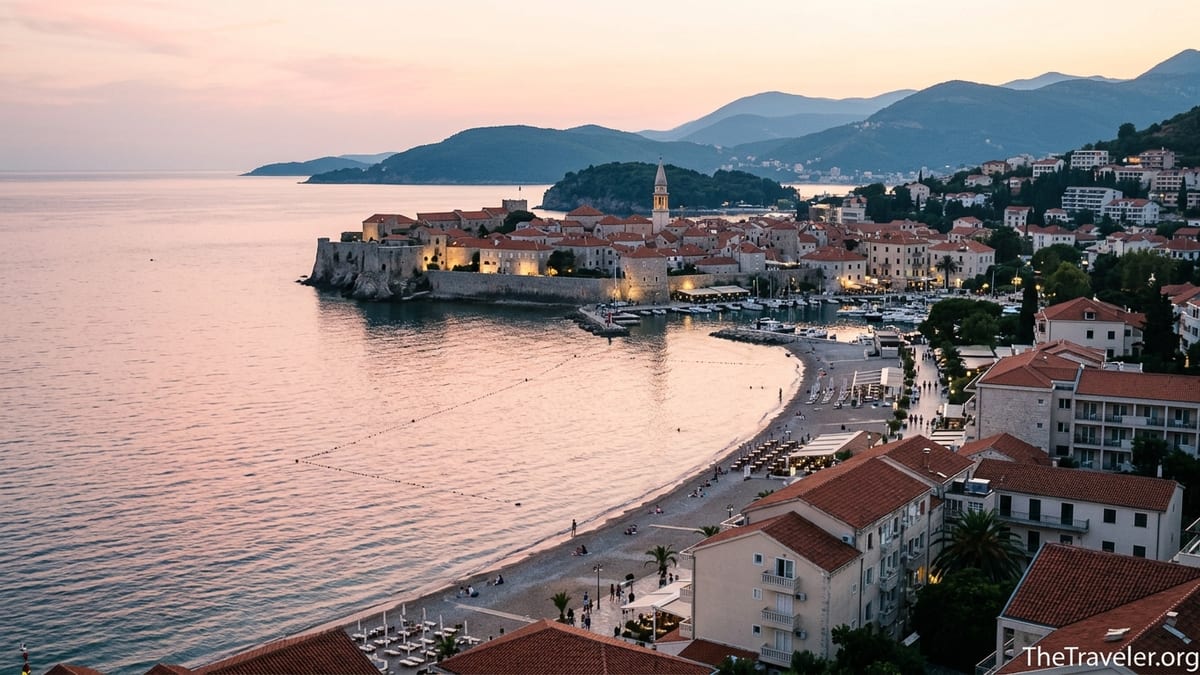
Budva at a Glance: Who It Suits and When to Go
Budva sits roughly midway along Montenegro’s Adriatic coast and acts as the hub of the Budva Riviera, a string of more than two dozen beaches stretching north toward Jaz and south toward Sveti Stefan. The Old Town is genuinely historic, with stone walls and narrow lanes, while the newer city around it is a dense spread of modern apartment blocks and hotels. In July and August the town fills with regional tourists from Serbia, Bosnia and Russia, alongside growing numbers from Western Europe, the UK and North America, so expect a busy, resort feel rather than a quiet fishing village atmosphere.
Budva works best for travelers who want a mix of sea, sun and nightlife in one place. Beach bars on Slovenska Plaža start filling up by late morning, Mogren is packed with swimmers by early afternoon, and after dark music carries up from the promenade and hillside clubs until late. If you are picturing something closer to Dubrovnik’s old town calm, Budva will likely feel too hectic in peak season. For that reason some visitors base themselves in nearby Bečići or Petrovac and treat Budva as a day or evening trip.
Timing is important. June and September usually offer warm sea temperatures and long beach days but with more manageable crowds and easier parking. In July and August, open-air mega clubs operate at full tilt, most beach bars run daily events, and prices for accommodation jump noticeably. Outside the main season, especially from November to April, many seafront venues close or run reduced hours, nightlife thins out and Budva functions more as a quiet coastal town with weekend visitors from Podgorica and neighboring countries.
As a rough benchmark, a mid-range double room a 10 to 15 minute walk from Old Town in high season often falls in the 80 to 130 euro per night range when booked ahead, while apartments slightly inland or uphill can drop to 50 to 80 euro. Outside July and August you can find simple studios from around 35 to 40 euro per night, especially if you book directly with local hosts.
Exploring Budva Old Town: Walls, Lanes and Sea Views
Budva’s Stari Grad, or Old Town, is the postcard heart of the resort. Enclosed by stout stone walls rebuilt after the 1979 earthquake, it occupies a small peninsula flanked by a marina on one side and the town beach on the other. Enter through the main gate near the marina and you step into a compact maze of polished stone lanes lined with cafes, jewelry shops, ice cream stalls and occasional galleries. It is atmospheric rather than grand: think small squares shaded by palm trees, laundry hanging between limestone facades, and church bells marking the hour.
A simple self-guided circuit starts at the main gate, passes the citadel at the southern tip with its sweeping views across to Sveti Nikola Island, then loops back past the churches of St John, St Sava and Holy Trinity. Many visitors time this walk for late afternoon or early evening when the stone has cooled and the lanes glow in soft light. Typical prices inside the walls reflect the location: expect to pay around 4 to 6 euro for a draft beer, 2 to 3 euro for a scoop of gelato, and 12 to 18 euro for a main course at a mid-range restaurant, with seafood and steaks at the higher end of that range.
The Old Town also serves as the most pleasant place to drink in the evenings if you prefer conversation to heavy clubbing. Small wine bars pour local Vranac reds and crisp white Krstač by the glass, and several cocktail bars set tables out onto tiny squares with live acoustic music a few nights a week. Dress codes are generally relaxed, and tipping follows broader Montenegrin norms: rounding up the bill or leaving around 10 percent is appreciated but not rigidly expected.
Keep in mind that the Old Town is pedestrian only, paved in smooth stone, and includes a few shallow steps and short inclines. For travelers with mobility issues, the narrowest back lanes can be difficult, but the main streets from the gate to the citadel and the seafront promenade are comparatively flat and wide. In summer, start Old Town visits early in the morning or after 5 pm to avoid the combination of heat and cruise-day crowds.
Mogren Beach: Scenic Coves a Short Walk from the Walls
West of the Old Town, Mogren Beach offers one of the most scenic swims close to central Budva. Reached via a short coastal path that begins near the western end of the Old Town walls, Mogren actually consists of two small coves, Mogren I and Mogren II, divided by a rocky headland and linked by a pedestrian tunnel cut through the rock. Each cove is a mix of fine gravel and small pebbles backed by orange cliffs and greenery, giving the water an intense turquoise color on sunny days.
Because Mogren is an easy 10 to 15 minute walk from the Old Town, it gets busy from late morning in high season. A significant portion of the beach is usually occupied by rental sunbeds and umbrellas in tight rows, with prices often in the region of 15 to 25 euro for a set of two beds and one umbrella for the day, depending on your row and the month. There is normally a small strip of “wild” beach where you can lay a towel for free, but you may need to arrive before 10 am in July and August to secure a comfortable patch, especially on Mogren I.
Facilities at Mogren are basic but adequate for a few hours: seasonal beach bars sell coffee, soft drinks, bottled water and simple snacks like toasted sandwiches and crepes, and card payments are increasingly accepted though having some cash on hand still helps. The water shelves to swimming depth fairly quickly, so while families do use the beach there can be a short but sharper drop-off compared with Bečići or Slovenska. Stronger swimmers sometimes continue along the coastal path above Mogren II toward the ruins of Mogren Fortress for a panoramic view over Budva, Jaz Beach and Sveti Nikola Island, though the path becomes rough and should only be attempted in sturdy shoes and good weather.
Parking for Mogren is limited. A small informal parking area exists uphill near the road to the Mogren Fortress, from where a path leads down to the beach. In peak season those spaces fill early, and local drivers sometimes park along the roadside. For most visitors staying in or near Budva, walking from the Old Town or taking a short taxi ride to the path entrance is less stressful than circling for a parking spot.
Jaz Beach and the Wider Budva Riviera
About 4 kilometers northwest of Budva, Jaz Beach stretches in a broad arc of coarse sand and pebbles framed by steep green hills. It has hosted major concerts and summer festivals in the past and still combines a long swimming zone with a casual daytime party atmosphere in high season. Reaching Jaz from Budva by car takes roughly 10 to 15 minutes in light traffic along the main coastal road toward Kotor, although in afternoon peak hours the drive can double as cars queue at junctions and for limited parking.
Once at Jaz you will find several distinct sections. Closest to the main parking area sit the more organized zones, where beach bars manage rows of sun loungers and umbrellas. Prices here are broadly similar to Mogren or Slovenska: around 15 to 25 euro per day for a pair of loungers and an umbrella in high summer, sometimes a little less in June and September. Farther along the beach the organization thins out and there are more stretches where you can lay your own towel free of charge. Simple changing cabins and freshwater showers are usually available, sometimes for a small fee.
Boat taxis from Budva often run to Jaz in July and August, departing from the marina or Slovenska waterfront. These cost more than a local bus but avoid parking hassles and offer a scenic approach along the cliffs below Mogren. If you do drive, there is generally a large open parking lot directly behind the beach that operates with a flat daily rate. Exact prices change, but visitors in recent seasons have reported paying a modest fee equivalent to a few euros per day. Always check the price before entering and keep your ticket handy in case of checks.
Beyond Jaz, Budva’s coastline continues with several other options worth considering if you have a car. To the south, Bečići offers a long, gently shelving sand and pebble beach backed by large resorts, well suited to families with younger children. Farther still, tiny Pržno and more open Kamenovo combine smaller coves with a slightly calmer feel than central Budva. Heading toward Sveti Stefan, you will find a mix of public and concession sections, plus occasional stretches of wild shoreline where facilities are minimal but crowds thin out.
Slovenska Plaža and Everyday Beach Life
Slovenska Plaža, often simply called Slovenska Beach, is Budva’s main in-town beach, running for around one and a half kilometers east from the Old Town. It is a mix of coarse sand and fine gravel divided into signed sections, with a continuous pedestrian promenade lined by cafes, fast-food kiosks, souvenir stalls and hotels. This is where Budva feels most like a classic package resort: inflatable water playgrounds anchored offshore, families renting pedal boats, teenagers buying pancakes and corn on the cob from stands, and music drifting from bars throughout the day.
Slovenska is convenient rather than idyllic. Water quality fluctuates with boat traffic and crowds, especially in the central sections closest to the marina, but it improves as you walk farther east. Expect much of the frontage to be occupied by lounger rentals similar in price to other Budva beaches, with free towel space typically found between organized sections or at the far ends. Snack prices here tend to be slightly lower than inside the Old Town: a takeaway slice of pizza might run 2 to 3 euro, a simple espresso 1.50 to 2 euro, and a soft drink from a kiosk around 2 to 3 euro depending on brand and size.
In the evening Slovenska’s promenade becomes one of Budva’s main social arteries. Families with strollers, groups of friends and street performers share the walkway, while beachfront bars switch from iced coffees and smoothies to cocktails and beer towers. If you are staying nearby, this is often the easiest place to start a night, with some venues offering live bands or DJs until midnight before crowds continue on to clubs elsewhere. Noise can carry, so light sleepers may prefer accommodation a block or two back from the seafront or in quieter neighborhoods toward Bečići.
Parking for Slovenska is a mix of paid lots and private spaces behind buildings. Large signed car parks sit at both western and eastern ends of the beach, charging hourly or flat rates that can add up over a full day in July and August. Many hotels and apartment buildings advertise free or reserved parking; when comparing accommodation, asking whether parking is on-site, nearby or via a public lot can save both time and money, especially if you plan to explore the Budva Riviera by car.
Sveti Stefan: Iconic Island, Restricted Access
About 9 kilometers south of Budva, Sveti Stefan is one of Montenegro’s most famous images: a fortified islet connected to the mainland by a narrow causeway, lined with terracotta-roofed stone houses. The island itself is occupied by a luxury resort operated under the Aman brand, which reopened to guests recently after several years of closure. This means that access to the island remains limited to hotel residents and certain restaurant bookings, with security at the entrance controlling entry.
For most visitors, Sveti Stefan is therefore a viewing destination rather than a place to wander freely. The best public viewpoints are slightly uphill on the main coastal road, where lay-bys and cafe terraces offer elevated angles over the causeway and island, especially striking near sunset. On the mainland side, the beach is divided into different zones. One section, often on the right-hand side as you face the island, typically functions as a paid area with serviced loungers at premium prices reflecting the association with the resort. The other side functions more as a standard public beach, where you can rent loungers at more typical Budva Riviera prices or spread your own towel for free, assuming you find space in high season.
Recent local debates around beach privatization and access mean rules can shift from one season to the next, particularly regarding smaller coves like Queen’s Beach tucked behind the pine trees north of the island. As of 2026, travelers should assume that walking freely around the island and using all nearby beaches is not guaranteed unless they are staying at the resort. If Sveti Stefan is a priority photo stop, consider visiting in the golden hour before sunset, when tour buses are thinning and the light flatters the stone and sea. A taxi from central Budva to Sveti Stefan typically costs in the region of 15 to 20 euro one way, but it is wise to confirm the price or insist on the meter before departure.
While Budva’s own beaches can feel hectic, Sveti Stefan’s setting has a more refined atmosphere, particularly outside the central holiday weeks in August. That said, closer to midday in peak season the small public strip can become very crowded, and parking along the main road can be tight. Several nearby restaurants and guesthouses within walking distance offer their own parking, making them a useful base if you want to enjoy the coastline here without dealing with day-visitor traffic each time.
Nightlife: From Old Town Bars to Hilltop Clubs
Budva’s nightlife is one of the main reasons many visitors include it in their Montenegro itinerary. The scene is layered. At the most relaxed end are wine bars and small cocktail spots tucked into Old Town courtyards, where you can sit out beneath stone walls with a glass of local wine and soft background music. These usually close around midnight or shortly after, and prices are comparable to other European coastal towns: 4 to 6 euro for a beer, 7 to 12 euro for a cocktail, and similar for a glass of decent imported wine.
Step outside the walls and along Slovenska promenade and the mood shifts toward beach bar energy. Many venues here operate as cafes by day and bars by night, with tables spilling across the promenade and music ranging from Balkan pop to international hits. There is no single dress code, but casual summer clothing is standard; shorts and sandals are common, although some slightly smarter venues might prefer long trousers for men after 10 pm. Cover charges are rare for these beachfront bars, but some run themed nights where a small entry fee includes a drink.
For full-scale clubbing, Budva still leans on its open-air hillside clubs above town, notably venues like Top Hill that reopen for the July and August high season. These are large, purpose-built spaces that host regional DJs and occasional international acts, with crowds arriving around midnight and dancing into the early hours. Entry prices vary by night and performer but often fall somewhere in the 15 to 30 euro range, with bottle service and VIP tables priced considerably higher. Drinks inside clubs usually cost more than at seafront bars, so budget accordingly if you plan a big night out.
Safety-wise, Budva’s nightlife is typical of a busy European resort. Petty theft can occur in crowded clubs and along the promenade, especially late at night, so keep valuables to a minimum and use zipped bags. When it comes to taxis after dark, agree on the fare before getting in if the driver refuses to use the meter, and be cautious of cars waiting outside major clubs that quote vague prices. Several recent visitors have reported being surprised by rapidly climbing meters or flat fares that doubled the cost of their inbound journey. Asking your accommodation to call a trusted local company, or walking a few minutes away from the busiest club exits before hailing a cab, can reduce the risk of overpaying.
Families, Prices and Practicalities: Is Budva Worth It?
Budva can work for families, but it is important to match expectations. During school holidays the town is noisy, with loud music from beach bars, crowded promenades and late-night traffic. Families who stay a short walk away from the main seafront, perhaps in Bečići or in residential streets uphill from Slovenska, often report a better balance: easy daytime access to beaches and Old Town, but quieter evenings. Beaches with gentler entry into the sea, such as Bečići or the eastern stretches of Slovenska, tend to be more comfortable for younger children than steeper coves like Mogren.
In terms of day-to-day costs, Budva is no longer a budget secret but is still generally cheaper than top-tier Mediterranean resorts. A basic breakfast of coffee and pastry from a bakery might be 3 to 5 euro per person. A simple lunch of grilled meat or fish with salad at a non-frontline restaurant could run 10 to 15 euro per person without drinks, while a sit-down dinner with wine at a mid-range Old Town spot might reach 25 to 35 euro per person depending on your choices. Supermarkets carry most essentials, and buying water, snacks and basic groceries there can keep overall spending down, especially for families or groups staying in self-catering apartments.
Parking is one of the main practical challenges. Central Budva has limited free street parking, and municipal or private lots near the Old Town and Slovenska charge by the hour or day. In July and August you may find lots full by mid-morning, particularly on weekends, leading drivers to circle or park further up residential hills. If you plan to rent a car, choosing accommodation that guarantees a parking space is worth a small premium. For day trips along the coast, leaving early and returning before the late afternoon rush helps avoid the heaviest traffic and the hardest parking searches.
Whether Budva is “worth it” depends on your priorities. Travelers looking for charming old towns, scenic hikes and quieter bays might prefer to base themselves in Kotor, Perast or Herceg Novi and visit Budva for a day. Those who want several days of easy beach access, a variety of affordable restaurants, and at least one or two big nights out will usually find Budva delivers. Many itineraries split time between the Bay of Kotor and the Budva Riviera, spending two or three nights in or near Budva to experience its beaches and nightlife without committing an entire week to the resort atmosphere.
FAQ
Q1. Is Budva safe to visit, especially at night?
Budva is generally considered safe for visitors, including at night, provided you take normal urban precautions. Stick to well-lit streets, avoid leaving bags unattended on the beach or in clubs, keep an eye on your drink, and use reputable taxis or ones called by your accommodation. Most issues reported by recent travelers involve minor scams or inflated taxi fares rather than violent crime.
Q2. Which Budva beach is best for families with children?
For families, Bečići Beach and the eastern stretches of Slovenska Plaža usually work best thanks to their wider sands, gentler entry into the sea and good access to facilities. Mogren offers beautiful scenery but shelves deeper more quickly, while Jaz can have livelier surf and a more youthful daytime atmosphere in peak summer. Wherever you go, arrive earlier in the day to secure a comfortable spot and avoid the heaviest crowds.
Q3. Do I have to pay for sunbeds or can I use the beach for free?
You are not required to rent sunbeds to use Budva’s beaches. Almost every beach has both organized zones with paid loungers and smaller sections where you can lay your own towel free of charge. In high season these free areas can be busy, especially on Mogren and the central parts of Slovenska, so many visitors choose to pay for loungers for comfort. Expect typical prices for two loungers and an umbrella to be in the mid-teens to mid-twenties of euros per day in July and August.
Q4. How expensive is nightlife in Budva compared to other European resorts?
Budva’s nightlife prices are moderate by European resort standards. In Old Town bars, a beer commonly costs around 4 to 6 euro and a cocktail 7 to 12 euro. On Slovenska promenade prices can be slightly lower, while in large hillside clubs entry fees and drink prices trend higher. Overall you will likely spend less than in Ibiza or the French Riviera but more than in many inland Balkan cities.
Q5. Is Sveti Stefan beach still accessible if I am not staying at the resort?
As of 2026, the island of Sveti Stefan and certain adjacent coves operate under restricted access tied to the luxury resort, but sections of the mainland beach remain accessible to the general public. One side typically functions as a more standard public or semi-public beach, while the other may run as a premium serviced zone with higher-priced loungers. Rules can evolve, so plan to treat Sveti Stefan as a scenic stop with partial beach access rather than a fully open island to explore.
Q6. Do I need a car in Budva to enjoy the beaches and nightlife?
You can enjoy Budva’s main beaches, Old Town and nightlife without a car, especially if you stay within walking distance of Slovenska or the Old Town. Taxis and occasional local buses or boat taxis connect to beaches like Jaz and to nearby towns. A car becomes useful if you want to explore more remote coves along the Budva Riviera or make frequent day trips inland or to the Bay of Kotor, but it also brings parking challenges in high season.
Q7. When is the best time of year to visit Budva?
For most travelers the sweet spots are June and September, when the sea is warm, most venues are open, and crowds and prices are slightly lower than in July and August. High summer brings the fullest nightlife schedule and the biggest open-air club nights but also the most congestion and highest accommodation rates. May and October can be pleasant shoulder months if you are flexible about swimming temperatures and accept that some beach bars and clubs may be closed or on reduced hours.
Q8. Is Budva Old Town worth visiting if I am staying in Kotor?
Yes, Budva’s Old Town is worth at least a half-day trip from Kotor. It offers a different atmosphere, with more of a resort feel and direct adjacency to large beaches. Many travelers staying in Kotor take a bus or taxi to Budva, wander the walls and lanes, swim at Mogren or Slovenska, have dinner, and then return in the evening. The drive typically takes under an hour outside peak traffic periods, making Budva an easy contrast to the Bay of Kotor.
Q9. How crowded does Budva get in summer, and can I avoid the worst of it?
Budva is very busy in July and August, particularly on weekends and during regional holidays, with crowded beaches, traffic slowdowns and lively nightlife stretching into the early hours. To soften the impact, consider booking accommodation a short walk away from the main seafront, visiting popular beaches early in the morning or late afternoon, and planning day trips to less central coves along the Budva Riviera. Staying in nearby Bečići, Petrovac or in the hills above Budva and using the town mainly for occasional evenings can also help.
Q10. Is Budva worth visiting if I am not interested in nightlife?
If nightlife is not a priority, Budva can still be worthwhile for its compact Old Town, easy access to multiple beaches and convenient transport connections along the coast. However, you may prefer to limit your stay to a shorter visit or base in a quieter nearby town while visiting Budva for a single day. Travelers seeking tranquil seaside evenings and more traditional village atmospheres often find Kotor Bay, Perast or smaller coastal villages better aligned with their expectations.